Society

Россия-Африка
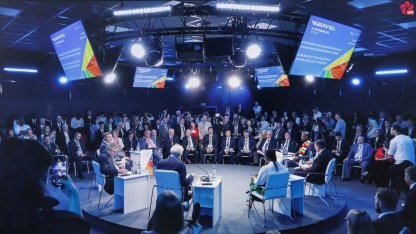
The Rector of St. Petersburg Mining University called the availability of quality education the main goal of the UN sustainable development. On Thursday, July 27, the Russia-Africa Economic and Humanitarian Forum kicked off in the city on the Neva River. One of its sections was devoted to the prospects of integration of the parties in the field of education and science. As the participants of the discussion noted, this is one of the most pressing issues, since it is higher education that today represents the foundation underlying the socio-economic development of any country.
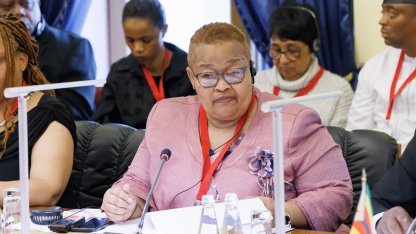
Sylvia Lucas
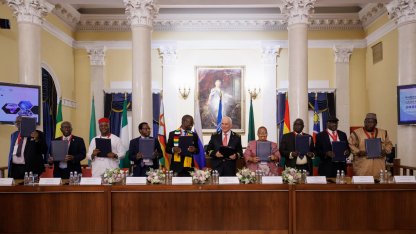
The Empress Catherine II Saint Petersburg Mining University is known for receiving high-profile guests from all around the world, which constantly enlighten and diversify the atmosphere in the halls of the University. This week, Mining University received a delegation of diverse representatives from different countries from Africa.
Африка
Its task will include the growth of academic mobility and the organization of joint research centers with Russian scientists, and the mission will be the formation of a multipolar world based on the equality of cultures and peoples. The event was organised in cooperation with the International Competence Centre in Mining Engineering Education under the auspices of UNESCO.
летние школы
They will be attended by students and graduate students from Armenia, Belarus, Iran, China and new Russian regions. On Tuesday, July 4, at the Empress Catherine II Saint Petersburg Mining University the season of summer schools - short-term educational programs, prepared especially for students from partner universities - began. Among them are the University of Shiraz (Iran), the China University of Mining and Technology, the Belarusian National Technical University and many others.
Белоглазов
In 1938 the Balkhashtsvetmet plant produced the first copper, which had previously been imported from abroad, and in 1942 molybdenum, essential for the country’s tank-building industry, was produced. Severonikel produced the first nickel for tank armor and aircraft parts in 1939 and cobalt in 1940. ”Norilsk Combine” in 1939 received the first copper-nickel matte and high-grade matte, and by 1944 gave the first tons of platinoids and began producing 40 to 60 percent of all Soviet nickel.
Владимир Литвиненко
He called the events unfolding in Russia today a challenge not only for the country’s leadership and security forces, but also for every citizen. On Saturday, June 24 the rector of St. Petersburg Mining University, Chairman of the Presidium of ”Nedra” Consortium which includes more than one hundred domestic higher educational institutions, Vladimir Litvinenko addressed the academic and business communities. He called the current situation an ordeal for our country as a whole and for every citizen in particular.
приемная комиссия
The main one, but not the only one, is the presence of six universities, which are implementing a new concept of higher education in Russia in connection with our country’s withdrawal from the Bologna process.
Литвиненко
St. Petersburg Mining University is one of six Russian universities, which this year will start a pilot project to withdraw from the Bologna process
Китай
China is a country of global competition. From a place on the road for one’s bike to a place in life for one’s person. Here even the draft army is recruited on a competitive basis. No matter how you look at it, it’s a billion four hundred million people. And if you don’t work or study 24 hours a day, you’ll be somewhere at the bottom of that list.
Севергин
At the end of the 18th century the Russian Empire included Belarus, the Right-Bank Ukraine, Crimea, the Sea of Azov, and the lands between the Bug and Dniester. Russia ”took under its patronage” Georgia, Russian America - Alaska - appeared. In addition, the unexplored Urals and Siberia beckoned with their wealth. The new lands required detailed research ”economically, economically, geographically and in other respects”. One of those who Alexander I put in charge of this undertaking was Vasily Severgin, elected professor of the Academy of Sciences at the age of 27.