

Most of the Antarctic field season is already behind them, yet even now it is clear that within the relatively short summer period, the researchers have managed to accomplish a great deal.
On the eve of the expedition, the Rector of Empress Catherine II Saint Petersburg Mining University and Scientific Supervisor of the university’s project “Comprehensive Geological and Geophysical Studies of the Deep Structure of East Antarctica” outlined for the team the key tasks to be addressed by Russian scientists:
«East Antarctica is less studied compared to West Antarctica. In previous years, we carried out narrowly focused work, primarily concerning the creation of new methods of ice destruction and the study of the processes occurring during its drilling. Despite the fact that the exploration of the continent has involved numerous studies that produced revolutionary scientific results, there are still ‘windows’ of uncertainty in other fields of knowledge—gaps that we have yet to close. How did the ice sheet on the continent form? How homogeneous is the ice, given that in different periods sediment accumulation occurred under varying conditions and with different physico-chemical properties? What is happening beneath the ice? How do thermal and tectonic processes affect the White Continent? A separate subject of research is the basement of the continent—the Antarctic Platform, most of which, along the coast of East Antarctica, is represented by an Upper Archean crystalline basement. These and other questions have not yet received unambiguous answers».

During the 70th Russian Antarctic Expedition (RAE) last season, Mining University researchers searched for a drilling site in the area of Progress Station and carried out geological and geophysical traverses. This work marked the beginning of a large-scale effort to develop a tectonic scheme and to refine the understanding of the geodynamic evolution of East Antarctica. The first results were obtained in detailing the tectonic structure and the chemical composition of rare-metal pegmatites on the Broknes Peninsula.
In the current season of the 71st RAE, the identified patterns must be confirmed on the remote Sturnes Peninsula, which is a specially protected area of Antarctica. It is there that a group of scientists has been deployed, working in complete isolation about 20 km from Progress Station and conducting geological and geophysical investigations—from collecting oriented rock samples to areal magnetic surveys.
«We have completed the main volume of reconnaissance work and have now concentrated on specialized geological studies in the most interesting areas identified earlier. Sturnes received its status as an open-air natural monument due to its unique boron mineralization, and mapping it leaves an unforgettable impression. Detailed description and sampling of minerals and structures that textbooks present only under a microscope, and as extremely rare, can be done here with the naked eye. Their sizes are measured in centimeters, and they form entire outcrops tens of meters in extent, which is truly astonishing. Among the discoveries worth mentioning already at the fieldwork stage are pegmatite bodies with chrysoberyl mineralization that we identified—previously undocumented on the peninsula—as well as pegmatites containing gigantic crystals of black quartz (morion), which is generally uncharacteristic of the high-temperature parageneses prevailing in the Larsemann Hills area», - noted Nikita Krikun, Assistant at the Department of Historical and Dynamic Geology, who is leading the Mining University’s geological work as part of the 71st RAE.

According to the University’s scientists, these new data will make it possible to reconsider the region’s developmental history. Under the prevailing understanding of its geological structure, the rocks there were formed at very high temperatures—above 700°C. However, the mineral assemblages identified by the Mining University researchers indicate different geodynamic, magmatic, and geochemical settings, with lower formation temperatures (400–450°C) as well as different depths and pressure conditions. For crystals of black quartz of such exceptional size to form, the processes involved must have been more static and shallower than had been assumed prior to the current fieldwork. This new information reshapes our understanding of the genesis not only of the peninsula under study, but of East Antarctica as a whole.

As part of the geophysical program on the peninsula, the planned areal magnetic survey at a scale of 1:25,000 has also been completed.
«At present, detailed investigations have begun to verify the identified magnetic anomalies and delineate their boundaries, as they reflect the complex and highly heterogeneous geological structure of the study area. For a more accurate interpretation of the results, integrated geological and geophysical observations were carried out along a 2.4 km reference profile that crosses virtually all geological complexes typical of the Sturnes Peninsula. The work included: a detailed geological description with sampling of all lithological varieties and their sketching, magnetometric and radiometric measurements—including determination of natural radionuclide contents—as well as aerial photogrammetric surveying to produce orthophotos, digital terrain models, and three-dimensional models of the area. In the future, the data obtained will be used to develop physical–geological models of East Antarctica and to study its structure and evolution», - aid Dmitry Ushakov, Lead Engineer at the Arctic Research Center.

Separately, the scientists spoke about the conditions in which they live and work. It would seem that a distance of 20 km from Progress station, where a sauna and gym, offices and workshops, a medical unit, and a galley are available, is not so significant. However, in the conditions of the White Continent, covering it can take up to four hours. Therefore, a group of four mining engineers works here autonomously from the main team.
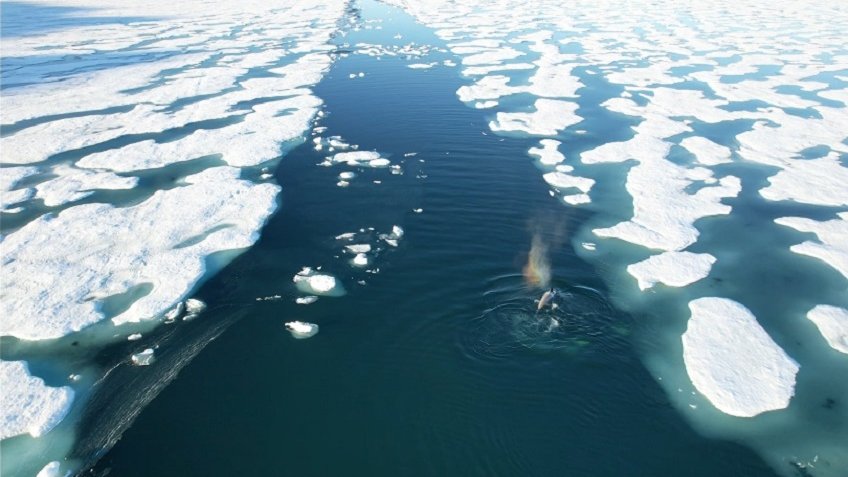
«Self-sufficient organization of everyday life is quite typical for small geological teams. From that perspective, there is nothing surprising in the fact that before and after routes—which can last 12 hours—we have to cook, bring water, service the diesel generator, and deal with an endless number of other small tasks. On the other hand, living away from the main concentrations of people in Antarctica allows us to experience the full wildness and inaccessibility of the local nature. Just 50 meters from our living module, four emperor penguins have been standing for two weeks already. Near a polynya in the landfast ice of the Thala Fjord—left behind by the vessel Akademik Fedorov—ten Weddell seals were resting. On the last day of January, we spotted five orcas that had swum in to hunt them. They spouted, slapped their tails, raising waves and sending the seals into panic. The more quick-witted animals awkwardly crawled farther away from the water; the less so dove into it. Two of the largest orcas left immediately after lunch, while three—one of them a calf—continued playing in the polynya for a long time, allowing us to watch the most dangerous marine predators and take several drone photos. Since childhood, I had dreamed of seeing them up close in the wild, and moments like these, unforgettable as they are, more than outweigh the lack of certain conveniences in the camp», - Nikita Krikun shared.



«Soon we will have to leave the Sturnes Peninsula and return to the station, from where we will then head back to the mainland. Over a month of living in near-complete isolation, we managed to set up our dwelling—a timeworn but reliable and cozy Soviet-built field module. For a person to live comfortably, at least some needs must be met, first and foremost, the most basic ones, and our module copes with this quite well. It is located on the western shore of Thala Fjord—at the very edge of Antarctica. The heart of the trailer is the diesel generator: whether the shelter is warm, whether we can cook food, dry soaked clothes, and, of course, stay in touch with family and loved ones all depend on it. The diesel unit is solid and reliable. It hums steadily all day long and falls silent at night—we switch it off, since the module accumulates heat during the day, and its thick walls prevent it from cooling quickly», - said Ivan Babenko, Research Engineer of the NGP “Antarctica.”.


«We have a stove, pots, frying pans, plates, and cutlery. We carry water from nearby lakes or melt snow. We take turns cooking in pairs every other day. As for supplies, we were provided with a substantial stock of stewed meat, canned vegetables, bread, and grains, as well as such luxuries as chocolate, coffee, nuts, and dried fruit. For geologists and geophysicists accustomed to the most Spartan field conditions, this is more than sufficient. We lack nothing and can fully concentrate on our work, which is already yielding tangible and very promising results», - Ivan added.
