

A delegation from Empress Catherine II Saint Petersburg Mining University has returned from the Republic of Ecuador, where they participated for two weeks in the “International Engineering Practice 2026” educational program, conducted in a “summer school” format.
The project is being implemented within the framework of the presidential initiative aimed at improving the higher education system in Russia. The university’s partner institutions include universities from China, Iran, India, Peru, Bolivia, Brazil, and Ecuador. During the May holidays, three groups of students and faculty members were simultaneously immersed in an international scientific and educational environment, including two groups in the People’s Republic of China.

In the South American state, the partner institution is the National Polytechnic School in Quito (EPN). It is the country’s oldest research center, founded in 1869 — only 39 years after the establishment of the Republic of Ecuador. Today, the university holds a leading position in the field of higher technical education and engineering research. The institution maintains an enrollment of 10,000 students, supported by a faculty of 600 instructors.

The Ecuadorian short-term program was titled “Petroleum Engineering, Exploration, Production, Processing, and Sustainable Development in the Amazon.” The number of applicants wishing to familiarize themselves with the republic's oil and gas industry was so substantial that a rigorous competitive selection process had to be organized for the candidates. Ultimately, 12 representatives from the institution—eight students and four faculty members—traveled to Quito.
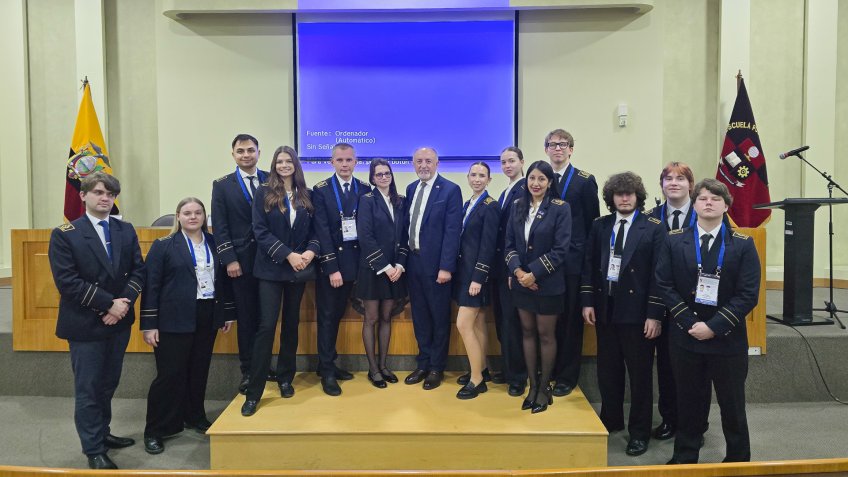
The first day of the summer school commenced with an opening ceremony attended by the leadership of EPN and the Ambassador of the Russian Federation to Ecuador, Vladimir Sprinchan. The economy of the republic is based on oil production and exports, which account for more than half of the country’s export revenues, explaining the considerable attention given to the visit of the delegation from the Mining University.

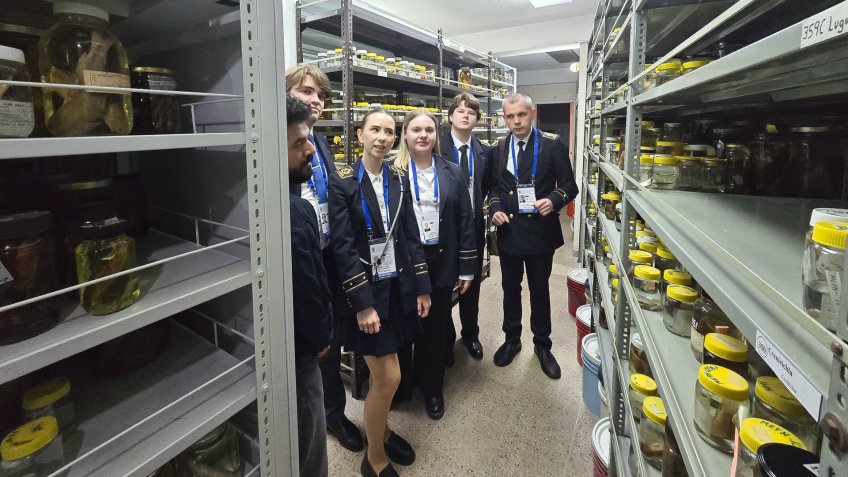
The guests were offered an introductory tour of the campus, including visits to specialized faculties and departments, research centers, and individual structural divisions such as the Museum of Natural History, the Geological Museum, the Center for Foreign Language Studies, and the Institute of Geophysics.
For instance, the latter is recognized as one of the largest centers for seismic activity analysis in the world. This focus is by no means accidental—Ecuador is situated in a highly seismically active zone, a consequence of its position at the junction of tectonic plates and the presence of numerous volcanoes. While the Russian language primarily relies on a single term for "earthquake" to denote seismic activity, Spanish features a comprehensive lexicon of terms that vary strictly depending on the intensity of the tremors and their origin.


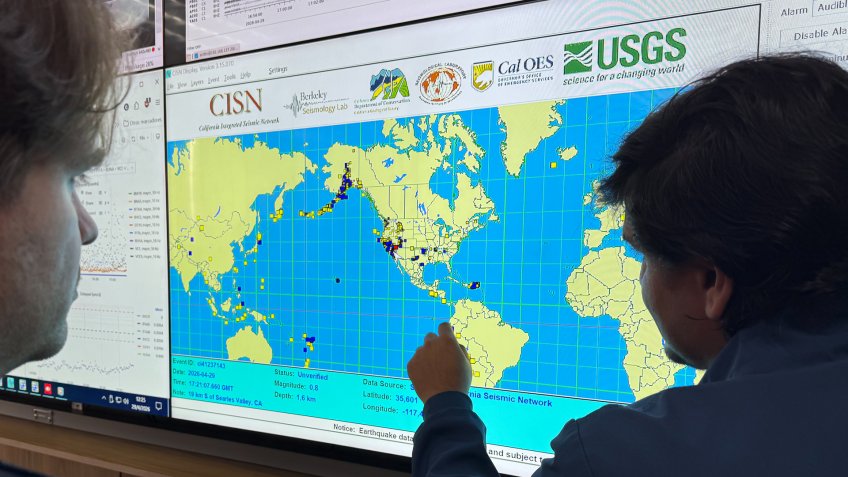
At the EPN Institute of Geophysics, scientists monitor real-time data from seismographs installed in various regions of Ecuador, as well as information on the world’s most active seismic zones received through the unified network of seismic monitoring centers.
The educational component of the program included classes conducted at the Faculty of Geology and Petroleum Engineering in geology, reservoir development, drilling, thermodynamics, modeling, programming, and mineralogy. The St. Petersburg students studied the numerical modeling of fluid flow processes in wells, examined the specific characteristics of offshore natural gas extraction, conducted a comparative analysis of drilling technologies and conditions in Ecuador and Russia during practical sessions, and mastered the tNavigator software suite for geological reservoir modeling.

One of the country’s leading geomorphology specialists, Liliana Troncoso Salgado, delivered a lecture entitled “Landslide Processes and the Characteristics of Mudflow Events in the Vicinity of Quito,” in which she provided a detailed analysis of the tragic mudflow incidents that occurred in 2022 and 2023.
During petroleum geology classes, the future engineers examined the structure of Ecuador’s key oil and gas basin and proposed possible approaches for reducing the environmental problems arising from oil production.

«As a young faculty member, I paid particular attention to the features of the educational process in Ecuador. What stood out most was the opportunity for students to participate directly in delivering lectures. They are provided with study materials in advance, after which each student has the opportunity to conduct part of the class in front of their fellow students. At the same time, the instructor provides comments and asks guiding questions, thereby supplementing and adjusting the presentation of the material. This practice enables students not only to independently master part of the material, but also to try themselves in the role of a lecturer. It was introduced due to a significant shortage of qualified faculty members in the field of the mineral resources complex. Despite the existing differences in the educational process, we and our Ecuadorian colleagues share a common goal — high-quality engineering training. Joint efforts in this direction will produce tangible positive results for the future of both countries», - noted Enver Dzhemilev, Assistant and Deputy Head of the Department of Oil and Gas Transportation and Storage.
The delegates also showed great interest in laboratory work conducted at the departments of process automation, chemistry, and mechanical engineering. At EPN, students, including international trainees, independently complete assignments involving programming, equipment setup, and testing, while the instructor acts primarily as a scientific supervisor.
For example, students from Empress Catherine II Saint Petersburg Mining University were shown training areas for welding and lathe operation. Laboratory staff explained the theory of welding and safety precautions to the students and then gave them the opportunity to produce weld seams independently.

Despite the comprehensive nature of the classes conducted within the National Polytechnic School, the core component of the program was an internship focused on acquiring practical skills at the production facilities of PetroEcuador, the republic's largest oil company. The enterprise engages in oil production, refining, transportation, and the marketing of crude oil and petroleum products. The Ecuadorian side engaged the American company Halliburton as a service provider, which enables them to use advanced technologies and management principles based on a system of strict regulations and penalties.
On average, the holding produces 130–140 million barrels of oil per year, or 350–400 thousand barrels per day, of which more than 100 million barrels are exported. Almost half of the oil produced is refined by the company itself.
Of the two weeks of the summer school, exactly half of the scheduled time was allocated to work at production facilities.
«International internships are a traditional tool in training specialists for the Mining University. In the 2000s, during my time as a postgraduate student, I traveled to Germany, Poland, and Finland myself. However, those trips were primarily observational in nature. Here, however, there was practically no excursion component: they gave us a brief induction, put tools in our hands, and told us to go drill, sample the oil, evaluate the content, measure, study the methodology, and deliver results. Such openness is crucial for long-term cooperation. PetroEcuador is a potential industrial partner of ours. The company is prepared to sign an academic partnership agreement with the Mining University in conjunction with the National Polytechnic School, and to invite our students not only to onshore oil fields but also to offshore gas fields in the Pacific Ocean», - stated Stanislav Kovshov, head of the delegation and Deputy First Vice-Rector of Empress Catherine II Saint Petersburg Mining University.

Following a safety briefing and an introduction to Zarina Messa, Chief of Section No. 26 at the Lago Agrio field, the students proceeded to the drilling pad, where the drilling process for an S-shaped directional production well was nearing completion. The drilling depth was approximately 3,200 meters. As of May 1st, the wellbore casing cementing process was drawing to a close, and the bottomhole perforation process was being initiated to stimulate oil inflow.
Third-year student Ksenia Dyshanova from the Department of Well Drilling joined the company’s specialists in their work.


«Visiting an operating oil field became the most important event of my internship in the Amazon Region. Seeing the drilling process live, as it actually takes place, and even more so taking direct part in it, is a rare opportunity for a student. During the tripping operation, I had to center the drill pipe as it was being lifted from the bottomhole. It is noteworthy that in Russia, women are generally prohibited from being at the wellhead, whereas in Ecuador, there are no such rules — everyone is allowed to work. It was an unforgettable experience that helped me become acquainted with the technology and equipment used in drilling at high-viscosity oil fields in another country and identify a number of similarities and differences», - Ksenia shared.
The second technological unit visited was the laboratory for the interpretation of well logging and geophysical data. Here, the "summer school" participants were shown a well lithological column alongside gamma-ray and resistivity log results, which are essential for determining the lithological composition of the productive reservoir and the characteristics of the saturating fluid.

Furthermore, the students were able to independently verify the accuracy of the logging data. Core samples were retrieved from the exact depth where instruments indicated the water-oil contact (WOC) was located. Under a microscope, the students could clearly observe the transition where sandstone grains wetted with oil gave way to sandstone grains wetted with water.

The drilling mud solids control system was the final location on the drilling rig visited by the Russian delegates. Jorge Empinada, Chief Field Specialist for Drilling Fluids, told them about the work performed by specialists in his unit and explained how the continuity of the drilling process must be maintained through on-site modifications of the drilling fluid.
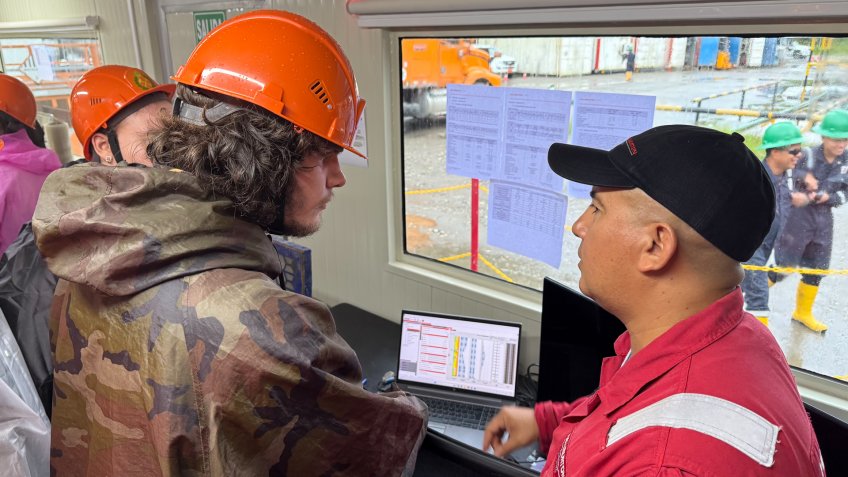
The next stage was a visit to the oil treatment facility. As is known, produced fluids are a multicomponent mixture, and separation is used to bring oil to marketable specifications. The students inspected separators, pressure-boosting equipment at the final sections of the pipeline system, and the tank farm. As part of their practical work, the future engineers took oil samples from different levels of the tank in order to determine water content throughout its entire volume. Each participant performed a series of operations prior to centrifugation, which made it possible to separate sediment, water, and oil and determine the percentage ratio of these components along the hydrostatic column.
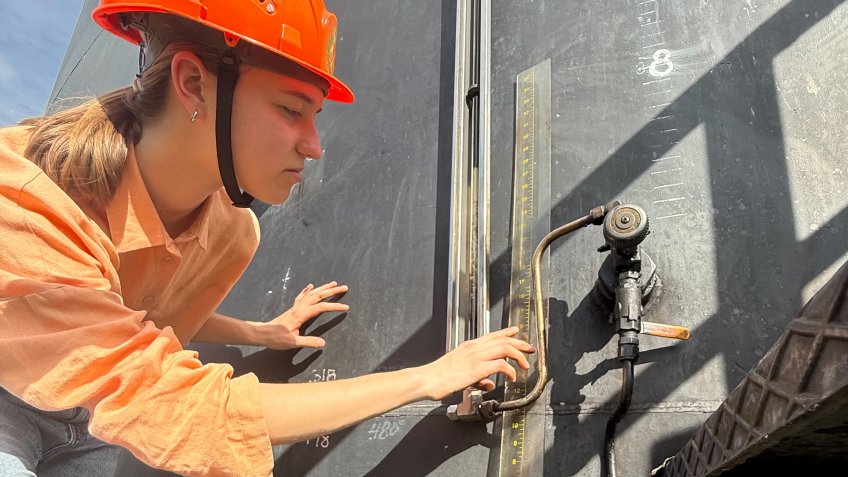

Regarding the pipeline transportation infrastructure, the young researchers were able to fully observe its operational environment en route to the Lago Agrio field. Due to the heterogeneous terrain, sharp elevation drops, regular soil erosion, and debris flows, accidents frequently occur along sections of the main pipelines in Ecuador. During the journey to their destination, the students observed five distinct locations featuring pipeline ruptures, two of which provided an opportunity to witness the ongoing repair and restoration process firsthand.

Upon completion of the internship, all program participants were awarded certificates of successful completion. Furthermore, a draft Memorandum of Cooperation was developed and officially signed by the Rector of EPN.

«The National Polytechnic School in Quito is deeply interested in the prestige, education, and science for which Empress Catherine II Saint Petersburg Mining University is renowned. The country’s government has allocated funding to the university for the establishment of a science park, and today they require our methodological and consultative assistance: how to properly structure the infrastructure, how to procure equipment, and how to ensure growth in both the quantity and quality of scientific research. Ecuador faces a major problem — a shortage of specialists. In the entire country, only two universities train petroleum engineers, and both departments share a total of just 25 faculty members. Salaries in the raw materials sector are exceptionally high: an ordinary laborer receives 4,000 dollars, middle management earns 10,000, and a field director makes around 45,000 dollars. At the same time, even middle managers at the fields frequently lack a higher education degree, entering the workforce with only a basic vocational school background», - emphasized Stanislav Kovshov, head of the delegation and Deputy First Vice-Rector.
According to him, operating under a severe deficit of up-to-date geological and geophysical data, the Ecuadorians often work by trial and error: they understand that an oil field exists in the Amazon and drill almost at random. Russia’s assistance in personnel training for both industry and higher education could enable the South American state to enhance its technological sovereignty and production volumes.
The “summer school” format presupposes not only educational, scientific, and production practice, but also total immersion into the culture of the host country. Only such an all-encompassing approach serves as a guarantee for strengthening enduring cooperation. Ahead for the participants of the “International Engineering Practice 2026” program lay participation in the “Immortal Regiment” march and Victory Day celebrations, an ascent of Cotopaxi—one of the largest active volcanoes in the world—visits to the Alexander Pushkin memorial and the Fyodor Dostoevsky monument, and much more. Read about this in the second part.

