

In late April and early May, a delegation of faculty members and students from Empress Catherine II Saint Petersburg Mining University completed an industrial and academic internship at Taiyuan University of Technology and Shanxi University of Technology, as well as at various enterprises across the People's Republic of China.
A group of thirty mining specialists studied the experience of their Chinese colleagues in organizing the educational process, familiarizing themselves with advanced scientific developments and the operations of specialized industrial facilities. This is by no means the first visit to the partner institution; it has already hosted several delegations from the city on the Neva, and young people from China's coal capital are currently pursuing their education at the Mining University.

The working program commenced with a visit to the student robotics club. Here, projects are initially supported by the university at their early stages, and later, if successful, they can secure sponsorship from the industrial and business sectors. Student teams constantly participate in and claim top prizes at regional and national competitions. Their greatest achievement was winning the 2024 World Robot Battle competition.


The delegation was highly impressed by the exceptionally rapid turnaround times for project execution, coupled with a near-total absence of unnecessary bureaucracy (requiring only a request from the laboratory head and a technical specification sheet). The pipeline from initial idea to final result spans just 1 to 2 weeks. Furthermore, any missing components needed during the robot assembly process can be outsourced and manufactured by an external organization within 2 to 3 days if they cannot be produced in-house.
The laboratory base of the Faculty of Safety utilizes advanced methods of X-ray imaging, chromatography, and MRI to determine the structure and critical properties of rocks, coal dust, and gas mixtures. The facility also features the capability to conduct small-scale physical modeling of gas and dust explosions under varying environmental conditions and initial material parameters.

The training laboratories of the Mining Faculty feature a 3D-visualization classroom for the primary technological processes of mining enterprises, alongside VR simulators and scale models designed to familiarize students with the overall structure of a mining operation.

The research laboratory for the physical and mechanical properties of rocks is equipped with an extensive range of instrumentation capable of determining a wide spectrum of rock properties. This equipment is constantly in operation. Over the past 10 years, the laboratory's team of 51 personnel—comprising 16 professors, 22 associate professors, 11 assistant professors, and 2 research fellows—has executed more than 50 major scientific research projects totaling over 40 million yuan (approximately 450 million rubles) and has been awarded 21 national and regional prizes, including awards for groundbreaking scientific discoveries.
Furthermore, the facility is equipped to conduct testing on the anchorage bond strength within various rock types, as well as structural strength testing on diverse anchor designs made from various materials.

The laboratory for studying the thermal and filtration properties of rocks is also equipped with modern, high-tech instrumentation developed according to the technical specifications of the faculty staff. These include the True Triaxial Multi-phase CO₂ Fracturing and Seepage Test Systems—cutting-edge units designed for simulating hydraulic fracturing and filtration at great depths, as well as for researching enhanced oil and gas recovery and geothermal energy.
The Faculty of Chemistry comprises 246 faculty members and 1,300 students.
Here, a department functions as a cohesive research group; on average, each instructor carries a classroom teaching load of approximately 100 hours per year. The quality control system evaluating the performance of the teaching and professorial staff is closely aligned with the model utilized at the Mining University (incorporating student surveys, mutual class observations, and departmental audits of methodological materials). Stipends reaching up to 30,000 yuan per year allow students to focus entirely on their studies without the need to seek part-time employment. Significant emphasis is also placed on character education and ideological development.

Department of Chemical Engineering: 41 faculty members, admitting 180 students per year. Students must complete 160 credits over 4 years, alongside two industrial internships plus a pre-graduation internship. Upon graduation, 30% of students proceed to master's programs, while 70% enter the workforce directly.
Department of Applied Chemistry: 25 faculty members, specializing in ecology and novel materials. Admitting 60 students per year. 70% of graduates proceed directly to master's programs.
Department of General Chemistry: 20 faculty members, 2 student groups. Active engagement in scientific research begins in the 2nd year.
Department of Biopharmaceutics: 350 undergraduate students, 50 master's students, and 21 faculty members (30% of whom possess international academic experience).
Separation of Training and Research Laboratories:
The training laboratory functions as a mini-model of a chemical processing plant, featuring three specialized coal-processing units. The infrastructure includes a maleic anhydride distillation column, equipment tracking via QR codes, and a fully integrated digital twin. The equipment can be disassembled. The industrial safety training system is 4 hours. There are benches for hydraulics, heat exchangers, and CO₂ absorption/desorption.

The scientific coal laboratory was established in 1985, and in 2021, it was recognized as a national-level laboratory. Its research areas include coal chemistry, energy efficiency, emission reduction, and deep processing of coal. Areas of focus: coal gasification into syngas and subsequently into methanol and gasoline; coal electrodes for aluminum production; gas cleaning from NOx and SOx, and wastewater treatment; waste processing into cement and refractories; and the extraction of heavy metals.
The State Key Laboratory of Intelligent Mining Equipment Technology is a joint platform of the university, a company, and a laboratory. The staff consists of 229 people (including 2 academics and 10 professors). The main areas of focus are: equipment for open-pit mining (loading automation, navigation, and machine vision); equipment for underground mining at great depths; and equipment for "smart mines" (sensors, MES, dispatching, and unmanned technologies). A full-cycle MES system for mining and processing is presented and has been implemented at one of the mines.

At Shanxi University of Technology, the St. Petersburg miners visited a training site for practical skills development. Real mining equipment is utilized visual training aids. Inclined and horizontal galleries with installed equipment and power supply systems are presented as models of underground mine workings, demonstrating various types of support, including frame support, rock bolting, and individual supports in different versions: metal, wooden, and composite. Full-scale simulators for drilling wells using underground rigs, stylized benches for measuring gas concentrations in mine workings, and classrooms are also available. The training ground is used for instruction by both students and employees of mining companies.
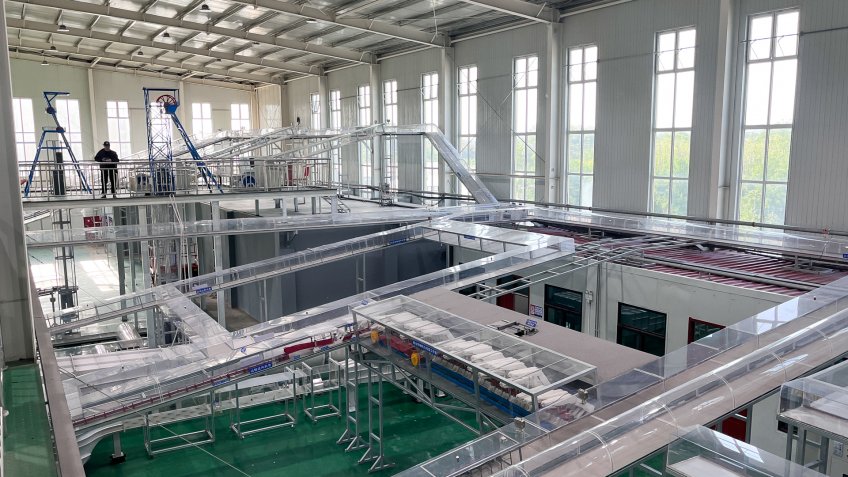
There is also a model of a dispatch control system for a “smart mine” featuring remote control capabilities for all equipment, which enables a reduction in the workforce by more than two times even at the current stage of development.

Operating development and longwall mining complexes are presented (with a total weight exceeding 1.5 thousand tons), which are utilized for mining thick seams with top-coal caving.
A separate small section of the training ground is dedicated to mine rescue training using VR technologies and firefighting simulators.

The technological development zone, Yangquan High-Tech Industrial Development Zone. The enterprise focuses on eco-friendly, resource-saving, and modern technologies. The emphasis is placed on digitalization, new materials, safety, and reducing environmental impact in line with China's policy course toward carbon neutrality by 2060.
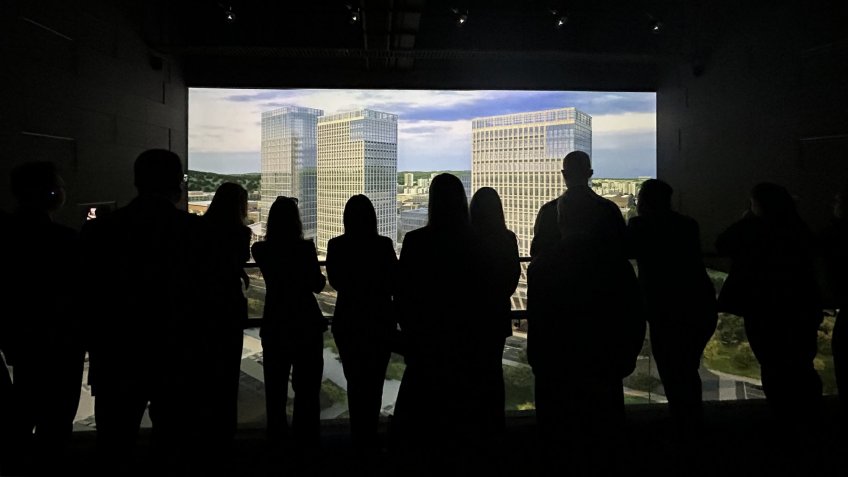
The company has evolved from a traditional coal company into an intellectual center for unmanned systems, "smart home" technologies, and innovative materials.
Digital solutions are presented, including drones for challenging conditions, autonomous transport, and recognition systems. A portion of these solutions is programmed for real-world operational tasks. The Baidu cloud computing center, which has been operating since 2012, was also shown separately.
Among the new materials are intrinsically safe, wear-resistant cutting picks for mining equipment and transparent polymers with low refractive indices that are “more transparent than glass.” Sodium-ion batteries are not a replacement for widely used lithium batteries, but rather a niche solution for industrial applications requiring operation at low temperatures and enhanced safety.
The delegation also visited Shanxi Linxian Huaye Coal Industry, a coal enterprise that applies intelligent and environmentally friendly solutions for the coal industry. The strategic objective is the creation of "green" and "smart" mines, including 5G technologies and mining methods with backfilling of mined-out spaces. This work is carried out in close cooperation with Taiyuan University and industrial partners (an intelligent dispatch system by Huawei has been implemented).

Digital solutions were presented, including AI, machine vision, automated dispatch control, and integration with Manufacturing Execution Systems (MES). The system monitors conveyors, belt ruptures, ventilation devices, and other malfunctions, while also ensuring process protection.
A separate system was presented for classifying hazardous situations, providing early warning throughout the mine, and enabling remote handling of emergencies. The response time of the mine rescue team is 30 minutes.
Environmental aspects: state support for land reclamation is provided as part of the transition toward safe and environmentally responsible coal mining.
Scale of implementation: 48 main and auxiliary subsystems, an implementation period of approximately 3 years, and an estimated system cost of 70 million yuan.
At the Hong’an Emergency rescue equipment manufacturing plant, the guests were demonstrated modern autonomous breathing apparatuses (operating up to 5–6 hours, weight 15 kg, temperature range from –20 to +60 °C), hydraulic and pneumatic rescue equipment, and tools (shears, jacks, cranes, rescue units for clearing rock debris, and specialized protective clothing). The enterprise features training grounds for both students and rescue personnel.

Taiyuan Heavy Machinery Group is the first large-scale heavy machinery enterprise in the PRC. The production facility features fully unmanned logistics and the sorting of finished parts by robots using QR codes. A single operator monitors the production complexes for cutting, welding, drilling, and milling. The machining and assembly workshop covers 120,000 m². Metal waste is reused.

The plant manufactures a wide range of equipment—from overhead cranes to autonomous open-pit mining dump trucks. There are orders from Brazil and India, as well as developments involving Germany and Japan. The enterprise builds all residential infrastructure for its employees in close proximity to the plants, including housing, schools, kindergartens, exhibition complexes, and parks.
The Shanxi Province Intelligent Coal Mine Laboratory demonstrates a triad: university, mine, and digital platform (Huawei). The core concept of a "smart mine" is a unified digital environment featuring methane sensors, pressure sensors, cameras, and other devices. The proprietary EIC (Enterprise Intelligence Cube) system integrates applications, cloud storage, edge computing, and management.
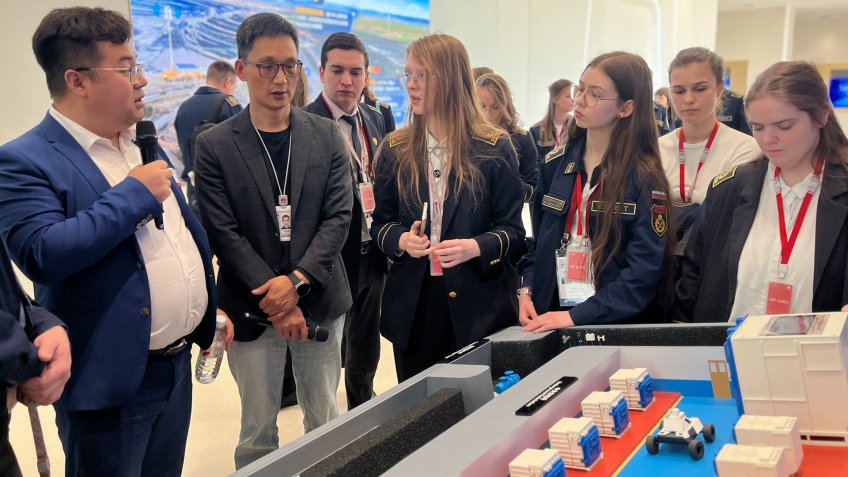
AI and machine vision monitor equipment, personnel, hazard zones, and the production process.
For open-pit operations, 5G, autonomous equipment, and AI dispatching are utilized. For mineral processing, intelligent control of density, flotation, thickening, and reagents is applied, which increases coal yield and reduces manual adjustments. The laboratory operates using its own algorithms. Huawei acts not merely as a vendor, but as an active participant in the technological partnership. This is a ready-made model for mining automation: data, equipment, a data center, AI, digital platforms, and the university.
The Antaibao open-pit mine is part of China Coal Pingshuo Group (Shanxi Province). Construction began in 1982, with commissioning in 1987. It is one of three open-pit mines within the Pingshuo lease, each producing approximately 20 million tons of coal per year. Antaibao ranks first in China in terms of disturbed land area.
The coal is long-flame (Grade D), low-ash, and contains lithium. The stripping ratio is 3.35 tons of waste rock per 1 ton of coal.

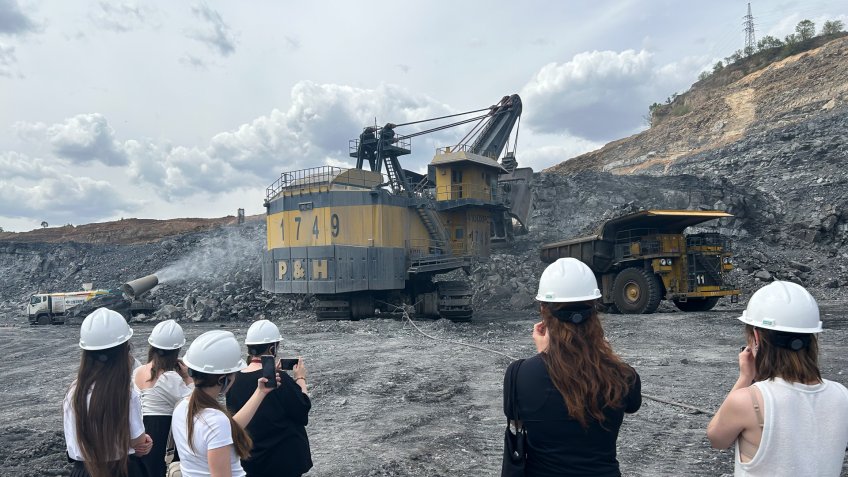
Of particular interest was the descent to the pit face: the opportunity to observe excavator operations and loading in real time provides a clear understanding of the scale and logistics of open-pit mining.
Work is currently underway to implement intelligent management systems for open-pit mining transport.
Internal dumping and active reclamation of disturbed lands at the open-pit mine serve as an example of conscientious adherence to a policy of rational nature management.
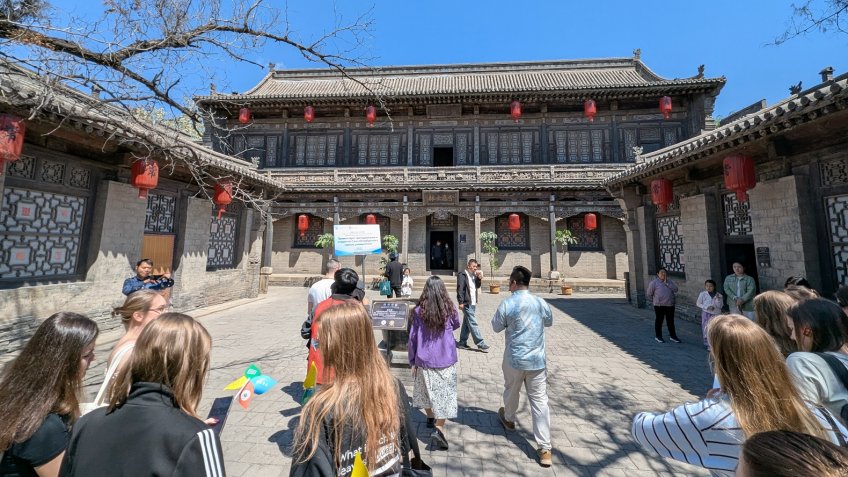
Naturally, there was also a cultural program. The century-old village of Hougou. The houses, courtyards, lifestyle, and traditional way of life have been fully preserved. The careful attitude of the Chinese people toward the integrated history of the site is highly impressive—a clear example of respect for history and traditions.

The Mengshan Giant Buddha statue (6th century, Northern Qi dynasty) is carved into the cliffside. It was destroyed toward the end of the Yuan dynasty and rediscovered in the 1980s. Between 2006 and 2008, it was restored, with a new head added to the original body. Separately, a visit was paid to the ancient town of Qikou on the banks of the Yellow River.
Ahead lies the comprehensive analysis of all three internships in the PRC and Ecuador, the outcomes of scientific conferences, the final review of results, and plans for the future.