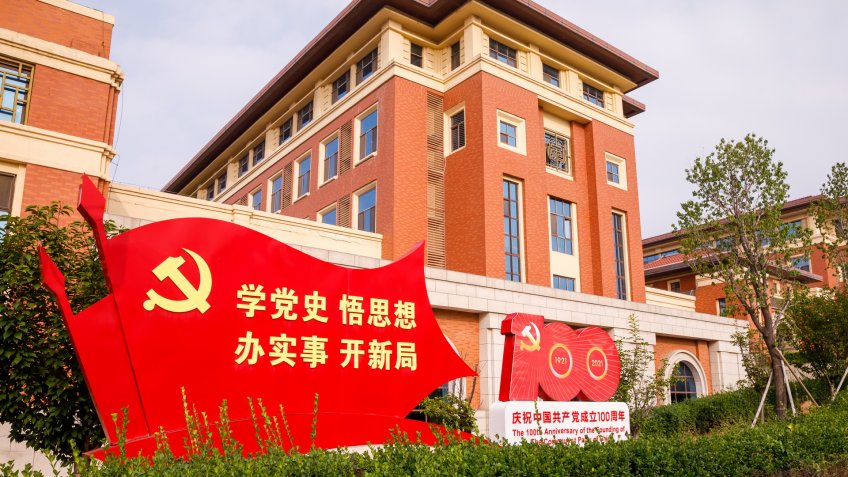
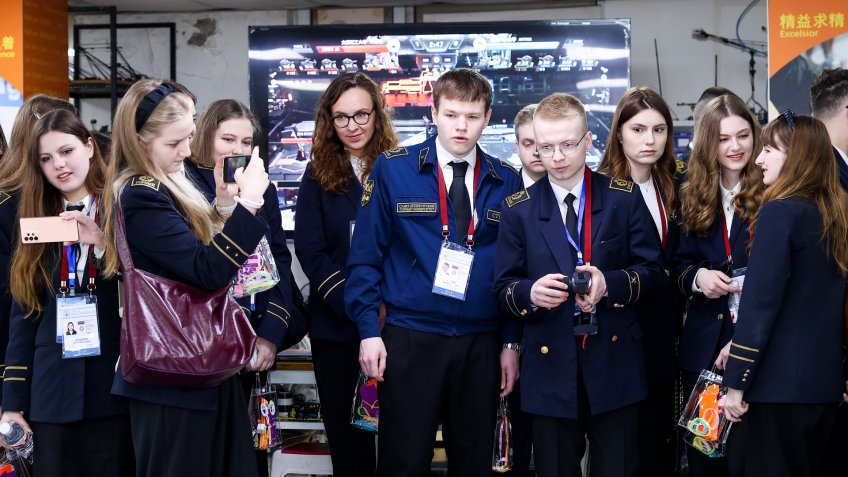
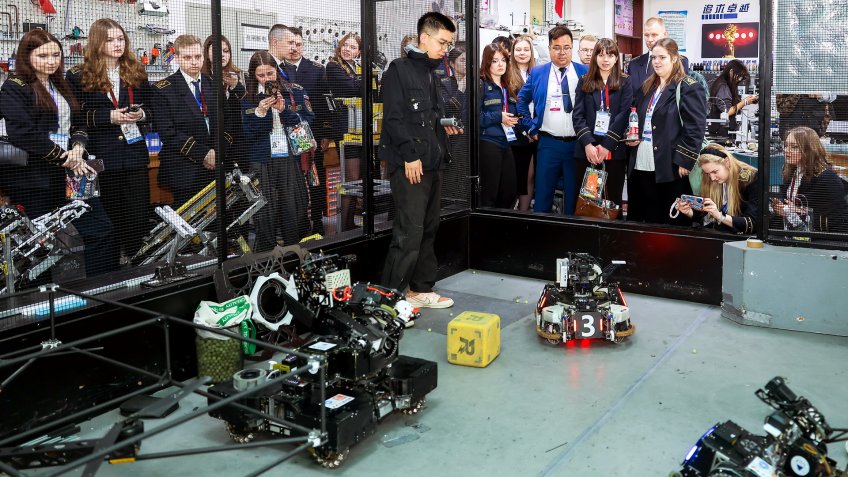
During the period from April 29 to May 13, 2026, a delegation from Empress Catherine II Saint Petersburg Mining University participated in the international short-term educational program for acquiring supplementary competencies titled "Scientific and Technological Development in the Sphere of Energy Security," hosted by Taiyuan University of Technology.
Founded in 1902, the university is ranked among the first three national universities in China and is an active participant in prestigious state initiatives, including "Project 211" and the "Double First-Class University Plan." TYUT delivers educational programs across 9 disciplinary fields: engineering, natural sciences, economics, law, education, humanities, management, art, and interdisciplinary sciences.
During the internship, the guests participated in several conferences and forums for exchanging best practices in the fields of safety, mining, and chemical engineering, and thoroughly familiarized themselves with the university's infrastructure and scientific research.
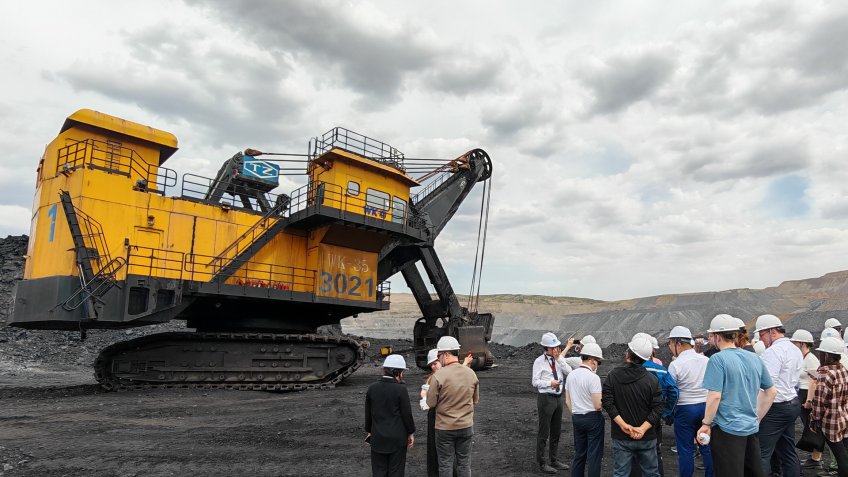
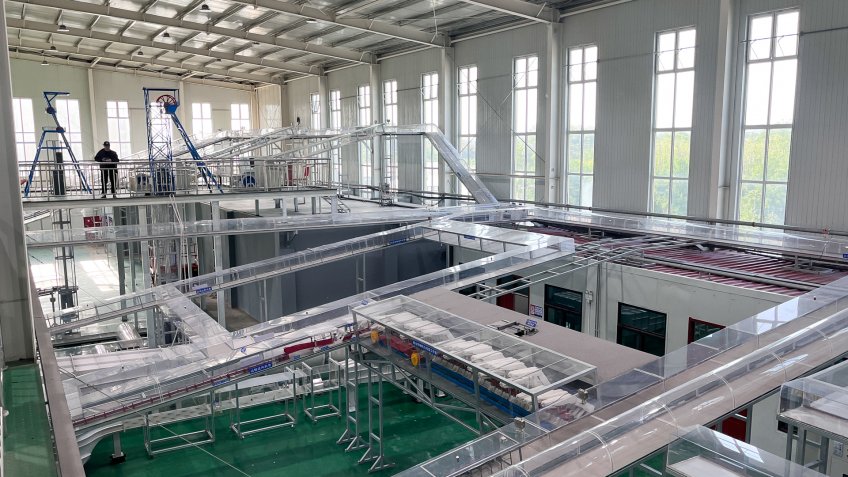
However, the pivotal events of the program were the technical site visits to industrial enterprises: the valve and actuator plant Yangquan Valve Technology Co; the smart mines and laboratories of the Shan Gong Zhi Quan Institute of Entrepreneurship and Innovation; the coal mining enterprise Shanxi Linxian Huaye Coal Industry Co; the "Antaibao" open-pit coal mine; Xiang Ming Intelligent Control, a company that develops and implements intelligent systems at mining enterprises; Shanxi Hong’an Technology Co, a pioneer and major supplier in the field of mine rescue system development in China; the Huawei subsidiary in the city of Taiyuan; and the heavy machinery manufacturer Taiyuan Heavy Machinery Co.
In evaluating the outcomes of the trip to the PRC, the St. Petersburg miners are analyzing the educational, scientific, and production activities, which collectively form an integrated system for training engineering personnel. Much of this resonates with the Russian approach, yet there are also clear differences. The instructors and students of the Mining University filter the incoming information, isolating specifically what they plan to implement in their own work.
Andrey Lebedev, Assistant at the Department of Organization and Management:
«The business trip provided me with a unique opportunity to immerse myself in the practical execution of 'circular economy' and 'digital economy' strategies. What is particularly valuable is that the Chinese approaches to the closed-loop economy are not merely theoretical models, but are actively implemented at the level of specific production lines, ranging from processing coal waste into high-purity kaolin to injecting CO₂ into reservoirs, utilizing intelligent coal mining systems, and introducing advanced artificial intelligence-based technologies into the production process.
From a pedagogical perspective, the practical training model proved highly interesting, where the instructor acquires and updates industrial experience by undergoing regular training at partner enterprises. This is one of the key elements that could make a significant contribution to the educational process, since it is vital for future engineers of the mineral resources complex that the lecturer shares authentic practical knowledge and cutting-edge industrial experience.
It is advisable to utilize the materials we collected during our visits to industrial enterprises when updating the practical content of the disciplines 'Production Organization and Management' (as Lean Production principles are applied at all plants) and 'Management of Innovation Projects' (studying trends in the development of energy and chemical engineering), as well as when developing specialized courses for planned supplementary professional competence programs in 'Circular Economy'.
I plan to include video and photographic materials demonstrating the operation of an electric excavator and the loading process of an open-pit dump truck in my classes with students, in order to analyze the efficiency of replacing diesel machinery with electric equipment. Materials on the deployment of photovoltaic modules, stations, and wind generators at industrial and mining sites will be useful for evaluating the economic feasibility of autonomous hybrid power systems in remote territories and calculating their payback periods. Incorporating Carbon Capture, Utilization, and Storage (CCUS) into the curriculum—specifically the cost analysis of capturing, injecting, and storing CO₂ in coal seams—will enable the assessment of economic incentives (carbon credits, tax incentives) in China and the possibilities of their adaptation in the Russian Federation. Furthermore, it seems advisable to study the Chinese approach to the circular economy—namely, the business models for processing coal waste rock into building materials, kaolin, and 'cloud stone,' as well as the economics of membrane water treatment and the extraction of valuable fractions.
According to the Assistant at the Department of Organization and Management, the integration of the aforementioned materials and approaches can enhance the qualifications of both lecturers and graduates, update the content of training courses, and identify new scientific and engineering challenges in the fields of the circular economy and alternative energy.
Arina Kildyusheva, a student at the Department of Automation of Technological Processes and Production:
«During the internship, I observed how the interaction between the university and real production is structured through long-term agreements on mutual data transfer, how training grounds and VR laboratories operate to train qualified personnel without subsequent risk to life, and how training centers based at the university are organized with large mechanized complexes. I realized that a modern automation engineer must understand not only electronics and programming, but also the physics of combustion, psychophysiology, and even the basics of biology, since predictive control systems require a comprehensive understanding of the technological process ranging from combustion chemistry to human behavior in a hazard zone.
Every day of our training in China provided me with a foundation for growth. For instance, as part of our introduction to the social life of the PRC, we visited a residential care facility for the elderly, where smart beds monitor the patient's condition during sleep and predict the likelihood of falling from the cot, and a specialized corridor is equipped with educational games designed to maintain the sensory and intellectual capabilities of the residents. This compelled me to think about the necessity of implementing such technologies not only in everyday life but also in the production environment.
Visiting real enterprises always leaves a profound impression on students. How will this affect my future professional development in the field of automation? The example of a smart mine, where human presence is reduced to a minimum, and all processes are monitored remotely, demonstrated to me the objective that I must strive for in my work. This includes the active implementation of digital and physical twins, optical sensors for dusty environments instead of traditional cameras that suffer from external glare and lens contamination, and predictive control systems. The acquired knowledge expanded my perspective: I realized that a modern engineer must consider not only production efficiency, but to an equal extent its safety and the quality of human life, whether regarding miners or elderly individuals in residential care facilities. A phrase I saw at a Chinese plant—' The safety of every individual is the foundation of a happy society'—will become my professional motto, and I will evaluate projects not only by their speed and precision but also by the reduction of human presence in the hazard zone».
Research activity is an integral component of the Celestial Empire's state strategy aimed at creating a "superpower in science and technology." This ambition is backed by an exceptionally high level of funding: in 2025, China directed 3,92 trillion yuan toward research and development (R&D), accounting for 2.8% of the country's GDP. For the first time, China's expenditures on science exceeded the average level of the OECD nations (2.8% versus 2.7% in 2025).
How is scientific research organized at the country's leading technical university?
Veronika Kondakova, Researcher at the Scientific Center for Geomechanics and Problems of Mining Production:
«The general direction of the deep transformation within the PRC's mining industry is clearly evident at each of the events visited: a transition toward high-tech production, 'smart' technologies, automation, safety assurance, and reducing the environmental footprint.
Overall, the model of organizing scientific activity at Taiyuan University is built upon a practice-oriented approach and active interaction with industry: from their very first undergraduate years, students, master's students, and postgraduates join scientific research teams and are involved in real-world projects; key laboratories and research platforms receive stable financial support to solve applied tasks. They act as a bridge between fundamental science and industrial implementation.
What impressed me the most were the key laboratories based at the university. They receive state status, expansive facilities, and a substantial staff, which clearly distinguishes them from standard university labs. Such units operate effectively as scientific research institutes. Their activities are highly structured, and their lines of work fully align with the objectives of the industry: automation, 'green' technologies, safety enhancement... The results are immediately implemented into production, which drives forward the economy, science, and education alike.
I was highly interested in the approach to laboratory testing. The Chinese do not attempt to excel everywhere at once. Thus, the laboratories of the mining faculty and the safety faculty are narrowly specialized and provided with expensive equipment designed to solve specific scientific problems. Many rigs are aimed at the physical modeling of only one, yet critically important, process. For example, modeling the strength of pillars through the simultaneous testing of up to 5 specimens; studying the tensile strength of rock bolts under varying temperature and pressure conditions; a rig for modeling coal gasification, as well as CO₂ sorption and desorption; modeling dynamic vibration loads; modeling the gas saturation of coal and rock permeability (with a sample diameter of 60 cm); and determining uniaxial compressive strength under varying temperature conditions for geothermal environments.
Furthermore, TYUT not only purchases equipment but also creates its own. Using the State Key Laboratory of Intelligent Technologies and Mining Equipment as an example, we were taught about the existing practice of developing and manufacturing large-scale equipment based on designs created within the university walls, which is then tested by the laboratory and can subsequently hold commercial potential for market sale».
Anastasia Glumova, Postgraduate Student at the Department of Mineral Processing:
«The scientific environment that we had the opportunity to become acquainted with during the internship is organized around stable research teams that unite departments, key laboratories, and industrial partners. The work is carried out not by isolated researchers, but by multi-tiered groups that bring together professors, associate professors, mid-level researchers, postgraduates, and engineers.
For instance, within the 'Mining Engineering' field of study, the faculty includes: 1 Academician of the Chinese Academy of Sciences, 3 laureates of the National Science Fund for Distinguished Young Scholars, 2 laureates of the Excellent Young Scientists Fund, 22 professors, 21 associate professors, and 23 instructors. Ninety-eight percent of them hold a PhD degree. The average age distribution is balanced: approximately 31% are under 35 years old, 32% are between 35 and 45 years old, and 37% are over 45 years old.
As part of the internship, we participated in the International Forum on Energy Security Technologies and Development—a joint event organized by Empress Catherine II Saint Petersburg Mining University and Taiyuan University of Technology. The objective of the forum is the exchange of scientific experience between the two universities and the creation of a collaborative foundation for training postgraduate students in the fields of mining engineering, energy, and materials science.
For me, the report by postgraduate student Zhang Shuxin, dedicated to the development of an intelligent analyzer for flotation tailing coal slurries, was particularly important: the device captures hyperspectral images of the slurry and sediment surfaces in real time, subsequently predicting coal ash content and detecting structural losses. This research is highly relevant for our exchange of best practices, as my own doctoral dissertation research is focused on the application of hyperspectral imaging to evaluate the quality of mineral raw materials. Following the conference, I had the opportunity to personally visit my colleague’s laboratory to examine the active experimental rig and the camera—a Hikvision DS-2MS8124-FL25 near-infrared (NIR) hyperspectral camera, which serves as the core measuring element of the system. During our discussion, I was able to learn the methodological and analytical aspects of the work in detail, which can be directly integrated into my own research.
Directly within my own scope of work, the outcomes of this internship can be utilized when updating training courses in mineral processing, industrial safety, geotechnology, and automation; when developing practical case studies on the intelligent control of technological processes; when designing research frameworks at the intersection of analytical methods, digital monitoring, and raw material processing; and when discussing the modern layout of a 'smart mine' and the transition of the mining industry toward intelligent and low-carbon technologies with students. It is precisely this applied translation of observed practices into teaching and science that makes the internship substantively meaningful».
The practical value of any internship always consists in isolating the rational kernel from the vast mass of new information—that which "carries life and can yield new growth." Applied to the university, this refers to material that can be directly or indirectly adapted both in scientific research and in pedagogy.
A distinguished delegation from Taiyuan University of Technology met with the leadership of Empress Catherine II Saint Petersburg Mining University. The main agenda of the meeting was the creation of a joint educational institution that will train engineering specialists for both countries.