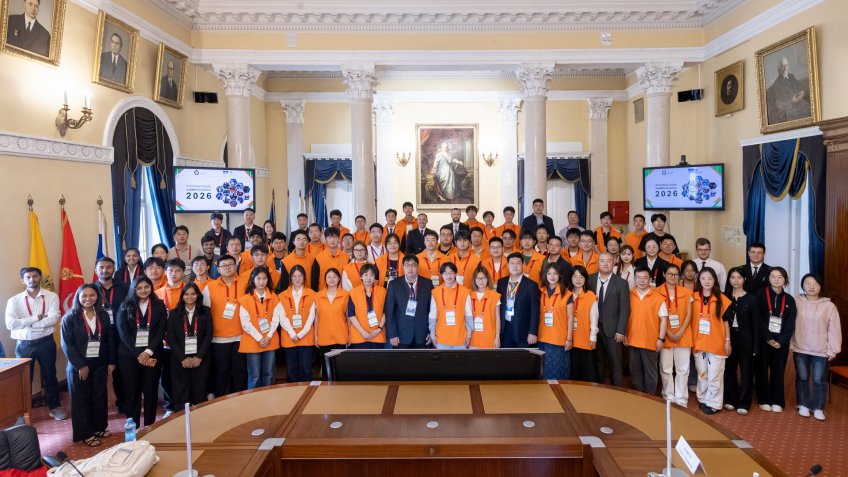
The international Summer Schools have concluded at Empress Catherine II Saint Petersburg Mining University. This is already the eighth season in the history of the project, which is addressed to future specialists of the mineral resources complex. Such a format allows for the organic combination of academic knowledge, real-world production practice, recreation, and an introduction to the rich culture of the Northern Capital. The program is overseen by the International Competence Centre under the auspices of UNESCO.
The project launched in May; over two and a half months, the university hosted approximately 400 Russian and international students from 22 universities, including from India (two Indian Institutes of Technology in the cities of Kharagpur and Guwahati) and the PRC. Representatives from 10 universities across six cities arrived from China: China University of Petroleum, China University of Geosciences (Beijing), China University of Petroleum and Shandong University of Science and Technology (Qingdao), Nanjing University (Nanjing), Tianjin University (Tianjin), Taiyuan University of Technology (Taiyuan), and Anhui University of Science and Technology (Anhui).
The geography of the Russian participants spanned the entire country: from Chechnya to Magadan. Among the guests were Almetyevsk Technical University, Transbaikal State University, Southwest State University, Millionshchikov Grozny State Oil Technical University, and seven other universities. For the first time in 2026, the Far East joined the project — Pacific National University.
- At the Scientific Center for Processing Mineral and Technogenic Resources, we had the opportunity to observe some experiments, in particular, an installation for the production of needle coke. For me, as a specialist in thermal power engineering, where there is more emphasis on physics, all of this was very interesting and informative. I would specifically highlight the scientific research equipment that I saw. The opportunity to experiment and engage in science is actively supported here, which is highly valuable. This provides students not only with theoretical knowledge but also with the practical experience necessary for future work, - shared Sofya Orlova, a second-year master's student at the Moscow Power Engineering Institute.
Specifically for the Summer Schools, leading specialists of the Mining University developed 11 unique educational programs, 7 of them in English. Each lasted two weeks and was dedicated to current trends — from oil and gas geology to sustainable energy. Alongside traditional programs — "Modern Mining Technologies" and "Mining Machinery and Equipment" — participants were offered entirely new topics: advanced drilling methods, chemical technologies for raw material preparation, and the fundamentals of raw material sciences.
For the second year in a row, the Mining University welcomed young men and women from the new regions — the DPR and LPR (Donbas State Technical University, Donetsk National Technical University). They were the first participants of the 2026 Summer Schools.
- We have many mines and factories in a ruined state. If they are brought back into operation and developed, the region will flourish again. At my university, we have few practical classes because the equipment is mostly old. At the Mining University, there is no problem with this — all the classrooms are excellently equipped. I am also satisfied with the program structure: the materials science we studied here is very important for understanding tool selection, and this will be useful to me in my profession. We tried quenching, annealing, and heat treatment of steel. There was also an opportunity to broaden our horizons in terms of software control. I really liked the heavy machinery simulators, - recalls Mikhail Shishlov, a third-year student at Donetsk National Technical University.
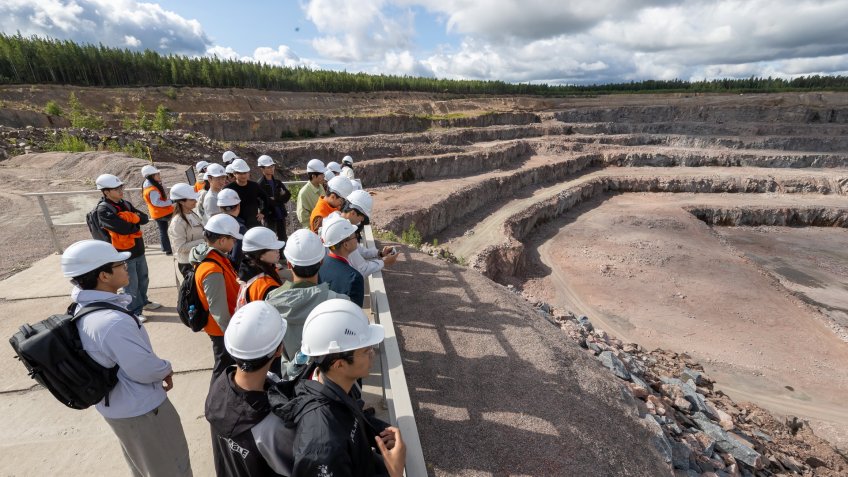
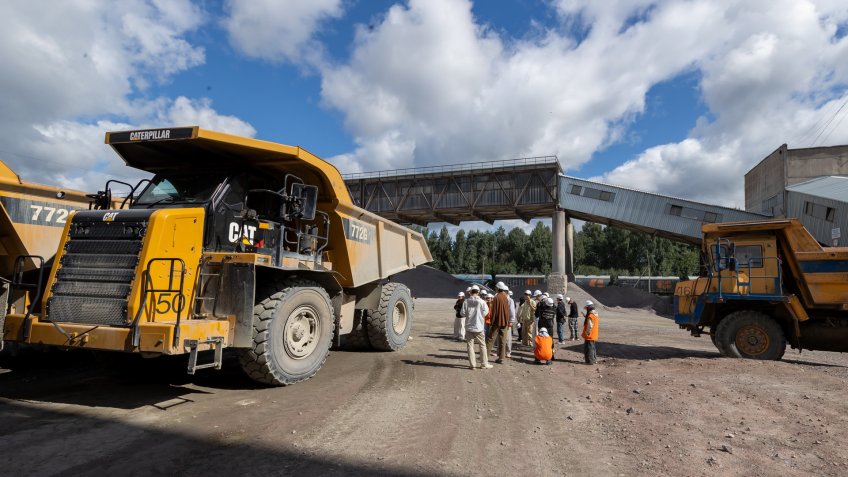
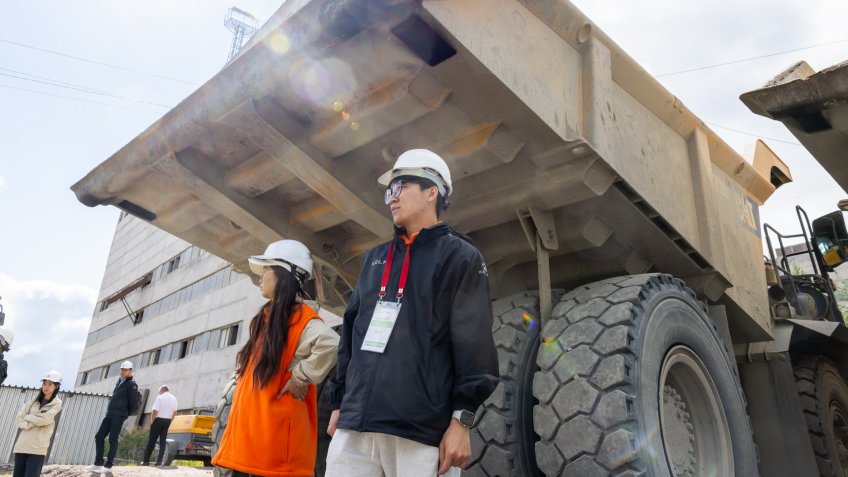
As part of the Summer Schools, the young people not only worked on high-tech equipment and listened to lectures from leading professors and scientists, but they were also able to gain an understanding of how leading organizations and industrial sectors operate in Russia. The students visited the largest industrial enterprises in St. Petersburg and the Leningrad Region: the Kirov Plant, Power Machines, Vyborg Quarry Management, the Kartex Izhora Plant, the Gazprom Neft Digital Transformation Center, and Alfa-Horizon.
Participants of the "Intelligent Control Systems" program traveled to the Gazprom Neft Digital Transformation Center and Gazprom Neft Industrial Innovations, where they were able to present their own technological solutions. The Mining University's own training grounds also hosted the guests — the geodetic training ground in Kuzmolovo, the drilling training ground in Sablino, and the Kavgolovo educational base in the Leningrad Region.
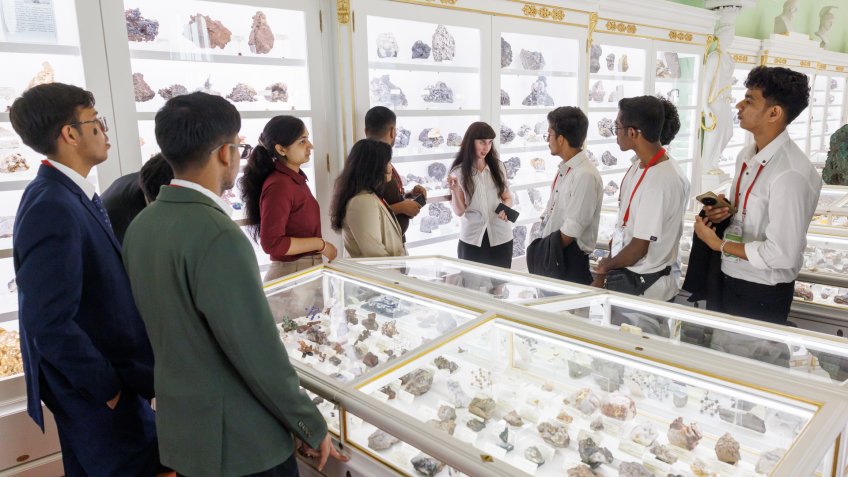
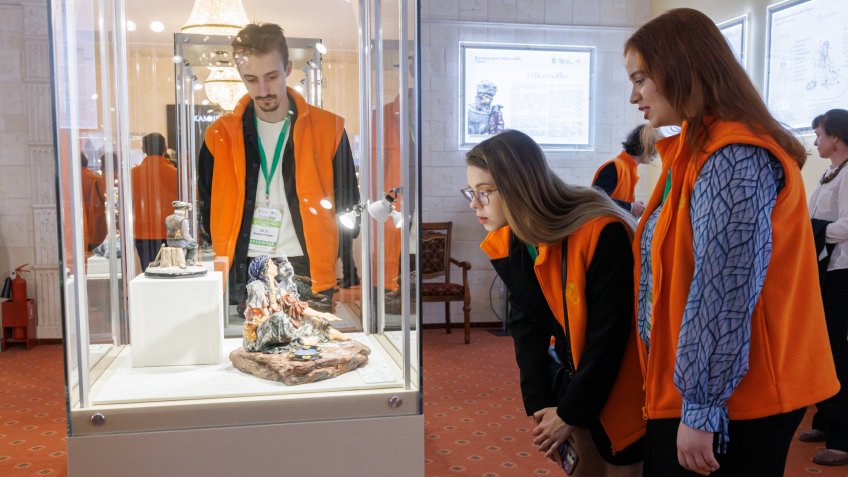
The Summer Schools were complemented by keynote lectures, sporting events, and intellectual quizzes, where students from different universities and countries not only tested their knowledge but also became more deeply acquainted with the history of St. Petersburg and the Mining University, and learned interesting facts about outstanding Russian scientists.
All educational programs were selected taking into account the students' background and interests. For example, the English-language program "Well Drilling Technology and Technique" was organized for Chinese geology students. To start, the third-year students underwent a "basic training course" in drilling: they attended lectures on occupational health and safety, equipment and tools, and the physical-mechanical properties of rocks.
- This is necessary because, in their home country, the students choose different modules as part of their curriculum. Because of this, their level of preparation varies significantly. A short but comprehensive intensive course helped us standardize their foundational knowledge and prepare them for further work. Next, the students independently prepared drilling fluids, measured their parameters using instruments, and studied well cementing technologies. Also, one of our postgraduate students conducted classes on directional drilling, where they disassembled double-tube core barrels on test benches, - explained Vyacheslav Kadochnikov, Assistant at the Department of Well Drilling and the program curator.
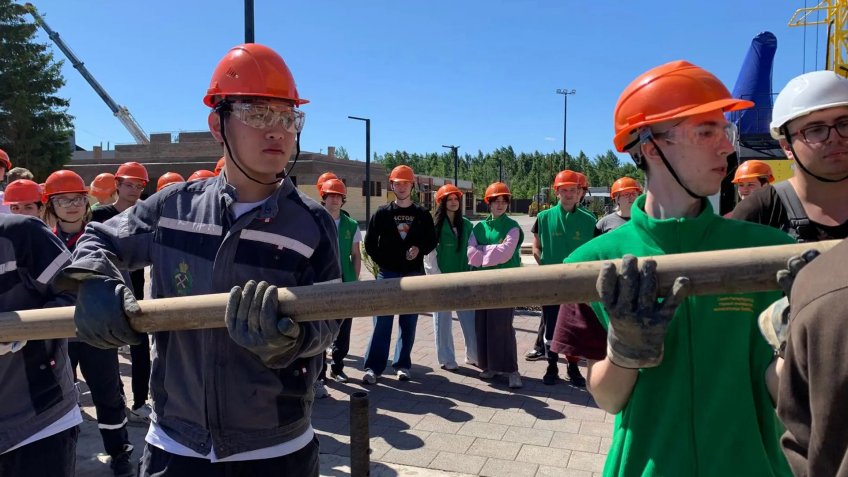
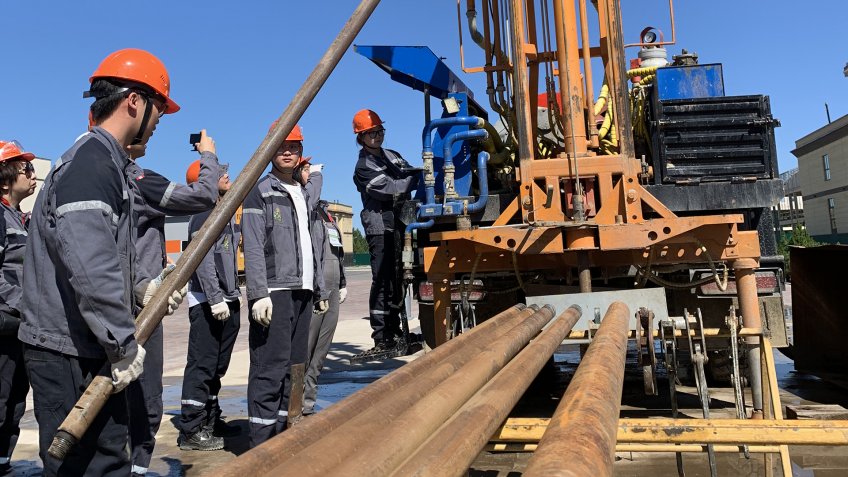
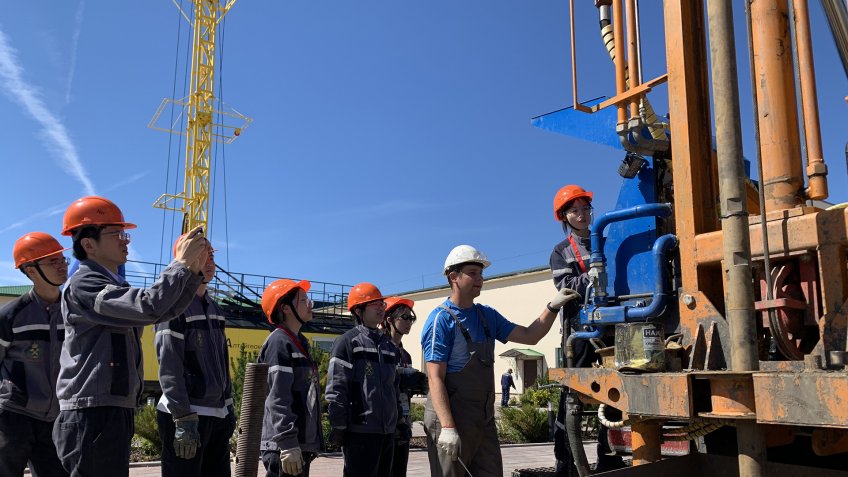
The main emphasis of the training was placed on practice. The students spent three days at the Sablino training ground — a unique site where a model of a real deposit is recreated: vertical and horizontal wells hundreds of meters long have been drilled.
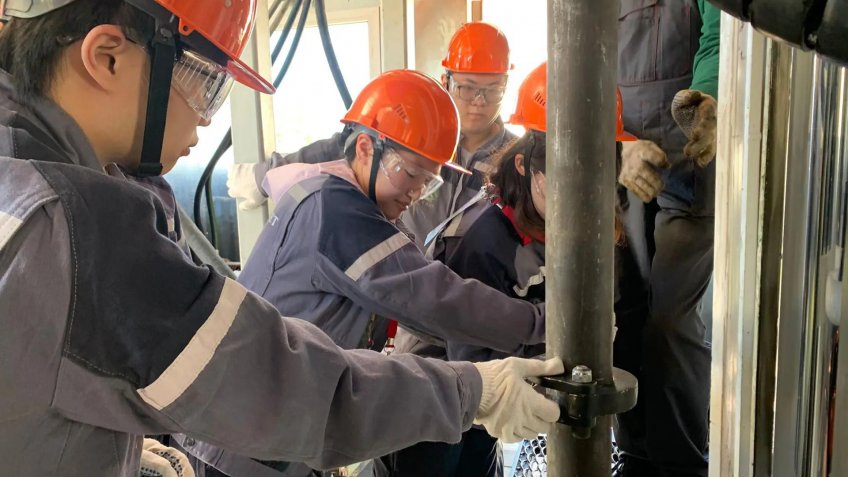
Qualified personnel work here, gladly passing on their knowledge to the youth. There are no similar training grounds in Chinese universities, so this experience was invaluable. The third-year students mastered the functions of assistant drillers, performing the basic tasks necessary to support the operator. And even, under the supervision of instructors, they tried to operate the rigs independently. Together with the students, the teachers dismantled and assembled equipment, carried out tripping operations, and engaged in the assembly and disassembly of drill string assemblies.
- The students from the PRC have a very strong theoretical foundation, but they acutely lack applied skills. Actually, this was the main goal of their internship. They were amazed by the simplicity and reliability of the engineering solutions underlying our rigs. Many of them were developed back in Soviet times; they are simple and reliable. The sight of the elevator catching directly onto the pipe body, rather than a groove, and the winch sliding along the pipe, lifting the stand, brought them to absolute delight. One of my trainees admitted to me: 'In these three days in Sablino, I understood more than in three years of study, - recalls Vyacheslav Kadochnikov.
Jing Pengyuan is a third-year student at the China University of Geosciences (Beijing), studying engineering geology, rock mechanics, and soil stability. This is his first international summer school, and according to the young man, it exceeded all his expectations.
- Although drilling is not my main specialization, this course proved to be an extremely useful addition to the theoretical foundation I received in China. Our education is strongly focused on theory and constant examinations and tests. In Russia, however, there is a much greater emphasis on practical work and live experience in laboratories with instruments and at training facilities. I am still impressed by the trip to the Sablino training site, where I was able not only to observe engineers at work, but also to practice independently. The university administration pays great attention to students’ living conditions. The apartment-style dormitories are very comfortable for living. Everyone here wears a uniform — a symbol of belonging to the oldest technical university. It is very beautiful and outwardly resembles a military uniform. This tradition is very proper, as it instils discipline and a sense of unity.
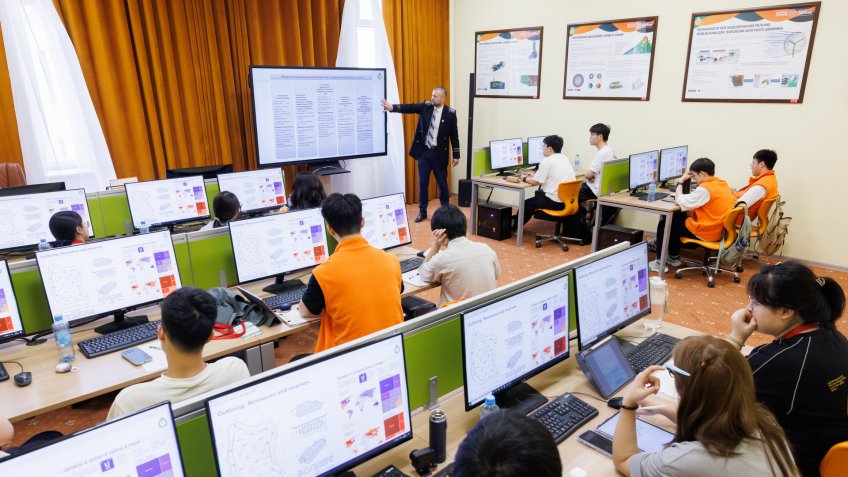
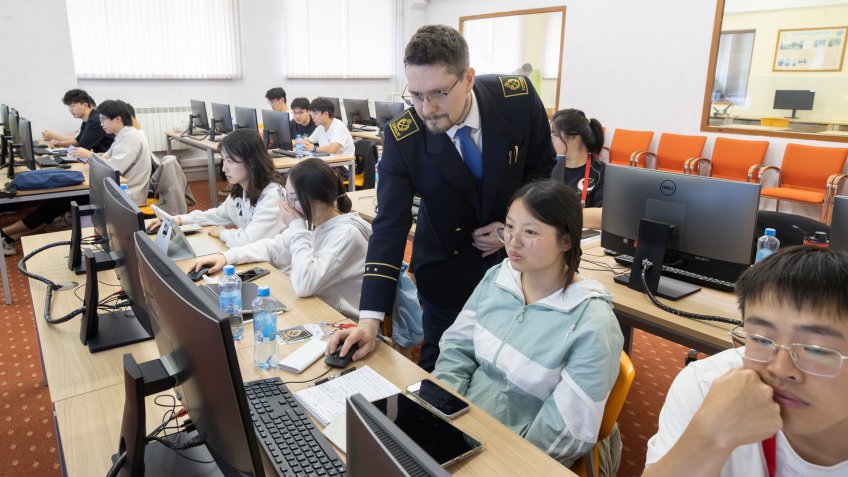
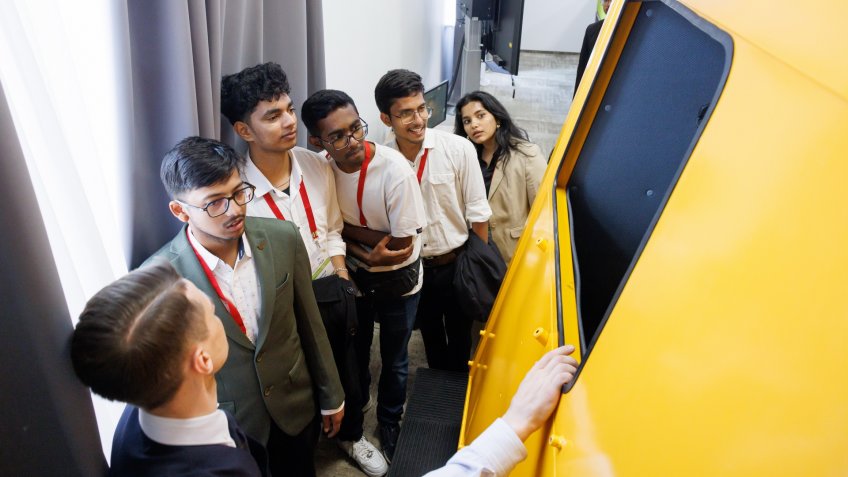
Ding Xin from Taiyuan University of Technology specializes in safety engineering and materials synthesis, but is also keenly interested in artificial intelligence. That is why she chose the program dedicated to digital technologies in mining. Most of all, she said, she wanted to work on simulator trainers and feel how large mining machines operate. Divided into subgroups, the students modeled elements of open pits, deposits, and hydraulic systems, and learned to apply digital twins in the mining industry. Wearing virtual and augmented reality headsets, they independently added objects into augmented reality.
- I really liked the course because of how intensive and varied it was: there was no ‘fixation’ on just one topic, and we managed to cover many areas. The lessons using VR and AR headsets were especially memorable. We had not had such an experience at our university. The instructors were very friendly and attentive, making sure that everyone moved at the same pace and that no one fell behind. This was unusual, because at our university the approach to learning is more competitive, - says Ding Xin.
Shreysi from the Indian Institute of Technology also shared her impressions of the Summer Schools:
- What I enjoyed most about the Summer School was the virtual reality experience of offshore oil and gas production, because it gave me a realistic understanding of offshore work and marine operations. I also particularly remember the gemological laboratory and the excursion to Sablino. Like any engineer, I need to continually reinforce theoretical concepts through real-world observations. The Mining University maintains a balance between theory and practical training, which is important. The knowledge and practical experience I gained here will be very useful in my future internship and career, especially when applying for positions in geophysics and energy.
According to the project curators — the International Competence Centre for Mining Engineering Education under the auspices of UNESCO — following the training, many universities have already submitted new applications to the Mining University to continue cooperation throughout the year. In September 2026, two programs are planned for universities in Russia and China.
- In addition, Indian and Chinese partners have expressed interest in expanding cooperation: they are not only ready to host our students and faculty members on return visits to participate in short-term educational programs, but also intend to develop cooperation in other areas of joint academic mobility, - clarified Valeria Starshaya, Leading Specialist of the UNESCO Centre.
As Vice-Rector for International Affairs of Empress Catherine II Saint Petersburg Mining University, Evgeniy Lyubin, emphasized at the closing ceremony, the main goal was not only to provide specialized knowledge, but also to demonstrate Russia’s hospitality, history, and culture, and to introduce the guests to the landmarks of the “Northern Venice.” He called on the students to continue cooperating with the Mining University in the future by participating in joint research and writing scientific articles.