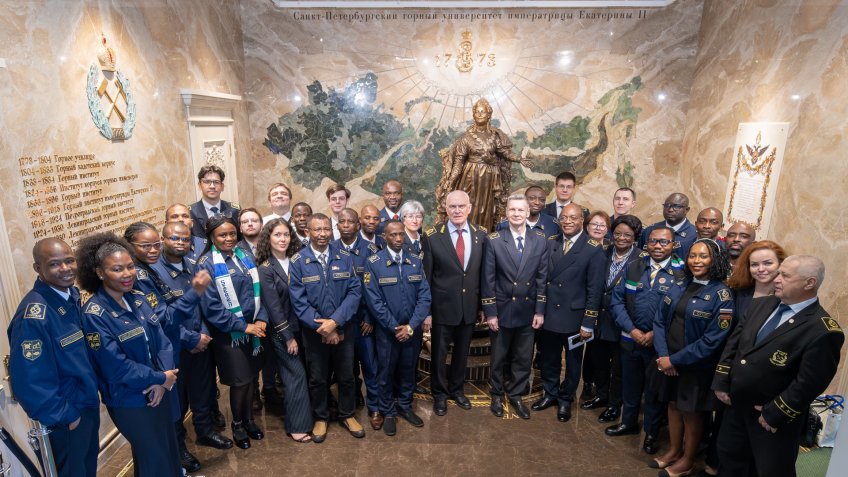
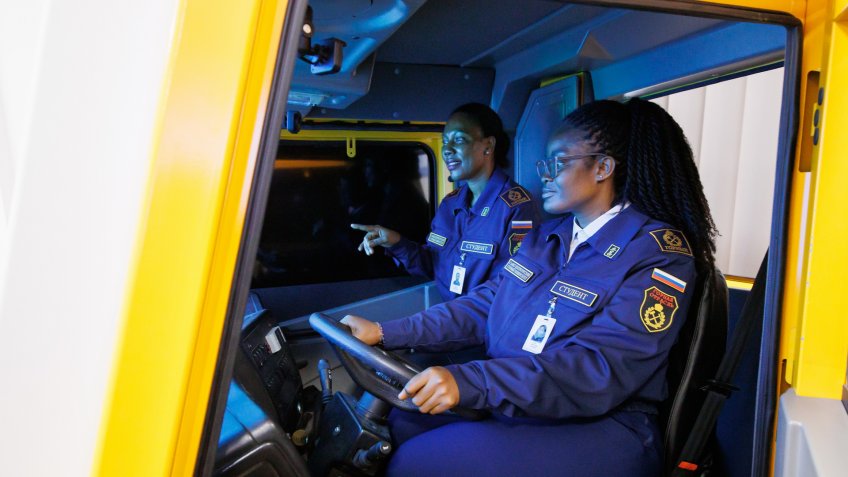
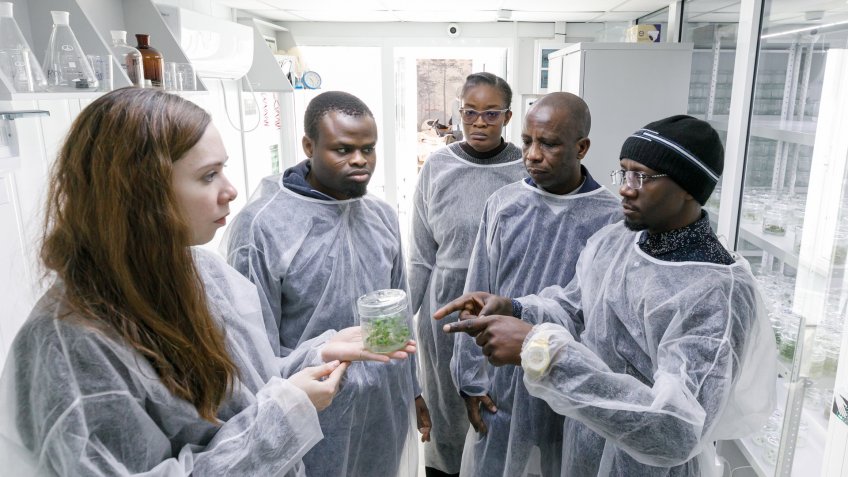
Diplomas were awarded at Empress Catherine II Saint Petersburg Mining University to the first graduates of the international MBA educational program “Management of Subsoil Use Facilities.” The project participants are middle- and senior-level executives of government bodies, sectoral companies, and scientific and educational institutions of the mineral resources complex from countries of the African continent.
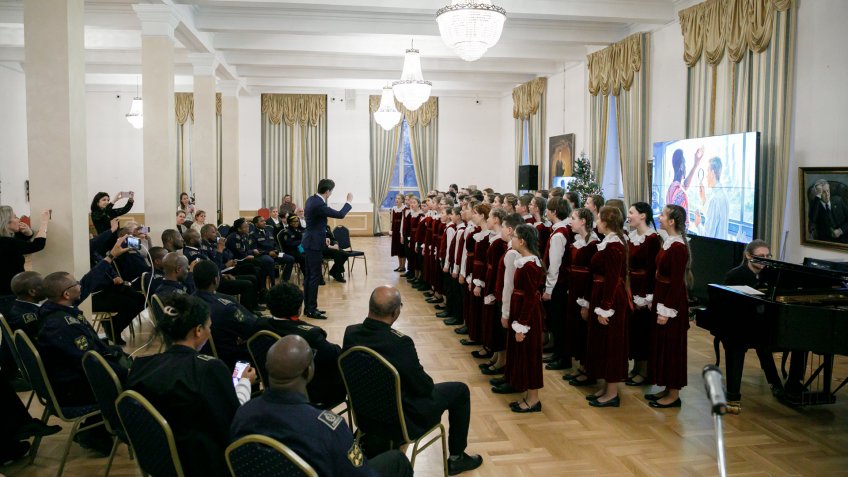
Opening the solemn ceremony, Rector of Empress Catherine II Saint Petersburg Mining University, Professor Vladimir Litvinenko, emphasized the acute relevance and distinctive features of the program:
«Mineral resources are the principal natural capital possessed by virtually all African countries. Transforming this capital into social capital and then into tangible capital is the direct task of the state, and in addressing it, the state must rely on its own national personnel potential. It is this potential, and only this potential, that will work for its own country and its economy. Today, when the continent’s relations with subsoil users are, for the most part, based on concessions, changing the established approach is extremely difficult. It requires tremendous efforts from those who understand the advantages of working with the subsoil through administrative and legal regulation. Today, the graduates of our program do not simply represent individual countries. They are a community of mining engineers around whom a new worldview must take shape. It will be fundamentally different from the beliefs of the leaders of foreign countries who come to your homeland solely to make money».
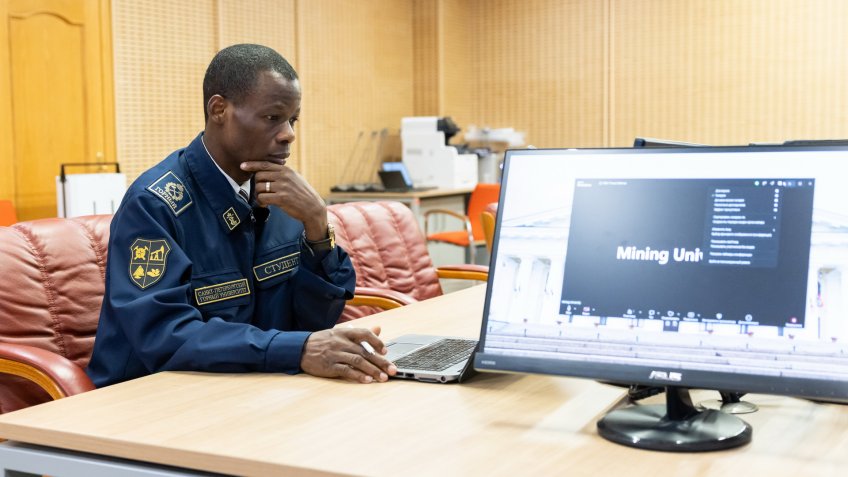
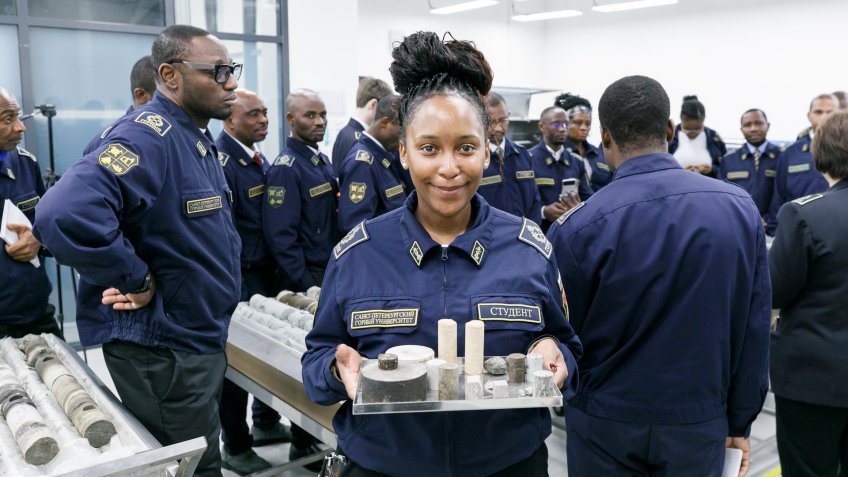
The project participants received professional retraining documents conferring the qualification of Master of Business Administration (MBA) in the field of Management of Subsoil Use Facilities. This means that within the walls of the university, they became high-level managers who understand what a subsoil use facility is and how it should be managed from the perspective of the state’s objectives.
The one-year program was first launched by the university with the support of the International Competence Centre for Mining Engineering Education under the auspices of UNESCO in September 2025. Twenty pre-selected specialists from seven countries came to the city on the Neva: the Republic of South Africa, the Federal Republic of Nigeria, the Republic of Sierra Leone, the Republic of Sudan, the Republic of Mali, the Republic of Niger, and the Republic of Burundi.
The goal of the training is to develop competencies in two blocks.
The technological block includes geology, exploration and assessment of deposits, digital technologies, oil and gas engineering, mining, mineral processing, metallurgy, industrial safety, and ecology.
The management block covers the economics of subsoil use, corporate finance, international reporting standards, legal regulation, risk management, lean production, and sustainable development.
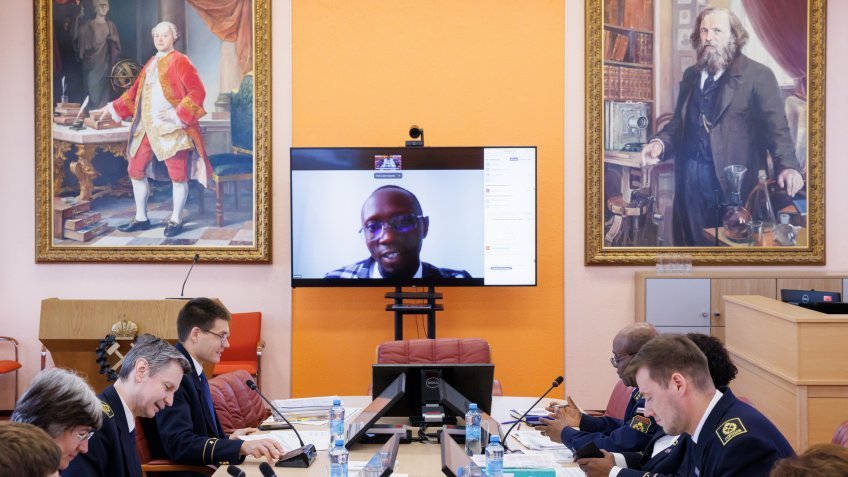
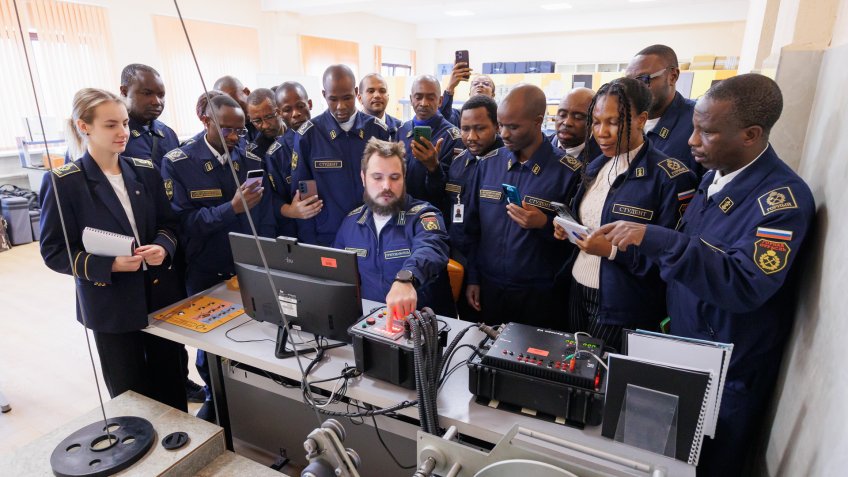
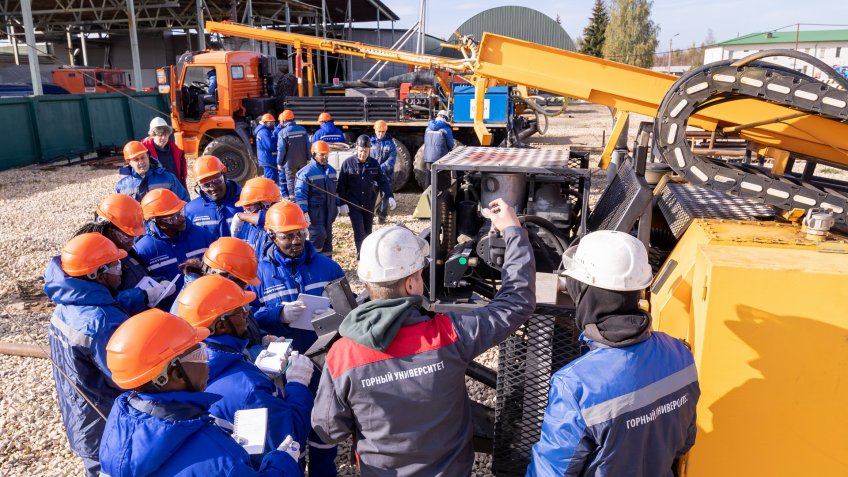
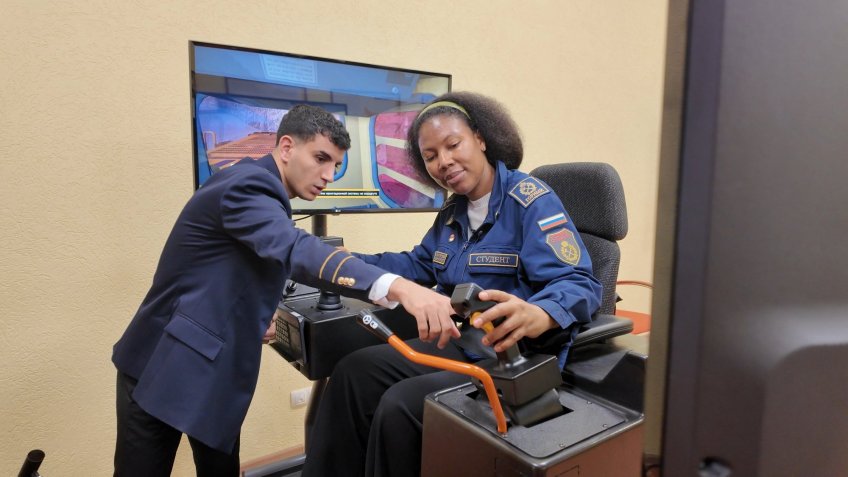
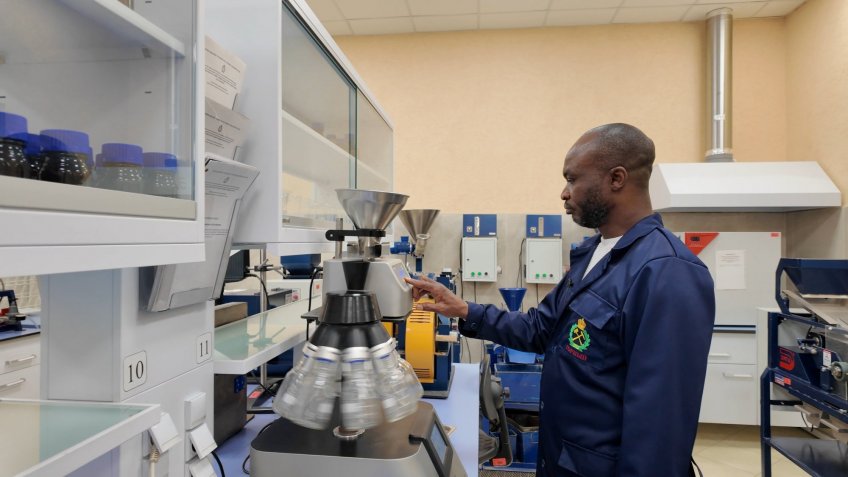
The educational component was structured on a modular basis and provided for 864 classroom hours. Twice as much time was allocated to practical training — internships at production facilities, in laboratories, and at the university’s training and research sites.
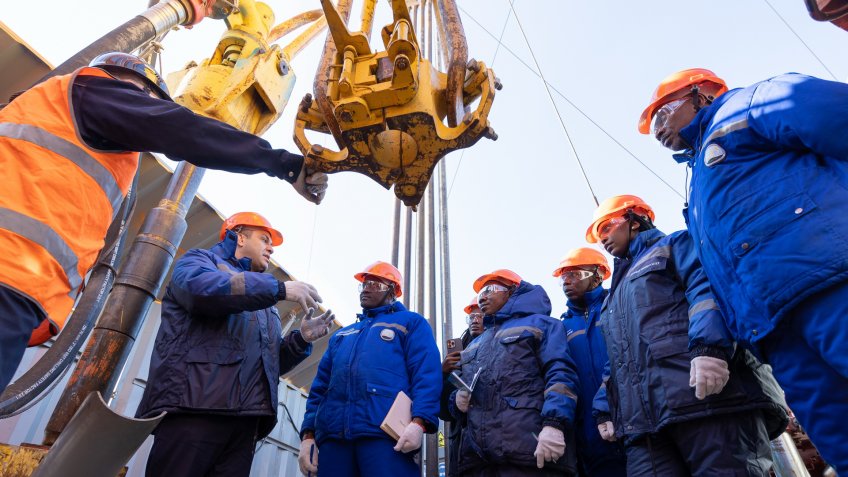
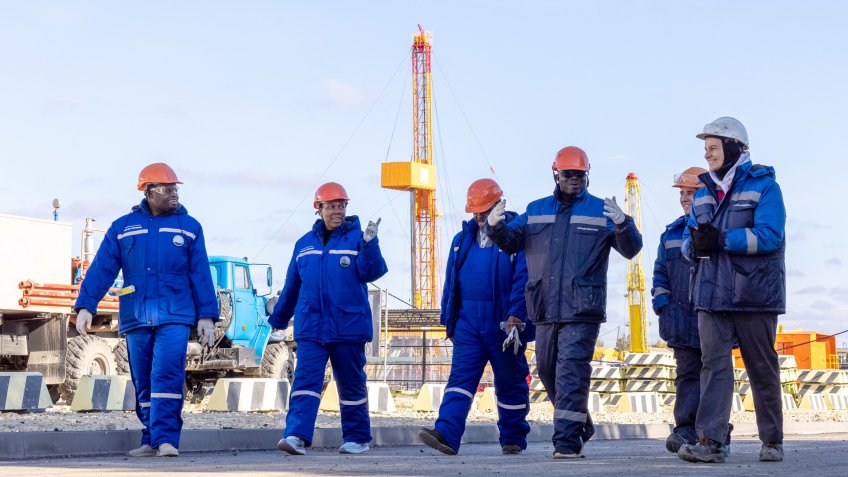
Geophysical training took place at the Kuzmolovo facility, while drilling training was held at the Sablino training site. These facilities are equipped with equipment corresponding to real production conditions, which makes it possible, for example, to practice exploration and drilling skills without risks to industrial safety.
However, the project went far beyond the educational program. Trips and contacts with heads of mining companies, as well as meetings with senior officials who shared their professional experience, were organized for the participants.
In addition to the opportunity to become acquainted with the cultural heritage of Saint Petersburg, the students had a chance to visit the capital of Russia. The trip to Moscow included visits to the Ministry of Energy of the Russian Federation, the Vladimir Vernadsky Geological Museum, the Aprelevka Branch of VNIGNI — the largest core storage facility in Russia — the Zyfra Group, a company specializing in software development and digital technologies, and the Rossiya Segodnya International Media Group.
A week-long internship in the Republic of Tatarstan was included as a separate item on the training agenda. This is where the headquarters of Tatneft are located, along with the Romashkinskoye oil field — the second largest in Russia and the thirteenth largest in the world in terms of reserves — as well as Almetyevsk State Technological University “Higher School of Petroleum”.
In addition, the participants completed an interactive course by former Austrian Foreign Minister Karin Kneissl on “The Continuing Scramble for Africa”.
Taken together, all of this made it possible not merely to gain a general understanding, but to form a holistic worldview among a new generation of mining engineers.
Immediately before the diploma award ceremony, in his welcoming remarks, the Rector of the Mining University wished the graduates every success in finding worthy application for the knowledge they had acquired.
With what goals and plans are the specialists returning home after a year of study?
Adamasira Jalloh, Geologist at the Directorate of Mines of the National Minerals Agency of Sierra Leone:
«I had the honour of meeting incredible professionals who became true mentors for all of us. I am immensely grateful to them. Empress Catherine II Saint Petersburg Mining University became a place to which we would like to return again and again. As part of the course, I acquired both technical and managerial skills that will help me conscientiously fulfil my professional duty in my homeland. First, I will use this knowledge as an important tool for serving my country and protecting our subsoil. Second, the project gave me tremendous life experience, which I intend to pass on to others. I plan to apply the knowledge I have gained to train young specialists in natural resource management».
Issaka Neino Mamane Mousbou, Head of Department at the Environmental Supervision Service of the Ministry of Mining of the Republic of Niger:
«During my studies at the Mining University, I understood why it is Russia’s first technical university not only in terms of history, but also in terms of prestige. The degree of seriousness and motivation shown by the instructors in transferring high-quality knowledge is the foundation of this university. The program in subsoil management must be developed and supported at the highest level. The skills acquired will be invaluable to me at every stage of mineral extraction projects. In my work at the sectoral ministry, this knowledge will enable me to effectively oversee foreign mining companies operating in our country».
Aloys Sibomana, Inspector at the Technical Inspectorate of Mines, Quarries, and Oil and Gas Fields of the Ministry of Water Resources, Energy, and Mining of Burundi:
«I acquired knowledge in sustainable mineral resource management, as well as in the planning and administration of mining projects. I also gained skills in analyzing geological and mining data, assessing resources, managing risks, making decisions, and working in teams. As an inspector of mines, quarries, and oil and gas fields at the ministry, I intend to apply these advanced methods in my practice to improve control, inspection, planning, and management processes at sectoral enterprises».
Goita Boniface, Mining Economics Specialist at the National Directorate of Geology and Mining of Mali:
«Contrary to widespread opinion, Russia is a country that highly values peace and sovereignty. Life here is pleasant and comfortable. Empress Catherine II Saint Petersburg Mining University is one of the best educational institutions where I have studied. The Management of Subsoil Use Facilities program allowed me to discover entirely new horizons. In particular, it helped me develop business management skills and understand that data management is an integral part of any work in the field of development. Upon my return, I plan to engage in research in order to contribute to the collection of data that can serve as a basis for decision-making».
Okoyokwu Michael Attah, Geologist at the Mining Inspectorate of the Ministry of Solid Minerals Development of Nigeria:
«The management courses, in which we studied human resource management, project management, risk management and sustainable development, as well as mineral marketing, became a source of new and exceptionally important information for me. I became familiar with management theories and analysis that had previously been completely unknown to me. As a senior official at the ministry, I will use the knowledge and skills I have acquired to analyze the current situation, assess available options, make decisions, and shape final policy in the field of mining».
Oludemi Babatope Johnson, Chief Technical Officer at the Mining Inspectorate of the Ministry of Solid Minerals Development of Nigeria:
«Russia is becoming a second home for African countries. We will forever preserve wonderful memories of Saint Petersburg and the Mining University. The quality of its instructors, combined with modern laboratories and equipment, places it first among technical universities. The professional retraining program proved to be an extremely timely step for me as a specialist. It changed my views on many areas of resource management. And now I intend to carry this worldview forward».
Nancy Musu Tucker, Geologist at the Department of Geological Surveys of the National Minerals Agency of Sierra Leone:
«The program opens Africans’ eyes to how important it is to know our subsoil and to be able to manage it. Personally, I gained a great many new skills in a wide range of areas — from effective negotiation and personnel management to policy development in the field of environmental development. The knowledge acquired will be of great importance to my professional environment, contributing to its positive transformation».
Mandisa Gaba, Managing Director of Ntsika Uhuru, a company specializing in the supply and technical maintenance of engineering equipment for the mining industry and energy sector in South Africa:
«The Management of Subsoil Use Facilities project meets high educational standards and therefore requires all participants to constantly work on themselves. For example, the complex structure of the program encouraged me to acquire deeper technical knowledge and strict discipline in applying it. But these efforts are worth it. I gained a clear and well-grounded understanding of subsoil management. This experience gives me a real competitive advantage in consulting and in establishing enterprises in the fields of mineral extraction and power generation in my home country».
Niyoyitungira Jean de Dieu, Head of the Department of Geological Surveys and Mining Cadastre of the Ministry of Water Resources, Energy, and Mining of Burundi:
«I am impressed by the technologies I became acquainted with at the Mining University, especially those related to the management of oil and gas production, as well as the exploration, development, and processing of solid minerals. Knowledge in economics is of great importance to me, because as a geologist, it was new to me. I am eagerly awaiting my return home so that I can share this new experience with my colleagues».
The selection of new candidates for the international program is now nearing completion. News of the success achieved in training the first cohort of “managers” has led to an increase in the number of participating countries and greater competition among applicants.