China ranks first in the world in coal production by a huge margin. In 2025, output reached a record 4.83 billion tonnes. Coal remains China’s main source of energy, covering more than half — according to some data, around 60% — of the country’s electricity needs. In this regard, the Summer School at Taiyuan University of Technology (TYUT) is, of course, an extremely relevant experience, equally valuable both for students and postgraduate students deepening their competencies in mining and chemical technology, and for young faculty members expanding their methodological and scientific horizons.
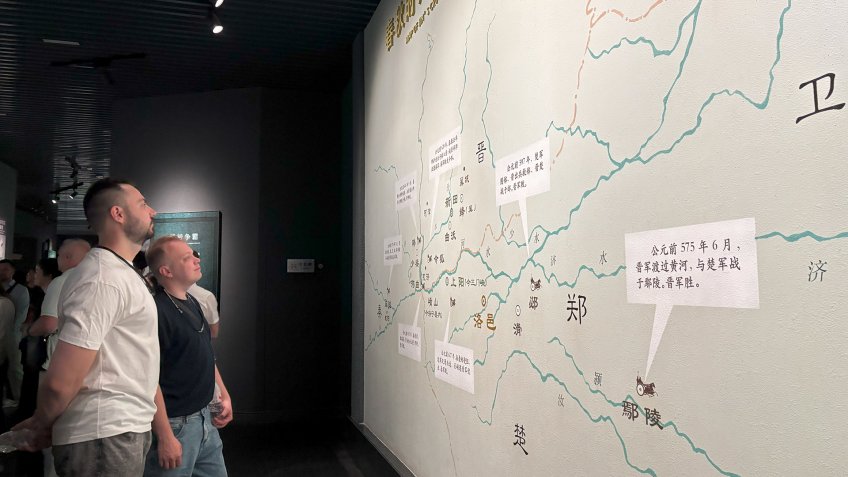
The internship of the students from Saint Petersburg began with a visit to the Shanxi Museum in Taiyuan, one of China’s largest historical museums.
«I was impressed by how the idea of centralization and national unification is revealed through the history of Shanxi. It turns out that this was perceived not merely as a political choice, but as a condition for survival. Artifacts from various dynasties, whose removal from the country is strictly prohibited, show how, over the course of 4,000 years, the country fought for its identity and sovereignty», - noted Elena Lipovskaya, a student at the Faculty of Economics specializing in Industrial Management.
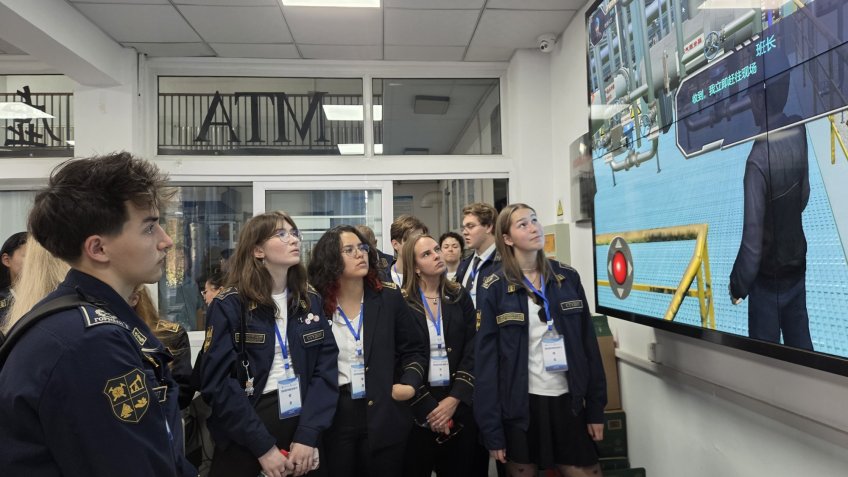
At the State Key Laboratory of Clean and Efficient Coal Utilization at the university college of TYUT, the young people familiarized themselves with simulations of secondary mineral raw material processing and chemical processes, which are also used in the training practice of Taiyuan University students. They were shown how, at the industrial level, researchers propose not combating emissions from coal processing, but removing harmful substances at the very beginning — before they enter the technological process. Spent catalysts are not disposed of, but regenerated and returned to the production cycle. This approach not only reduces the environmental burden, but also produces an economic effect.
The second laboratory, “Efficient and Clean Utilization of Gas Energy,” was established in 2017 and specializes in hydrogen energy, the extraction and purification of unconventional gases, including coalbed methane, and the catalytic conversion of energy gases.
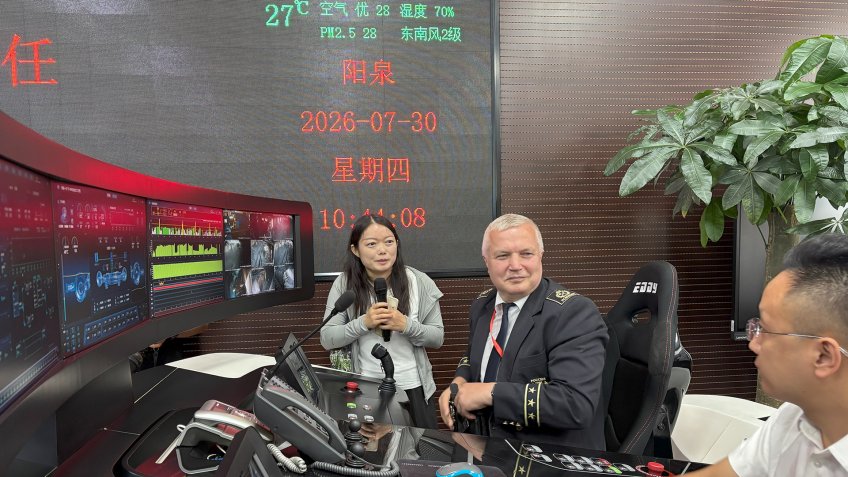
«The working visit to the Huayang intelligent mine left an incredible impression. We visited only one hall, but from there we were able to observe all processes and employees. We were shown monitoring and remote start-up systems that make it possible to control all stages of the mine’s life cycle. These systems are connected to an online analytics center, which receives sensor readings from the mine, processes them, and makes decisions on adjusting the operation of systems. Interestingly, a platform was developed for the enterprise’s employees that serves not only to track schedules and the concentration of various substances in the air, but also to make it possible to send messages about malfunctions that were not detected by sensors and cameras», - shared Ksenia Khvan, a student at the Faculty of Energy specializing in Radioelectronic Systems and Complexes.
Coal seam No. 15 is mined at the Huayang mine; the coal type is anthracite. The deposit covers an area of 80.6 square kilometres, with geological reserves of 505 million tonnes, while current recoverable reserves amount to 291 million tonnes. Sales revenue totals 3.9 billion yuan, and profit reaches 1.17 billion yuan per year, or 14 billion rubles.
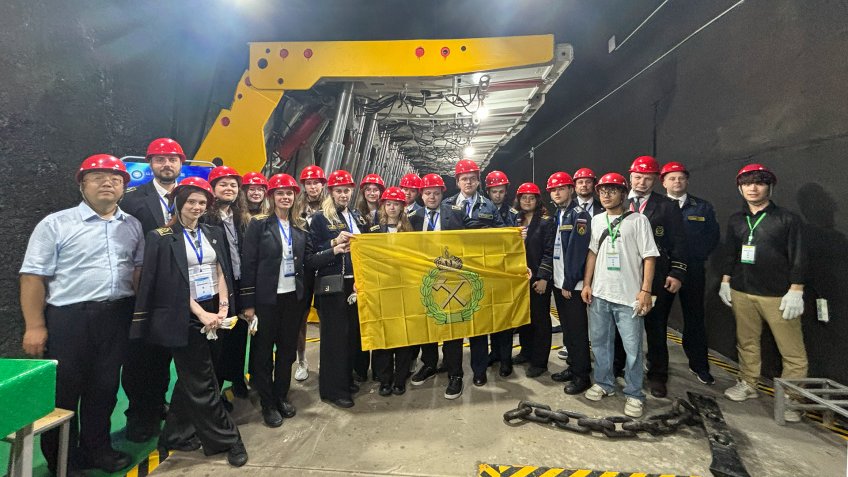
At Shanxi Engineering and Technology University, the guests inspected a unique training site — a simulated coal mine created jointly with Huayang Corporation. It is used for student training. The facility includes, for example, an EBZ160 roadheader and a longwall shearer with powered roof supports, where students can study the full working cycle of a coal face. Investment in the site exceeded 30 million yuan.
«This is an ideal bridge between theory and industrial practice. Students must understand that their education is built on the principle of ‘learning through a real process.’ Knowledge of the design of specific equipment models, such as the EBZ160 and hydraulic roof supports, as well as the algorithm of the ‘extraction–support–transportation’ cycle, gives them not abstract knowledge, but operational competencies that are valued in employment. This reduces the stress of adaptation at a real mine»,- said Nikita Duka, instructor at the Faculty of Mining, Department of Industrial Safety.
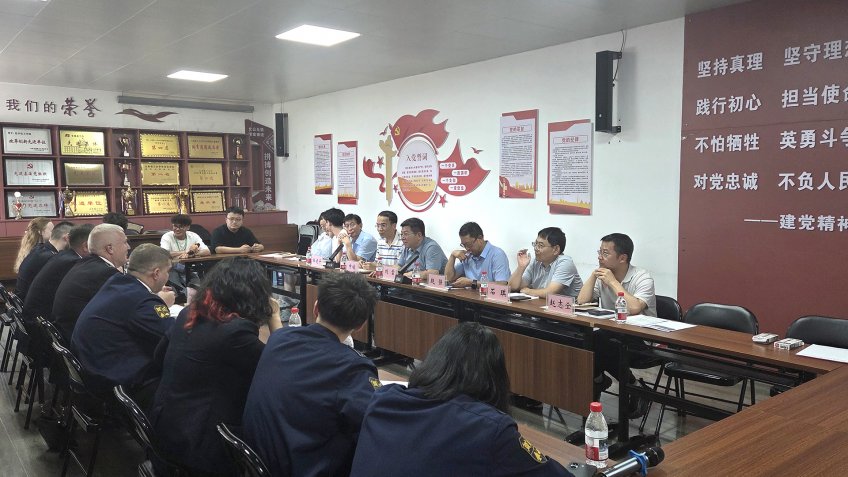
The first two days of the internship also included visits to enterprises such as Huayue Machinery, Huaxin Electric, and a pipeline fittings manufacturing enterprise. Ahead lie new lectures, seminars, laboratories, and production sites.