
Who is a metallurgist? The recently celebrated professional holiday is a good opportunity to reflect on the essence of the profession. Under the 1834 Charter of the Institute of the Corps of Mining Engineers, the training of metallurgists was included among the mining specialties. Nothing has fundamentally changed to this day. A metallurgist remains a specialist responsible for the final stage of the technological process of obtaining the end product from mineral raw materials. The metal is produced through the dedicated work and engineering expertise of geologists and numerous specialized professionals within the community of mining engineers, all possessing a broad outlook in their respective fields. They discovered the deposit, extracted the mineral raw materials, and made them suitable for obtaining the required metal.
Metallurgical engineers hold a well-deserved place within the community of mining engineers. They possess advanced technologies for metallurgical processes in both ferrous and non-ferrous metallurgy, including the most modern ones: pyrometallurgy (using high temperatures), hydrometallurgy (using solutions), and even biotechnology (using microorganisms).
For the comprehensive utilization of mineral raw materials from any deposit, particularly deposits containing a complex range of valuable components, it is not enough simply to organize the extraction of the desired raw materials. Research must first be conducted to assess the composition of the ore and identify the optimal extraction technology under laboratory conditions. The result should be a detailed project describing how to obtain the maximum possible range of valuable metals contained in the mineral raw materials of a specific deposit — a “Technological Passport” for the development of that particular field. The purpose of this document is to establish a technological process chain that makes it possible to extract everything of value from the ore, while properly separating what is not required and either using it further or disposing of it safely.
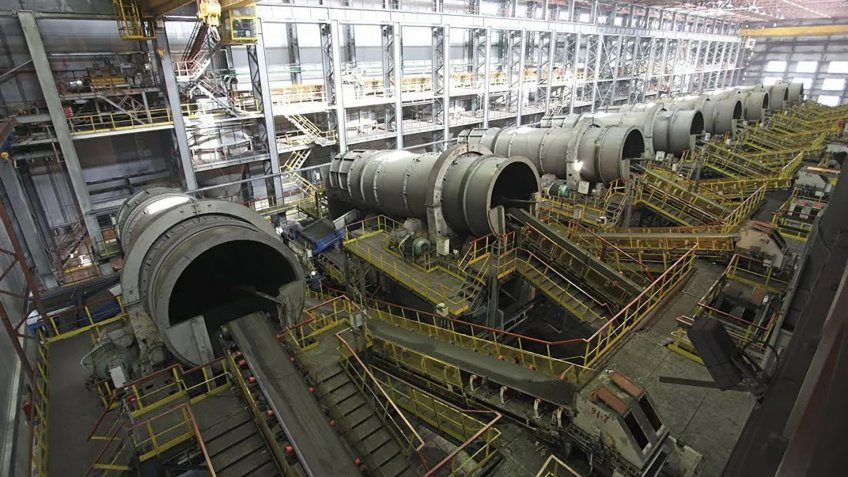
Engineers specializing in metallurgy must understand how to crush ore, how to grind and beneficiate it, and how to purify it, while having an in-depth understanding of the chemical and physical processes involved: flotation, roasting, and cyanidation (which differ depending on the type of raw material). As a rule, “Technological Passports” should contain information on processing stages, quality control, efficiency indicators, waste management, and measures to reduce losses and risks.
Against the backdrop of growing demand for mineral resources, requirements for the engineering corps in this field are also increasing. The issue is one of national competitiveness and sovereignty. Leading countries have embarked on a course of reindustrialization, and in this process everything begins with the professionalism of the mining engineer. In the race for global leadership, the state should always strive to put these unique people at its service, making use of their heritage and comprehensively developing continuity. It is always in the state’s interest to employ scientists and engineers to protect and strengthen its influence and power.

Let us take a realistic look at the place of the true engineer and scientist in the 21st century, at their status and the remuneration of engineering competencies. The present century is often declaratively proclaimed the age of resources: energy, raw materials, minerals, space, finance, labour, time, and food. Over the course of a century, the world’s population has increased sixfold, while GDP has grown twentyfold, dramatically increasing demand for certain resources, particularly energy, raw materials, and food. Humanity has entered the initial stage of an era of expensive resources. A shortage of resources, or an artificially induced increase in their prices, triggers the most difficult global crisis to overcome — an industrial crisis.
Today’s energy crisis is caused by artificial factors. The weak link has become transport and logistics services. Our civilization cannot exist without them. They are costly, resource-intensive, and environmentally unsafe. Roads and infrastructure, power plants and transmission lines, communication satellites and the Internet are tools that make it possible to conserve to the greatest possible extent humanity’s most valuable and non-renewable resource — time.
By improving the technosphere, engineers have saved humanity’s time resource. All the objects, systems, technologies, and equipment that surround us have been created through the work of generations of anonymous engineers over the course of centuries. Technological progress enables humanity to develop. It would be no exaggeration to say that without engineering technologies, neither politics nor art, religion, the state, society, nor any other forms of social and spiritual life would have been possible.
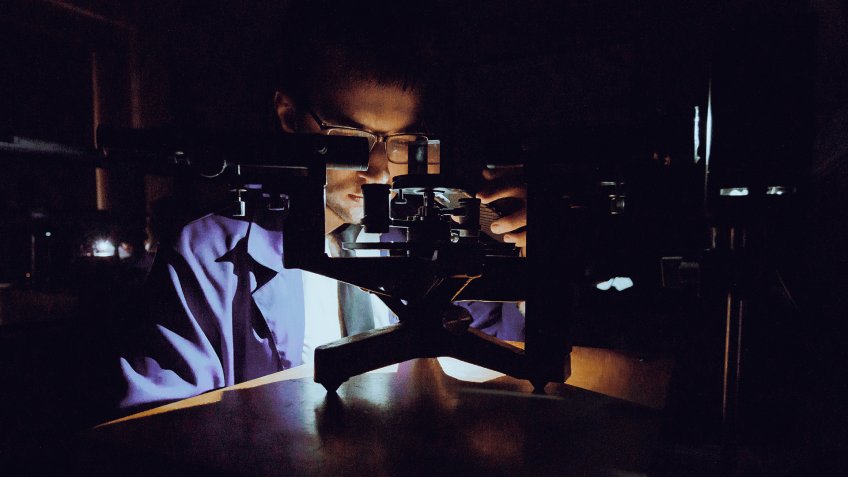
Widespread digitalization carries the risk of turning people into clones with digital thinking, further aggravating the global problems facing our civilization, since every digital technology relies on the material component of the technosphere. For example, the operation of the global Bitcoin network already consumes power equivalent to that generated by more than two power plants comparable to the notoriously known Chernobyl Nuclear Power Plant.
The sprawling technological giants are controlled through the stock market by descendants of the most influential families who rose to prominence during the period of primitive capital accumulation. As a rule, they are well-versed in legal and commercial matters and understand the global balance of power and the prevailing political environment. But they are not engineers, and they use engineers as support personnel in the interests of private capital. As technologies become increasingly complex, the global demand for, and dependence on, technologically competent people will only increase. Under these conditions, the shortage of a national engineering corps specializing in subsoil use and the management of natural capital is a critical problem for any country with an industrial economy. For Russia, resolving this problem is the key to prosperity.
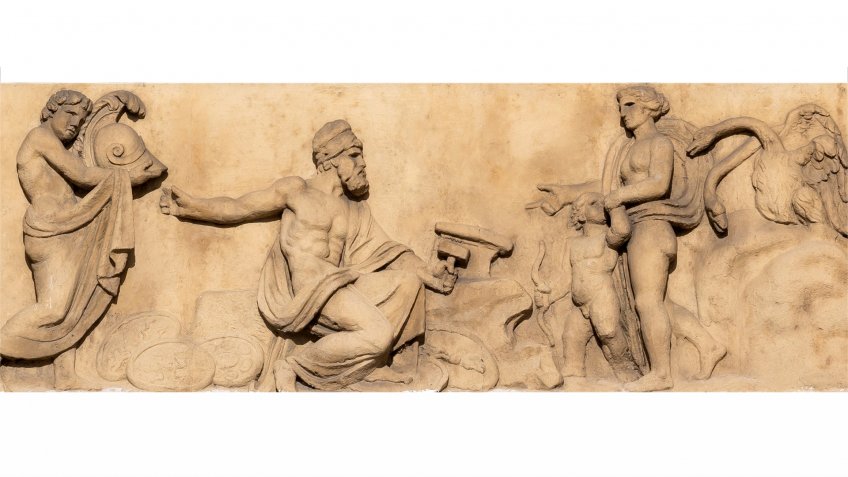
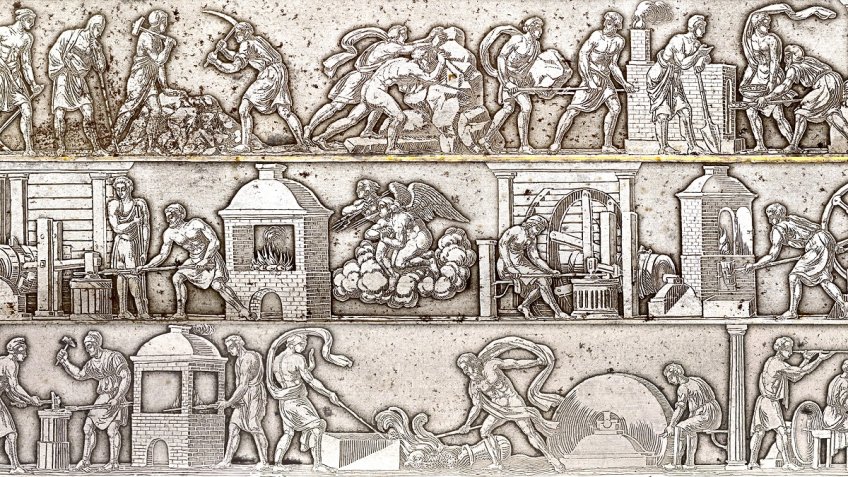
A frieze of Empress Catherine II Saint Petersburg Mining University depicts Hephaestus, the mythological god of metallurgy. His workshop, as is well known, was located deep underground. It was there that he first crushed the rock, then separated the metal from the slag, and only afterwards forged the weapons and armour with which the Olympians knew no defeat. Incidentally, in the pantheon of the gods, he was the only craftsman whom the ancient Greeks elevated to the status of a deity. Even in antiquity, people clearly understood the causal relationship between technological processes and their vital importance.