
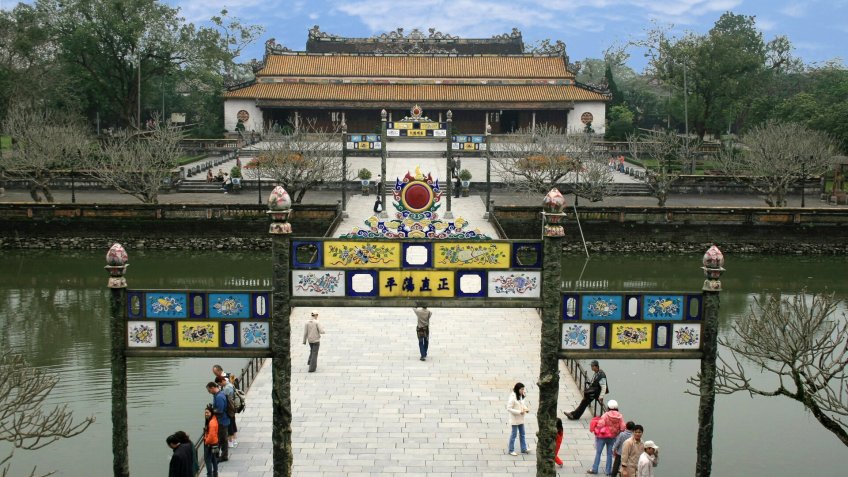
Empress Catherine II Saint Petersburg Mining University took part in the Russia–Vietnam Forum “Engineering Education, Science and Technology for Industrial Development”, held in Hanoi on September 21–24.
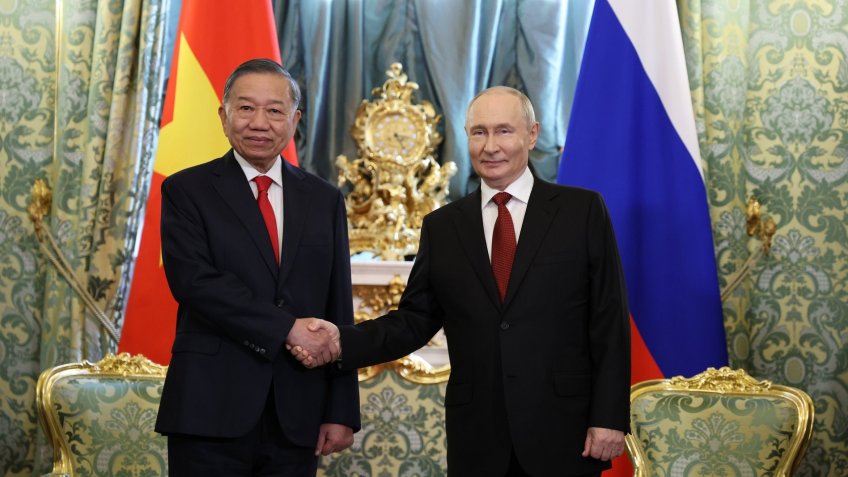
The visit coincided with a significant historical moment for both countries. On September 9, Russian President Vladimir Putin and President of the Socialist Republic of Vietnam (SRV) To Lam held talks, during which they agreed to intensify cooperation in energy, investment, education, and personnel training. The fuel and energy complex remains a traditional pillar of the partnership: the parties extended the operations of the joint ventures between Zarubezhneft and Petrovietnam until 2050, and also agreed on the construction of Vietnam's first nuclear power plant, Ninh Thuan-1, based on a Russian design. These plans are creating demand for qualified specialists capable of operating and maintaining high-tech facilities.
The primary objective of the subsequent forum was to establish a long-term model of cooperation between educational and research organizations, industrial enterprises, and relevant government institutions of both nations, in the context of the agreements reached.
It should be noted that Russia–Vietnam cooperation in education has a history spanning almost a century. In the early 1920s, students from distant colonial Indochina began studying at the Communist University of the Toilers of the East. In total, more than 60 Vietnamese citizens, including Vietnam’s first president, Ho Chi Minh, received training through the Comintern’s educational centres in the USSR.

Thirty years later, after the country had gained independence from French colonial rule, Ho Chi Minh himself sent a letter to Joseph Stalin requesting that representatives of Vietnamese youth once again be admitted to study in the Soviet Union “so that they might receive an excellent communist education”: “We would like to send 50–100 students to the USSR for study, who have completed nine years of education and are between 17 and 22 years of age.” Following the establishment of diplomatic relations between Moscow and Hanoi, such individual initiatives became a regular practice. Studying at Soviet universities became a crucial stage in the training of a new generation of national professionals for young communists from the newly sovereign republic.
Today, Vietnam is one of the most dynamic economies in Asia. In 2025, its GDP grew by 8%; in the first half of 2026, exports increased by 17%, while foreign direct investment grew by 55% compared with the same period of the previous year.
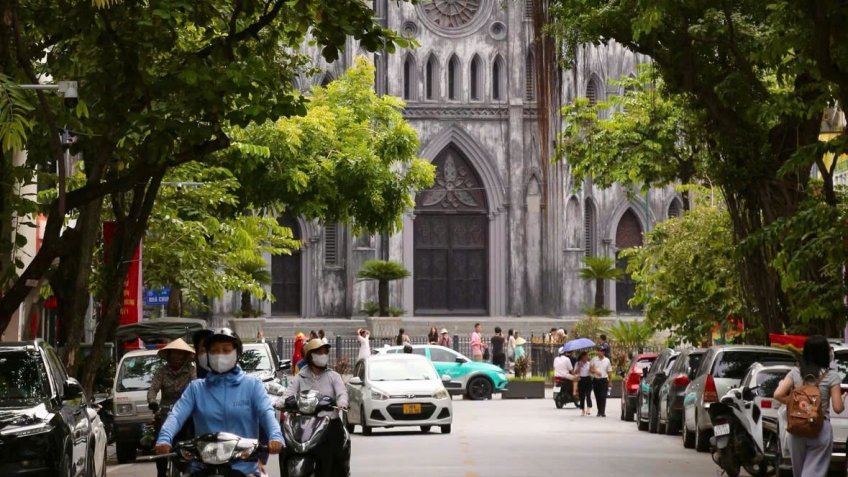
The country considers its people to be the main resource behind this economic breakthrough. In its resolution “On a Breakthrough in the Development of Science, Technology, Innovation and Digital Transformation,” the Politburo of the Central Committee of the Communist Party of Vietnam identifies engineering education as a strategic national priority. There are currently 238 universities in the country, and the share of faculty members holding PhD degrees has reached 36%; however, Russian universities still command the highest prestige.
Leading Russian technical universities, the Roscosmos State Corporation, the Rossotrudnichestvo Representative Office in Hanoi, and the Consortium of Technical Universities of the Russian Federation and the Socialist Republic of Vietnam were invited to participate in the Russian–Vietnamese Educational Forum. The extensive programme included meetings with relevant ministries, the Vietnam Academy of Science and Technology, negotiations with the country’s largest universities and high-tech companies. Given the prospective needs of the republic’s economy, particular interest was generated by universities that train engineers for the oil and gas, mining, and energy industries.
The participants discussed the demand of the industrial sectors of both countries for engineering and technical personnel over the next 3–5 years, the most sought-after specializations and competencies, as well as employers’ requirements for modern educational programmes.
Particular attention was devoted to joint practice-oriented training of specialists, including the organization of industrial practicals and internships, as well as training in the operation, maintenance, and further development of Russian and Vietnamese technologies and equipment.
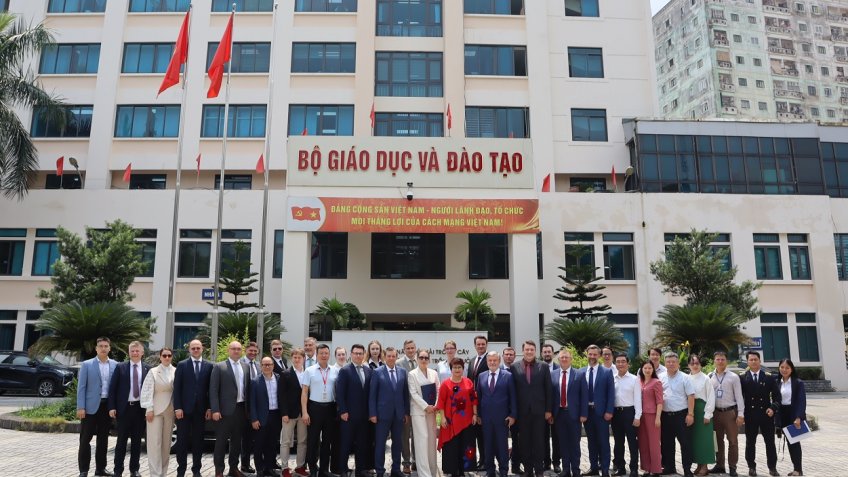
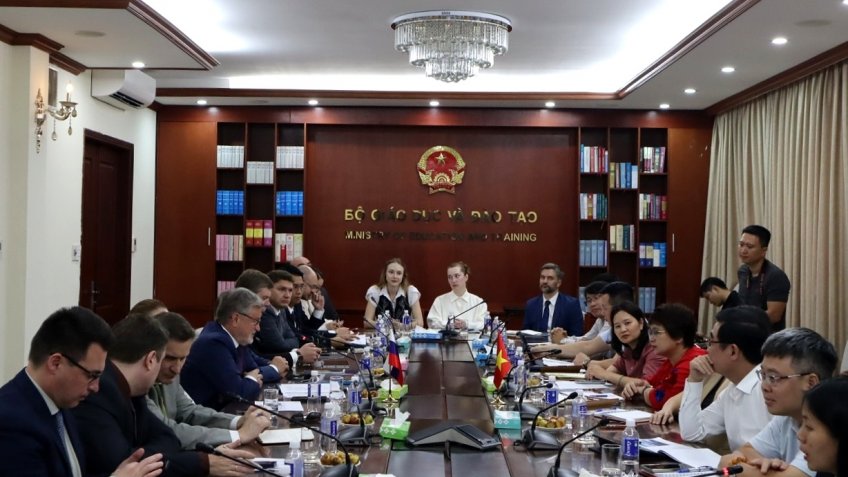
The leadership of the Ministry of Education and Training of the Socialist Republic of Vietnam highly praised the engineering education system at Empress Catherine II Saint Petersburg Mining University as part of the Pilot Project to Improve the Higher Education System. The colleagues were particularly impressed by the six-year integrated engineering programme, which includes up to 52 weeks of practical training, the acquisition of eight additional professional competencies, and two working professions. Although Vietnam adopted a two-tier system of higher education (bachelor’s and master’s degrees) in the early 2000s, the principles of the Bologna Process were introduced with numerous caveats and nuances. For some fields, such as industrial engineering, the period of study is at least five years. Universities are not prepared to blindly replicate the European model and are constantly seeking ways to improve the quality of education.
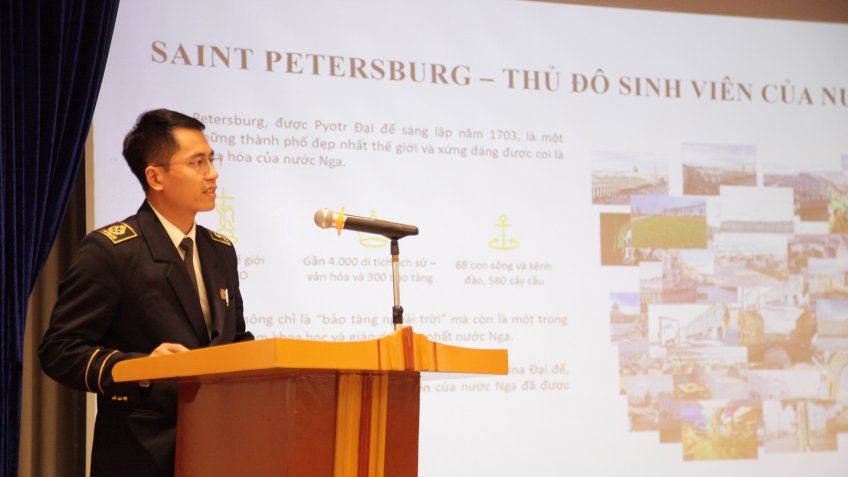
The growing demand for joint programmes, internships, and the training of highly qualified academic and research personnel was demonstrated by the academic community, including Hanoi University of Industry, Hanoi University of Science and Technology, the University of Transport and Communications, Vietnam National University, and Hanoi University of Mining and Geology. During breaks between the plenary sessions, colleagues approached the representative of Empress Catherine II Saint Petersburg Mining University, Associate Professor of the Department of Development and Operation of Oil and Gas Fields Nguyen Van Thang, with follow-up questions.
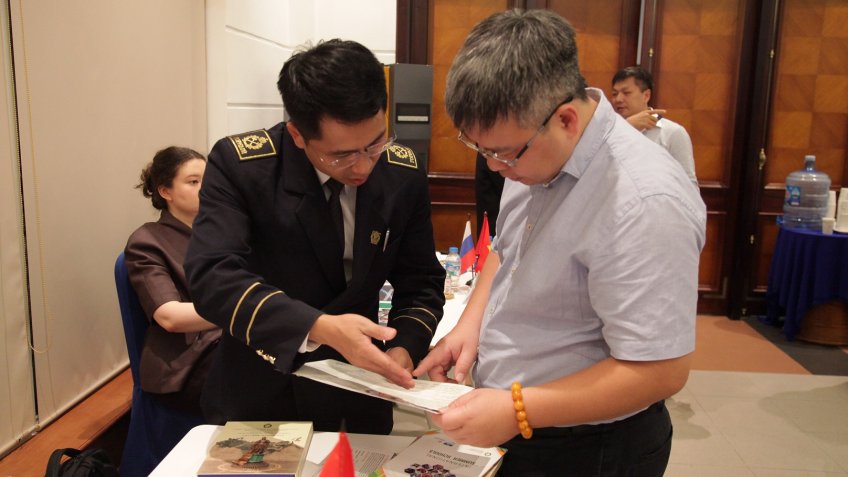
Thus, Nguyen Le Cuong, Vice-Rector of Electric Power University, noted that the two universities have many closely related fields of study, opening up broad opportunities for developing university ties, conducting joint research, and implementing technological initiatives.
«We were particularly interested in the Summer School for students and the MBA programme ‘Management of Subsoil Use Facilities’, designed for heads of government bodies, industry companies, and research and educational organizations in the mineral resources complex. The programme includes at least 864 classroom hours, five months of practical training at industry training sites and enterprises, as well as technological and management components, ranging from geology and digital technologies to subsoil use economics and sustainable development. We would like to intensify the exchange of students and faculty members and send the best of them to study in St Petersburg in order to train highly qualified specialists for Vietnam’s energy sector», — emphasized Nguyen Le Cuong.
The MBA programme of the St Petersburg university also became a focus of attention during a meeting at the Institute of Strategy and Policy in Industry and Trade under the Ministry of Industry and Trade of the Socialist Republic of Vietnam, which is responsible for the country’s mineral resources sector. Institute Director Nguyen Van Hoi expressed strong interest in specialized programmes and professional development for employees of the ministry and the institute, and also proposed developing cooperation in the mining industry and preparing joint research projects.
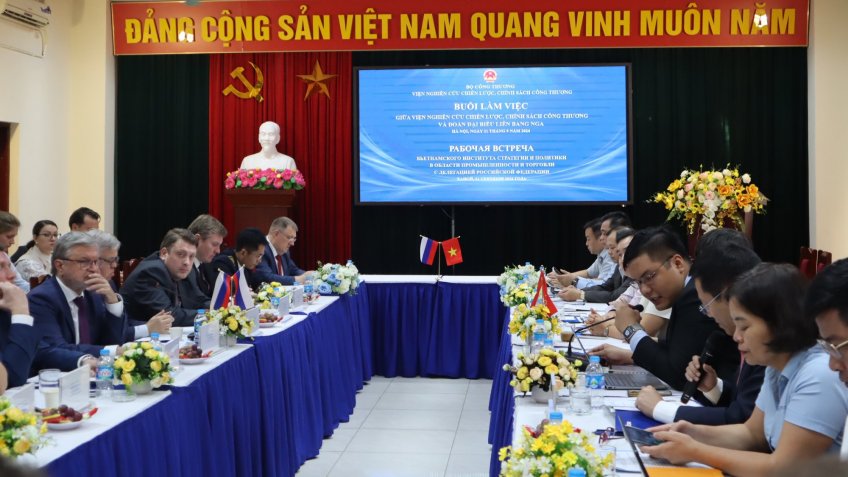
«Scientific and technological cooperation cannot be limited to signing memoranda. Agreements must be translated into pilot projects and joint laboratories, and their results must find practical application in major industrial corporations. Empress Catherine II Saint Petersburg Mining University, with its rich history and strong standing in education and science, will become one of the key partners of our Institute», — said Nguyen Van Hoi, Director of the Institute of Strategy and Policy in Industry and Trade under the Ministry of Industry and Trade of the Socialist Republic of Vietnam.
Will the talks between Presidents Vladimir Putin and To Lam become the very trigger that sets in motion the process of bringing the two countries’ higher education and research systems closer together? Could they provide the basis for moving from historical memory to the implementation of concrete projects?
An answer to this question may be found in the historical overview provided by the head of the Rossotrudnichestvo Representative Office in Vietnam. Vladimir Murashkin recalled that until 2024, a special agreement was in force under which the Republic independently covered the cost of educating its citizens at Russian universities. In 2026, the Russian Government’s quota for Vietnamese citizens to study at the expense of the federal budget amounted to 1,000 places, demonstrating the continuity and strategic nature of our partnership in the field of education. Priority areas include engineering, IT, and energy.
The Forum received extensive coverage in the Vietnamese media. Nhan Dan and Thoi Dai newspapers, the Vietnam Journal of Science and Technology (VJST), Voice of Vietnam Radio (VOV5), and Sputnik Vietnam provided detailed coverage of its results. VOV5 named Empress Catherine II Saint Petersburg Mining University among the leading Russian universities participating in the Forum, while the Vietnam Journal of Science and Technology specifically highlighted the University’s efforts to expand cooperation with Vietnamese educational and research organizations, particularly in the oil and gas and mineral resources sectors.
Voice of Vietnam Radio: https://vovworld.vn/ru-RU/novosti/v-khanoe-proshel-rossiysko-vetnamskiy-forum-inzhenernoe-obrazovanie-nauka-i-tekhnologii-dlya-2467994.vov5#
Sputnik Vietnam: https://kevesko.vn/20260924/nga---viet-cung-di-toi-cong-nghe-loi-bang-lien-minh-chien-luoc-44265893.html
Vietnam Journal of Science and Technology: https://vjst.vn/viet-nam-lien-bang-nga-thuc-day-nghien-cuu-lam-chu-cong-nghe-tao-ra-san-pham-103205.html?zarsrc=30&utm_source=zalo&utm_medium=zalo&utm_campaign=zalo&gidzl=Mq1XEc4clsDVM6SrQJYyPbzHR3T-PR9WG5CzOtOwiM5D33qrUcZWPn1PQsLxQBKt40vaOZ8FKEbXPIE-Rm