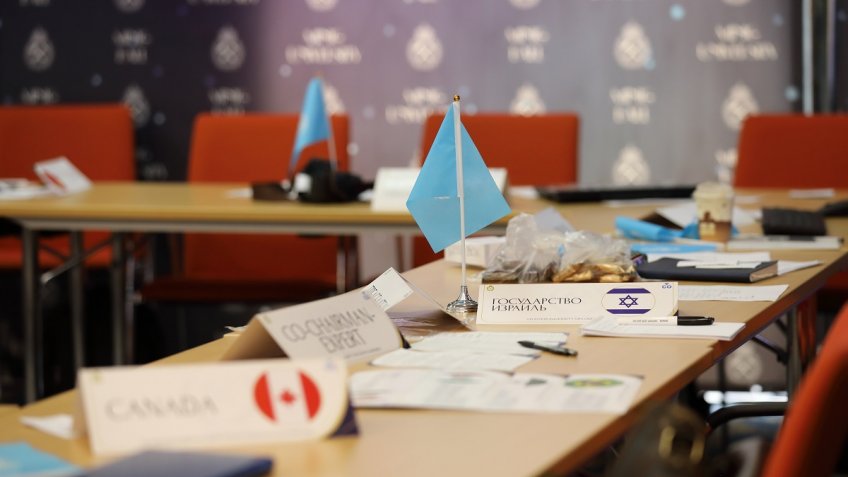
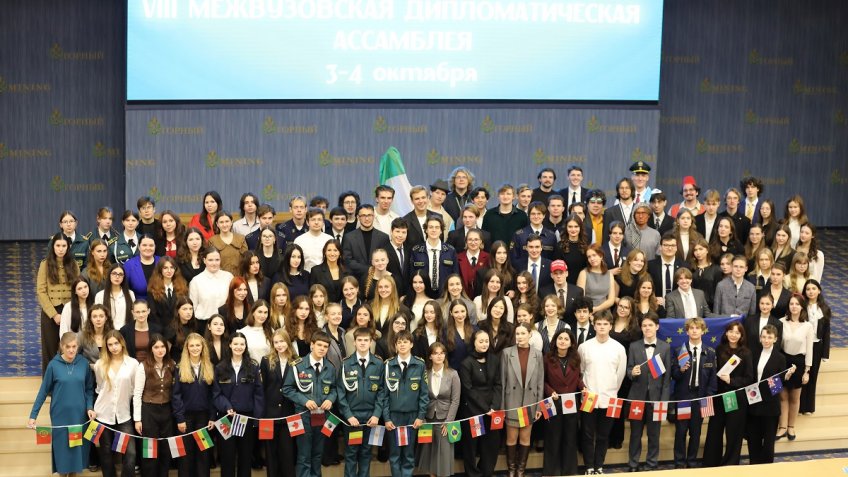
The Gorny Multifunctional Complex hosted the Interuniversity Diplomatic Assembly, a simulation based on a United Nations meeting. The participants — 143 university and school students from Moscow and Saint Petersburg with an interest in international affairs, diplomacy and public speaking — took on the roles of ambassadors and observers. Representatives of the Russian Federation, the United States, Ukraine, Israel, Türkiye, Germany, the People’s Republic of China, Greece and other countries sat down at the negotiating table.
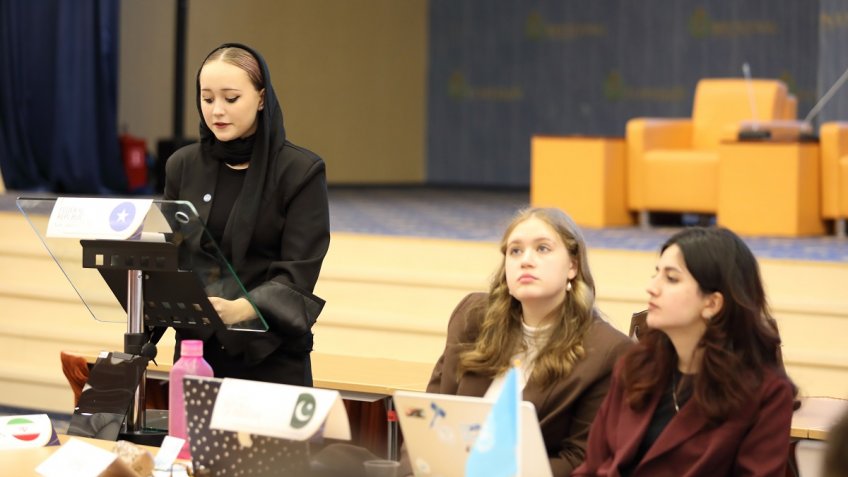
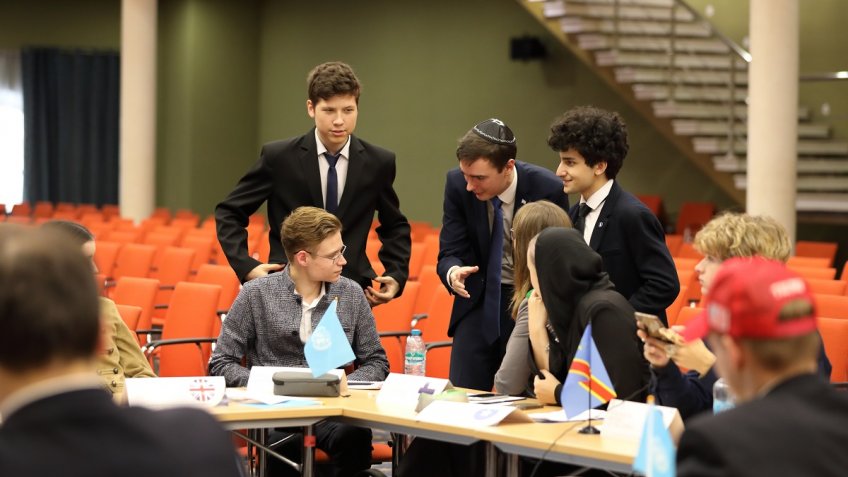
The agenda covered controls on autonomous weapons and migration flows, the use of artificial intelligence to combat disinformation during elections, and the rights of refugee children. Each country’s representative delivered a report and answered questions from fellow delegates. Beforehand, each had undertaken extensive preparatory work, studying the position of the country they represented, the documents it had previously signed and ratified, and official statements by national leaders.
Two days of work and heated debates culminated in a joint resolution proposing solutions to the international community. In total, 5 topics were addressed.
The UNICEF resolution on the protection of refugee children affected by armed conflicts and forced to leave their homes emphasises the need to establish education centres in camps and temporary accommodation facilities, and to introduce and develop language support. It also recommends increasing funding for family reunification programmes and providing special protection for unaccompanied minors.
The “UN experts” expressed particular concern over an autonomous weapon system (AWS) (a system that, once activated, can independently select targets and use force against them without further human involvement — editor’s note). The countries called for particularly stringent legal and technical review procedures for this lethal technology. A complete ban is not being proposed, but the tasks and conditions under which such systems may be used should be clearly defined. Human control must be maintained at every stage — development, production and use — and responsibility must rest with real people.
The participants also addressed the issue of countering disinformation and the manipulation of public opinion through artificial intelligence during election campaigns. The Assembly participants proposed:
- developing common international specifications for labelling content created or substantially modified using AI;
- expanding digital literacy programmes to help the public verify the authenticity of information;
- improving the technical capabilities of electoral bodies to rapidly identify and debunk false content.
The participating countries were also urged to accede to the United Nations Convention against Cybercrime, adopted by consensus by the General Assembly on 24 December 2024, and to subscribe to the Code of Ethics in the Field of Artificial Intelligence dated 26 October 2021.
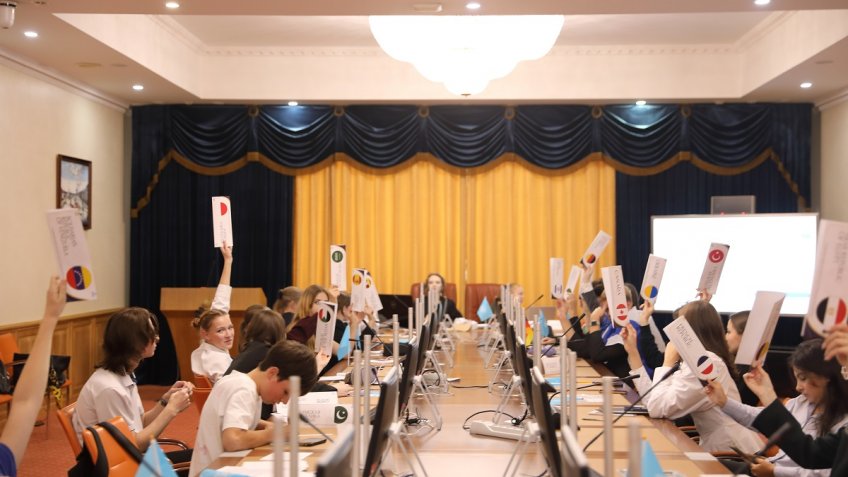
At the conclusion of the committees’ work, winners in the “Best Delegate” and “Most Constructive Delegate” categories were selected in each committee by secret ballot.
The UN Assembly is now in its eighth consecutive year and is organised by the “Model UN at Mining University” club. According to Dmitry Kaitandzhyan, the club’s Secretary-General, the event enables young people both to gain a deeper understanding of international processes and to develop qualities needed by future leaders: public speaking skills and proficiency in English.
— By taking part in Model UN, young people learn what it takes to build a better world. This requires stamina, the ability to work with facts and a willingness to consider other points of view — always putting the needs of the most vulnerable first.
The Assembly participants shared their impressions:
Daniil Dedinets, a student at the Bonch-Bruevich Saint Petersburg State University of Telecommunications:
— For the first time, I was named the best delegate in my committee (Israel), and I was very pleased with this result. It was incredibly exciting: many new acquaintances, new experience and interesting topics on the agenda. I also felt that the interview requirement helped to raise delegates’ average level of preparation considerably. Taking part in Mining University’s Model UN is a hobby for me. My degree subject has nothing to do with politics, but I am very interested in international relations, — he said.
Dmitry Semenov, a student at Empress Catherine II Saint Petersburg Mining University:
— I took part in the simulation to try my hand at a new role and meet active, enthusiastic people who share my interests. I hope we will meet many more times at future Model UN events. The whole event had a wonderful atmosphere and ran smoothly. Special thanks go to the student organisers for their ability to create and manage such a large-scale event.
Darya Drozd, a Grade 10 pupil at Secondary School No. 270:
— I represented the delegation of the Republic of Türkiye and took part in the UNICEF committee. There was a great deal of work to do. I listened to the positions of other delegates, asked questions that interested me, tried to take part in the discussions and, of course, in the adoption of the draft resolution. My impressions were entirely positive. Incidentally, I am considering applying to Mining University because I believe it is one of the best universities we have. It is very beautiful, and it has a special atmosphere all of its own.