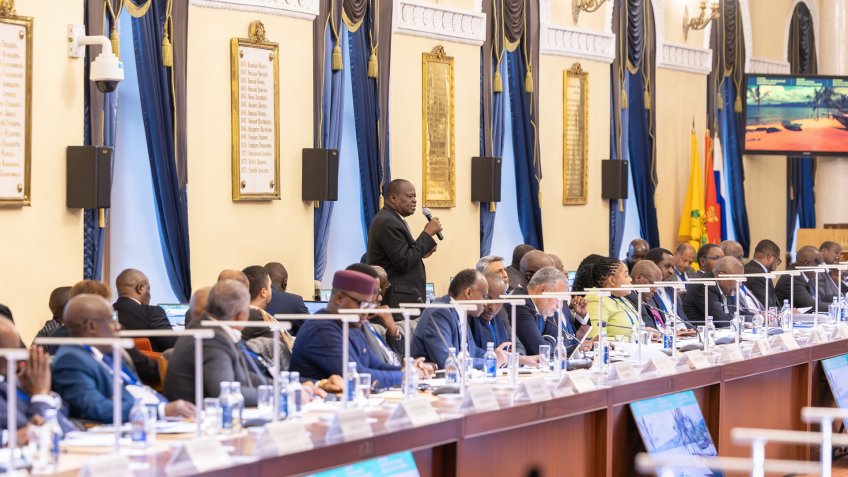
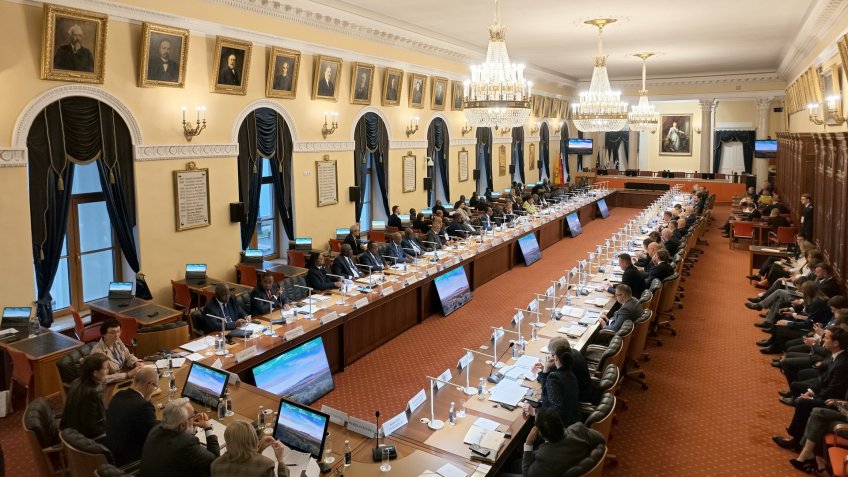
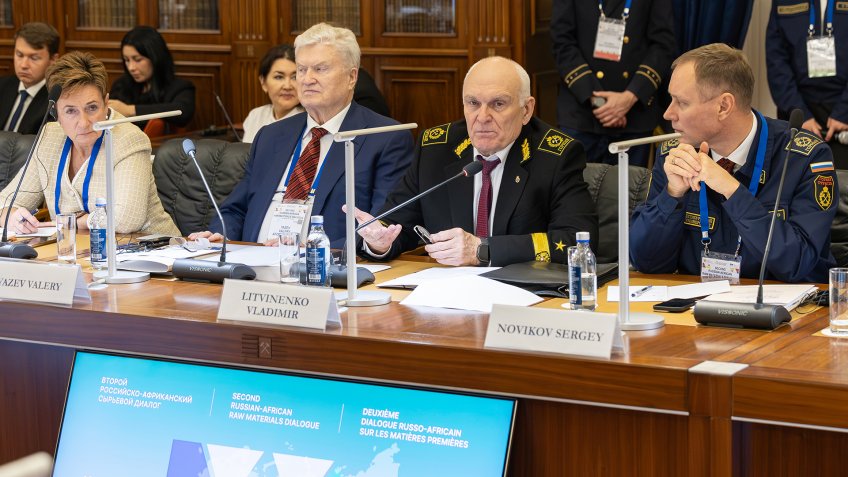
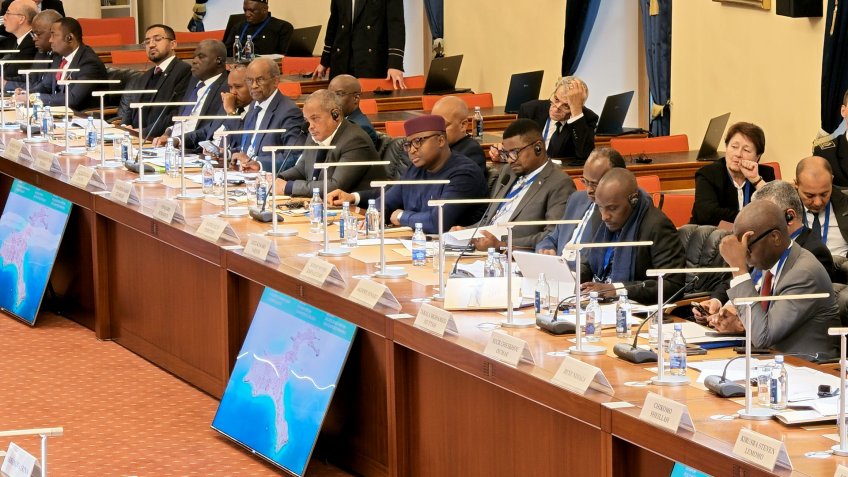
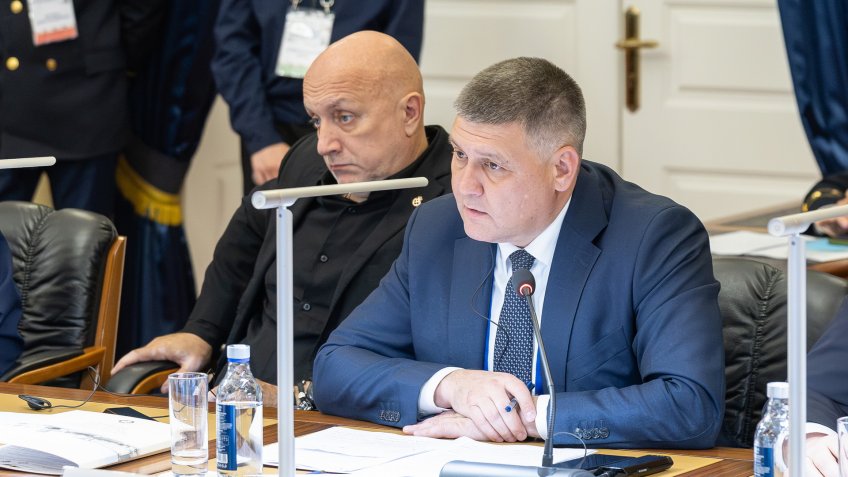
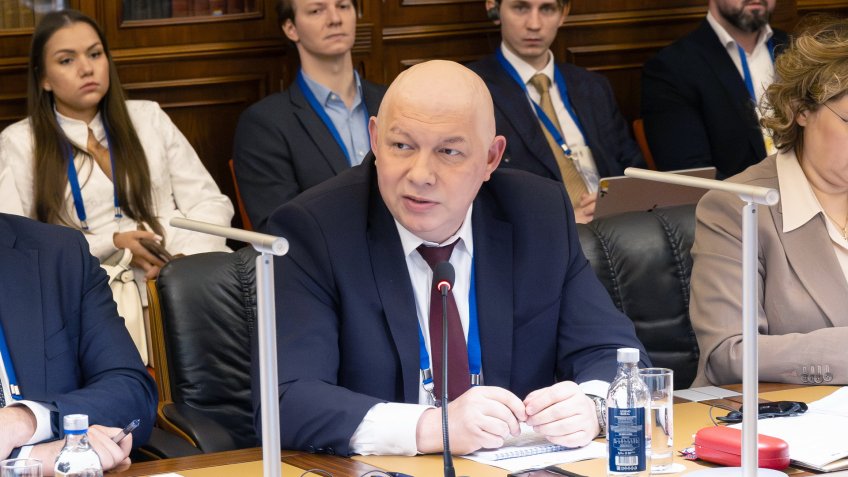
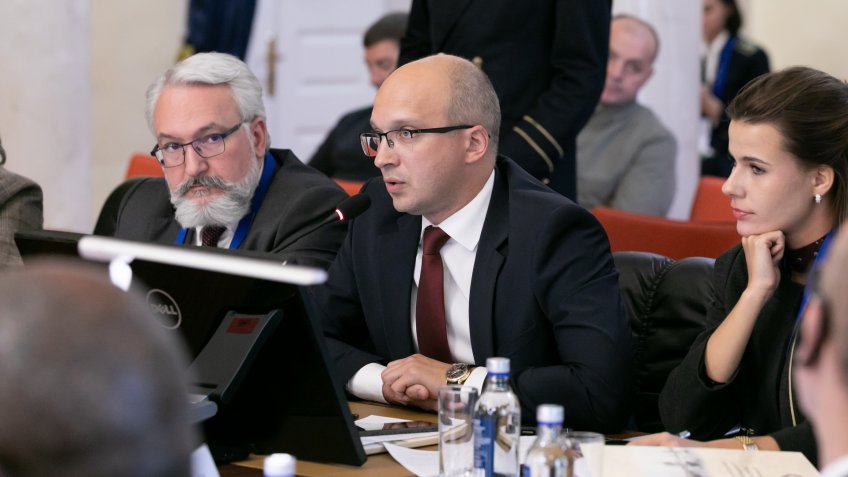
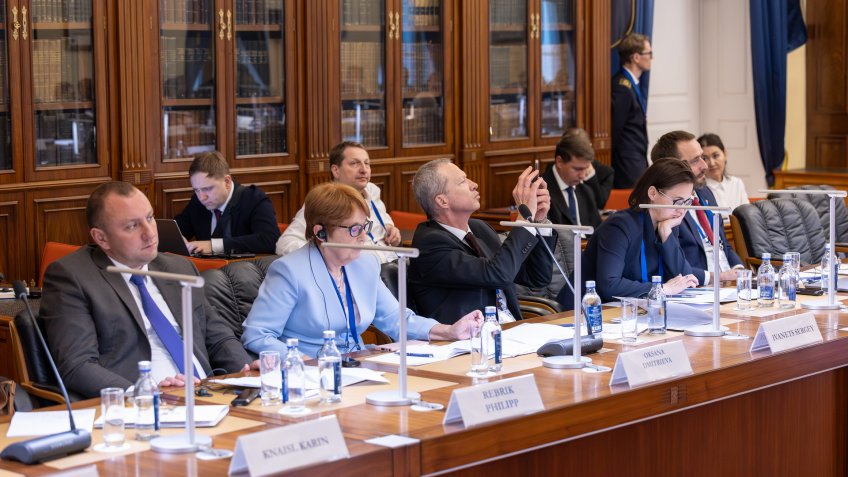
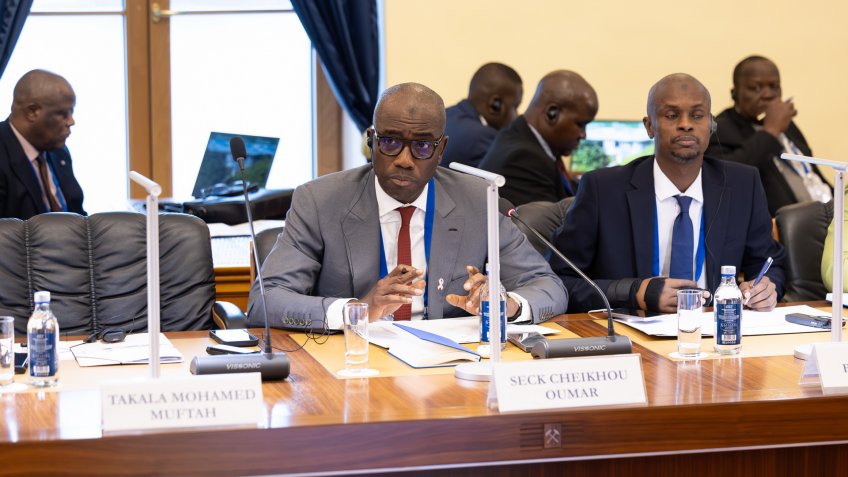
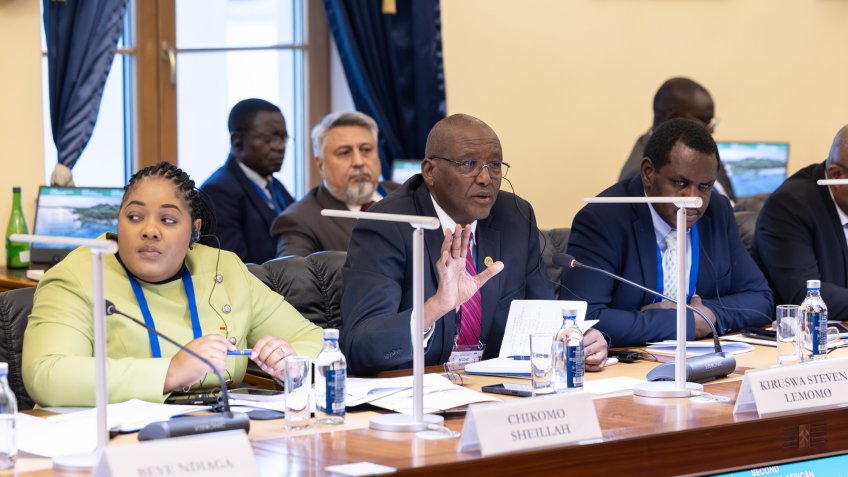
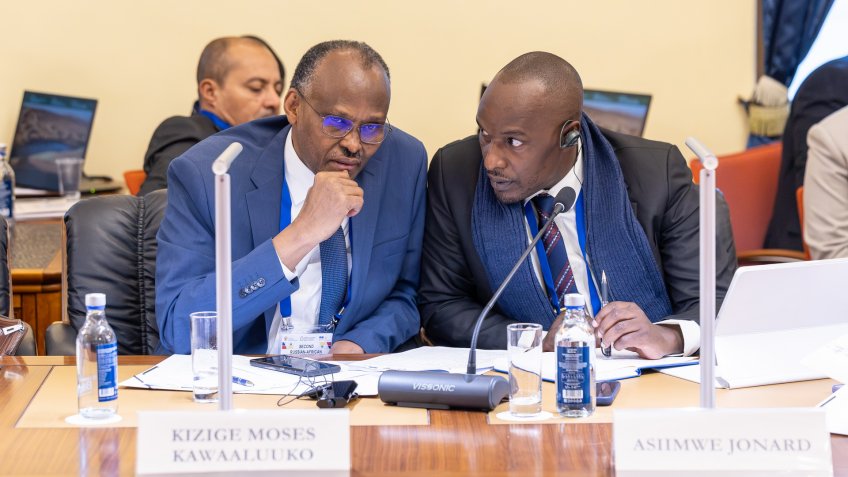
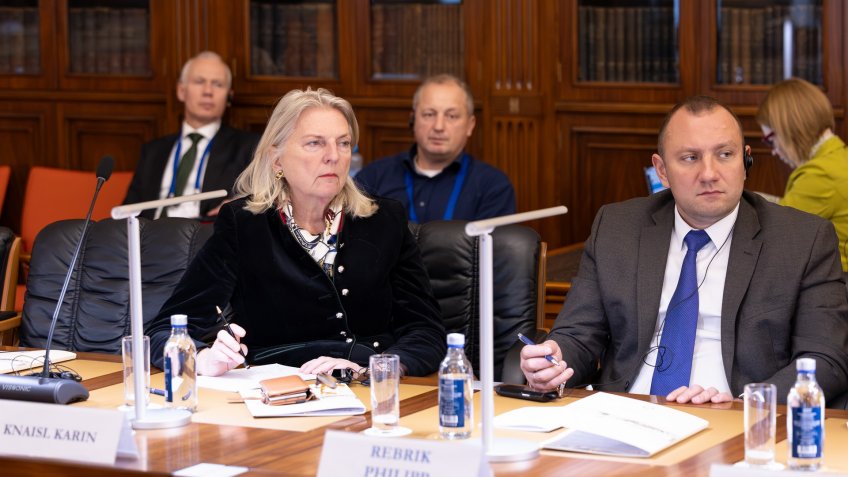
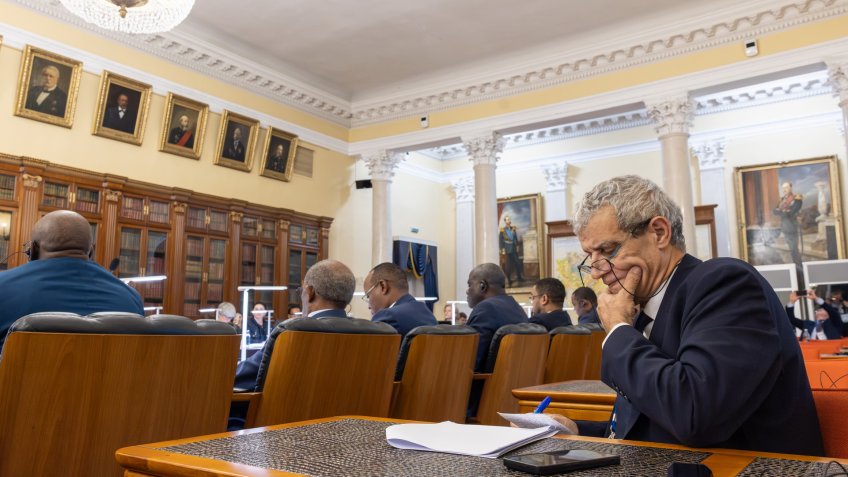
The Ministerial Session was the key event of the Second Russian–African Raw Materials Dialogue, held at Empress Catherine II Saint Petersburg Mining University. It brought together more than 70 senior representatives of relevant government bodies and the scientific and mining communities of Russia and countries across the African continent.
The event marked a genuine shift from declaratory rhetoric towards developing a common interstate policy for the development of the mineral resources sector, including its legal regulation and personnel training.
On the Russian side, the session was attended by the heads of the Department of Partnership with Africa at the Russian Ministry of Foreign Affairs, the Federal Agency for Subsoil Use (Rosnedra), the Institute for African Studies of the Russian Academy of Sciences, JSC Zarubezhgeologia, the A.P. Karpinsky Russian Geological Research Institute and the Non-Profit Partnership “Miners of Russia”, as well as the directors general of companies with an established presence on the African continent: the OKTO investment and industrial group, Nordgold, ALROSA Joint-Stock Company and Almazgeobur LLC.
On the African side, the discussion was joined by Ambassadors Extraordinary and Plenipotentiary from 21 countries, as well as ministers and deputy ministers responsible for mining and petroleum, energy and geology (Senegal, Madagascar, Sudan, the Central African Republic, South Sudan, Burkina Faso, Djibouti, Cameroon, Niger and Togo), higher education and science (Sierra Leone, Uganda, the Central African Republic (CAR), Gabon and Cameroon), and foreign affairs (Zimbabwe and the Democratic Republic of the Congo), together with the President of Libya’s High Council of State.
Opening the session, discussion moderator and Mining University Rector Vladimir Litvinenko stressed that, without resource accounting and a strictly regulated licensing system, the state loses effective control over its own subsoil, becoming a passive observer as transnational entities extract national wealth.
«Two years ago, an initiative was launched at the United Nations to create an electronic system for recording reserves and chemical elements underground, making it possible to determine with great precision which minerals are located where. The initiative came from several countries, including China. In effect, this means handing strategically important information over to others. When the Russian delegation asked whether we would be able to use this database, the response was: ‘We will think about it; this issue will be decided later.’ Essentially, this is about creating new systems of colonisation.
The second prerequisite for an effective system of control over subsoil resources is licensing. Analysis shows that 50% of current concessions in Africa do not even specify when development must begin. An investor pays next to nothing and leaves for Britain: the beneficiaries of the 100 largest investors in Africa are on the London Stock Exchange and hold on to sites to avoid creating competition for themselves. The alternative to the concession-based approach to subsoil management historically imposed on African states by Western institutions is the administrative and legal regulation successfully applied in the Russian Federation. This model regards subsoil resources as the unconditional property of the people and the state, and subsoil users as parties required to comply strictly with the state’s conditions. A licence is an obligation on the subsoil user. Under this system, a licence cannot be pledged to a bank, inherited or sold. If obligations are not fulfilled, the state immediately withdraws the licence», - concluded Vladimir Litvinenko.
Representatives of the Russian side shared their accumulated experience, including their work on the African continent, and presented their own model recommendations for organising future work.
«The right to use subsoil resources, established by a licence, is first and foremost an obligation on the subsoil user to the state and the population to bring the resource into economic use. It is an instrument for protecting sovereignty. We are fully prepared to work through the legal and regulatory mechanisms governing subsoil use within our bilateral relations», - said Dmitry Tetenkin, Deputy Minister of Natural Resources and Environment of the Russian Federation, outlining the state’s position.
Oleg Kazanov, Head of the Federal Agency for Subsoil Use (Rosnedra), drew attention to the fundamental difference between the Russian and Western systems of reserves accounting.
«Questions have arisen about introducing common unified classifications at the request of the Western banking community. Our answer is that this should not be done. The Russian reserves classification is a concentrated expression of state management of subsoil resources, designed to protect the interests of the people and the national economy. Under our Constitution, subsoil resources belong to the people, while the subsoil user merely carries out the work. Western classifications (CRIRSCO, JORC and NI 43-101) are based on a different principle: they establish the priority of private investors’ interests over those of the state and the population. There is no need to create a unified classification under these conditions. Instead, ‘bridging’ mechanisms should be developed using the United Nations Framework Classification for Resources (UNFC) as a basis for converting categories for specific transactions».
Alexey Desyatkin, Director General of Zarubezhgeologia, outlined the company’s experience in the Central African Republic and Sierra Leone. A transition has been made from the Soviet practice of general geological mapping to targeted prospecting and exploration for minerals in short supply and the introduction of digital subsoil use cadastres.
«Without digital technologies, documents submitted through paper-based cadastres take a long time to process. In Soviet times, there were anchor clients, such as Tsvetmetpromexport, which ensured the full cycle. Since 2021, we have been successfully conducting geological exploration in the Central African Republic (CAR) and Sierra Leone. If Russian companies with state participation could obtain licences covering the entire cycle, from exploration to commercial extraction, this would ensure an inflow of substantial long-term investment from Russia».
Speeches by relevant ministers and official representatives of Senegal, Uganda, Tanzania and the Central African Republic highlighted fundamental barriers to the continent’s development, particularly critically low levels of localisation, infrastructure and energy shortages, financial dependence and an acute shortage of personnel.
«Almost no country in Africa has accurate data on what is happening within its territory. The problem facing Senegal and other countries is not a lack of laws to protect investors, but a lack of finance and a domestic private sector. Foreign companies export raw materials, paying us only 10% of the profits. We need to develop a network of local enterprises and attract Russian banks and investment funds. We want to establish joint ventures with Russian companies and work together to overcome shortages of personnel, energy and infrastructure», - said Senegal’s Minister of Mines and Geology, Cheikhou Oumar Seck.
«At present, only 1.5–2% of the mineral raw materials extracted on the continent undergo secondary and advanced processing within African states, leaving the bulk of the margins and added value in foreign jurisdictions. Ghana ranks first in Africa and sixth in the world for gold production, with exceptionally high output per square kilometre. But isolated, one-off projects undertaken from time to time do not change the situation. We need firm, long-term agreements with Russia, with defined time frames. Ghana and Africa are ready to supply Russia with uranium, titanium, lithium and other minerals in exchange for technologies, the training of engineers and the joint establishment of processing facilities on our continent», - said a representative of Ghana’s mining sector.
«Over the past five years, we have completely changed Tanzania’s natural resources legislation to end the exploitation of our country. Our conditions are identical for all investors. All geological exploration data and copies of those data must be submitted to the Ministry of Natural Resources. A joint venture is established with the participation of a Tanzanian state-owned company. The state’s share in the joint venture ranges from 16% to 37%. At least 20% of the gold and raw materials extracted must remain in Tanzania for local industry. A uranium mining project with Rosatom subsidiary Mantra is operating successfully here, with a 20% state share», - said Stephen Kiruswa, Tanzania’s Deputy Minister for Minerals, by way of example.
Engineering human capital and academic independence are decisive factors in technological sovereignty. Without their own engineering specialists, any technologies transferred from abroad remain a “black box”, perpetuating African states’ technological dependence on external service companies.
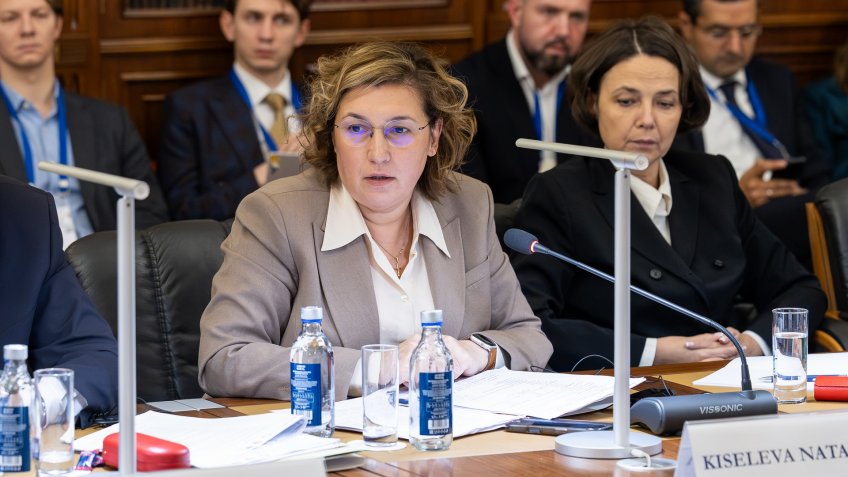
Russia has historically been Africa’s partner in higher education. In recent years, there has been substantial growth in this area. Since 2020, the number of African students studying in Russia has doubled to 37,000. As Natalia Kiseleva, Deputy Head of Rossotrudnichestvo, notes, interest and the number of applications for quota places are growing. These places provide access to secondary vocational, higher or continuing professional education funded by the Russian state budget.
«In just one year, this figure has doubled and now exceeds 40,000. Demand is highest in Angola, Sudan, Ethiopia, Egypt and Algeria. In total, the Russian Government allocates more than 5,000 quota places annually to students from African countries. However, the most sought-after specialisms include management, computer science and general medicine: fields that do not directly serve the country’s economy. Today, therefore, the personnel training system needs to be transformed, shifting its emphasis from the previously predominant humanities and medical fields to targeted, full-cycle engineering and technical education», -announced Natalia Kiseleva.
The speaker emphasised that immediate plans include launching a joint pilot project between Mining University and Rossotrudnichestvo to recruit students through targeted admissions for specific subsoil use facilities, with industrial placements at enterprises in Russia and African countries. The Russian–African Centre for Personnel and Scientific Support that has been established will become the central hub for the professional accreditation of mining engineers and the development of model legislation.