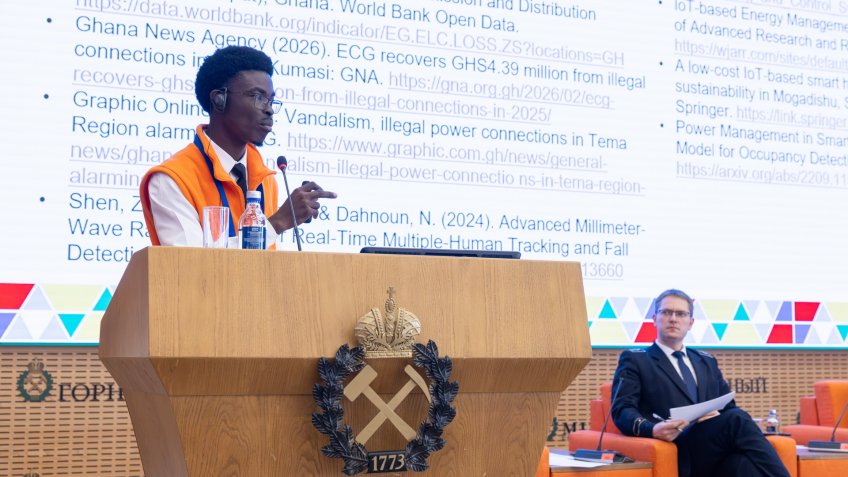
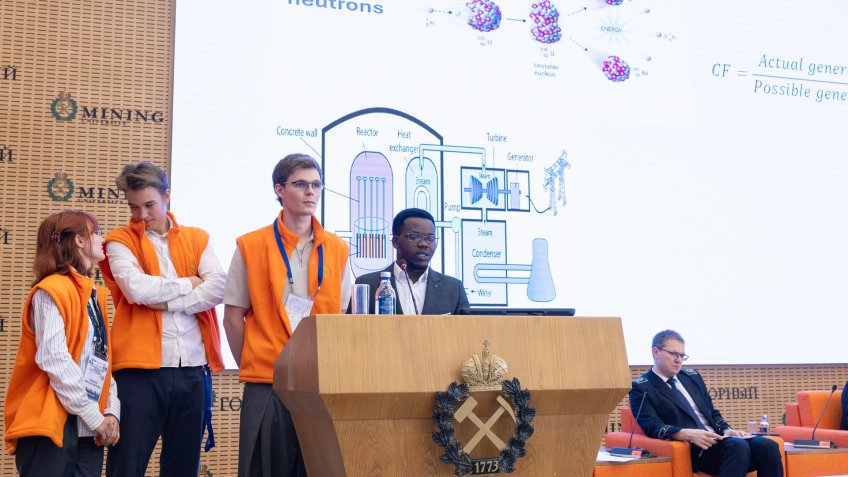
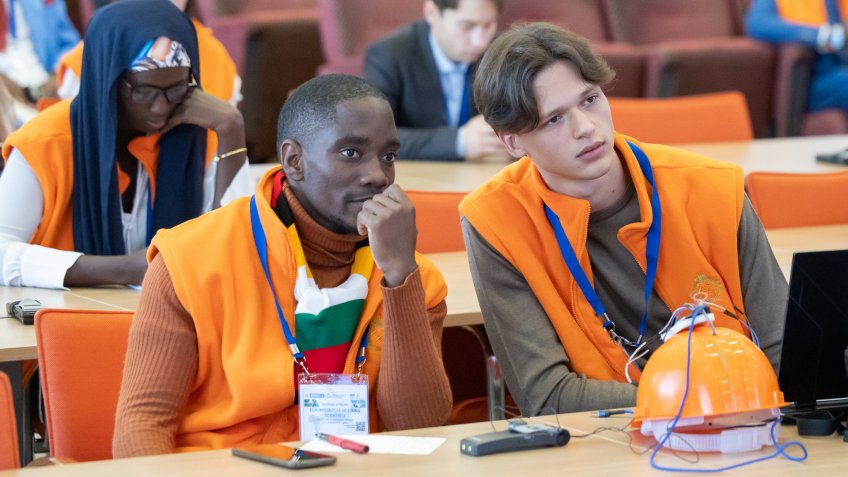
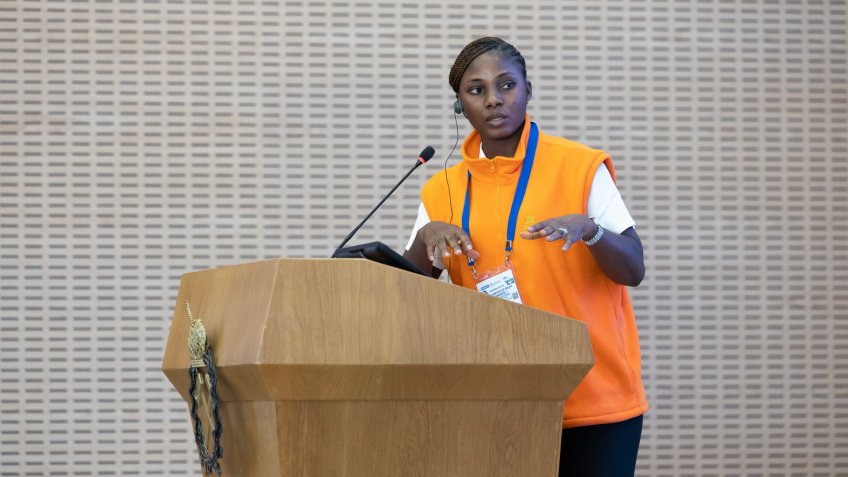
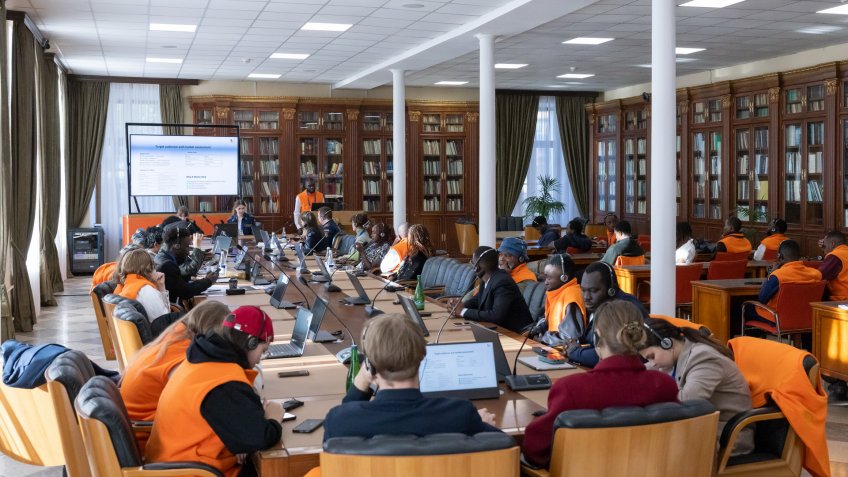
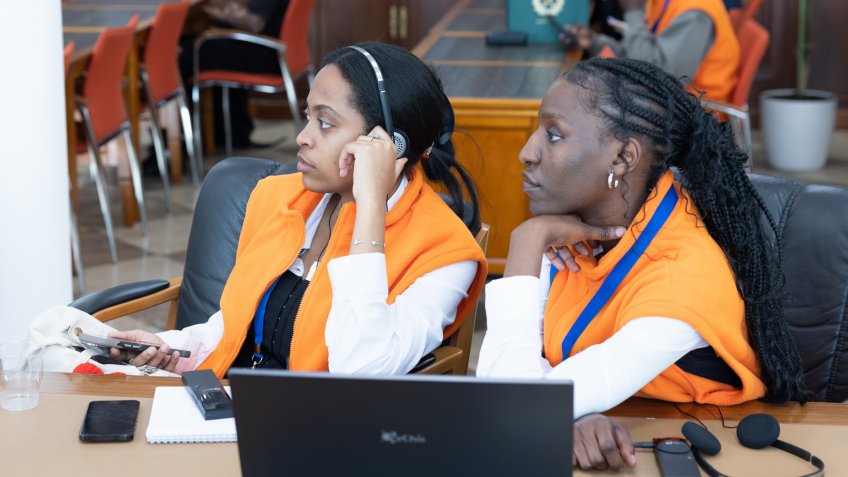
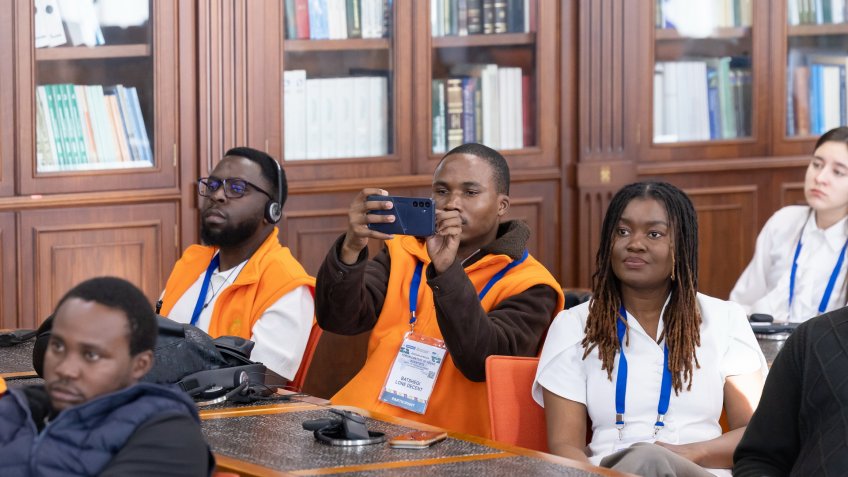
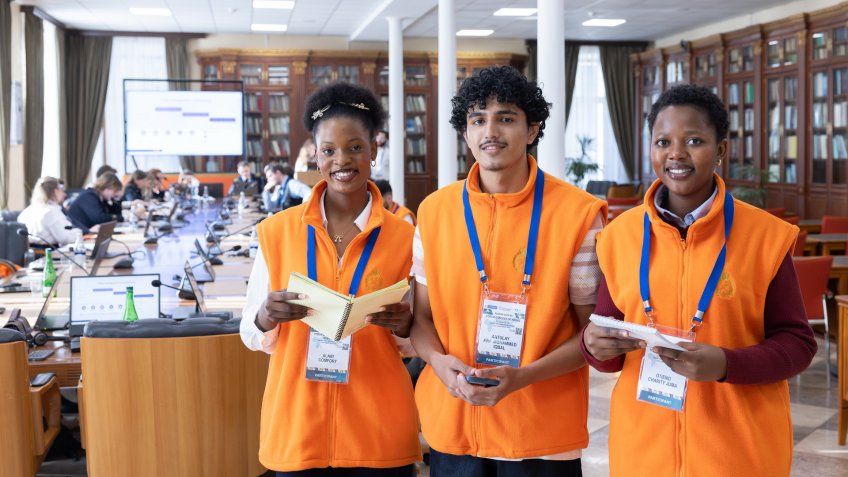
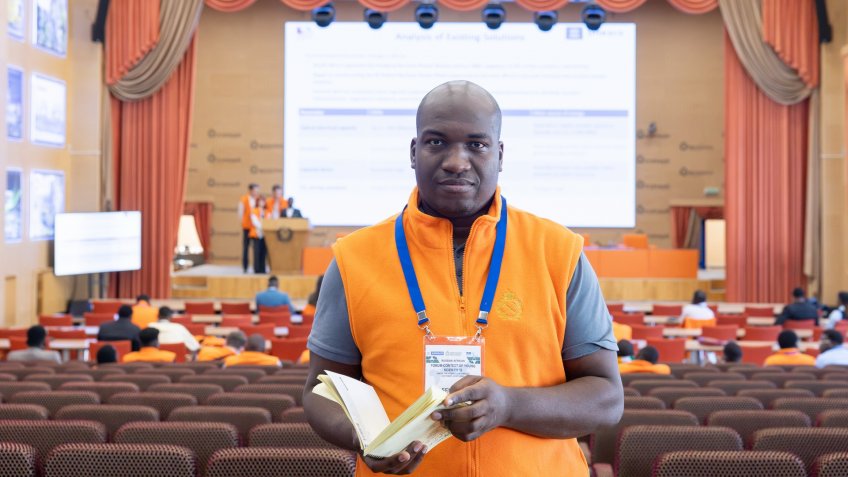
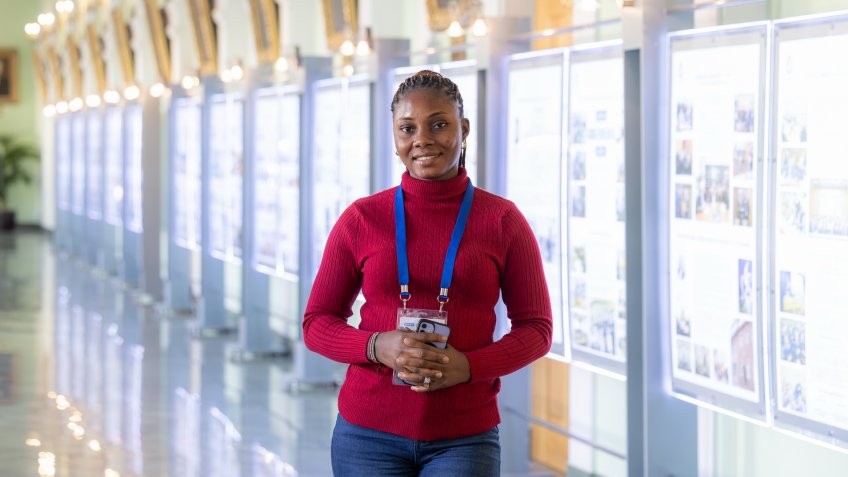
35 countries, 100 universities and 465 projects on smart energy, geology, climate engineering, ecology and biodiversity, chemistry of the future, mechanical engineering and other promising fields of engineering. The African Forum-Competition of Young Scientists, “Future Engineers of the World — the Foundation of Sustainable Development”, has concluded at Empress Catherine II Saint Petersburg Mining University. This major scientific event brought together students, postgraduate researchers and young scientists, each presenting their research developments, from AI monitoring and digital twins to satellite analysis and forecasting systems. Many projects were linked to specific African countries, including Nigeria, Ghana, Mali, Zambia, South Africa and Uganda.
The event was organised by the International Competence Centre for Mining Engineering Education under the auspices of UNESCO. Established at Mining University in 2018, the Centre develops methodological recommendations and models of educational programmes for mining specialisms, runs joint projects, placements and advanced training courses, and provides a forum for expertise on developing mining engineering education and training personnel for the mineral resources sector.
According to Maria Soldatchenko, Head of the International Competence Centre’s Education Project, the Forum’s principal value lies in bringing young researchers’ talent and scientific potential into contact with the real needs of global industry and the economy.
- Our idea was to invite the best representatives of the youth research movement in Russia and Africa. The aim is simple: not merely to discuss cooperation, but to show that joint projects can be put into practice, to find partners and to continue working within a ‘university – company – country’ partnership. Our guests were able to see Russian technologies and the opportunities offered by higher education, while Russian students became acquainted with the challenges and markets of the African continent.
The Forum also offered opportunities to find partners, like-minded colleagues and investors, and to seek advice from experts and representatives of major companies. The judges included leading lecturers from Mining University and member universities of the Nedra Consortium, the leadership of the All-Africa Students Union (AASU), representing more than 30 million African students, and the heads of industrial companies, including companies from Belarus.
- The young people were therefore also assessed by those who work directly with subsoil resources and industrial production. This gave competitors valuable feedback and helped them understand how to move forward, — Maria Soldatchenko added.
The chemical technologies section proved to be one of the most popular. Projects included producing synthetic fuel from local raw materials to replace expensive fuel imported from the United States, processing associated petroleum gas, and using other energy sources. The experts gave each team recommendations. A Nigerian team, for example, was advised to focus on analysing the composition of its associated petroleum gas, as the effectiveness of its proposed catalyst depends directly on the feed characteristics: water and hydrogen sulphide content and other impurities.
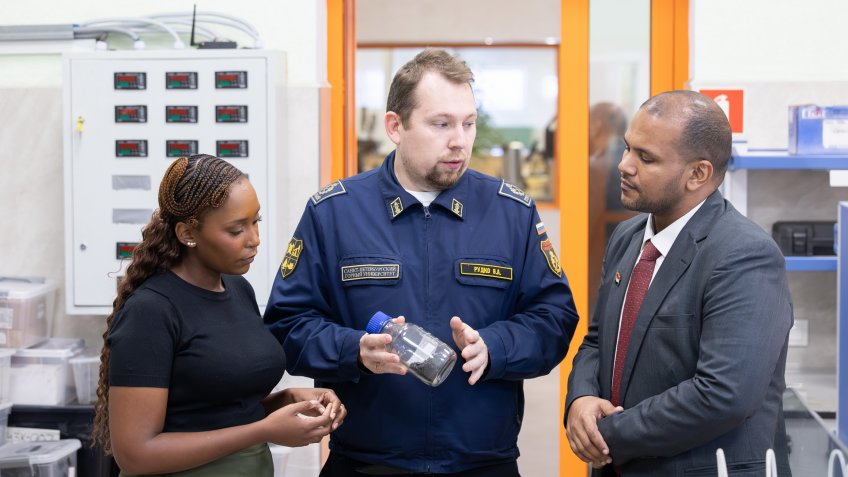
- Africans want to process their own resources to become independent of energy imports. For them, chemistry is therefore the key to industrial development and genuine sovereignty. I can see that the young people are defining their tasks correctly and keeping the practical relevance of their work in mind. However, all the projects shared a weakness: the lack of a deep scientific foundation. Our University has an established school of thought on how to process raw materials and what sequence of operations is needed to obtain a product with specified properties. The young people had a set of instruments, but lacked an understanding of the systemic link between feedstock quality and the characteristics of the final product. The jury and I emphasised that the essence of science is not simply to ‘investigate’ something using different methods, but to build a technological chain,- noted Viacheslav Rudko, Executive Director of Mining University’s Scientific Center “Issues of Processing Mineral and Technogenic Resources”.
There were some amusing moments, too.
- Not all the participants were able to attend in person, so some presented remotely. During one competitor’s presentation on the rather serious subject of reforming catalysts, roosters could be heard crowing in the background. Overall, though, the atmosphere was excellent and very friendly, one participant said.
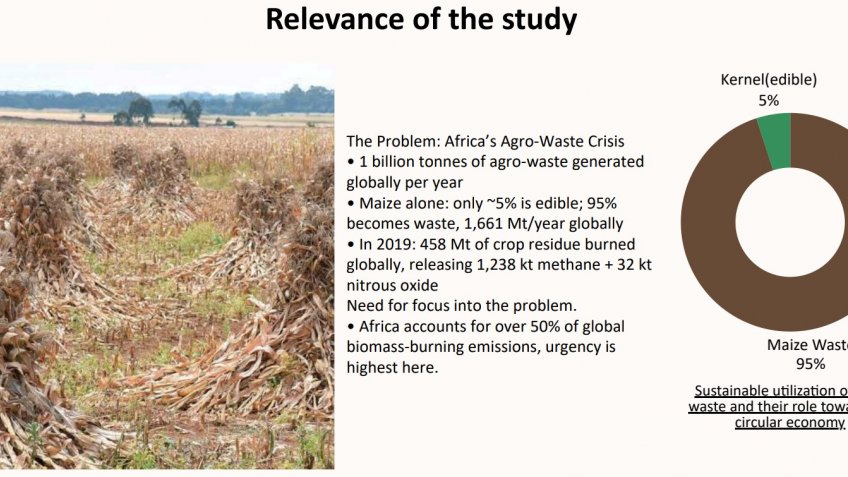
Around one billion tonnes of agricultural waste are generated worldwide every year, and a substantial proportion of maize residues is simply burnt, releasing methane and nitrous oxide. This is a global environmental problem. The team proposes turning maize waste into environmentally friendly, biodegradable leather. The technology involves extracting fibres from the waste, binding them into a flexible structure, treating them with natural oils and wax, and then dyeing and shaping the material. The team needs 135,000 dollars to complete its research and launch the product. As well as investment, the developers are seeking laboratories for testing and exchanging experience.
- Our project is innovative. We are currently at the prototype stage, and for the final version we plan to improve the material’s strength to make it commercially successful. The payback period is one year, and the market potential runs into tens of billions of dollars by 2030. Research shows that around 45% of leather goods consumers are willing to switch to more environmentally friendly alternatives, - said Charity Otieno, one of the project’s authors.
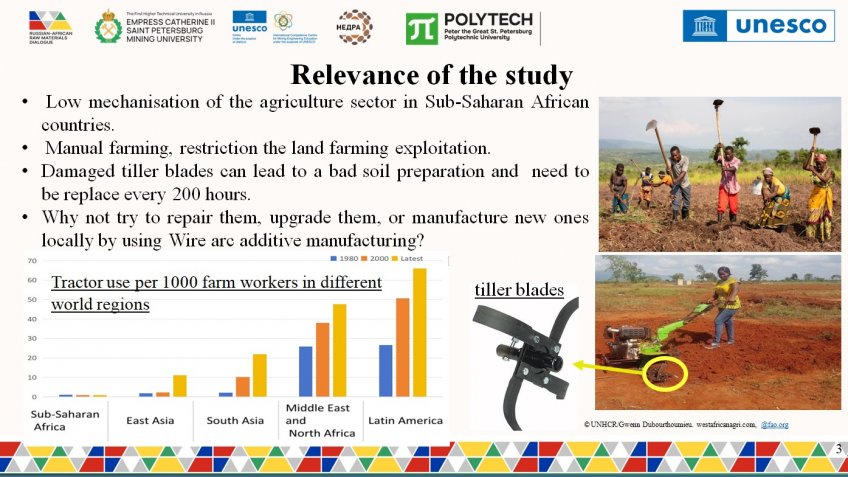
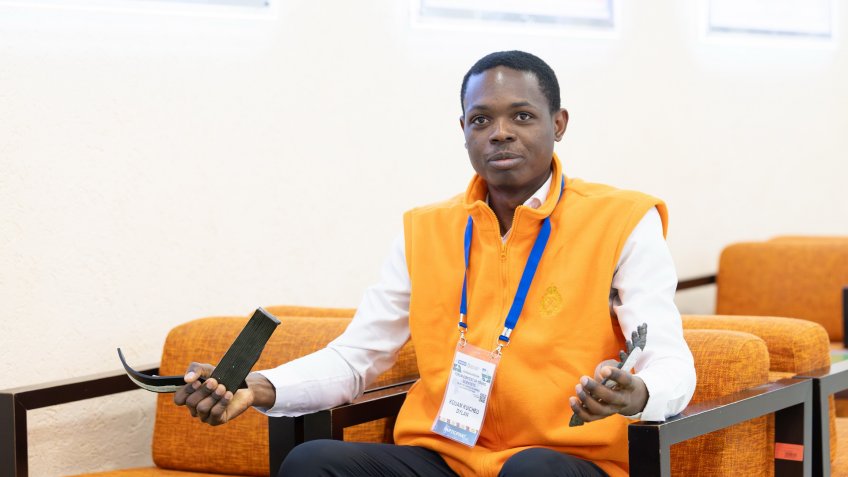
Another competitor, Dylan Kouam Kuicheu, a second-year postgraduate researcher from Cameroon at Peter the Great St. Petersburg Polytechnic University, presented an additive manufacturing project: improved cultivator blades for African farmers. The innovation lies in manufacturing metal parts using a 3D printer.
- Traditional press moulds are extremely expensive and difficult to manufacture, especially for unique or complex parts. My method makes production more accessible and reduces costs by a factor of two to three compared with other additive manufacturing methods. I would like this technology to be taught in African colleges and lycées so that people can manufacture the products they need locally, - explained Dylan Kouam Kuicheu.
The technology is relevant to import substitution and equipment repairs, both in agriculture and in other sectors, including the automotive industry. Its principal advantages include a 21% reduction in electricity consumption, less frequent replacement of worn blades, which currently need replacing every 200 operating hours, and the ability to repair and upgrade existing blades in-house.
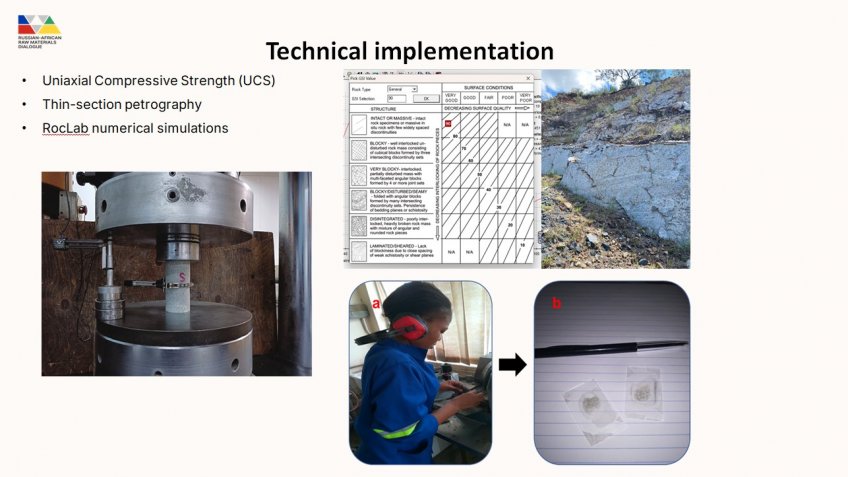
Sengani Fhatuwani Senga, a professor at the University of Limpopo in South Africa, presented a revolutionary method for assessing the brittleness of norite, a rock widely encountered in South Africa’s platinum mining industry.
The research was prompted by alarming safety figures at platinum mines. In 2024 alone, there were 29 recorded miner deaths due to falls of ground, while the total number of injuries in the industry exceeded 1,000. The scientist developed a specialised index that accounts for norite’s distinctive mechanical and petrographic characteristics. The project received funding to implement a multi-stage plan, including rock testing to determine critical loads, developing new materials and components using the resulting data, and testing the technology at operating mines.
- I came to Russia to find partners and form a research team,”. He is convinced that Russia has accumulated considerable experience and developed mining engineering technologies that could be useful to his project, - says Sengani Fhatuwani Senga.
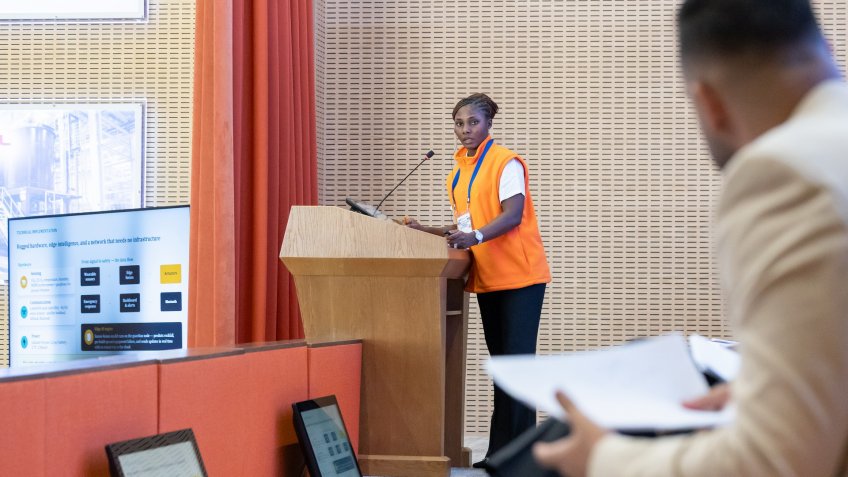
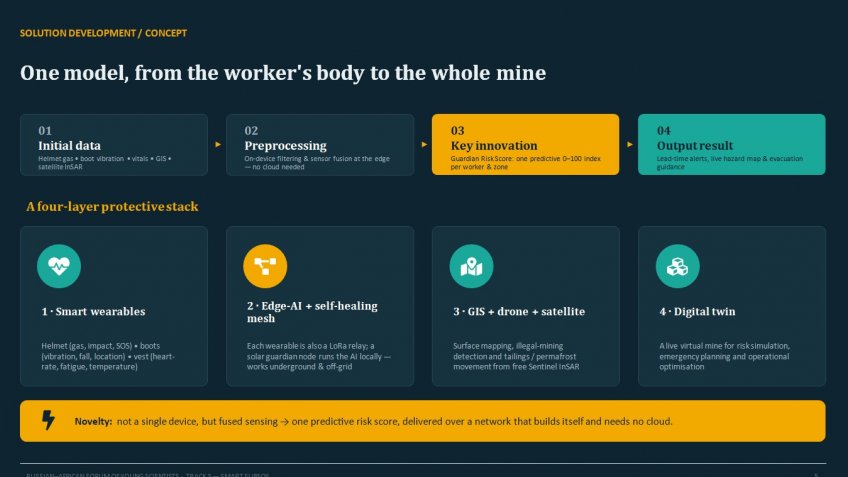
The project by Atto Adi’s team from the University of Calabar in Nigeria also addresses safety in the mining industry. The students proposed a mine safety system capable of operating without internet access or infrastructure. The problem is extremely acute: according to the participant, around 45 million people in Africa work in artisanal mining, where safety monitoring, protective equipment, and warning systems are often absent. The technology will help both industrial and artisanal miners.
The project is a system for monitoring a miner’s condition underground through “smart” equipment, including smartwatches, clothing, boots and headphones. It simultaneously tracks health indicators and environmental parameters such as oxygen levels and the presence of harmful substances in the air.
-The system will be able to operate even without access to the electricity grid or the internet. This is particularly important for remote African regions and hard-to-access mines in Russia, including Arctic and Norilsk operations, - explained Atto Adi.
The team has already assessed the project’s cost-effectiveness. Expected benefits include fewer accidents, reduced downtime, lower insurance premiums and improved ESG indicators. Developing and testing the prototype requires around 50,000 dollars; a pilot deployment for 200 workers requires 200,000 dollars; and scaling up the project is estimated to cost more than one million dollars. The team is now discussing funding with its university and seeking external investors.
Atto Adi herself is considering transferring to a master’s programme or entering a doctoral programme at Mining University.
- I am attracted by your well-equipped laboratories, which will allow me to move from theoretical work to building an actual prototype under the guidance of experienced mentors, — she said.
The Forum-Competition “Future Engineers of the World — the Foundation of Sustainable Development” concluded with the selection of 11 winners.
Продолжая использовать сайт, Вы соглашаетесь на обработку Cookie-файлов и принимаете условия Политики обработки ПД