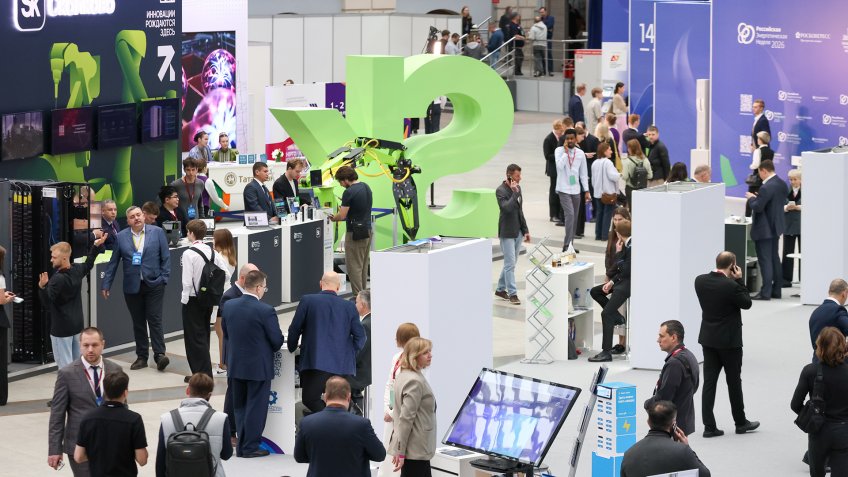
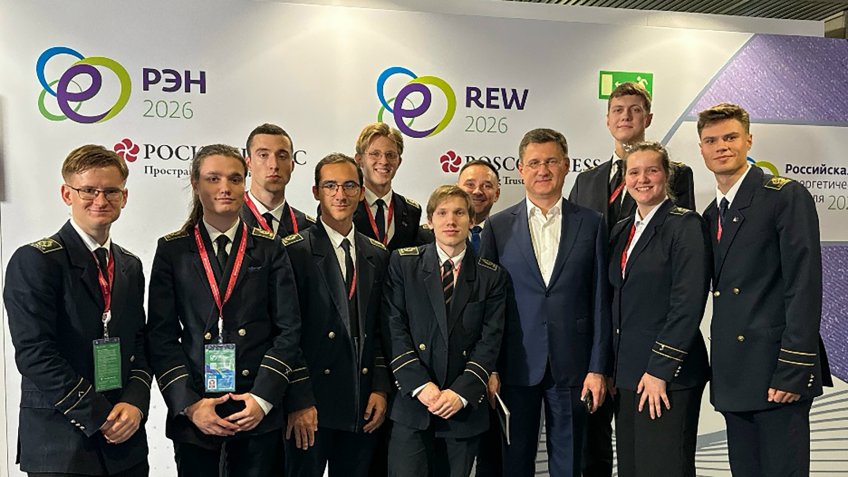
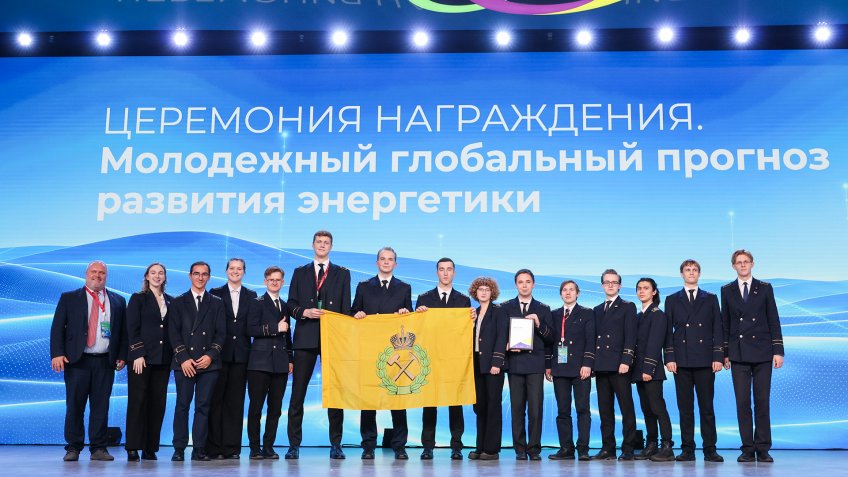
Students from Empress Catherine II Saint Petersburg Mining University returned with awards from Moscow, where the Youth Day of the Russian Energy Week (REW) International Forum took place. The WeWatt team’s achievements included victory in the prestigious Youth Global Energy Outlook project competition, whose final was held as part of REW.
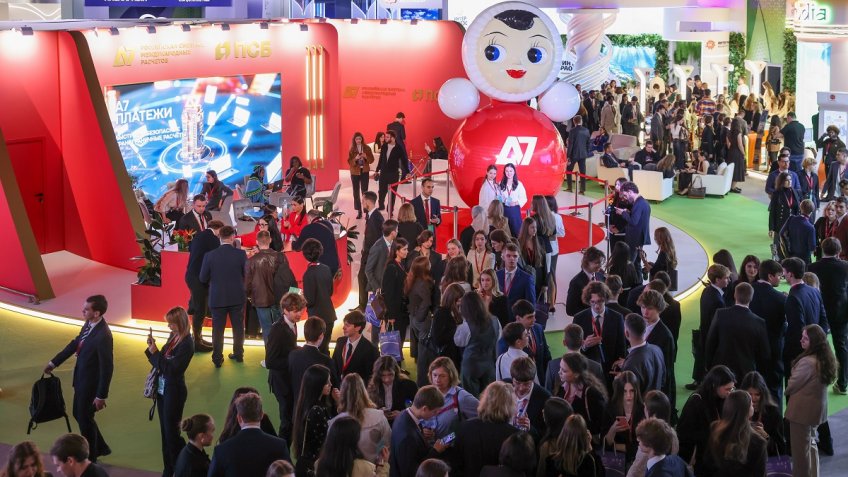
REW Youth Day is a platform where the energy sector’s future talent meet those shaping its development today. More than 4,000 young engineers, researchers, university students and schoolchildren spoke with representatives of government and leading energy companies: they explored the sector’s challenges, learned from professionals’ experience and put forward their own projects and initiatives. The WeWatt team analysed the fuel and energy potential of Russia’s regions, identifying favourable factors, risks and areas for growth. On this basis, they developed practical recommendations for optimising local energy balances. The emphasis was on making the fullest possible use of local fuels and establishing efficient logistics for energy supplies. The authors not only considered the regions’ existing capabilities but also proposed solutions that could improve the energy landscape. The forecast included 13 initiatives supplementing the recommendations for using existing resources and technologies.
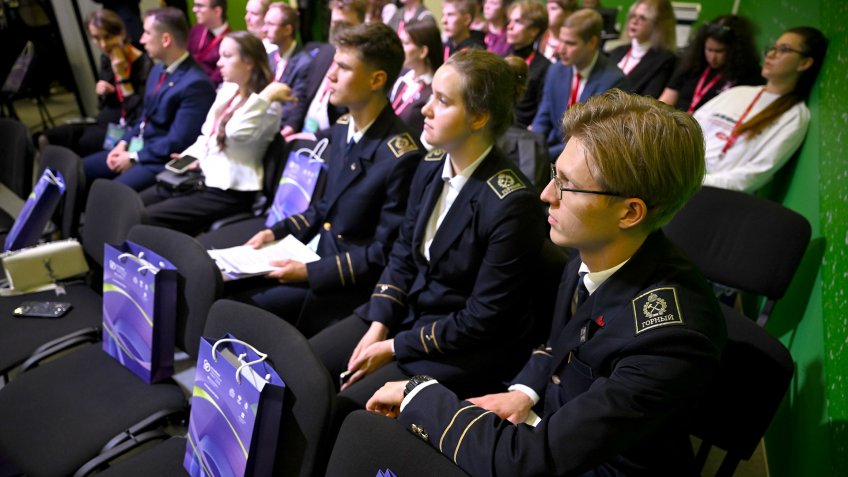
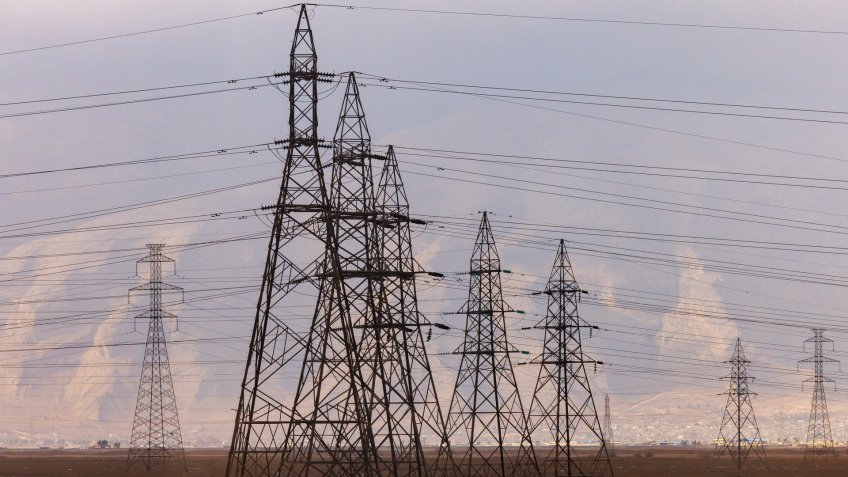
These included the use of drones that travel along power lines to inspect and repair power transmission lines. Such devices travel along the wires, locate damage, and service hard-to-reach sections. They can withstand voltages of up to 220 V without the line being switched off and operate at low temperatures and in winds of up to 10 m/s. On a single charge, such a device can inspect a section up to 5 km long. Its productivity is comparable to a day’s work by 10–15 electricians. In the project authors’ view, this technology would enable defects to be detected promptly and repairs to be carried out before serious faults occur. This is particularly relevant for regions with long distances, inaccessible infrastructure and a harsh climate: robotic systems could become one means of improving the reliability of electricity supplies.
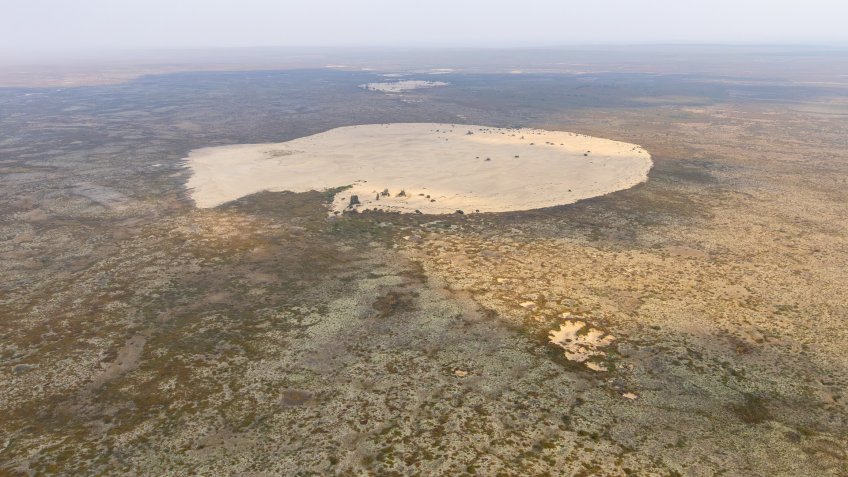
The forecast also included a project to develop advanced processing of rare-earth metals at the Afrikanda deposit in the Murmansk Region. The deposit is seen as one of the key sites in the rare-earth cluster taking shape in the Arctic. Its distinctive feature is the complex composition of its ores: in addition to rare-earth elements, they contain titanium, niobium and tantalum, which are in demand in high-tech industries. Several of the team’s initiatives focus on developing new energy sources: establishing hydrogen production in the Nenets Autonomous Okrug and assessing the prospects for using floating nuclear combined heat and power plants in the Sakhalin Region.
Particular attention was paid to transport logistics. The students identified adverse factors that could restrict the movement of energy resources and proposed ways to overcome them. Examples included the use of unmanned ultra-heavy Yermak electric locomotives, reviving the Belkomur project to build the White Sea–Komi–Urals railway line, and high-voltage direct current (HVDC) transmission from the Novovoronezh Nuclear Power Plant to Moscow.
«Winning the Youth Global Energy Outlook is a major and important achievement for us. The team’s membership changed considerably this year. We were concerned that, with so few experienced participants, we might not be able to maintain the high standard WeWatt had set previously. But thanks to good organisation, coordinated teamwork and help from the previous team members, we rose to the challenge very successfully», – said deputy team captain Gleb Lishmanov.
The Saint Petersburg Mining University students were named the best team in the Students category for the second consecutive year and the seventh time since the competition was founded in 2017. Russian Deputy Prime Minister Alexander Novak presented the winners with their certificates. He thanked the team for its work and noted that its findings and recommendations were an excellent example of an analytical approach to the sector’s development.
«The energy industry is one of the most technologically advanced sectors, actively introducing cutting-edge digital and engineering solutions. It is gratifying to see REW Youth Day bring together thousands of talented schoolchildren, university students and young professionals every year, ready to address strategic challenges in the fuel and energy sector. Our country has the world’s largest power system, and it is the new generation of engineers and researchers who will be called upon to develop its potential, strengthen domestic industry’s workforce and move the sector forward», – Alexander Novak emphasised in his address to Youth Day participants.
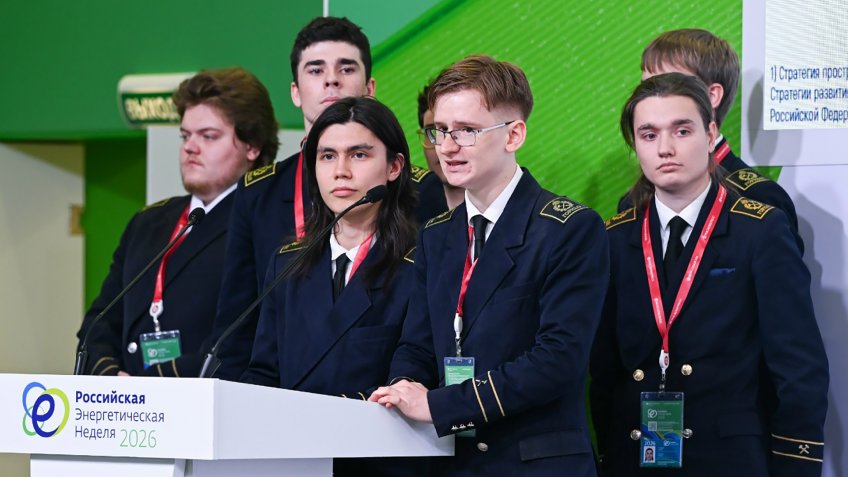
Two other teams from Saint Petersburg Mining University presented their projects at the youth interactive sessions. Members of Attractor, for example, developed a unified digital platform called ‘Spatial Solutions Recommendation Suite’. This tool helps plan the development of regional fuel and energy sectors through mathematical modelling. The platform collects data from the relevant ministries’ government information systems, processes them using analytical algorithms and forecasts changes in socio-economic indicators, fuel and energy balances, and transport route utilisation. This makes it possible to formulate recommendations for the relevant authorities. According to the young developers, neither Russia nor any other country has a fully equivalent system combining data collection, strategic planning and interdepartmental cooperation.
«We modelled the potential findings the platform could produce. One example is a project for the industrial development of the Donetsk People’s Republic. The model is intended to study enterprises and link them into an ‘extraction–primary processing–secondary processing–sales’ chain, anticipate possible risks in the form of electricity shortages and propose a solution involving an increase in the capacity of the Zuyevskaya Thermal Power Plant. The platform can also estimate the likelihood of a substation failure and devise an alternative route for transmitting electricity. In other words, this is not only about collecting and accumulating data, but also about developing solutions for sustainable development in the fuel and energy sector», – said Attractor team members Timur Aliyarov and Pavel Pushin.
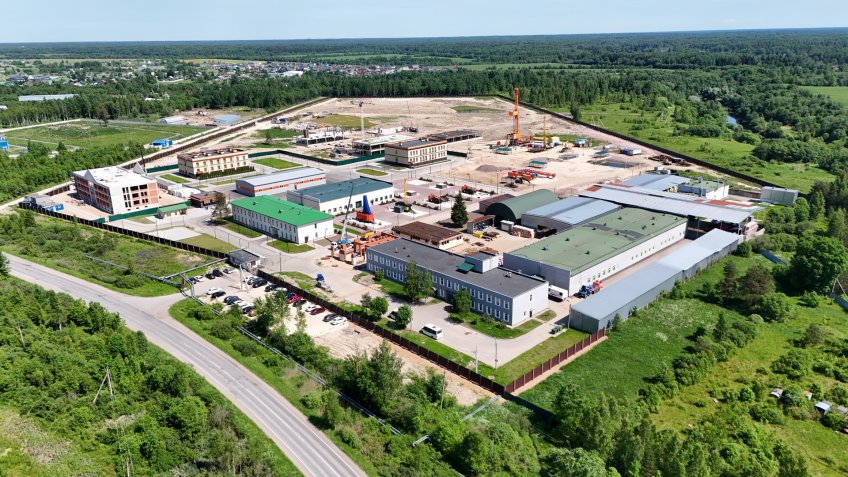
The INMOVE team proposed a concept for transforming the Sablino training site, which currently serves as a key venue for practical training for students in mechanical engineering, construction and oil and gas disciplines. The project would take the site to a new level, giving it the status of a unique teaching and research complex open to different audiences: young engineers, postgraduate researchers, university students and even schoolchildren. According to its authors, this approach ensures high-quality interdisciplinary interaction and creates an integrated ecosystem for workforce training.
«In our proposed project, the site’s infrastructure provides a continuous educational pathway, from career guidance exhibitions for upper secondary school pupils to scientific tests on real equipment for postgraduate researchers or employees of partner companies. The project includes creating a training area for safe work with electrical equipment, an electric vehicle charging station, an amphitheatre for lectures and a space for operating unmanned aerial vehicles. All this turns Sablino into a teaching and research complex bringing together people of different specialisms and ages», –explained INMOVE team member Anastasia Tishkovskaya.
The projects presented at REW Youth Day are the result of the practice-oriented training model established at Mining University. Throughout their studies, students learn to solve practical problems in interdisciplinary teams and develop complete solutions for industrial partners. Participation in Russian Energy Week gives these developments exposure at the federal level.