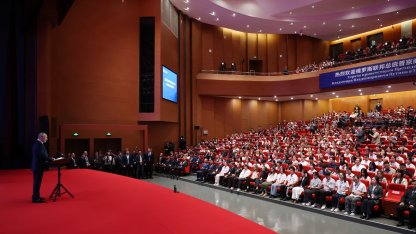

Speaking in Shenzhen on 18 November, Vladimir Putin described Empress Catherine II Saint Petersburg Mining University as one of the world’s best universities in its field. The context was the establishment of the Russian–Chinese Mineral Resources Institute by Saint Petersburg Mining University Mining University and Taiyuan University of Technology. At first glance, another international education project: exchanges of students, lecturers and research developments, and diplomas from two universities. Yet this initiative offers a considerably more interesting opportunity to bring together two scientific and educational traditions to train engineers capable of creating the next generations of industrial technologies.
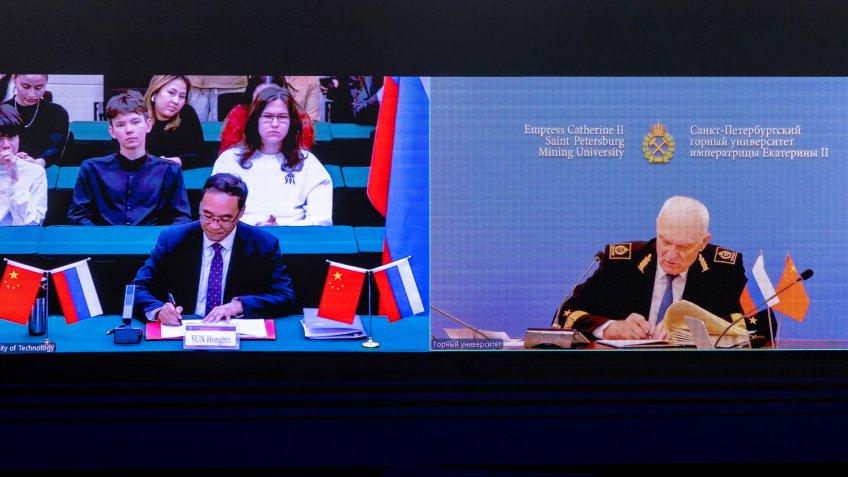
The Institute will have campuses in Saint Petersburg and Taiyuan. The programme is designed to last six years: two years at home, two in the partner country and another two after returning home. The preliminary plan is to admit 125 students annually, starting in 2027. The programmes cover Mining Engineering, Technosphere Safety and Chemical Engineering. The central issue, however, is not the pair of diplomas. The question is whether students can follow a coherent path from developing the foundations of a scientific worldview to applying advanced research methods to industrial problems.
Two Scientific Traditions — One Educational Pathway
In spring 2025, Mining University postgraduate researcher Alexander Korshunov brought samples of shale ash to Taiyuan. Together with his Chinese research supervisor, Hao Wenming, he was preparing a series of experiments to test the ability of shale ash to capture carbon dioxide and hydrogen sulphide. The nature of the material had been investigated in Saint Petersburg, while the partner university had the equipment to analyse its interaction with gases. This illustrates how cooperation between universities can broaden both the range of scientific questions and the opportunities for research.

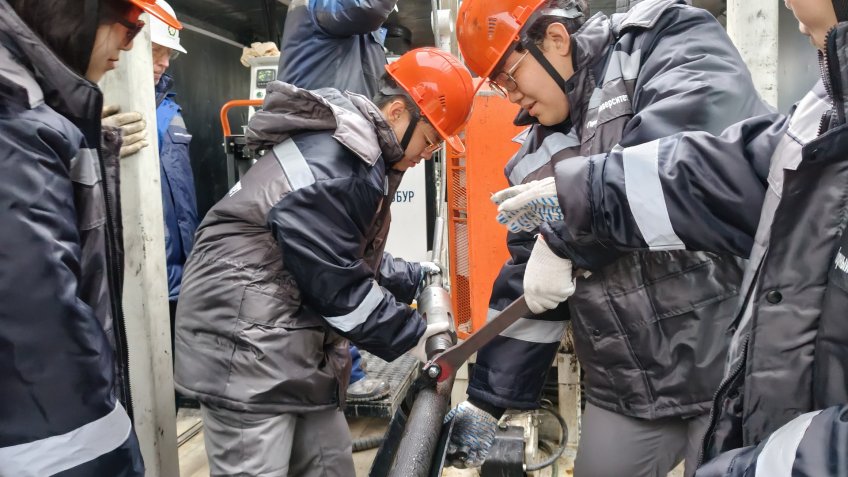
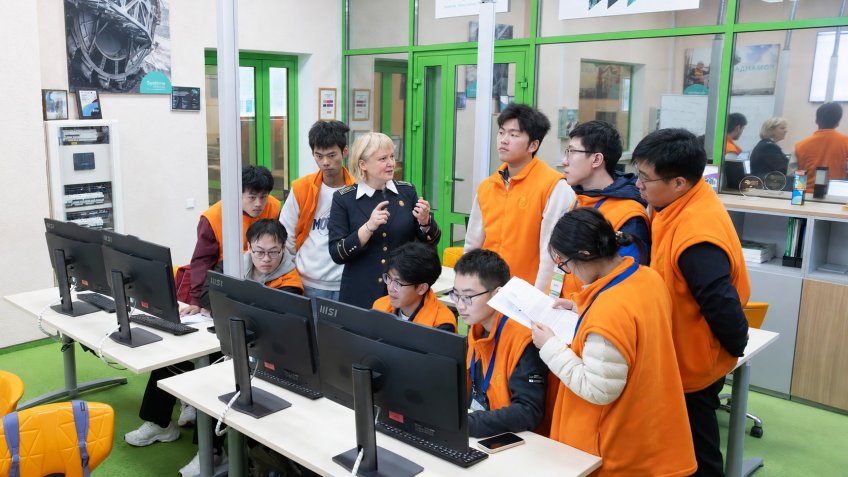
The new Institute will offer an even longer period of immersion. A student from China will do more than study the Russian engineering tradition: they will be able to experience it from within, see how laboratories and expeditions work, how a mentor discusses a failed experiment, and how a lecturer and a process engineer debate whether a calculation is applicable. Likewise, a Russian student will immerse themselves in China’s scientific, industrial and cultural environment. A two-year stay is valuable not for its own sake, but for the opportunity to become part of another research environment — an experience that a few guest lectures cannot provide.
Returning to the example above, what might this work look like for students at the joint Institute? In the early years, it all begins with curiosity: why can shale processing waste capture gases at all, and could it be turned into a useful material? Fundamental subjects help turn these questions into a scientific hypothesis, while participation in a Mining University research group helps students master methods for testing it experimentally. In Taiyuan, a student encounters new equipment, learns to compare the results from two laboratories, and explain the patterns and contradictions found. Finally, in the concluding stage of their training, they are already able to participate in industrial trials alongside their research supervisors and academic partners, assessing the possibility of turning a scientific result into a working technology.


Whether the ash can become an effective sorbent is the next question. Such materials could potentially be used to remove carbon dioxide and hydrogen sulphide from industrial gases. According to data from the International Energy Agency (IEA), the world’s coal-fired power plants alone emit around 11 billion tonnes of CO2 annually. It is important to remember, however, that even a successful laboratory experiment does not amount to a finished technology. Tests on an actual gas stream will be needed, along with assessments of the material’s service life, its capacity for regeneration and the cost of gas treatment. This is precisely the sequence a future engineer must learn: first understand the phenomenon, then test the hypothesis, and then determine the conditions for industrial application. Between a scientific result and a working installation lies not a ‘paper’ report, but an entire chain of research and engineering decisions.
From Kapitsa’s Principles to Integrated Training
As early as February 1946, Pyotr Kapitsa, formulating the principles of the future Moscow Institute of Physics and Technology (Phystech), insisted that students should have access to the work of strong research teams and learn alongside active researchers. The USSR had student design bureaux, scientific societies and sectoral laboratories; research throughout the entire period of study was also discussed. It would therefore be strange to declare such involvement a 21st-century discovery.
Yet the existence of a research club or a design bureau does not itself mean that every engineer graduates with a research mindset. Today’s task is more complex: to connect scientific literacy, fundamental subjects, students’ own research experience and industrial placements in a coherent educational pathway. The aim is to make these elements work together, rather than replace one with another.


Mining University has already laid the foundation for this. The Pilot Project to improve higher education provides for six-year engineering education with a core of fundamental subjects and extended practical training. In their first year, students study ‘Concepts of Modern Natural Science’; in their second, ‘Fundamentals of Scientific Knowledge Formation’. There are student scientific societies, the ‘Scientist’s Assistant’ programme and the advanced ‘Research Engineer’ pathway, which enables students to obtain a second diploma. In 2026, the first participants in this comprehensive programme have already defended their research. In this way, curiosity leads to real experiments and independent work on scientific problems.
Why do these elements need to be connected in the first place? An answer can be found in the October report by the Organisation for Economic Co-operation and Development (OECD). Putting physics, chemistry, mathematics and engineering subjects alongside one another in a curriculum makes for an attractive ‘Interdisciplinary’ label, but does not teach students to connect different kinds of knowledge in practice. Yet graduates need these competencies, because Russia and China face major scientific and technological development challenges on a national scale.

Demand for Tomorrow’s Engineers
The need for professionals of a new calibre can be measured in concrete figures. In 2025, 32.5% of Russian innovative organisations reported a shortage of highly qualified engineers, 37.8% a lack of the necessary competencies among employees, and 34.8% difficulties replacing departing experts. Demand from the industries for which the Russian–Chinese Institute is being established is also revealing. Russia will need around 30,000 additional specialists by 2030 to implement the ‘New Materials and Chemistry’ national project alone.
China’s demand for personnel is no less substantial, although it is driven by somewhat different processes. According to figures from China’s State Council, demand for technical specialists in robotics is 5.2 times supply, while demand for engineers in new energy technologies is 5.1 times supply. For the coal industry, which is particularly important to Shanxi Province, where Taiyuan is located, a separate challenge is training specialists who combine knowledge of mining, automation and digital technologies. According to some estimates, the intelligent modernisation of mines could create a shortage of around 150,000 workers with these competencies.
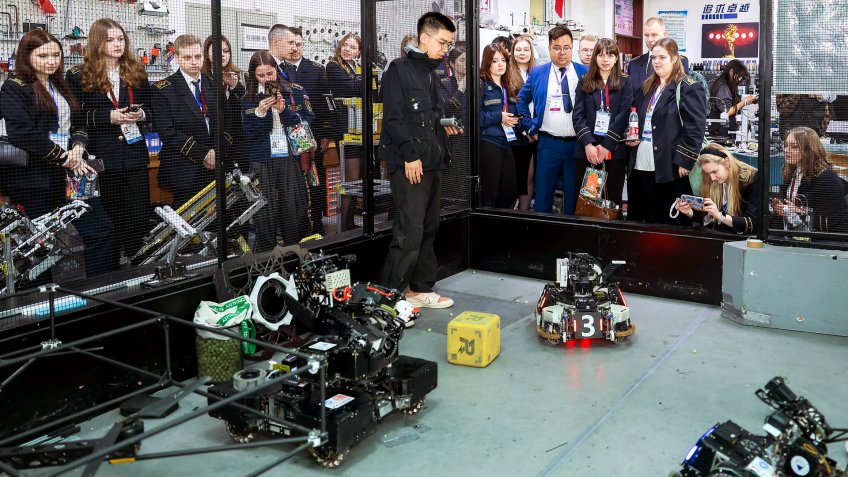
Of course, an annual intake of 125 students cannot eliminate the substantial workforce shortages in the two economies, but it is precisely through such challenges that knowledge from the two research traditions can meet enterprises’ needs. The new Institute’s results should therefore be assessed by more than the number of graduates with two diplomas or joint publications. Far more important is how many research solutions have undergone independent verification in both countries, how many developments have been tested at enterprises, and which have proved technically and economically viable. Fundamental science is not obliged to produce an immediate profit, but solutions developed for practical use must have a route to industrial testing.
Russia and China need more than a joint university project: they need a replicable model of engineering education in which the path from curiosity about the world to developing new production systems becomes part of professional training. The joint Institute must make this possible by offering a new model of engineering education with meaningful scientific content integrated throughout the curriculum. Many of the technologies needed do not yet exist in a finished form. They cannot be mastered from textbooks that no one has yet written. Years from now, those who enrol at the Institute in summer 2027 and successfully graduate will have to write them.