
From 19 to 20 December, the foreign ministers of African countries and Sergey Lavrov will convene in Cairo. A delegation from Empress Catherine II Saint Petersburg Mining University has also been invited to the meeting. The University plays a flagship role in educational cooperation with Africa, through the “Nedra Africa” consortium and the International Competence Centre for Mining Engineering Education under the auspices of UNESCO. It is precisely the improvement of the quality of training for specialists in the field of subsoil use that is the number one issue for the continent with the greatest mineral-resource potential.
Africa is simultaneously the richest and the poorest region in the world. Its enormous wealth is concentrated in its subsoil. For example, the Democratic Republic of the Congo holds approximately 50 percent of the world’s reserves of cobalt and lithium. South Africa accounts for more than 80 percent of global reserves of platinum and palladium and around 40 percent of chromium. South Africa, Gabon, and Ghana taken together possess 70 percent of the world’s magnesium reserves. These estimates may also prove to be significantly understated, since geological exploration in Africa is conducted at a clearly insufficient level. In any case, when recalculated in terms of natural resources, each resident of the continent may be considered 15 times wealthier than a European or an American.
Global conditions in commodity markets are also developing in Africa’s favor. In 2025, for example, prices for platinum group metals rose significantly, and especially for gold, which, amid heightened geopolitical uncertainty, has acquired a special status as a “safe-haven asset”.
In the coming years, a substantial increase in demand should also be expected for other mineral resources from Africa’s “treasure chest,” particularly lithium, cobalt, graphite, nickel, and copper, since these materials are indispensable for the production of electrical grids and transmission lines, batteries, as well as for renewable energy, in particular wind turbines.
Even the International Energy Agency has today fundamentally revised its forecasts regarding the expected peak in demand for mineral resources, including fossil fuels. It is now believed that global demand in this segment of the market will continue to grow at least through 2050.
Unlike, for example, Europe, Africa’s demographic situation is also favorable: a high proportion of young, working-age population makes it possible to develop the economy and the social sphere. According to the latest data from the leading analytical agency S&P Global, approximately 12 percent of the world’s working-age population (aged 15 to 64) lives in the part of the continent south of the Sahara. By 2030, this figure will rise to 15 percent, and by 2050, to 25 percent.
Africa’s natural and human resources are immense, yet they are unable to provide Africans with even an average standard of living by global measures. Nineteen of the world’s twenty poorest countries are located there. GDP per capita even in the continent’s most developed economies—South Africa (USD 6,100), Egypt (USD 3,000), Algeria (USD 4,000), and Morocco (USD 3,300)—is 10–20 times lower than that of global leaders such as Switzerland (USD 90,000), Singapore (USD 68,000), and the United States (USD 67,000). Despite its enormous potential, Africa’s share of global production amounts to a mere two percent, and its share of global trade stands at three percent of the world market.
A particular challenge is Africa’s energy sector. Ranking fourth among the world’s regions after the Middle East, the CIS, and North America in terms of proven natural gas reserves, at 17.221 trillion cubic meters, Africa remains a modest producer and an even smaller consumer of this resource. As emphasized in the declaration of leaders at the recent G20 summit in Johannesburg, more than 600 million Africans have no access to electricity at all, and a billion people are deprived of clean fuel for cooking.
The absence of growth in industrial production and living standards is rooted in the sphere of personnel training. The qualification level of the workforce is extremely low, and the shortage of professional specialists is exceptionally severe. The deficit of specialized engineering personnel is critical. As a result, the majority of mineral resources are exported in unprocessed form. Consequently, the extraction, transportation, and even processing of natural resources, in the absence of a trained national workforce and indigenous technologies, bring Africa only negligible returns from the true value of its subsoil, fail to generate high added value, and do not provide the economies of supplier countries with adequate income.
Colonialism has given way to a post-colonial predatory exploitation of the continent by global corporations. Armed with neoliberal ideology, they use their technological superiority to implement projects in the field of raw material extraction that are disadvantageous to Africa. The well-known Brazilian religious figure Frei Betto wrote about neoliberalism that “what matters is not progress, but the market; not production, but speculation; not the quality of a product, but its advertising success.” Naturally, the periphery of the global system bears the greatest costs.
As one of the relevant African ministers aptly noted, Africa, in its “race for survival” through tax incentives and concessionary privileges granted to transnational companies, inevitably finds itself in a “low-margin extraction trap.” Meanwhile, the revenues generated in the same context by countries of the Global North—the de facto owners of technologies and competencies—exceed any reasonable margin.
Hence the conclusion: the region must make significant progress along the value chain from extraction to processing and manufacturing in order to fully utilize national resources for the benefit of the state. Achieving this key objective requires active scientific and technological development and a rapid expansion of the professional human capital of the mineral resource complex (MRC) of African countries.
This is well understood by many representatives of the scientific and educational community in Africa itself. Not long ago, at a major forum in Pretoria, participants pointed out an unfair and painful paradox of the modern world (above all for Africa): humanity has learned to benefit from outstanding technological achievements such as artificial intelligence, robotics, and biotechnology, while at the same time, social inequality on the planet continues to grow.
If society seeks to create a more just, humane, and stable world, science and education must first and foremost ensure the sovereignty of the continent's states.
Africa itself sees the achievement of the desired sovereignty through assuming responsibility for addressing such critical tasks as:
- strengthening research infrastructure;
- retaining African scientific talent;
- ensuring that the continent derives fair benefits from its natural wealth;
- integrating science, technology, and innovation into the industrialization process;
- increasing the share of expenditure on research and development in the GDP of African states;
- improving the quality of mathematical, natural science, and engineering education.
These approaches are correct; however, African countries (as any other state) also require a common national goal capable of guiding the development of the future workforce toward achieving state sovereignty. Without which, each African country risks fragmenting into sectors, institutions, and interests operating in different directions, thereby weakening the collective capacity of nations for renewal.
Such a national goal is directly linked to university education, which, in addition to its traditional missions (knowledge transmission and personnel training, scientific research, and innovation), must place particular emphasis on “engagement,” that is, the responsibility of universities to interact with government, industry, local communities, trade unions, and civil society in addressing pressing social challenges.
The most important issues of development must be resolved independently by each state. They cannot be delegated to others, and Africa has considerable and not always pleasant historical experience in this regard. At the same time, making use of assistance from friends who have not tarnished themselves with colonial ambitions and who treat Africans not condescendingly, but as equals, is entirely appropriate.
Such assistance is being offered to African countries, and above all to their higher education institutions, by Empress Catherine II Saint Petersburg Mining University. Just recently, these issues were discussed in detail with African colleagues during the ongoing Russian–African Raw Materials Dialogue, held with the participation of representatives from 32 countries of the continent.
The delegates from Africa showed exceptional interest in the practical developments of the Mining University, in particular in the International Standard for Training Engineers in the Mining Industry. The absence of a unified system for assessing the professional skills of mining engineers creates serious obstacles to the development of the MRC, limits the mobility of qualified personnel, and complicates the inflow of investment.
An agreement was reached on large-scale cooperation and the exchange of best practices to improve the quality of education in the field of mineral resource management with the Association of African Universities—the most authoritative inter-African structure in the sphere of higher education and science, founded in 1967 and uniting more than 400 African universities. For them, the experience gained by the Mining University during the implementation of the pilot project aimed at improving Russian higher education and developing optimal approaches to the engineering education of the future is of great importance.
Great interest at the forum was also generated by presentations from African specialists who are undergoing full-time training at the Mining University under the new program “Management of Subsoil Use Facilities.” This program is designed for individuals who already hold higher education degrees and who, over the course of one year, enhance their qualifications at the Mining University both in the field of engineering itself and in the management of enterprises within the mineral resource sector. The competition for the very first intake of the program already amounted to several hundred applicants per place. And now, following the forum, there is confidence that its popularity among African specialists will only continue to grow.
Finally, those for whose benefit all this work is ultimately carried out—the younger generation, students of Russian and African universities specializing in the raw materials sector—were not forgotten. Young participants in the Russian–African Raw Materials Dialogue adopted a Student Declaration, in which they recalled that students are a key driver of progress and positive transformation. They recognize their responsibility in the context of global development and the construction of a multipolar world, and see their mission in establishing an effective dialogue, exchanging knowledge and experience between educational organizations in Russia and African countries, expanding joint research projects, supporting high-quality professional training, peace, and sustainable development.
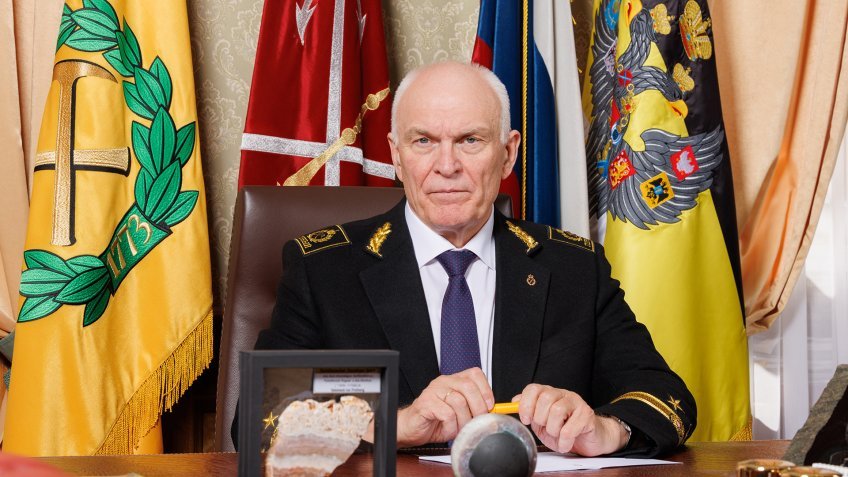
Vladimir Litvinenko, Rector of Empress Catherine II Saint Petersburg Mining University
The original article was published by RIA Novosti.