

On Thursday, June 4, during the main business day of the St. Petersburg International Economic Forum, a thematic session titled "Rare, Strategic: Sovereignty and International Cooperation in the Field of REM and Critical Minerals" was held. It became one of the central events of SPIEF-2026. As noted by the moderator, Ilya Dronov, Managing Director of the RBC TV channel, everyone today talks about artificial intelligence, yet frequently forgets that its very existence is owed to rare-earth metals.
In terms of the reserves volume of chemical elements within this group, Russia ranks 7th in the world (28.4 million tons). A strategic issue of national sovereignty is establishing a complete full-cycle workflow with rare-earth and rare metals: spanning from geological exploration to extraction, separation from oxides, processing, and the manufacturing of final products for microelectronics, mechanical engineering, high-tech medicine, and other industrial sectors.
«Rare-earth metals are becoming the oil of the twenty-first century. If 9 out of 10 consumer goods bear a trace of hydrocarbons, then in relation to REM, we can already speak of a ratio of 6 out of 10 today. A razor blade made from an alloy formulated with the addition of metals from this group far outperforms the classic version. Incorporating 2 out of the 17 chemical elements of the group into nitrogen fertilizers improves solubility metrics to such an extent that we can discuss, for instance, fundamentally higher rice crop yields. To generate a single megawatt of wind energy, 160 kilograms of REM are required», – stated Vladimir Litvinenko, Rector of Empress Catherine II Saint Petersburg Mining University.
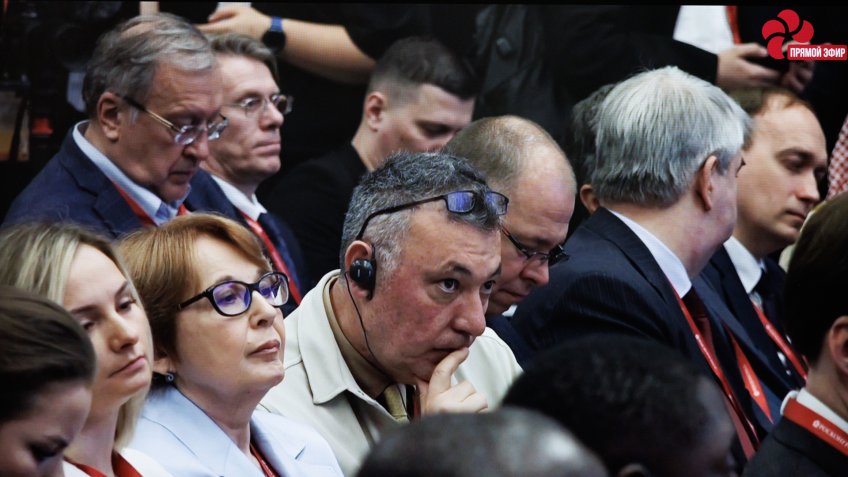
According to the Rector, the subject of rare and rare-earth metals possesses the potential to catalyze intensive economic growth in any country, particularly our own. Increasing labor productivity is one of the three key challenges of the century, alongside the future of the monetary system and the global crisis of trust. Through products manufactured using REM, the problem of productivity growth can be successfully resolved, but the role of scientific and human resource support increases significantly in the process. Vladimir Litvinenko also noted the acute necessity for competent and precise management and regulation of the REM-based innovation process:
«he state needs to organize a single coordinating center for REM. Similar to China, where the third-highest-ranking official in the country is responsible for the entire complex of issues regarding this vital subject, and everything is structured within a unified management system. Scientific research must also be integrated into this system. Globally, there is still no unified geological understanding of the genesis of rare-earth elements or the optimal technology for their exploration and development. It has been proven that they form at great depths, and the most promising deposits are located there. The second issue is personnel; we must restore the Corps of Mining Engineers on a national scale to meet the needs of a high-tech economy. And finally, the production itself, the full cycle leading to the final product—everything must be closed within a single regulator with the necessary powers and accountability».

The discussion regarding the development prospects of the industry based on rare-earth and rare metals also featured participation from the First Deputy Prime Minister of the Russian Federation, Denis Manturov; the Minister of Natural Resources and Ecology of the Russian Federation, Alexander Kozlov; the Minister of Industry and Mineral Resources of the Kingdom of Saudi Arabia, Bandar bin Ibrahim Al-Khorayef; the Minister of Industry and Construction of the Republic of Kazakhstan, Yersaiyn Nagaspayev; and the Minister of Mining and Mineral Resources of the Republic of Sierra Leone, Julius Mattai. Representing Russian industry were Musa Bazhaev, President of Alliance Group JSC, and Vladislav Sviblov, CEO of Areal ICJS.