

This year, the St. Petersburg Mining University's master's degree program has undergone significant changes. Its first year now begins with students receiving the basic scientific competence "Philosophy of Science", in which young scientists will learn how to properly design articles, work with scientometric databases, justify the chosen methodology of research, and acquire many other necessary knowledge and skills.
Requirements for graduation papers have also risen. From now on, it will consist of three sections: scientific, technical, and economic, each of which will receive a separate grade. Forpost decided to find out what the students of Russia's oldest technical university thought of all these innovations. After all, it is obvious that it has become noticeably more difficult to obtain its higher education diploma.
Yulia Andreeva, a graduate student at the Faculty of Energy, says that people looking for an easy way out of life will not initially enroll at the Mining University, because the knowledge and skill requirements were very serious here before. Lecture classes, participation in laboratory experiments, passing educational and industrial practices - all these are prerequisites for the final success.

"Those guys who entered the master's program are extremely interested in obtaining the best possible quality of knowledge, because we all understand that in the future this will be our competitive advantage. Everyone wants to develop professionally, and they come here precisely because the university gives them such an opportunity and motivates them to work. There are many programs here, such as the Assistant Scientist program, which allow you to acquire additional competencies. That's why young people come here. Those who are not ready to work and are not capable of self-organization usually drop out as early as the first year of a bachelor's or specialist's degree," says Yulia, whose research interests include protecting outdoor lighting systems from breakdowns.
The ability to overcome difficulties and not be afraid of them is one of the prerequisites for the successful career of modern graduate students. After all, not all of them associate their future with entering graduate school and further work as a teacher or scientist. Most of them should go "to the fields" and do applied research there. Considering that the vector of the country's development today is, first of all, the Arctic projects, it goes without saying that one must have a certain amount of courage to participate in them.
Unfortunately, not all graduates of domestic higher technical educational institutions have such courage. According to the heads of mineral resource and energy companies, many of them are ready to work as waiters just to stay in comfortable urban conditions. Not everyone wants to hone their engineering skills in the harsh climate of the Polar region.
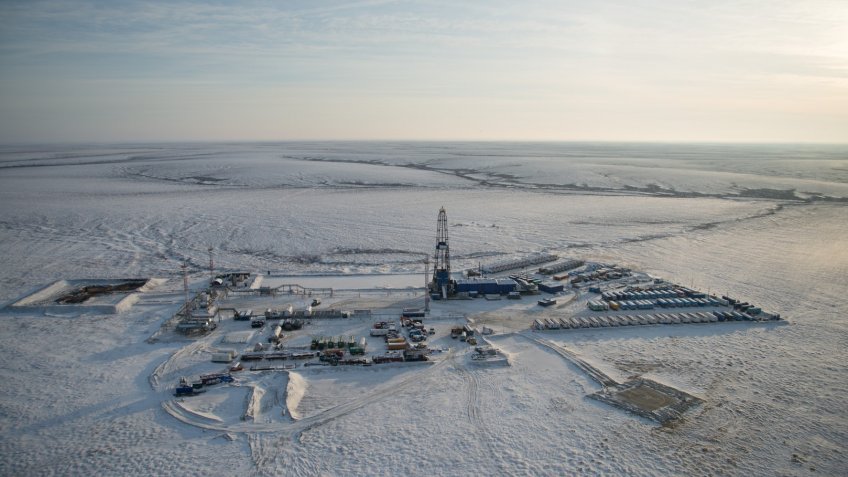
"In fact, the infrastructure of 90% of the fields today is very well developed. And new facilities are built taking into account modern realities and demands, including those of young specialists. No one lives in trailers for a long time; they put you in a comfortable dormitory with rooms for two people. Gyms and playgrounds for all kinds of sports have been built within walking distance. You also will not go hungry, and do not get bored. Sports competitions, various scientific competitions - the culture of leisure-time activities in the Far North is at quite a high level. There is no big difference with urban conditions for a long time. As for harsh climatic conditions, when your body is young it endures them quite calmly. It gets used to them very quickly, literally in a week. So I recommend my graduates not to get lost and go to the north and realize their potential there," said Mikhail Chernyshov, a first-year master's student of St. Petersburg Mining University.
Mikhail knows what he is talking about, he has had practical training at various fields, including those located beyond the Arctic Circle. And in the future he plans to do applied research for oil and gas companies operating in the Arctic. The sphere of his scientific interests is modernization of technologies that help to increase the efficiency of oil production processes and preparation of oil products for transportation.

"Of course, gaining practical skills is one of the most important parts of professional development. But in order to have a successful career, it is also necessary to have scientific knowledge, including fundamental knowledge. That is why I made the decision to enroll in the master's program at the Mining University, as this university is one of the flagships of technical education. So personally I consider the new requirements of the rector, which are aimed at further improvement of the educational process, as a logical and timely step. They will certainly help me and other students to realize myself in my profession. This is very important," Mikhail summarized.
Ivan Skvortsov, who studies electrical drives and control systems for electric drives, began his scientific work in his third year as a bachelor's student. At first, as an assistant scientist, he worked on improving the properties of fuel hydrogen cells. But now he is somewhat disappointed in their cloudless prospects and devotes more time, just like Yulia Andreeva, to research in the field of protection of street lighting systems from breakage under the guidance of Jaroslav Shklarsky, Doctor of Engineering, Head of the Department of General Electrical Engineering at Mining University.

"I think that starting your first year of graduate school by participating in a program like Philosophy of Science is very helpful. First, in terms of motivation. In the process of mastering this basic scientific competence, you begin to realize more clearly that you are no longer studying for a bachelor's degree. It is not a continuation of it, but a much more serious level of education. A completely different level of requirements. Secondly, it is helpful to those students who did not participate in scientific groups and did not participate in serious research or publish articles in highly ranked journals at the undergraduate level. Learn to search for materials on your area of research in the scientometric database, process them correctly, and choose a methodology for working in laboratories. In the end, all the knowledge and skills acquired as part of the basic scientific competence will help to avoid mistakes in the course of experiments, and thus increase their quality and reliability," emphasized Ivan.
Anastasia Meshalkina is studying chemical technology of organic substances. She has been involved in science since her sophomore year. Her interests include studying low-temperature properties of diesel fuels and searching for ways to improve their properties. This is extremely necessary for the successful implementation of Arctic projects, which in the context of anti-Russian sanctions will obviously stall without domestic fuel additives. Another function of these preparations is to minimize environmental damage from car exhaust emissions. Today they provoke up to 70% of all pollutant emissions in cities, and, of course, reducing this figure is one of the priority tasks facing Russian science.

"As an assistant scientist, I participate in profile research conducted by specialists from the Scientific Center for Problems of Processing Mineral and Technogenic Resources at the Mining University. In order to ensure the accuracy of measurements, high reliability of laboratory experiments and then correctly interpret the data obtained, of course, it is necessary to have a huge baggage of knowledge and skills, many of which I have yet to acquire. But the ability to clearly and easily present the results of your research in the final scientific paper and, even more so, in the article that you send for publication in a highly ranked journal, is also a very important competence. Most of my undergraduate classmates did not have it. That's why it's obvious that Philosophy of Science, where the kids get this basic scientific competence, is an extremely useful project for the development of young scientists," says Anastasia.
As for the stricter requirements for her master's thesis, she is not intimidated by them. The student is confident that in 2 years she will successfully master all curricula and write a worthy dissertation. Moreover, she already has a certain amount of knowledge behind her, and the level of the teaching staff allows her to hope for its quantitative and qualitative replenishment.


Yulia Andreeva notes another important feature of the Philosophy of Science program: in the course of their studies, the students interact with a large number of professors, many of whom will not be teaching them later. In this way, the university creates an additional opportunity for young scientists to find a really interesting research topic. Better yet, an interdisciplinary one, as it often yields much better scientific results.
The acquisition of basic scientific competence not only contributes to professional growth, but also forces us to ask fundamental questions about our worldview. How does the crisis of the book culture, replaced by the Internet and social media, affect society? Why is science increasingly engaged in solving ephemeral problems instead of working scrupulously toward the goals of sustainable development? Why does the involvement of multinational companies in subsoil use in developing countries not lead to their prosperity, but only enriches Western elites?
Ivan Skvortsov emphasizes that the search for answers to these questions, as well as understanding the challenges facing Russia today, is no less important for young people than professional fulfillment. After all, each year civilization will require more and more resources, one sign of which is exhaustibility. Consumption of copper, nickel, lithium, natural gas, rare earth metals, as well as many other minerals will a priori increase. But what, for example, is the model of management of the mineral and raw materials complex that will make it possible to get the maximum margin from their processing and sale?
The young scientist says that the optimal paradigm for the development of the industry is to increase the role of the state as a regulator, defining the rules of the game on the market. What volume of production and processing corresponds to modern realities? What conditions will be most favorable for the construction of processing facilities? What should be the level of social and environmental requirements for the management of mining and energy companies? The answers to all these questions should be more clearly regulated by the government.

"In my opinion, enterprises should build their business on the basis of more clear rules and requirements defined by the state than today. But, of course, with their own business interests in mind. And the main function of the regulator should not be to punish companies for excessive environmental damage or any other violations, but to create favorable conditions for the development of high-margin production and implementation of the best available technologies. First and foremost, in the field of deep processing and reduction of pollutant emissions. This will not only create new jobs in the country, but will also increase our technological safety," says Ivan Skvortsov.
He, as well as the entire generation of students currently studying at technical universities, has a very important mission - to rid the country of a shortage of engineering and scientific-pedagogical personnel. Otherwise it will be almost impossible to start a new industrialization of Russia. The generation of professionals nurtured in the USSR is gradually aging, the competent middle-aged cadres - graduates of the 1990s and zero years - certainly exist, but the mineral resource complex and universities experience an obvious lack of them. Do today's undergraduates understand that they have a global goal to reverse this trend? And are they ready, having entered the post-graduate course or having got a job at production, to work at their own place to achieve it?
Daria Borisova is getting a degree in environmental monitoring and environmental protection at the Mining University. She has been involved in science since her second year of bachelor's degree. Her field of scientific interests is reduction of negative impact on biosphere components during mining of rare-earth elements at the enterprise located beyond the Polar Circle, and elimination of objects of accumulated damage, in particular, tailing dumps. Of course, modernization of production facilities that produce "critical metals" is the most important state task. So is the construction of new plants that can become the foundation of the next industrial revolution. For our country, it is associated not so much with the introduction of intelligent robotic systems as with the creation of modern value chains.

"We are all well aware that the new environment, which is at a high technological level, dictates higher requirements for the scientific community and, among other things, for the teaching staff. This is all the more obvious because the mineral resource complex is one of the most dynamically developing industries, the efficiency of which, if we rid it of a shortage of personnel, can become much higher. We are truly aware of the level of expectations and are ready to be worthy successors. It is necessary to keep up with the times, to promote the growth of intellectual capital, to move science, even to be ahead of the curve in some respects, to look into the zone of immediate, prospective development, to study new methodologies, to grow professionally. Those who use ready-made formulas, move along the path of least resistance, lose their importance as specialists. I am sure that the vast majority of students at the Mining University are not threatened by this," says Daria.
The most important thing is that the opportunities that emerged for domestic higher education after the withdrawal from the Bologna agreement should be used to the fullest extent. But this requires the government to develop a clear strategy aimed at solving state tasks and satisfying market demands. So far, universities have to look for relevant vectors of development and tools to improve the quality of graduates on their own. The lack of such work on a global scale not only negatively affects the level of training of engineering and scientific-pedagogical personnel, but also, obviously, carries the threat of technological backwardness of Russia.
