Today, the phrase "Hungarian dog" will instantly conjure up an image of a short-haired dog lynx, a masterpiece of Magyar hunting breeding. They have a bright golden color and a fine sense of smell for feathery game. In Russia 200 years ago, mining professionals associated it with a subject very distant from hunting.
November 1839 was the brightest month in the life of Lieutenant Alexander Platonov: he had his first-born son, and published an article in the "Mining Journal" about the improvement of rolling technology in the mines of the Perm plants.
This respected journal is still at the top of the respective industry periodicals today. At that time it was the only scientific, technical and industrial edition in the field of subsurface use, published at the Institute of the Corps of Mining Engineers (now St. Petersburg Mining University). Publication here was considered a matter of great honor.
Platonov's technological experiments were so successful that they made it possible to count on reducing the cost of moving the rock mass from the faces to the ore-lifting mines by half.
The future mining engineer was born in the same place where he came of age; in the Western Urals in Yugovsky plant, 70 kilometers from Perm, in the family of a factory surveyor. Platonov's father supervised on behalf of the state for the collection of taxes from the plant. The qualitative fulfillment of fiscal duties required the verification of production volumes, and of course, to strive to increase them.

Sending his son to study in St. Petersburg, to the Mining Cadet Corps (in 1834 it was renamed to the Institute of the Corps of Mining Engineers), the elder Platonov admonished Alexander to look for new technologies for the aging Western Urals mines and metallurgical productions. The native Yugov plant, for example, since 1821 began to reduce release of copper and to lose profitability.
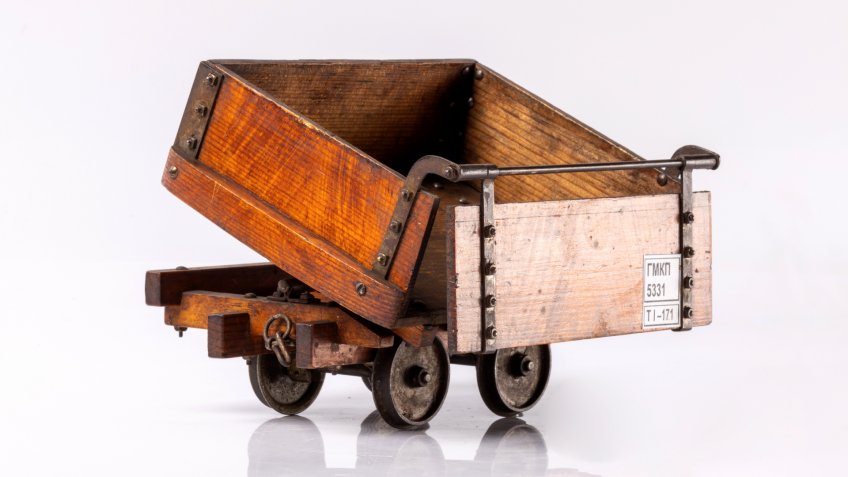
Within the walls of his alma mater Alexander Platonov got acquainted with a mine cart under a strange name "Hungarian dog". Shortly before his studies, the one-sixth scale model had been purchased by the Corps for educational purposes.
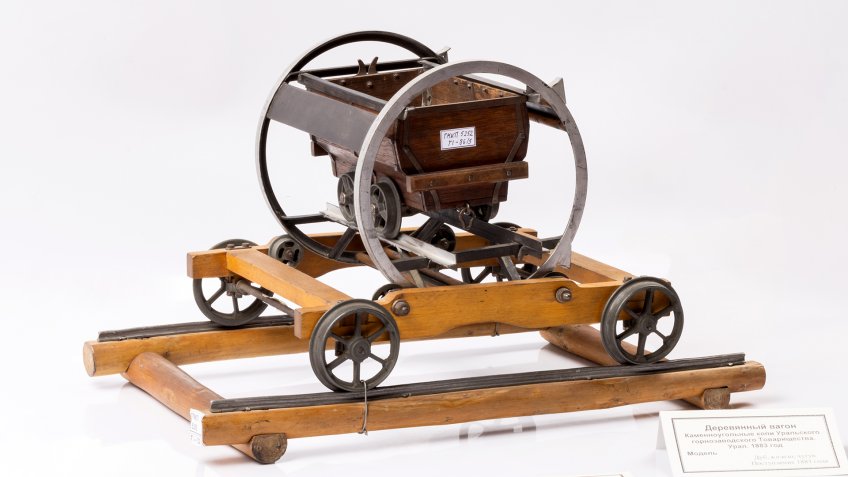
It is a wooden four-wheeled wagon. The body tapers upward and from the rear to the front. The wheel axles are mounted with an offset center of gravity for convenience. The wheels roll on the boards. A trail nail attached to the cart was sometimes placed between them. It kept the "Hungarian dog" from coming off the tracks.

The cart bears its name from the hand of Saxon miners. They adopted the Magyar invention and used it effectively from the late 18th to the middle of the 19th century. The Hungarian word "hyntow" - wagon - is consonant with the German "hund" - dog. This is why the inanimate vehicle became a pet.
After graduating from the Mining Institute in 1836, Alexander Platonov returned to his native land and was unpleasantly surprised by the backwardness of technology. The old wheelbarrows were still used at the Perm mines. Leather straps were tied to their handles, with which the miner wrapped his shoulders and across his chest. The weight of the load caused the straps to dig into the skin until they bled. There was no talk then about staff safety or lean production in the Urals.
The changes in personal life and career of Lieutenant Platonov (mining engineers in those years graduated with the military rank of Lieutenant or Lieutenant Colonel) went in parallel. The experiment to introduce "Hungarian dogs" to the Russian mines coincided with his marriage to Lyubov Tsytovich, the daughter of a Gittenferwalter (an executive position in the mines and mining plants). The successful completion of the experiments, as already mentioned, was marked by the birth of a son Nicholas.
The article in "The Mining Journal" was noticed, and the know-how found interest. However, in Europe the Hungarian dogs soon began to be superseded by English iron wagons. Gradually, the progress reached the Urals.
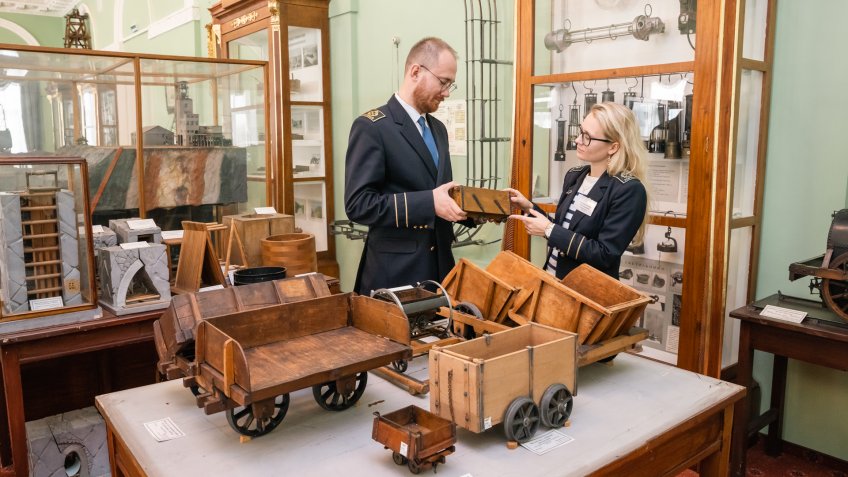
The same model of the cart that Platonov learned from is still carefully preserved in the Mining Museum. Today, however, it is no longer an innovative technology, but a historical one. Modern descendants of wagons and other mining equipment, including digital and robotic ones, fill the laboratories and educational centers of Russia's oldest technical university.
Below, photos of various types of mining carts from the collection of the Mining Museum.