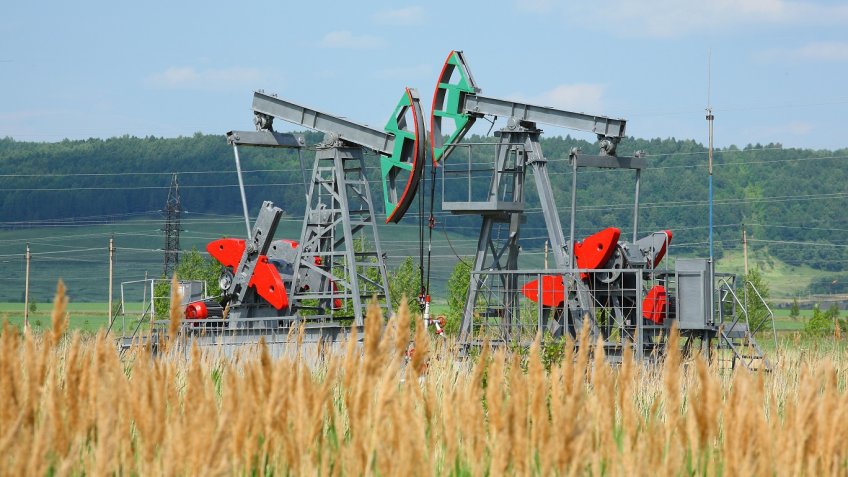

"For 35 years, the entire economy of the Soviet Union was based on Tatar oil," said Nikolai Baibakov, Chairman of the State Planning Committee of the USSR, referring primarily to the Romashkinskoye field. The country applauded its discoverers. Of course, the first place in Russia in terms of reserves and the status of a unique super giant according to the international classification made it a legend. However, there was a scientist, who did the impossible - he could increase the economic significance of the field many times over...
Certainly, nobody belittles the success of oil explorers and drillers who stood up for the Volga-Urals region's prospects at meetings, despite the long negotiations and everyday difficulties in prospecting for hydrocarbons and construction of wells. But saying that the subsoil of the "Second Baku" has been successfully developed for over 70 years, and the maximum annual oil production rate was a record 81.5 million tons (1970), one should understand that the Romashkinskoye field has been a testing ground for new technologies almost from the very beginning. And it was the introduction of advanced development methods that allowed to accelerate production of reserves many times and save hundreds of millions of rubles.

Digital algorithms for controlling oil production facilities, 3D modeling and "smart fields" occupy the minds of today's engineers. Will they be relevant 50 or 100 years from now? Or will they be replaced by other, more advanced tools?
The technologies proposed at the Romashkinskoye field in 1948 are still in use around the world. There, for the first time in the world practice the intra-circuit waterflooding into productive formations was successfully carried out. Alexander Petrovich Krylov became the author of new systems of oil field development.
He was born on August 14, 1904 in Tatevo, Smolensk province, in the family of a priest. Ambition and ability led the young man to the Leningrad Mining Institute. Despite his desire to pursue science, the first years after graduation the young specialist worked at Surakhan oil fields in Azerbaijan, explored coal fields in Donbass and Sakhalin. Research in the field of technique and technology of raw materials extraction required preliminary acquaintance with the work of enterprises and analysis of their efficiency. The talented engineer quickly achieved professional growth: field technician, head of drilling party, deputy head of the field.

In 1932 Krylov was invited to the State Oil Research Institute, where he was finally able to concentrate entirely on his research: issues of flowing and compressor operation of wells. The fundamental and experimental studies of the movement of liquid and gas mixtures in vertical pipes conducted over the next 10 years allowed the scientist to develop a theory of gas elevator calculation and methods of designing rational elevators for the operation of flowing and compressor wells. His research allowed the implementation of single-row elevators in oil production practice.
Addressing the problem of reducing starting pressure in compressor wells, Alexander Petrovich for the first time gave a method for calculating the reduction of pressure with the help of starting holes, showed the limitations and disadvantages of this method, formulated the requirements that should meet the starting valves, as well as developed their new design.
No less important result was the "Course of oil fields exploitation", written by Krylov for higher education institutions. Needless to say, this work became a desk book for several generations of Soviet oil workers.
With the beginning of the Great Patriotic War, the oil industry of the country was faced with tasks, which required revision of many scientific views and the emergence of new approaches to the development of hydrocarbon deposits. To implement them, the Design and Research Bureau for Oil Field Development was established, with Alexander Petrovich as its scientific adviser. Theoretical researches of the bureau were closely intertwined with specific design works: the results were subjected to industrial testing and then put into practice.
One of the first such projects was the development of Devonian formations of the Tuimazinskoye field in Bashkiria.

Back in 1944 there was commissioned a new well № 100, 1700 m deep and with the flow rate exceeding 250 tons. The first six Devonian wells produced 1100 tons of oil per day. Discovery of oil in Devonian strata was of exceptional importance for the country, as its presence in deep horizons of the vast territory has been proved. Such reservoirs turned out to be much larger in their reserves than all known deposits at that time. As a result, the Tuimazinskoye field became the largest oil field of the USSR in the 1950s. Under the conditions of war the demand for fuel was particularly great, that is why the decision was taken to intensify the process of development. Aleksander Petrovich Krylov was involved in the work.

His research allowed to create a new rational system of reservoir flooding that was introduced in December 1948. For the first time in the world practice the Tuimazinskoye field was developed with reservoir pressure maintenance by a combination of by-loop, contour, intracontour and local reservoir flooding. Thanks to this the basic mass of the recoverable reserves has been extracted for 20 years. Twice as much oil has been recovered from Devonian reservoirs as would have been obtained using conventional waterflooding techniques.
These successes largely determined the general direction of research development in the field of "black gold" production in the USSR and a number of foreign countries. Krylov himself was awarded the State Prize in 1949.
In 1951, the scientist was invited as a scientific adviser to the All-Union Oil and Gas Research Institute (now VNIIneft), which he headed several years later. The leading hydrocarbon institute in the country, Alexander Petrovich led it until 1971, while teaching at the Gubkin Moscow Oil Institute. In addition, after becoming an academician of the USSR Academy of Sciences, he headed the Laboratory of Oil Field Development at the Institute of Oil Fields of the USSR Academy of Sciences. It is no exaggeration to say that Krylov at that time was the leading oil scientist, who set the vector of profile research and was responsible for solving cardinal problems of technical development of the oil industry.

Together with a group of his students and colleagues he proposed a method of intensification of oil field development by creating pressure at the water injection line, exceeding the initial reservoir pressure; he proved the possibility and expediency of operating wells at bottomhole pressures below the saturation pressure, and also proposed to organize pumped oil production from the very beginning at a number of objects instead of the fountain, proving high technological and economical efficiency of such substitution.
Another equally important and loud project for Alexander Petrovich was a huge Romashkinskoye field, during the development of which the ideas of the scientist were implemented to the fullest extent. Under his guidance a complicated scientific, engineering and technical task of its development was solved, namely: theoretically justified, designed and performed division of Romashkinskoye field into separate areas by means of inner-contour flooding. As in the case of the Tuimazinskoye field, this significantly increased the volume of oil produced and resulted in a huge saving of energy costs. The second successfully implemented idea of Krylov was two-stage waterflooding. In this case, at the first stage, the field is drilled through a sparse grid of wells, providing not only current production but also additional exploration of the strata structure. The subsequent stage of drilling is characterized by a more reasonable location of new wells.

The oil geologist received the Lenin Prize in 1962 for these works.
Under Krylov's direct scientific supervision, VNIIneft employees drafted development projects for the most complex and large fields in Western Siberia and Kazakhstan, including such unique ones as Samotlor and Uzen.
In 1972, a graduate of the Mining Institute headed the Scientific Council of the USSR Academy of Sciences on problems of oil field development, while also being a member of the Expert Commission of the USSR State Planning Committee and Chairman of the Oil Field Development Section of the USSR National Committee on Oil. At that time Krylov was paying special attention not to individual projects but to the development of an optimal technological and technical-economic policy of the oil industry development. During his career he gained tremendous production and research experience and quite logically proceeded to the creation of the development model for the whole industry and the search for optimal ways of development of the country's oil industry.
Alexander Petrovich Krylov died on May 11, 1981. Today the All-Russian Oil and Gas Research Institute bears his name. Its formation and development is inseparably connected with the ideas of Alexander Krylov.
His theories of intra-circuit waterflooding and well grid optimization found wide recognition among oilmen and were successfully realized practically in all regions of the country as well as beyond its borders. Moreover, they are still relevant today, including at the famous Romashka. For example, 34.5 million tons of oil were produced in Tatarstan in 2021. Of these, about 60% of "black gold" was brought to the surface exactly at the Romashkinskoye field.