

On the last Sunday of August, Miner's Day is celebrated in Russia and the former Soviet Union, including Belarus, Estonia, Kazakhstan and Ukraine. In 2022, the holiday fell on August 28. On the congratulatory posters, there are pictures of stark, "black gold"-stained faces of the miners. What are coal industry public relations people not telling us?
The traditional visual image is easy to remember and instantly evokes associations with heroic labor and high risk. However, in spite of the name, the holiday is celebrated by all the specialists of the industry - the less textured mine builders, mine surveyors, safety specialists, geomechanics... Without them there would be neither mining itself, nor its Stakhanov records. One of the motivating photos should undoubtedly feature not the stout figure of a worker, but the intelligent and refined face of Nikolai Bulychev: the founder of the scientific direction "Mechanics of underground structures".

The outstanding scientist created a complex of calculation methods in the field of underground structures construction, which were used in the design and construction of mines of the Donetsk and Kuzbass coal and Krivoy Rog ore basins, BAM, Rogun, Irganay, Temir, Baipazin and Tashkumyr hydroelectric stations, as well as the railway tunnel on the Yalta-Simferopol highway. In the eighties and nineties of the twentieth century it was he who oversaw much of the research work in underground construction.
Nikolay Spiridonovich was born in 1932 in Vyatka region in a peasant family - his father worked as a carpenter, and his mother as an elementary school teacher.
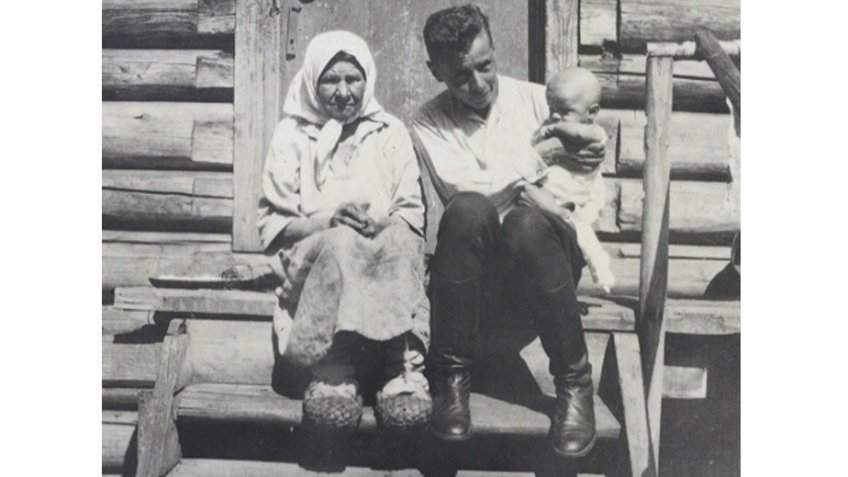
The provincial town of Yaransk looked more like a big village: mostly one-story houses, each household had a cow and a vegetable garden, which allowed to survive even in the most difficult years for the country. And they did not take long. In 1941 the war began, and in 1942, the family lost their father, and one of the older brothers was taken prisoner.
The hostilities bypassed Yaransk, lost among the dense forests. However, a hospital was opened there and evacuated Leningrad residents were accommodated. The emotionally restrained inhabitants of the besieged city stayed with the Bulychevs, and their stories about Leningrad, unbroken by any grief, impressed the boy. He was determined to go there after finishing school. Among all the universities the young man chose the Mining Institute - the oldest institute of higher technical education, which trained the specialists who were so necessary for the restoration of the industry. During the war many mines were blown up, the surviving ones fell into disrepair, and metallurgy and the coal industry were in desperate need of young personnel.
The conditions offered by the university also played a role. For example, the standard stipend was 480 rubles and the increased stipend 600 rubles, while workers in some regions could receive 200 rubles per month. Nikolai borrowed a tattered jacket from his brother, who had miraculously returned from captivity, slung an old plywood satchel over his shoulder, and set off for the city on the Neva by a trolley in 1949.
Even at the entrance exams Yaran was noticed by the pro-rector, Professor Boris Vyacheslavovich Bokyi, who offered him the specialty "Construction of mining enterprises". But the applicants met the "peculiar" provincial with a chuckle. Very quickly his progress in his studies made his classmates bite their tongues.
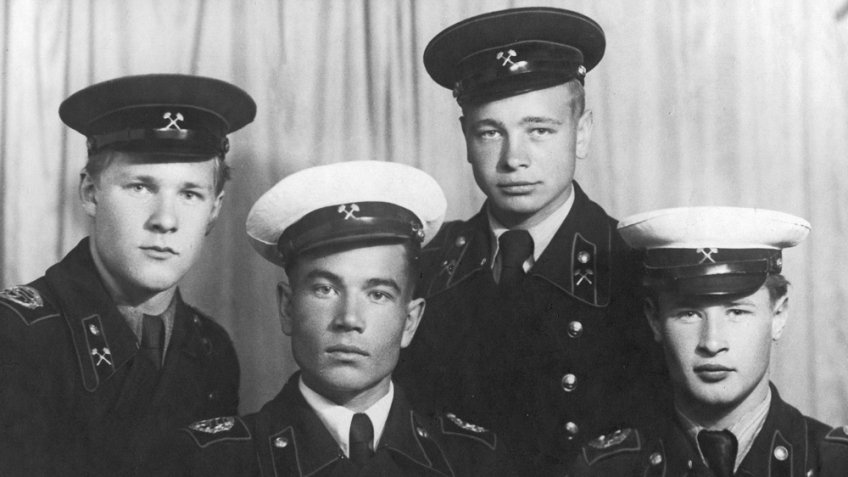
In the summer, the student went on an internship to Siberia and Donbass, where he did not just get acquainted with the conditions of his future work, but solved specific engineering problems. For example, in the city of Shakhty he built an underground medical station - he erected a monolithic concrete support, made an inner wooden formwork, so that there was space between the latter and the rock. He did his pre-graduation internship in the Tula Region, on the territory of a coal basin near Moscow. The young man chose sinking a vertical shaft in difficult engineering and geological conditions as the topic of his diploma work. According to Nikolay's project, the shaft should have been run using compressed air. Although his scientific opponent - the chief engineer of the Leningrad Institute GIPROSHAKHT - initially did not agree with the idea, the proposed innovative solutions and calculation schemes allowed Bulychev to defend his point of view at the defense. After this case in 1954, Bokyi recommended that the newly minted scientist to work at VNIMI (All-Union Scientific Research Institute of Mine Surveying, as it would be in English).
Addressing questions of interaction of the rock mass with vertical shaft supports, Nikolay Spiridonovich wrote over 300 articles, which were published in Austria, Australia, Bulgaria, China, Czech Republic, Finland, France, Germany, Hungary, India, Italy, Japan, Korea, Norway, Poland, Portugal, Sweden, Switzerland, and USA. In addition, he received 25 inventor's certificates and patents.
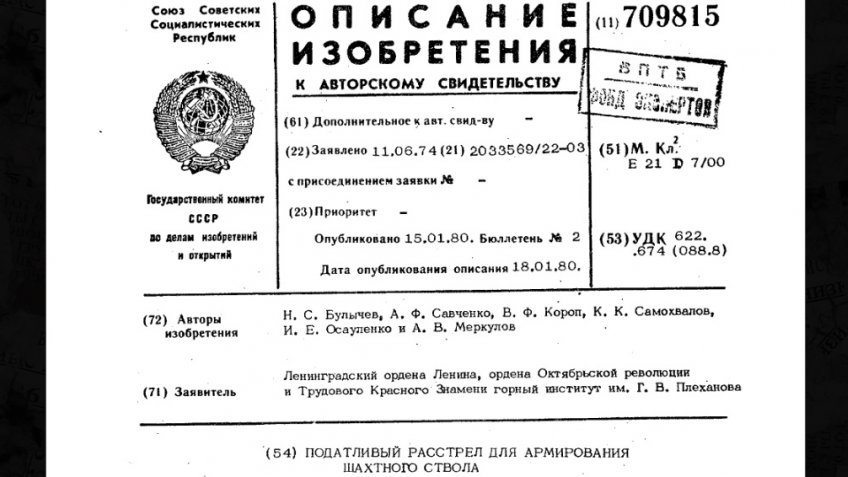
While still in graduate school, Bulychev developed a device that simulates the shaft and allows to set radial displacements of the cylindrical surface with high accuracy and in a wide range. In VNIIMI's theoretical research laboratory he proposed a new approach to calculation of composite rings and a method of calculation of multilayer roofing of circular section mine workings, deformation criterion of rock strength. And in 1974 he proposed an invention called "malleable shot for reinforcing a mine shaft". It allowed mining companies to increase the reliability of the firing pin when the vertical mine shaft was displaced.
The profession of the miner is dangerous and difficult, but at the same time it is strategically important for the economic development of Russia, because it provides raw materials for all industries. In order to make the work of miners more efficient, technologically advanced and safe, hundreds of scientists work. And some of them manage to make incredible breakthroughs in their field of knowledge.
From 1972 to 1980, Nikolay Bulychev was the head of the Department of Mining Construction at LGI. At that time he formed a new scientific discipline "Mechanics of underground structures", which was included in 1976 by the USSR Ministry of Higher Education in the training curriculum for mining engineers. The professor led the direction which considered the problems of theory and analytical methods of calculation of underground structures constructions, became the founder of scientific school of geomechanics and mechanics of underground constructions, and also the author of the first textbooks, programs, instructions and manuals in this direction.
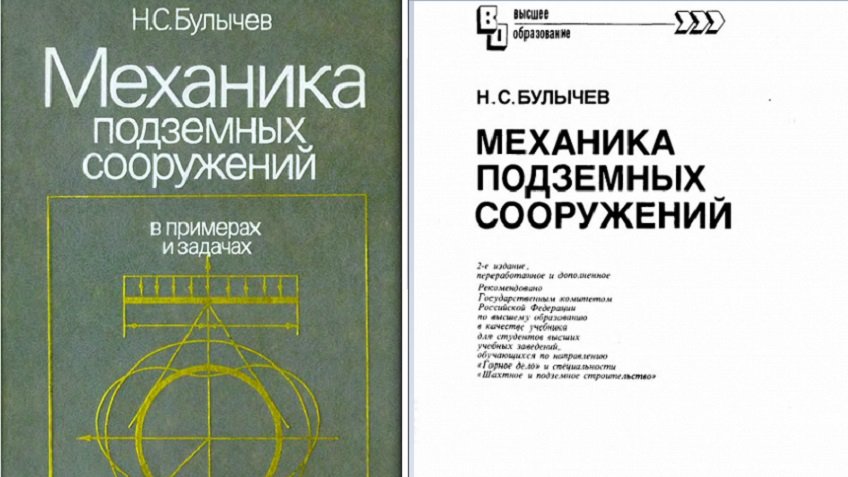
The scientist formulated the conceptual basis for the calculation of mine workings and underground structures lining, defined the principles and methods of these calculations. He singled out basic models of interaction between support and rock mass and made their classification, which completed the transition from a semi-empirical approach in considering rock pressure issues to consistent application of continuum mechanics methods to model rock mass.
By 1980, Bulychev's research became widely known domestically. A scientific school was formed in his alma mater, so the scientist began to regularly give lectures at specialized universities throughout the Soviet Union and accepted an invitation to head a department at the Tula Polytechnic Institute. At the same time, his work was actively interested at the international level. In 1981, Nikolai Spiridonovich was elected a member of the International Bureau of Rock Mechanics of the World Mining Congress, his monographs were published in China, and his calculation methods were used in the design and construction of tunnels, reservoirs, and other underground structures in the Czech Republic, Iran, Syria, Algeria, and Indonesia. The team of scientists headed by Bulychev won a prestigious grant of the International Association INTAS in Belgium for its research on the construction of tunnels in urban environments.
In 1999, Professor Bulychev, by then already a doctoral candidate, made a presentation at the World Tunnel Congress in Oslo, Norway. For the first time a representative of Russia was elected a member of the Executive Committee of the International Tunnel Association, uniting representatives from more than 50 countries.

In his homeland, the geomechanic earned no less recognition. Bulychev was awarded the Prize of the USSR Council of Ministers for works in the field of design and high-speed construction of mine shafts (used, in particular, at uranium mines), the Prize of the Russian Government for the textbook "Mechanics of Underground Structures." He became an honored worker of science and technology, a member of the Russian Academy of Natural Sciences and the Academy of Construction of Ukraine in the department "Construction of mines and underground structures", as well as a holder of the sign "Miners' glory" of three degrees.