

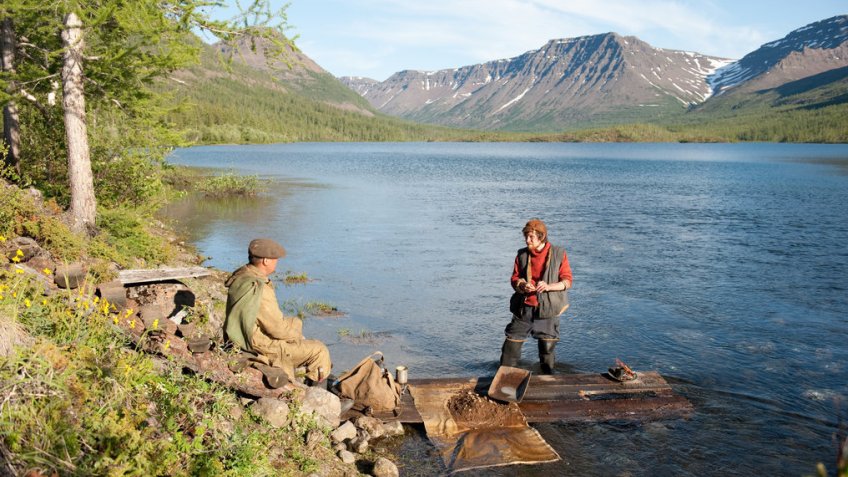
In 2015, the feature film "Territory" was released, made on behalf of and with the personal support of Vladimir Putin. The head of state's name was even in the credits, and it premiered at the Kremlin. The extreme North-East of the country, the vast tundra and obsessed with the idea of finding the "big gold" main character, the prototype of which was a famous graduate of the Mining Institute.
The picture is a screen version of Oleg Kuvaev's novel and is based on real events. Once the writer himself received a geophysical education and worked as a party chief in the country's northernmost city of Pevek. However, despite having his own experience, the book is based on the story of an entirely different person.
Inspired feat
The key character, the chief engineer of a geological prospecting office, is convinced that although all the previous years the territory under his control yielded only tin, it is incredibly rich in the precious metal. Despite the lack of direct instructions from the management and the closure of the department, in one field season he undertakes to find the deposits the country needs and organizes searches.

The plot is almost a mirror image of the story that has already happened in reality with Academician Nikolai Shilo in 1940. At that time, no one believed him that gold could be found around the Tenge River basin, which flows into the Kolyma River. It was believed that it could not be there, as there were many tin ores in the area, and tin and gold were incompatible. But a researcher of placer geology believed that typical gold-bearing structures were located there, and sought to verify the theoretical assumptions. The scientist studied the nearby areas and came to the conclusion that at least 40 tons of gold could be mined in the Omchak River valley alone.
The forecast turned out to be correct. In 1940, a record 92 tons of placer gold was mined at the Dalstroy placers (Main Directorate of Construction of the Far North of the USSR NKVD), and Nikolai Alekseyevich received the Order of Honor.
How a Shepherd Became a Mining Engineer

His biography is a real monument to his uncommon professional passion and persistence. Nikolay Shilo was born in 1913 in Pyatigorsk, in the family of a gardener, where in addition to the future geologist there were seven more children. With the Civil War, which took away his father, came hunger and poverty. The boy grazed cows until the age of 11 and remained illiterate. Going to school at last, at the cost of untold effort he managed to catch up with his peers, completed seven classes and entered the work-faculty of the Grozny Petroleum Institute. This opened the way to higher education.
In 1932 Nikolai Shilo was already a student of the geological prospecting faculty of the Leningrad Mining Institute. There were 40 applicants for one place. The first exam was an essay. The young man's "work" so impressed the professor that he exempted him from the oral exam. Despite the apparent ease of admission, studying was unusually difficult. Of the thirty people enrolled with Shilo, only twelve graduated from the first course.
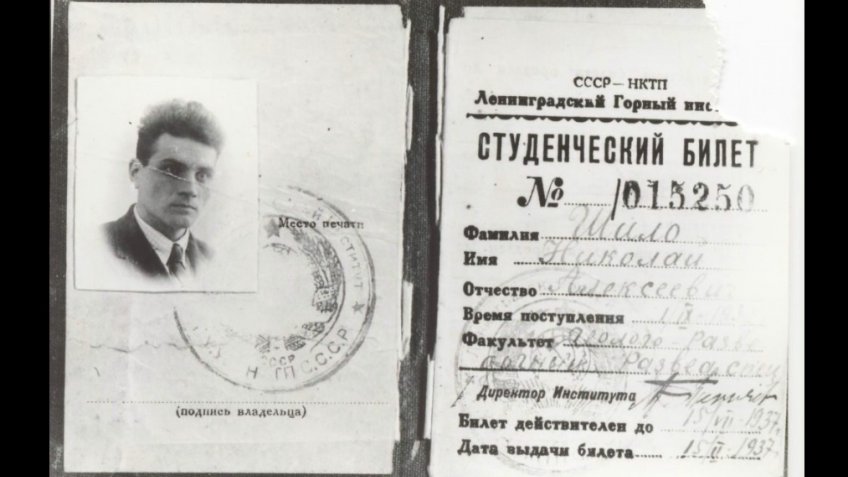
In 1937, Nikolay Alekseyevich received a diploma with honors and the status of a mining engineer. On the recommendation of Yuri Bilibin, who taught at the university and whose name was covered in legends and was associated with the discovery of the Kolyma "Klondike," the young man signed a contract with Dalstroy. The question of material difficulties was instantly resolved - a salary of 900 rubles per month, allowances for a young family, a six-month vacation every two and a half years. The documents specified the place of work - the Northern Mining Office, organized in the valley of the Khatynnakh River, flowing into the Taskan, the left tributary of the Kolyma River. Prisoners were exiled there, which did not stop the newly minted specialist.
Test of strength
"The land of permafrost, still untouched by man. This region - the most remote territory, imagined on maps as a white spot - best suited my image of activity," Shilo recalled later.
It took more than two weeks to travel one way. Upon arrival, Khatynnakh turned out to be a small village of several barracks and tents. In one of them the senior engineer of the department of placer prospecting Shilo together with the convicts who worked there had to live at first. By the way, perhaps it was the remoteness of the place that saved the young geologist from the repressions raging at the time. Although several times he was "on the verge"...

By 1938 Nikolay Alekseyevich was already the head of the department of placer prospecting. During the day from the mine to the exploration areas he passed 15-20 km, and sometimes the temperature reached minus 50 degrees. He supervised the zoning of the Kolyma left bank: 37 thousand linear meters of pits, or 7400 excavations were passed. The richest placers were discovered in the basins of the Khatynnakh, Chek-Cheka, Malyy and Bolshoy At-Yuryakh and Debin rivers. In just one year the production of gold in "Dalstroy" doubled. The young specialist applied his own ways of working, which increased the speed of exploration and reduced costs.
For example, he replaced the traditional methods of sinking pits (usually the ground was thawed by bonfires) with explosions. In addition, he often began detailed exploration, bypassing the preliminary stage, only on the basis of an assessment of the gold content of the territory according to the prospecting data. Such boldness could have cost him his freedom and even his life.
"Once I estimated the Malo-At-Yuryakh valley as the largest gold-bearing system in which at least 200 tons of gold could be obtained. I planned a detailed exploration, bypassing the preliminary stage. The head of "Dalstroy", Karl Pavlov, was passing by and saw hundreds of pits. He asked if there was gold here. I answered that the pits had not yet reached the gold-bearing layer, but I was convinced that there would be industrial placers. Pavlov felt that this could not be done," Shilo wrote.
The established commission was to decide whether this was illiteracy or sabotage, and then bring the guilty parties to trial. However, it proposed to bring the work to an end. If there is no gold, the geologist can always be punished. But if he is not mistaken, then the members of the commission will be accused of sabotage. Once again Nikolay Alekseyevich was right, and his authority became stronger than ever.
How Geologists Saved Military Planes
Shilo worked at Kolyma for almost 40 years. When the war broke out he applied for assignment to the front, but Stalin's order came: everybody had to stay where he was, since during the war as much gold and tin as possible were needed. It was Nikolai Alekseyevich who was in charge of mining. In addition, he was instructed to create a special purpose unit.

Allied warplanes were flown from Alaska to the Western Front under strictly classified Lend-Lease agreements. The Anadyr-Okhotsk route was considered the most difficult: there were not enough airfields for refueling, the existing ones were of little use to military vehicles, and the vast expanses remained poorly mapped. All this could lead to forced landings in the taiga and accidents. And so it happened. The special squadron saved many planes and pilots, scouts found them hundreds of kilometers away from airfields on reindeer and dog sledges, cleared the runways, helped the pilots, kept in touch with the center. Shilo received several government decorations and the title of engineer-major in the NKVD. Without a break from the extraction of strategic raw materials.
The father of the placer drill
Extreme conditions made of him not only a real geologist, but also a brilliant scientist.
As Nikolay Alekseevich himself liked to say, "while I was mining gold, I was only "touching" science". After the war he was appointed head of Sredne-Kolymsky regional geological surveying department and in 1949, director of the All-Union Research Institute of gold and rare metals in Magadan. His career took a turn toward theory. For more than ten years he was engaged in the construction of a new research institute.
At the same time he was offered to head the nuclear project in the north-east of the USSR: they were going to search for uranium in Chukotka, and it was necessary to have a high-class specialist and a good manager. However, the scientist managed to "step aside," referring to the study of gold geology, in which he advanced much further than his colleagues.
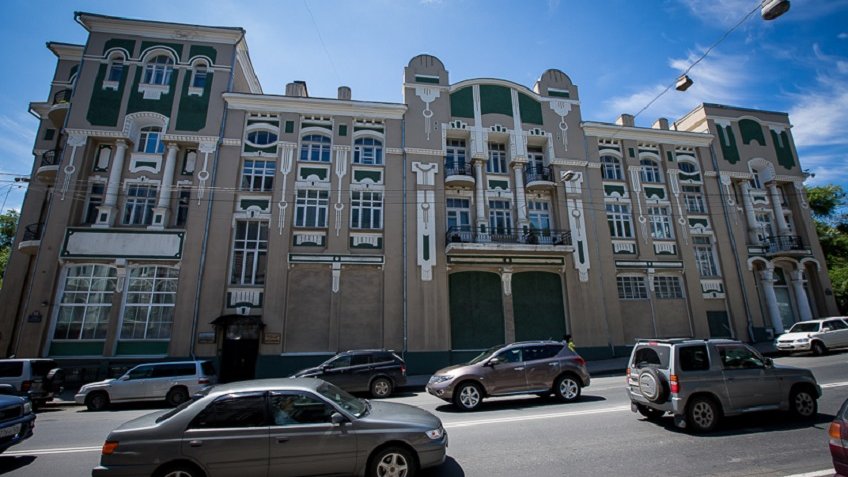
In 1960, Shilo became director of the North-Eastern Complex Research Institute of the Far Eastern Scientific Center of the USSR Academy of Sciences, and in 1978, he became director of the entire center. He headed the institution until 1985. During those 25 years 21 research institutes emerged within it, the scientific fleet reached 19 ships, and five of them were equipped with the world's best equipment. A total of about 10,000 people worked at the center.
The main areas of scientific activity of Shilo were geology of mineral deposits, primary and scattered, volcanogenic belts and their metallogeny. Nikolai Alekseevich created the doctrine of placers. For the first time in the world science a comprehensive analysis of placer deposits was presented on a unified conceptual basis. The work explained the conditions of formation of gold deposits in subpolar physical and geographical environments, including their relationship with the geodynamic and geochemical processes of the Earth, disclosed the characteristics of the behavior of minerals in exogenous conditions, provided a classification of placer forming minerals, placer deposits of various minerals and indigenous sources of placers.
Geology as a science developed inseparably from production. As a result of Shilo's research, rich deposits of gold were discovered in Chukotka, and in Eastern Yakutia - deposits of tin, which surpassed in reserves all known up to now.
The scientist's works were of great importance for the reevaluation of many gold-bearing areas of the world.

Shilo conducted fieldwork in the Urals, Northeast Kazakhstan, Chukotka, Kamchatka, Sakhalin, Wrangel Island, the Kola Peninsula, the Caucasus, Yakutia, and Uzbekistan. He has conducted route studies in 42 countries. In particular, he has crossed the British Isles from North to South, Alaska from its Pacific coast to the Arctic, conducted researches in France, Spain, USA, Finland, visited Chile and Peru, Hawaii islands, Australia, New Zealand, Malaysia, Indonesia and Japan.
In 1985, as a professor, doctor of sciences and academician of the Academy of Sciences, Nikolai Alekseyevich moved to Moscow. One of the greatest geologists of his time, he joined the Presidium of the Academy of Sciences, where he supervised the problems of metallogeny and ore formation until the end of his days. He passed away in 2008, a few years short of his centenary.

The memory of Nikolai Shilo is immortalized in the names of research institutes and streets, numerous books and films. In 2019 in Moscow there was a grand opening of a memorial plaque on the facade of the famous House on the Embankment, where the scientist lived.