

Russian and European professors believe that the Bologna process has a negative impact on the training of engineers. These are the preliminary results of the public discussion initiated by Vladimir Litvinenko, Rector of the St. Petersburg Mining University. Of course, there is nothing surprising about this, but the surprise is completely different. Western technical universities have introduced a two-tier system of higher education (bachelor's and master's degrees) only by word of mouth. In fact, their curricula are much more constructive.
In other words, if we ignore the nuances, the Old World imposed standards on our universities that reduced the requirements for graduates and led to an acute shortage of competent engineers in Russia, but it is guided by completely different approaches. Forpost decided to find out what the differences are and what we need to do to urgently rectify the situation.
So, the main disadvantage of four-year training programs, which are now the foundation of domestic higher education, is that only a few weeks are set aside for on-the-job practice in them. As a result, young people enter the labor market without work experience in real production, which a priori reduces their competitiveness and attractiveness in the eyes of the employer.
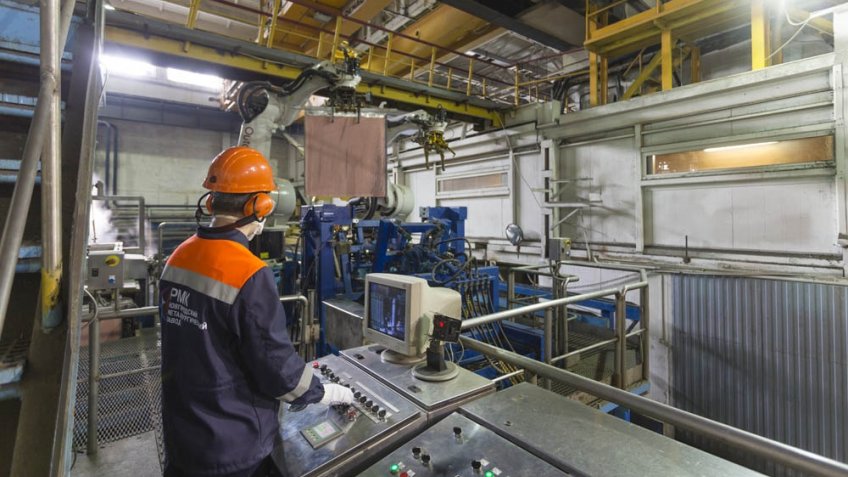
Some of the bachelor's graduates subsequently graduate with a master's degree and thus increase their demand on the part of business. But there are comparatively few budget places, so it is unrealistic to ensure the mass graduation of engineers in this way. In addition, the second stage of higher education is designed primarily for those who plan to build a research career, which means that future engineers have to compete for the diploma with young scientists, which is quite strange.
Things are quite different in Europe. For example, in Austria, where the system is formally painfully similar to the Russian reality, all engineering students are obliged to enter the master's program after their bachelor's degree. The quotas allocated by the state are enough for that. In addition, one of the prerequisites for obtaining a diploma is a six-month internship.

"Of course, there are isolated cases where students for some reason do not continue their studies after the bachelor's degree. But in general, the educational process in Austria is organized in such a way that almost all engineering students complete their master's degree, i.e. the entire cycle. The Bachelor's program includes a six-month compulsory internship, which can be completed in one or three two-month periods. The most important thing is to stick with it, six months," said Leoben University Rector Peter Moser.
In Britain there is no requirement to continue after the first stage of education has been completed. However, the 4-year education has a distinctly practical orientation.
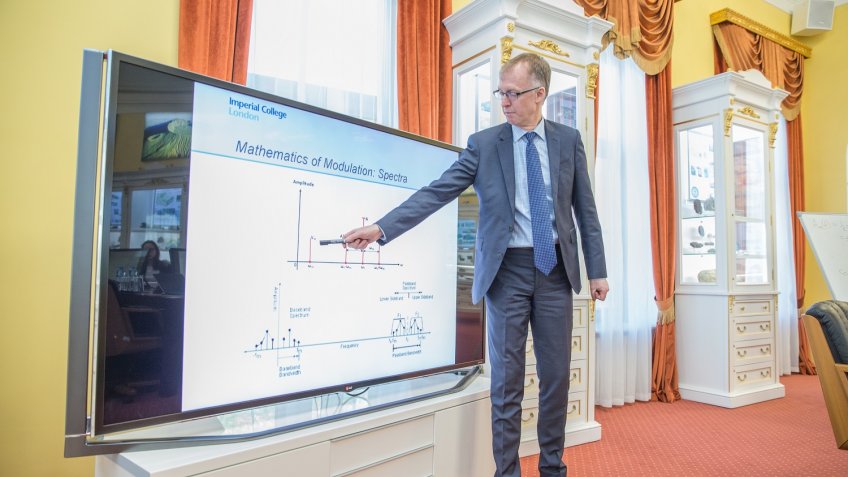
"We're trying to make our four-year training match the traditional system, which involves five years of classes. We're trying to make our four-year training correspond to the traditional system, which involves five years of classes. The first two years of the curriculum are about the same, and then we start to specialize. Then, in the third year, our students get practical training, which takes six months. In other words, we can say that we have joined the Bologna Process, but in fact, it's not quite like that. The task of fully complying with its principles is not in front of us," explains Eric Yatman, professor of microengineering at Imperial College London.
In Germany, it seems that no one has ever heard of the Bologna Process. The minimum period of study there is 5 years. For the final attestation the student must write a scientific paper, which becomes his calling card for employment. Another condition is a report on the results of industrial practice.

"It may well be that three to four years is enough for humanities students, but it is impossible to train a good engineer in that time. Our curricula stipulate a lower threshold of five years, although young people can study even longer. The main thing is not to exceed twice the total period. For example, if five years are initially given to obtain a profession, the deadline is ten. With regard to practice, a special semester is allocated for it. All students are sent to a company or an enterprise of their choice. There they take part in a project and write a detailed report," says Carsten Drebenstedt, professor at the Freiberg Mining Academy.
What about us? Paradoxically enough, but 20 years ago, unlike the Europeans, we took a "blind eye" and blindly copied all of the Bachelor's degree standards prescribed in the Bologna Agreement. Of course, we wanted the best, to join the European educational community, in which all members recognize the high status of diplomas issued in other states that have signed the convention, including Russia. But it turned out as usual - in the West the value of our documents on higher education has remained zero. On the other hand, as the employers say, "half-trained" people have begun to leave the ranks of Russian universities.
The main complaint to the bachelor's degree programs is too short a period of work practice. Two-three weeks in the third year are enough just to get the general idea about a company. Students do not have time to go into the essence of specific technological processes, let alone take part in their implementation. As a result almost nobody wants them on the labor market, business "hunts" for graduates of specialist's degree, who studied for five and a half years and had a long pre-diploma internship. The problem is that there is a catastrophic shortage of them.

Mikhail Gordin, Acting Rector of Bauman Moscow State Technical University, specifies: "The university has preserved the specialty programs for training engineers." Their share is 45%, which is quite a good indicator by the standards of the country. But many areas of study, such as Informatics and Computer Engineering, Electrical and Thermal Power Engineering, Materials Technology, and Management in Technical Systems, provide exclusively for Bachelor's and Master's degrees.
What kind of technological sovereignty can we talk about then? Its foundation is the continuity of generations in science and industry, and this has obviously been broken 20 years ago. The change in production comes not thanks to, but in spite of the prevailing circumstances.
"We receive numerous appeals from the management of enterprises, first of all, of the military-industrial complex, which raise the issue of the shortage of qualified engineering personnel. The shortage of developers of new equipment and technologies, who are able to solve problems related to the preservation of Russia's technological sovereignty, is obvious. Therefore I consider it unconditionally necessary to train such specialists under programs of 5.5 to 6 years in length. At the same time, taking into account the industry specifics and the nature of the future professional activity of the graduates, within the framework of the educational field of Engineering, Technology, and Technical Sciences, the possibility of a 4-year education should also be preserved," Mikhail Gordin believes.
The Rector of Ugra State University Roman Kuchin is sure that "it is simply impossible to provide the change of generations in the industries that are significant for the development of Russia - rocket and space, nuclear, mineral and raw materials and fuel and energy complex" without higher school reforms.

"In 4 years, higher education institutions do not have time to prepare a graduate who meets all the necessary competencies. It takes a long time for a bachelor to adapt to production, e.g. at a power plant, electric grid company, or oil field, and is not an easy task for both the young specialist and the employer. The master's program, prepares graduates aimed at a research career. Graduate students are more prepared for postgraduate studies than for employment as leading engineers," notes Roman Kuchin.
Natalya Gordina, Rector of Ivanovo State University of Chemical Technology, has no doubt that the main model of higher education should be "a 5-year specialist program that will provide students with a deeper immersion in the field of study and allow them to master more complex competencies necessary for a successful career in engineering."
"The extra time will allow more emphasis on the practical part of the training, which will greatly improve the quality of the graduates. We propose to modify the curriculum so that in the 5th year students could combine work and study," says Natalia Gordina.
The rector of St. Petersburg Mining University, Vladimir Litvinenko, who publicly discussed the draft strategy to radically improve the quality of training and use of specialists with higher technical education, received a great many suggestions. There were even more words of support, because no one doubts, perhaps, the necessity of reforming the domestic higher school.
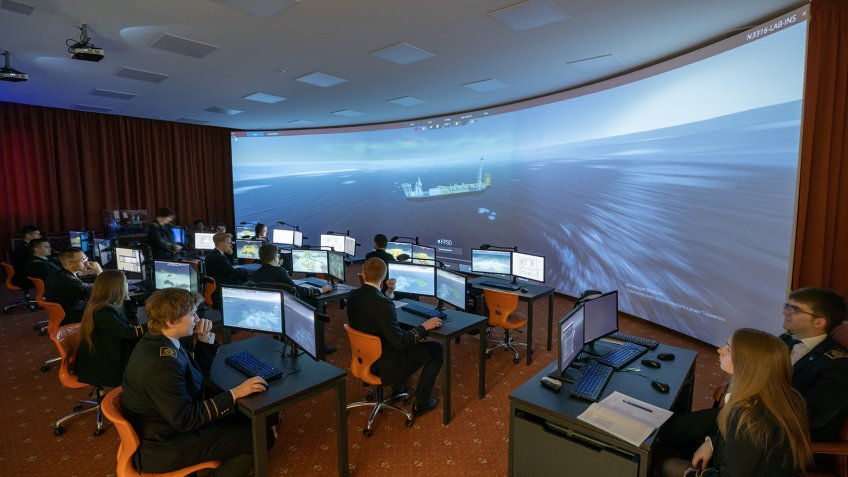
The general opinion: to adapt the graduate to the needs of the market will be possible only in case of transition to training specialists with higher education within 5-6 years. In this case theoretical knowledge alone is not enough. They should be reinforced by the skills obtained in laboratories, simulators, training grounds and, of course, production sites.
It should be reminded that Vladimir Putin suggested returning to the traditional system of higher education in order to reduce the shortage of engineering personnel. This initiative was voiced about two months ago, within the framework of the Russian President's message to the Federal Assembly.