

St. Petersburg Mining University has become one of the six Russian universities where a pilot project to withdraw from the Bologna process, i.e. to abandon the bachelor's degree and replace it with engineer training within 5-6 years, will be launched this year. The corresponding decree was signed a month ago by President Vladimir Putin. Forpost decided to ask the rector Vladimir Litvinenko how important he considers this decision and who will be the main beneficiary of the coming reform.
- Vladimir Stefanovich, let's start our conversation with another decree by Vladimir Putin, which was signed in late May and stated that St. Petersburg Mining University was given the honorary title of "Empress Catherine the Great." How important is this to you? And why did it happen?
Vladimir Litvinenko: This decision by the President was very important for us. We were especially pleased that it was made in the year of our anniversary, the 250th anniversary of the founding of St Petersburg Mining University. We are talking about restoring the historical memory, because our university was named after Catherine the Great in 1896, when the capital city was mourning and celebrating the 100th anniversary of the Empress' death. The corresponding decree was signed by Nicholas II.
This document indicated the enormous contribution of scientists and graduates of the Mining Institute in the progress of mineral resources complex of Russia. In fact, even at the time of Alexander III it was declared at the highest level that this industry is "the most important part of the economic development of our state." At that time, the only "design bureau" that worked on training personnel and creating innovations for it was the Mining Institute.
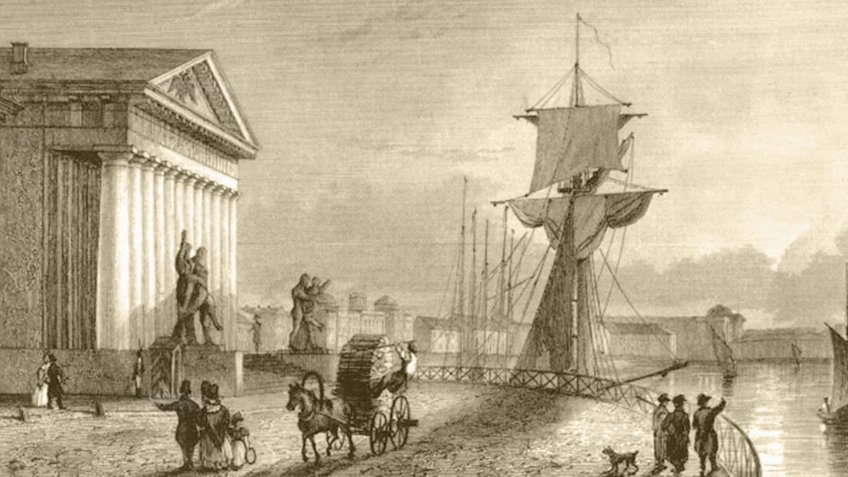
At the same time, it was also a recognition of Catherine II's indisputable merits in the development of domestic education and mining production. It is no secret that during her reign the quantitative and qualitative indicators of the Ural metallurgical plants increased dramatically, which allowed, among other things, to provide the army with all the weapons it needed to defeat Turkey. And this victory, in turn, led to the termination of the raids of the Crimean Tatars in the central and southern regions of Russia, and the growth of our country's influence in the international arena. To a large extent, all this was made possible by the introduction of breakthrough technologies for mining and processing of minerals at the time, as well as the elimination of the shortage of engineering personnel. Russia is facing similar challenges today.
The principles of government proclaimed by the empress state that "it is necessary to promote the prosperity of the state and make it abundant," "it is necessary to make the state formidable in itself and inspiring respect for its neighbors," and "it is necessary to educate the nation that must be governed." Seemingly very simple words, but crucial to understanding the fundamentals of any power's development decades into the future.
As for the need for education, let me remind you that in front of the entrance to Stellenbosch University, located in South Africa, hangs a plaque with the following words: "The destruction of any nation does not require the use of atomic bombs or long-range missiles. All that is required is to reduce the quality of education and allow students to cheat on exams. Patients die at the hands of such doctors. Buildings collapse at the hands of such engineers... The collapse of education is the collapse of a nation." I absolutely agree with this statement.

- Why is it so important today to reform the higher education system? Has the old one finally exhausted itself?
Vladimir Litvinenko: I have no doubt that the prosperous nation of this century will be the one that creates the most effective system of school and university education. This is the foundation of progress, especially given our enormous natural resources. In Russia lies the entire Mendeleev's table, but in order to monetize these resources, to learn how to involve them in deep processing and produce within the country quality goods of direct consumption, we need competent personnel and modern technology.
Of course, the potential of domestic higher education is great. We are still graduating young engineers who are in high demand at companies, providing scientific support for major projects implemented by Russia's flagship companies, and introducing innovations. Nevertheless, today it has become obvious that joining the Bologna Process has created certain barriers to the formation of a favorable scientific and educational environment. And we are talking not only about the reduction of training programs to 4 years, which significantly hindered the process of adaptation to production of young people who received a diploma.
There is also a decrease in the interest and motivation of applicants to enter technical universities, and in general to acquire knowledge. The prestige of scientific and pedagogical activity is falling, which complicates the selection of personnel. The popularity of reading is also decreasing; books and even telephone communication are being replaced by data exchange via messengers.
Of course, on the one hand, social networks have made it easier to access information, but in parallel they have lowered the threshold of its reliability. Let's be frank: there are a lot of blatant lies or speculation on the Internet today. Even in the scientific community, there are more and more situations in which one's private opinion is passed off as the truth. This does not take into account such factors as, for example, imperfect measuring instruments that distorted the results of experiments, or the lack of knowledge about the object of research as a whole, but only a partial study of it.

All this contributes to the spread of anti-scientific theories and approaches, which are spread through network systems and perceived by the younger generation as absolute truth. For example, a great many children and young people sincerely believe that the development of renewable energy sources is artificially held back by lobbyists of oil and gas corporations, who pollute our planet for super-profits. Young people do not understand that wind generators and especially solar panels have a very low density of generated energy and, at the same time, a high consumption of materials. Therefore, if we exclude hydrocarbons from the energy balance, then, firstly, we will pay dozens of times more for electricity, and secondly, we will forever say goodbye to the stability of its supply to the grid. In other words, we will live in conditions of permanent blackouts.
This is the main reason why renewable sources cannot displace fossil fuels, but young people, who have fallen under the influence of liberal ideology, do not understand this. As a result, new values are formed in society, and ephemeral problems are put on the agenda, which frankly prevent the solution of real problems facing the state, those that are important for improving the quality of life of every citizen of Russia. For example, several years ago, for some reason, a very popular topic of discussion was the need to replace natural gas with hydrogen, which at the current level of technology is simply impossible.
Neither is it necessary. On the contrary, we should continue gasification of the country, because it is an ideal resource that, on the one hand, ensures energy security and economic sustainability, and, on the other hand, reduces the anthropogenic load on the nature, as compared to the same coal or fuel. Moreover, methane, like oil, can be involved in deep processing. It can be used to produce polymers and high-margin products: clothes, furniture, tires, varnishes, paints, and many other things.

In order to ensure that the younger generation understands the cause-and-effect relationship of events around them, is motivated to work, without which no development is possible, and does not want to leave the country, except for the vacation season, we should, of course, abandon blindly copying Western templates. And to create such a system of higher education, which would allow to direct the energy of society to the intensification of socio-economic development by improving the quality of training and creating breakthrough technologies. Let me repeat: the potential of domestic higher education is sufficient to do this.
- What exactly will change in personnel training after you leave the Bologna process?
Vladimir Litvinenko: St. Petersburg Mining University will completely switch to training students in new programs, which are designed for 5 to 6 years. This is caused, among other things, by requests from employers and applicants. The current high school students expect to enter the university, upon graduation of which they will receive a full-fledged engineer's diploma giving them a competitive advantage in the labor market. Executives of flagship oil and gas, mining, energy, and petrochemical companies also fully support the idea of abandoning the bachelor's degree, because they are dissatisfied with the quality level of knowledge and skills of the overwhelming majority of graduates who receive a four-year higher education.
Their main complaint is the lack of time allocated for internships. In this regard, in the new curricula we will provide for three time segments during which students will acquire workplace competencies. The first involves a general acquaintance with a particular enterprise as part of the group. Then, at the end of the third year, they will acquire the skills to work in their specialized occupation for three to four months. After the fourth year you have six-month externship, which includes, among other things, mastering of the knowledge in organization of technological cycle and its economics. In other words, we switch to training engineers for 5-6 years, of which 10-12 months are spent on practice.

We will change not only the existing standards of educational programs, but also the name of some areas of training, we plan that their name will be changed to 30% of the specialties. We also need to create conditions for current bachelor's students to be able to get a full engineering diploma, that is, to continue their studies after 4 years of training. I do not claim that we will be able to accomplish this in the course of the coming academic year, but there is such a demand from young people and their parents. They are well aware that the competitiveness of bachelors in the labor market, already not the most obvious, will now become even lower.
In addition, in order to improve the quality of educational programs in different areas of training, a supervisory board will be organized which will include representatives of various ministries at the level of deputy ministers: Industry and Trade, Energy, Labor, Higher Education and Science. This will allow all interested parties to develop a common position on the future of engineering education and contribute to the effective integration of higher technical educational institutions and industrial enterprises.
Withdrawal from the Bologna process should lead to the reduction of the shortage of highly qualified personnel demanded by the real sector of the economy, the emergence of new breakthrough technologies. But, of course, we all need to understand: the reform of domestic higher education will only bring results if this process is based on trust and professionalism.