

Trade turnover between Russia and Africa continues to grow. In the first eight months of last year, it increased by 43.5%, to $15.5 billion, and the share of the countries of the sunny continent in the total volume of our foreign trade increased from 2.3% to 3.7%. The dynamics is undoubtedly positive, especially if we take into account that the overwhelming majority of experts are confident in its preservation.
But what exactly are the areas of cooperation in which the states, where almost one and a half billion people live today, are interested? And can this partnership be mutually beneficial? For example, Zimbabwean President Emmerson Mnangagwa spoke at the II Russia-Africa Summit about the "numerous opportunities" that exist in agriculture, mining and energy. He paid special attention to lithium mining as one of the most promising sectors of the national economy and invited our companies to participate in this business.
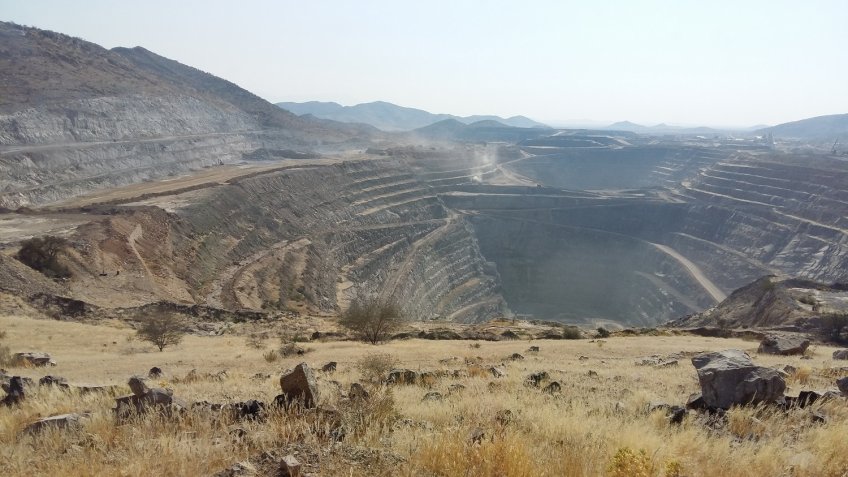
"Mining remains a pillar of the African economy, contributing significantly to income and GDP growth. However, our continent still faces a shortage of skills capable of extracting and processing minerals. Africa has lost billions of dollars in potential profits due to a shortage of mining engineers and equipment needed to add value," says Sifelani Tsiko, a journalist with Zimbabwe's popular daily newspaper The Chronicle.
He believes that training competent employees for the mineral and raw materials sector is the most promising vector of cooperation between our countries. And he says that the International Congress "Africa is looking for solutions", which took place last December in St. Petersburg, was a very important step towards overcoming the personnel and technological crisis in which practically the whole continent is mired. The forum was organized by the UNESCO Center of Excellence in Mining Education, and the event resulted in the signing of the agreement on the establishment of the African Subsoil Consortium. The consortium includes about 130 different organizations - higher education institutions, scientific institutes, geological communities and mining and metallurgical companies.
The goal of the new community, coordinated by the Empress Catherine II St. Petersburg Mining University, is to create joint research teams and engineering centers, as well as to implement specific industrial projects. These include mineral prospecting and exploration, assessment of natural resource reserves, analysis of the profitability of field development, and scientific support for the construction of processing plants with access to the production of end-use goods.
"Russia has signed a cooperation agreement with almost 30 African universities, including those from Zimbabwe. There is no doubt that our universities will benefit from this deal as it is aimed at improving the training of mining engineers on the continent. A 12-member delegation of experts from our state attended the congress where the signing took place. They represented not only universities but also research institutes and the government. This forum was part of the efforts to implement the agreements reached at the Russia-Africa Summit in July this year," Sifelani Tsiko elaborated.
Namibia, whose subsoil is rich in large deposits of diamonds, gold, copper, lithium, manganese, iron, rare earth metals, uranium and other resources, also expects a lot from the new consortium. The national government does not have sufficient funds to invest in the development of deposits, and this is a serious factor holding back the country's development. After all, Western multinational companies are guided solely by the interests of their shareholders, but not those of the local population.

"Foreigners almost always impose not very favorable conditions on us. They understand perfectly well that we have to accept them anyway, because otherwise we will be left without any income from the extraction of raw materials at all. The managers of such companies say the same thing: we come with our money, but we don't know whether we will be able to find the minerals. Accordingly, we are taking a big risk, which means that if we succeed, we should receive the bulk of the rent and you should pay only a small percentage," explains Twei Chekero, Chairperson of the Standing Committee on Natural Resources of the Namibian National Assembly (Parliament).
In his opinion, the agreement on the establishment of the African Subsoil Association can make a significant contribution to changing the current state of affairs. First of all, due to cooperation within the consortium of Russian companies and organizations with local businesses, as well as academic exchange. Itah Kanji-Murangi, Namibia's Minister of Higher Education, Training and Innovation, has a similar viewpoint. She urged African universities to cooperate closely with Russian universities, as this would help "develop the competencies of mining engineers.

"The leaders of our higher education institutions should seize this opportunity to establish fruitful cooperation with their Russian counterparts. Let us see to it that our hands are ready for action, for the objectives of the consortium are fully in line with our needs," Mrs. Kanji-Murangi stressed.
The Secretary General of the Committee of Chancellors of Nigerian Universities (CVCNU), Mr. Yakubu Ochefu, said "the agreement reached will help intensify the country's transition from an agrarian to an industrialized economic model." He also described the consortium agreement as "evidence of the partnership between Russia and Africa reaching a new level."
"The new community has united under its wing more than 130 organizations from 42 countries of the continent. These are institutions of higher education, scientific institutions, geological communities and mining companies. There is no doubt that its establishment will contribute to increasing academic exchanges, generating new knowledge and developing such an important field as mineral exploration," the Nigerian newspaper Vanguard quoted Mr. Ochefu as saying.
The president of the consortium is a Nigerian - the rector of Admiralty University, Paul Omaji, who called the new community "an essential tool for Africa's development". Among the reasons for such an optimistic assessment of the event, he cited "Russia's lack of colonial history, which allows us to count on a fair distribution of revenues from the extraction and processing of raw materials.

"The paradox is that we are walking on untold riches, yet we are literally mired in poverty. One of the main reasons: the specificity of education, which needs to be urgently changed because it does not correspond to the real challenges. We do not need half-measures, we need a solution that will allow us to make a sharp breakthrough and fundamentally change the state of affairs. The creation of a Russian-African consortium of universities is the most important mechanism for achieving this goal," Paul Omaji said.
The Zambia National Broadcasting Corporation (ZNBC) called the creation of the new association "an important step towards improving the efficiency of scientific research and management of the mining industry". Another significant point of the agreement, journalists believe, is the possibility of professional development for local university students and young engineers who are current employees of mining companies.

"Copperbelt University Rector Paul Chisale expressed confidence that the merger of universities that produce professionals to work in the mining sector will change the face of the industry in our country. Talent Ngandwe, Vice President of the Zambia Chamber of Mines, said the signed document will help accelerate the introduction of new technologies needed to improve the profitability of the mineral sector," ZNBC reporter Michael Kaumba said.
One of the most important tasks facing the consortium is to study the Russian experience in the sphere of state management of subsoil use, as well as its implementation in African countries, taking into account local specifics. It is no secret that after the collapse of the USSR, Russian deposits were also given to the US and Europe, which was one of the reasons for the unprecedented decline in the living standards of the population of our country. The situation could be remedied only after the election of President Vladimir Putin, who returned control of mineral resources to the state and thus created the prerequisites for a sharp economic spurt.

Moreover, all participants agreed that the current two-tier system of training imposed on us by the West does not meet the challenges of the times. If Africa is to break free from neo-colonialism, it simply needs to adopt a different model of higher education. To accomplish this task, branches of Russian universities are expected to open on the continent, with curricula aimed at training engineers rather than bachelors.
"Any state invests in the education system primarily to ensure its scientific and technological progress, which requires competent scientists, teachers and engineers. This is relevant for the whole world, including Russia, but especially for the countries of Africa, as most of them today, like air, need an accelerated transition from agrarian to industrial model of economy. But is it possible to achieve this if universities, instead of producing specialists from their walls, are solely engaged in humanizing young people? How will this help industrial enterprises to reduce the shortage of personnel or introduce the innovations necessary to offset the constraints on development? It is obvious that technical universities should urgently reconsider their functions and direct their efforts towards achieving priority goals," emphasized Vladimir Litvinenko, Rector of the Empress Catherine II St. Petersburg Mining University, commenting on the results of the International Congress "Africa Seeks Solutions".
Implementation of the pilot project on transition to a new system of basic higher engineering education with the term of students' education for five and a half years is planned to start with Namibia. Two private universities from this country and one state university have already announced their willingness to participate in it.