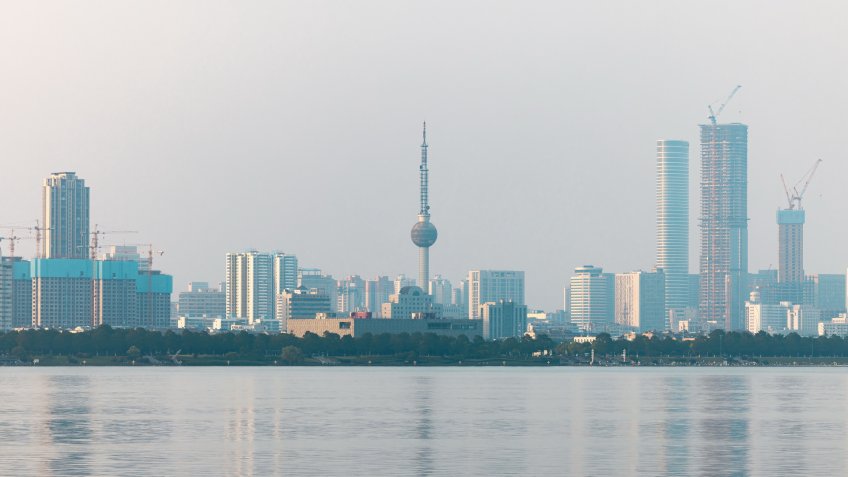
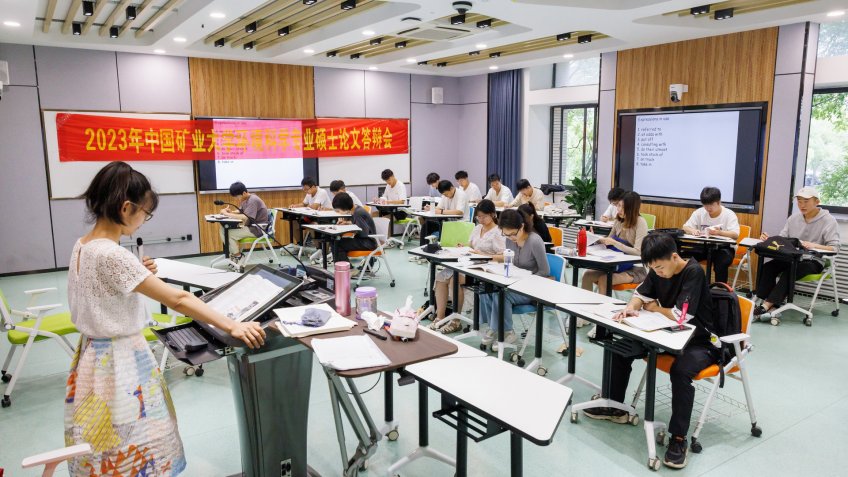
The delegation from Empress Catherine II Saint Petersburg Mining University spent nearly two weeks in the PRC. The trip was organized by the International Competence Centre for Mining Engineering Education under the auspices of UNESCO as part of the Summer School program.
The program was attended by 17 students from the first three undergraduate years, representing various faculties and specialties. The program focused heavily on the theme of "smart" mining and incorporated "green" technologies in raw material extraction.
The hosting institution was the China University of Mining and Technology (CUMT), with which the Mining University has cooperated since the 1950s, when Chairman Mao decided to introduce the Soviet model of education to the country. Indeed, the very first instructors here were St. Petersburg miners. In recent years, collaborative efforts have become particularly active: within the framework of academic exchange, the universities dispatch postgraduate students and young faculty members for internships and conduct joint scientific research. Students from the Celestial Empire, including those from CUMT, are regular participants in the Summer School programs.
В начале апреля 2025 года девять отобранных экспертной комиссией аспирантов Санкт-Петербургского горного университета императрицы Екатерины II под руководством двух координаторов приступили к стажировке в одном из ведущих инженерных вузов на территории Северного Китая - TYUT. Поездка была ориентирована на достижение сугубо прагматичных целей – понять структуру образовательной и научной деятельности КНР и определить, что из ее аспектов можно внедрить у нас.
Today, CUMT stands as one of the leading educational institutions in the mining sector within the country. Founded in 1909, its academic disciplines include mechanical engineering, mine safety, engineering, energy, environmental management, and geotechnical engineering. Key priorities for the PRC include detailed coal exploration and intelligent mining, intelligent construction, and the safe operation of deep underground structures, disaster prevention, and environmental protection.
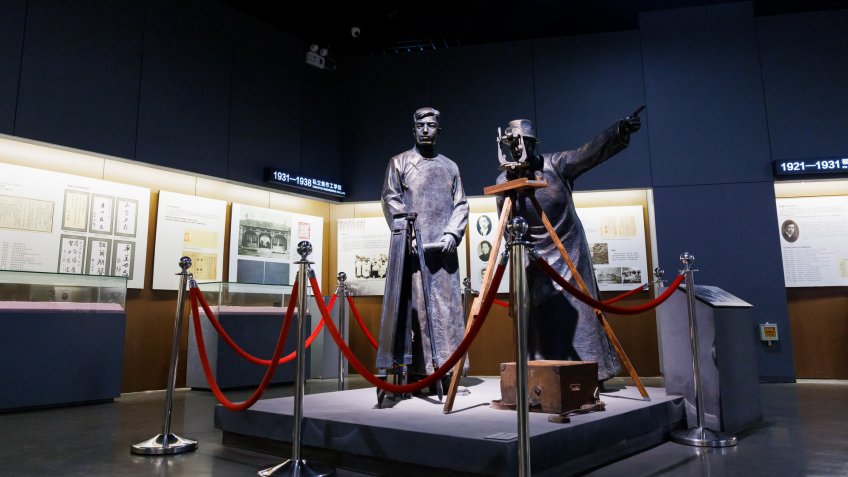
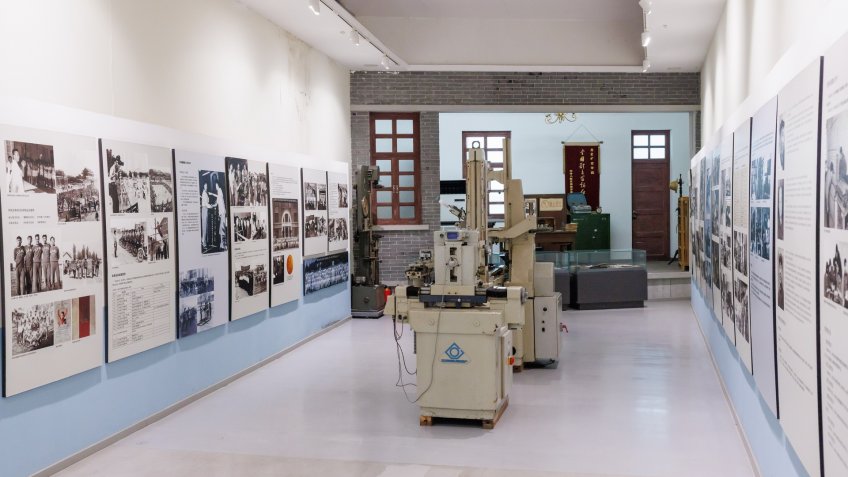
At the CUMT Mining Museum, the students familiarized themselves with the historical development of mining technology in China, viewed mine mock-ups, and examined specimens of unique equipment.
One of the first to welcome the St. Petersburg delegation was the Dean of the School of Mines at CUMT, Professor Huang Yanli:
- Coal production in China amounts to approximately 4.8 billion tons per year. The finest miners and engineers in the country are practically all our graduates. Currently, Chinese mining companies are investing in Russia. Mining equipment manufacturers, such as Zhengzhou Machinery, supply a large volume of machinery and technology to your country. We hope to leverage the strengths of both sides to serve Russian enterprises together and to jointly train personnel, - noted Huang Yanli.
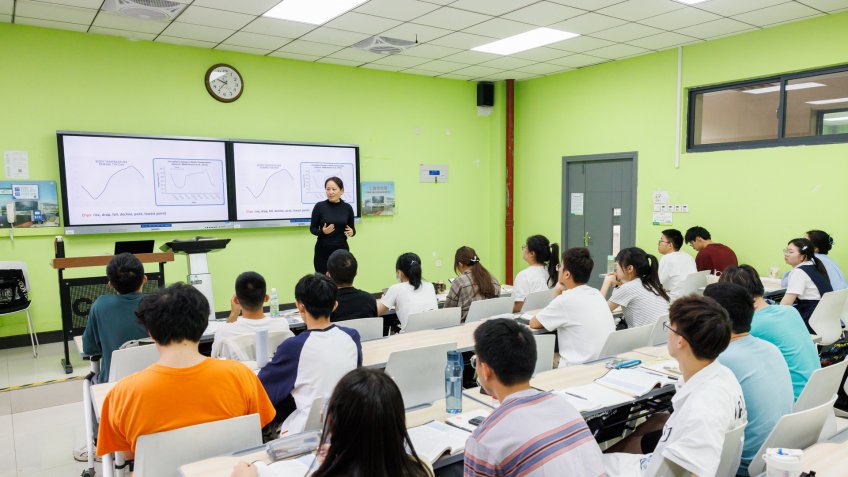
As part of the internship, the participants attended a series of lectures delivered by leading CUMT professors and toured museums, laboratories, and the Wenchang and Nanhu campuses. The St. Petersburg delegation was highly impressed by the sheer scale of the university campus, which houses academic buildings, scientific research laboratories, libraries, as well as all necessary social infrastructure.
The guests from the city on the Neva visited key enterprises in the region. In particular, a site visit was paid to a GCL Group waste-to-energy plant, which processes 75% of the municipal waste of a city of 9 million people (equivalent to 2,400 tons per day) and generates electricity for 16 residential districts.
- I was deeply impressed by their attitude toward resource conservation and national ecology; here, they realize the true cost of all the resources they use and strive to exploit them as efficiently and carefully as possible. The volumes and quality of recycling are remarkable. I would love to see this type of technology deployed for mass use in Russia. Following this trip, I have developed a clear understanding of which automation methods in China outpace our own. This serves as a great incentive to direct our efforts toward implementing them back home. And this is more than realistic, – stated Yuriy Abrashitov, a 3rd-year student at the Faculty of Mineral Processing.
The Russian delegation visited the LvJian dairy plant, which features a practically fully automated production process. The personnel count for a single shift is fewer than 40 people, with all primary packaging and product movement operations executed by robotic manipulators and conveyor lines.
- As a student of the Department of Automation of Technological Processes and Production, it was highly interesting for me to observe so many robots and mechanisms, where human participation in the operations is minimized. In the field of dairy production, this plays a critical role. The shelf life of the products is extended by reducing the risk of bacteria entering the jars of yogurt and cheese, - noted Margarita Badina, a 3rd-year student.
The lectures prepared by the host side were strictly practice-oriented. The classes were conducted not only by representatives of the People's Republic of China, but also by their colleagues from other countries who are working on their research projects within the university walls. This reflects the immense scale of the university, which serves as a center of attraction for specialists from all over the world, including Russia.
- For me, the most memorable lecture was on space mining. Today, this topic remains something from the realm of science fiction, but it seems that it will not take much time before it becomes a reality. Spectral analysis allows us to understand the composition of celestial bodies and realize their value for human life. We were shown a prototype of a robot designed to sample soil on the surface of space objects. It is fascinating and keeps provoking new questions. It also fosters a desire to grant our country, which is one of the leaders in mineral extraction on Earth, the absolute right to this even beyond the boundaries of our planet, - says Andrey Pogorelov, a 3rd-year student of the Civil Engineering Faculty (Department of Construction of Mining Enterprises and Underground Structures).
- I highly enjoyed the lecture 'Mineral Extraction and Geological Exploration Technologies.' We were taught about China's primary mineral resources, such as graphite, rare earth elements, zinc, and lithium, as well as geological exploration technologies: drilling, geophysical and geochemical surveys, and remote sensing methods. The lecturer who conducted the class was deeply passionate about the topic and possessed an excellent command of the English language, making it highly engaging and easy to follow, - recalls Dmitriy Gaydarly (1st-year student, Faculty of Oil and Gas).
- I am studying the specialty 'Economics of Mining Production,' and I was delighted to learn about new technologies in the field of rock extraction, such as machine learning. It helps identify the type of minerals even prior to their extraction, thereby optimizing the mining process and making it faster. This was explained to us during a lecture dedicated to predicting the mechanical behavior of rocks. I can also say with confidence that over the two weeks of lectures and various events conducted in English, I was able to improve my language proficiency. Furthermore, it has motivated me to learn the Chinese language, - admitted Maria Karpova, a second-year student of the Institute of Basic Engineering Education, Faculty of Economics.
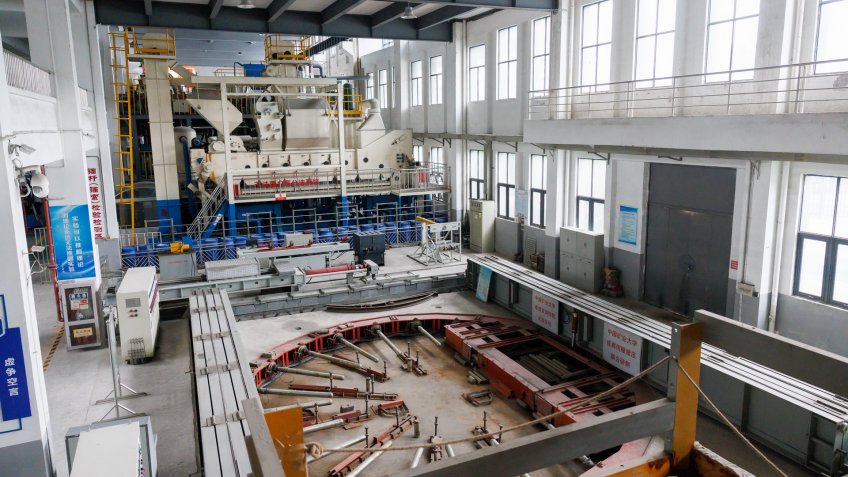
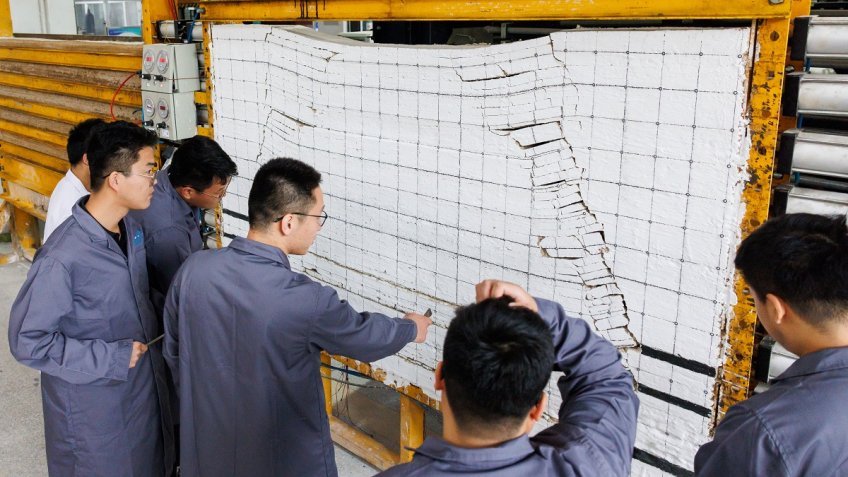
- We visited the CUMT laboratories and familiarized ourselves with the equipment used for experiments. For instance, we saw presses for testing the stability of coal seams, rigs for measuring compressive and tensile strength, and presses for modeling hazardous situations. Understanding how this equipment operates will provide a deeper comprehension of our specialized subjects, as well as the strength of materials, - says Georgy Mesyats (a second-year student of the Institute of Basic Engineering Education).
At the China University of Mining and Technology, extensive attention is devoted to the upbringing of students, specifically their moral, spiritual, and ideological development. This aspect was of particular interest to the guests. At the Mining University, cultural and patriotic education, alongside the academic "social fabric," constitutes an integral component of the educational process. This can be noticed from the very first moments. Every undergraduate, postgraduate, and faculty member wears a uniform, just as it was 250 years ago. This dress code is a tribute to tradition, a symbol of discipline, and a token of the unity shared by the St. Petersburg miners. While CUMT does not currently mandate a uniform, the university leadership notes that this issue is on the agenda as a top priority.
In China, significant emphasis is placed on cultivating qualities such as patriotism, responsibility, a sense of community belonging, and integrity within students. Here, they believe that proper values form the foundation upon which a mature, well-rounded individual develops. The curriculum includes several specialized disciplines designed for this purpose. For instance, there is a mandatory theoretical course that helps young men and women better comprehend the national activities of their country, including its politics, economy, and foreign relations.
However, upbringing most frequently occurs through collective thematic events and social practices. Students are actively involved in participating in national holidays and anniversaries of milestones, and trips to historical landmarks and memorials are regularly organized. Great attention is paid to the study of traditional Chinese culture; student events are hosted where individuals can learn more about ancient crafts, customs, and art.
Extracurricular activities also play a vital role. The university hosts sports competitions and has established various student clubs catering to every interest, ranging from calligraphy courses to Chinese Xiangqi chess and robotics.
This comprehensive approach links the university closely with their colleagues from the city on the Neva.
- Learning through action plays a paramount role. Collective events and social practices help students understand the living conditions in the country, witness the achievements in the development of their nation and society, and thereby foster a sense of belonging to a common cause, - explained Yang Guohua, Professor and Research Supervisor at the School of Marxism of the China University of Mining and Technology.
The Institute of Marxism itself was opened at CUMT in 2011, succeeding the Department of Marxism-Leninism established back in the 1950s. Currently, approximately 200 master's and postgraduate students (future researchers, instructors, and scientists) study here, guided by 62 full-time faculty members. The primary objective is the upbringing of highly moral specialists and the creation of a teaching staff characterized by a "strong political stance, a broad horizon, and high self-discipline".
The Russian delegation requested a more detailed explanation of how the "upbringing process" is organized here. It all begins with the mentor. Every student is assigned a research supervisor who not only guides them along their academic path but also shapes their values and perspectives. In essence, they combine two functions—serving as both a scientific advisor and a mentor.
- A mentor is required not only to transfer knowledge but also to pay close attention to the values, worldview, psychological health, and moral qualities of the students—that is, to all the key factors influencing their development, - believes Yang Guohua.
The preparation of mentors is approached meticulously. The primary criterion is that the candidate must "measure up": in addition to extensive knowledge, they must be deeply caring, genuinely interested in working with youth, possess an excellent reputation, and exhibit appropriate moral and personal qualities. For supervisors of master's and doctoral students, the requirements are even stricter.
- Not every instructor can be a mentor. If a teacher wishes to become one, they must submit an application and pass an initial screening. Only after verifying a whole set of indicators (moral readiness, responsibility, active scientific research and its funding, and so forth) do they receive the right to supervise students. This is the first essential condition, - explains the professor.
The number of students a given mentor can supervise varies and is determined on an individual basis. Those who demonstrate better performance are permitted to take on more students. If a supervisor shows poor results, they can be suspended and stripped of this right. If a faculty member fails to do what is required, this effectively becomes a serious professional setback for them — their “quota” is reduced.
The second step in preparation involves the maximum immersion of the instructor into the work with their mentees. The mentor must be aware of everything—from the daily schedule of their students to joint scientific events. These can take the form of group meetings or specialized research seminars. Every student must attend a specific number of them prior to graduation. Passing the final examination directly depends on this.
- We have rigid requirements. If an instructor does not conduct these seminars, the students will not have the opportunity to attend them. Consequently, the exam will be failed.
But how exactly is a mentor's effectiveness evaluated? What if they approach their duties as a mere formality? At Saint Petersburg Mining University, there are more than 20 such criteria, ranging from the quantity and quality of scientific papers written by the student to extracurricular activities. The employee's salary package, among other things, depends directly on this.
- Your evaluation system is largely similar to ours," confirms Yang Guohua. "It contains many parameters. For example, whether the mentor took their mentees on excursions to museums or cultural events, whether they engaged with them through any additional tutoring, how many hours they dedicate to such work, and how many papers have been published. We evaluate their work with students comprehensively; their future career opportunities, including chances for a salary increase, depend on it.
Annually, the faculty members undergo re-attestation. Again, the better their personal indicators are—academic achievements, hosting conferences—the more students they are permitted to recruit. Furthermore, each instructor has a team of students with whom they jointly participate in research and projects, publishing their findings in scientific journals.
- It results in an entire ecosystem. If the number of research students suddenly drops, it will damage the team's development; therefore, this balance must be maintained. The more students you recruit, the more they are involved in the process, which in turn drives your research forward. So, there is a mutual interest here, - adds Yang Guohua.
As noted by Valentin Isheyskiy, Associate Professor of the Department of Blasting Engineering at Saint Petersburg Mining University and the delegation leader, the approach of both countries to the education and upbringing of students has proven to be largely identical.
- We have conducted an excellent 'synchronization of watches.' In China and in Russia, the hands on the clock face move in the same direction. The mechanisms as a whole are mutually very similar. As the proverb goes: 'Like-minded people are separated by neither mountains nor seas.' We hope that this visit will serve as a foundation for deepening our cooperation in the areas of academic discussions, joint personnel training, theoretical research, and much more. We will learn from each other and move forward together.
Naturally, the itinerary was also rich in cultural events. The St. Petersburg delegation toured the Xuzhou Museum and the Baolian Temple, one of the oldest Buddhist complexes in the country; attended the "Splendor of Pengcheng" water show on the picturesque Lake Yunlonghu; and participated in a culinary masterclass on folding Chinese dumplings.