
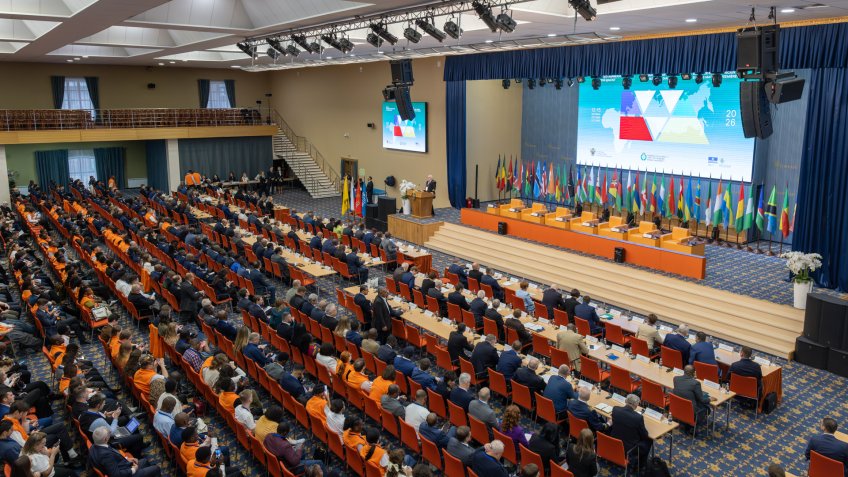
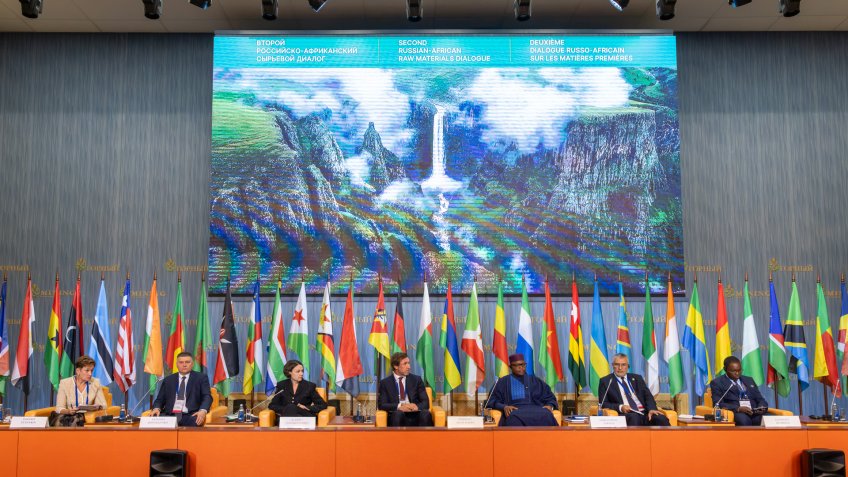
The Second Russian–African Raw Materials Dialogue, “Path of Development: Raw Materials and Personnel as the Foundation of Economic Sovereignty”, has opened at Empress Catherine II Saint Petersburg Mining University.
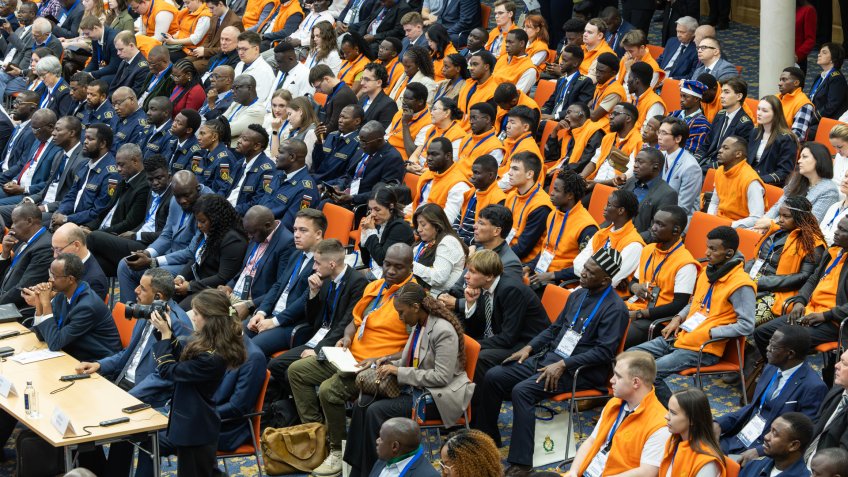
The forum has brought together more than 800 participants, including delegates from 43 African countries. Representatives of governments, relevant ministries and businesses, scientists, and public figures will discuss a wide range of areas of strategic cooperation between Russia and African states. The key topics are Africa’s transition to an industrial economy, improvements to the system of state regulation of the mineral resources sector, and the training of qualified mining engineers.
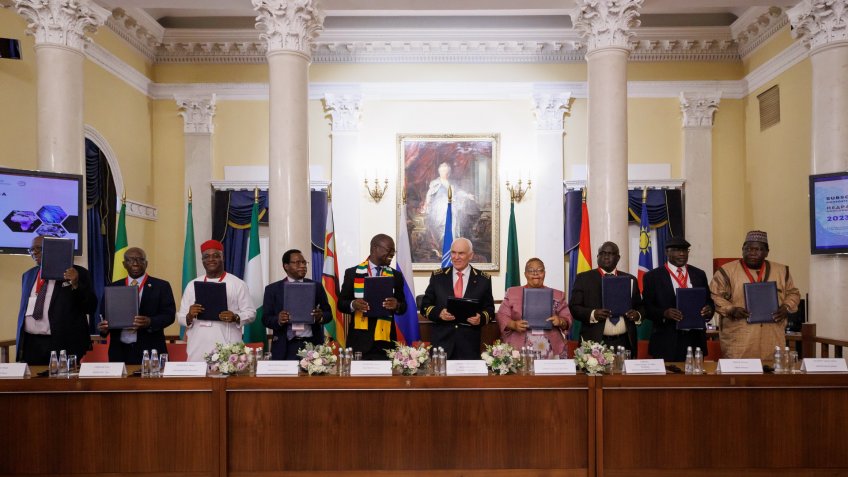
This extensive partnership mechanism stems from an initiative put forward by Russian President Vladimir Putin at the Russia–Africa Summit in 2023. That same year, Mining University hosted the International Congress “Africa Seeks Solutions”, where an agreement was signed to establish the “Subsoil of Africa” consortium, bringing together more than 100 technical universities. Exactly a year ago, in October 2025, the University hosted the First Russian–African Raw Materials Dialogue, which established itself as a permanent platform for discussing issues of subsoil use.
Africa is a distinctive region on the world map, with enormous reserves of natural resources. The continent’s subsoil holds around 30% of the world’s mineral reserves, 12% of its oil and 8% of its natural gas. For certain resources — cobalt, manganese, chromium, titanium and bauxite — the figures are significantly higher than the global averages. Such natural wealth should make this region a key player in global supply chains of raw materials for high-technology industries, such as electronics manufacturing. However, the overwhelming majority of deposits are controlled by Western corporations, predominantly American, British, and French. Under concession agreements, they receive the bulk of the resource rent, amounting to as much as 80–85% of the volume of subsoil exploitation. This policy of the Global North hinders the use of the continent’s natural resource potential for the benefit of the people who live there.
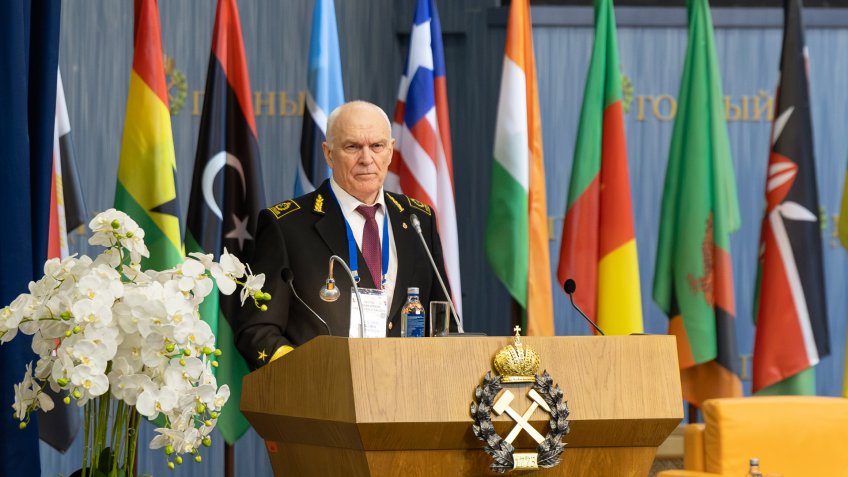
Africa faces an acute shortage of manufacturing capacity and innovation. The longstanding practice of neocolonial exploitation can be ended only by creating an intellectual elite within African states: engineers who will become the driving force of technological progress. This was stated by Mining University Rector Vladimir Litvinenko in a media interview before the summit opened.
«If we compare known resource reserves in African countries with their populations, there is 2–3 times as much natural wealth per person there as in Europe. But for this wealth to contribute to the well-being of its people, Africa needs its own engineering and technical personnel. Mining University works closely with African partners, and we moved from discussions to practical action long ago: we are training managers of mining companies and relevant ministries. These are not simply technical specialists, but senior managers who will be able to establish the full cycle of converting resources into products with high added value. Now we need to go further.
The next stage will be the establishment of a Russian–African Centre for Scientific and Personnel Support for the Development of the Mineral Resources Complex. The principal aim of today’s dialogue is to develop a clear mechanism for establishing this body, which will provide a foundation for cooperation between relevant ministers and the academic community. Our successful experience will form its basis.
As you know, a presidential decree established the National Center for Personnel and Scientific Support of the Mineral Resources Complex “Corps of Mining Engineers” at Mining University. It is a link between the state, science, and the real economy. The Association of African Universities will now also become one of its partners. We hope that all this will make it possible to create a unified model for training mining engineers on the continent».
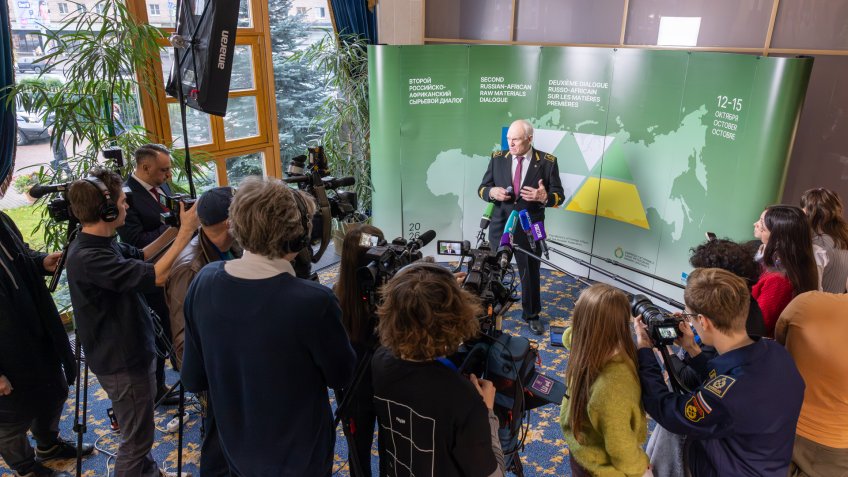

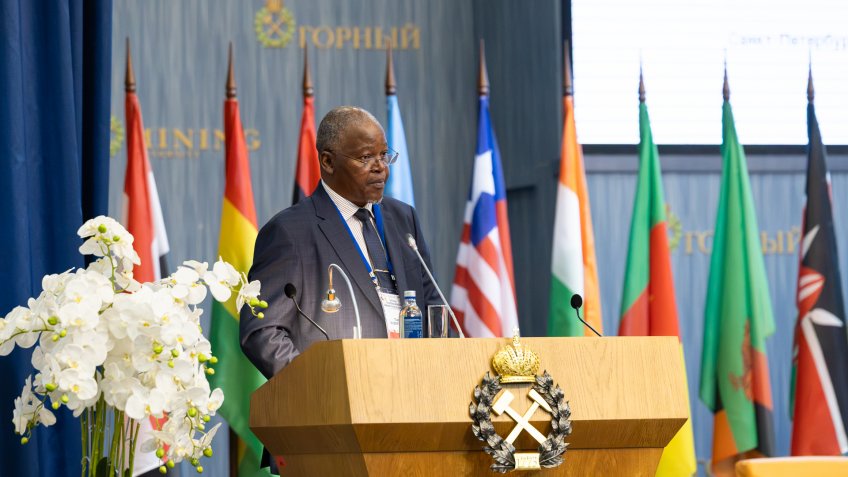
This position was fully supported by Olusola Bandele Oyewole, Secretary-General of the Association of African Universities (Republic of Ghana). He emphasised that bringing together the academic communities of the two continents is not simply an educational exchange but the foundation for Africa’s extensive industrial transformation:
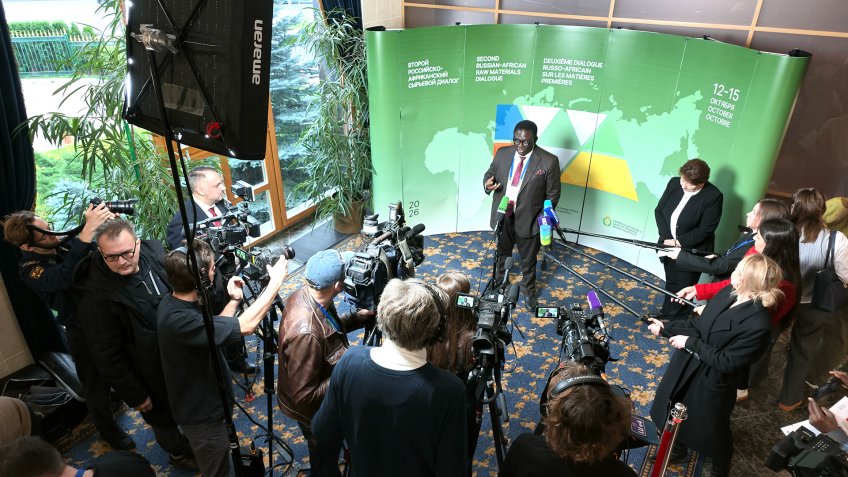
«The Association comprises more than 500 universities from across Africa, and we are a leading platform for research and innovation. Dialogue with Russia is essential for the sustainable development of national economies, their industrial transformation and improvements in the quality of education. Africa is the fastest-growing region in the world. We need to pass on skills and knowledge to our young people so that they are the ones who manage this wealth. The Raw Materials Dialogue is an excellent platform for strategically bringing together all political, economic, and academic forces. We thank the International Competence Centre for Mining Engineering Education under the auspices of UNESCO and Mining University for this initiative. We believe that this dialogue will become a permanent platform for strategic cooperation between Africa and Russia, ensuring continuity in our joint projects».
Konstantin Mogilevsky, Deputy Minister of Science and Higher Education of the Russian Federation, addressed the Dialogue participants. He emphasised that strengthening the multifaceted and mutually beneficial partnership with African states remains one of Russia’s strategic priorities. Cooperation in higher education and science has a central role, as it is in these fields that the foundations are laid for long-term economic growth and technological progress. Particular attention was drawn to Mining University’s special role as Russia’s oldest technical university and a custodian of the finest traditions of engineering education.
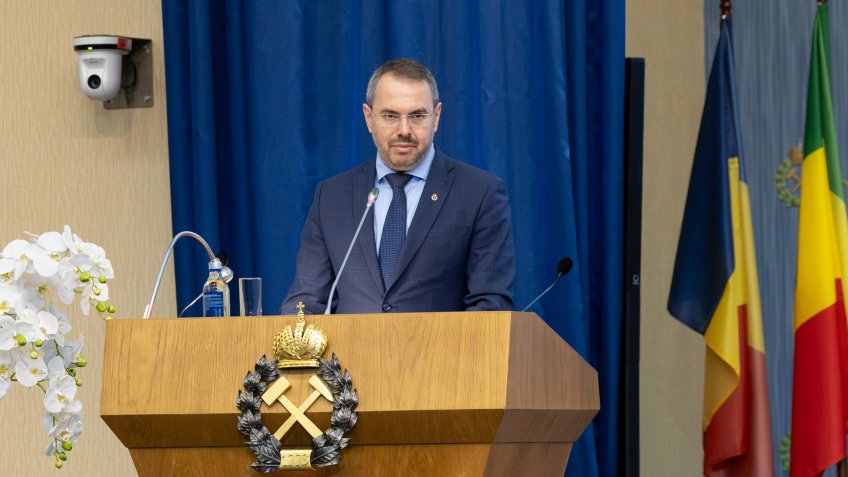
«Training qualified engineers for the mineral resources sector is of fundamental importance. Our country has recognised expertise in this area. We are ready to share modern teaching methods, technologies and practical knowledge with our African colleagues. Establishing direct contacts between universities is one way to expand opportunities for obtaining a Russian education. A good example is the professional development programme ‘Management of Subsoil Use Facilities’ delivered at Mining University. Such initiatives help to develop knowledge that is in demand and transfer technologies for mining and the rational use of natural resources. We also consider research to be another promising area. We see good prospects for applied projects in geology and mining», – noted Konstantin Mogilevsky.
Background:
«Management of Subsoil Use Facilities” is a year-long educational programme offered at Mining University for employees of raw materials companies and government bodies. The project is implemented with the support of the International Competence Centre for Mining Engineering Education under the auspices of UNESCO. It aims to develop competencies in two areas simultaneously — technology and economics — enabling participants to work at enterprises in the real economy. The first 20 graduates received professional retraining diplomas in Russian and English. A second cohort has now begun its studies.
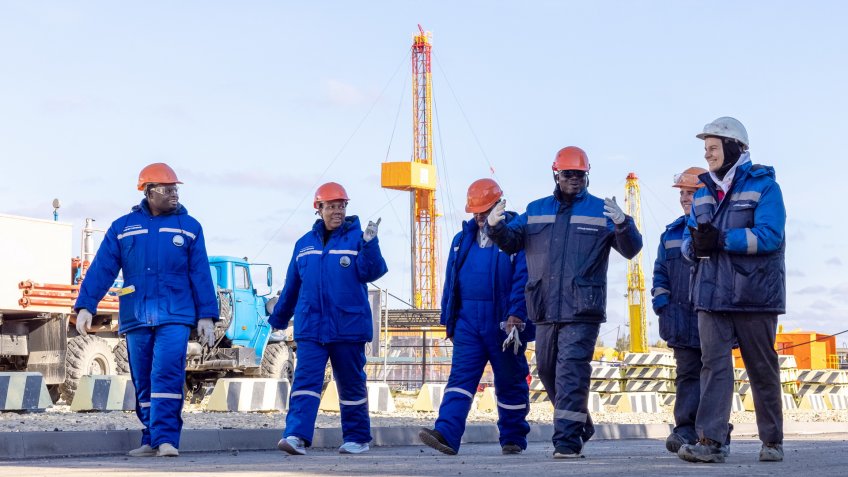
Russia and Africa are not competitors but partners that can and should complement one another. Cooperation based on equality and mutual interest is the key to economic development and the well-being of their peoples. Alberto Júlio Tsamba, President of the Southern African Federation of Engineering Organisations, spoke about this in his welcome address:
«Africa has exceptionally rich resources, yet remains the poorest continent: in 2019, it produced raw materials worth more than 400 billion dollars, but very little went to Africans themselves. This is a paradox: countries with the richest resource reserves are effectively deprived of financial independence. We recognise Russia’s experience in developing the mineral resources sector and are confident that it will help us. Africa needs technologies and qualified engineers so that it can not only extract and supply raw materials, but also process them and generate added value. We are ready to speak openly about the problems and cooperate by opening universities in Africa based on the Russian model, in order to improve our population’s standard of living in the future».
Messages of greeting were sent to the participants of the Russian–African Raw Materials Dialogue by Valentina Matvienko, Chair of the Federation Council of the Federal Assembly of the Russian Federation, and Sergey Lavrov, Minister of Foreign Affairs of the Russian Federation. They emphasised the importance of developing direct cooperation and finding practical solutions that will give new impetus to the partnership. This work is particularly relevant in view of the forthcoming third Russia–Africa Summit.
Discussion of these topics continued during the plenary session, which began immediately after the official opening. The forum’s programme spans four days in total. The Dialogue will include a Ministerial Session, an Academic Session of Rectors, a series of round tables on current areas of cooperation, business sessions and meetings.
The words of summit participant Zakhar Prilepin, a Russian writer and public figure, on the need to restore a strong bridge between Russia and the African continent could serve as an epigraph to the forum:
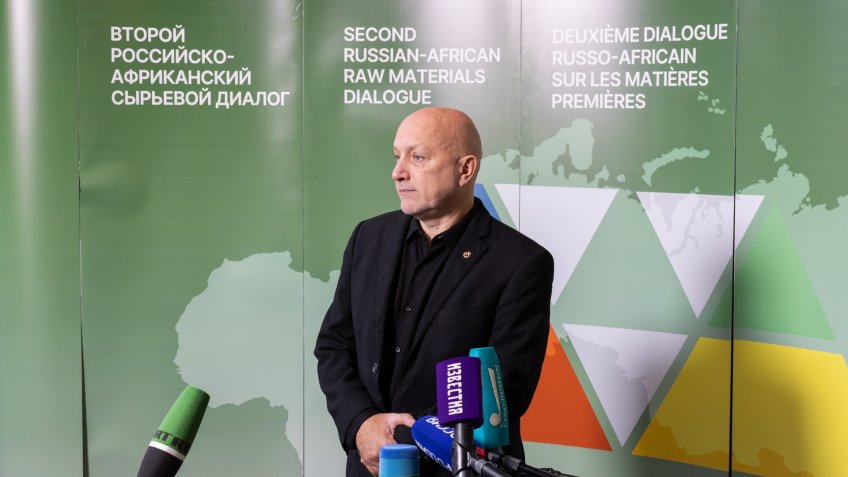
«After the collapse of the Soviet Union, in cultural terms, we simply shut out an entire continent. The country wanted to watch Hollywood films and effectively removed Africa from its information landscape. Do you know how much of the media agenda in Russia is devoted to Africa? Less than half a per cent. We devote more attention to Macron’s wife than to an entire continent, which comprises 55 countries. I find it immensely interesting to know how African peoples live, what they think, what films they make and what they stage in their theatres. And we have serious work ahead of us in this area».