

Empress Catherine II Saint Petersburg Mining University and Taiyuan University of Technology (TYUT) have signed an agreement to establish a joint Russian–Chinese Mineral Resources Institute. This is one of the most significant examples of educational cooperation between the two countries, demonstrating a long-awaited shift from the large number of joint university projects being implemented towards a focus on quality.
The document sets out the organisation’s aims and objectives, organisational structure and operating arrangements.
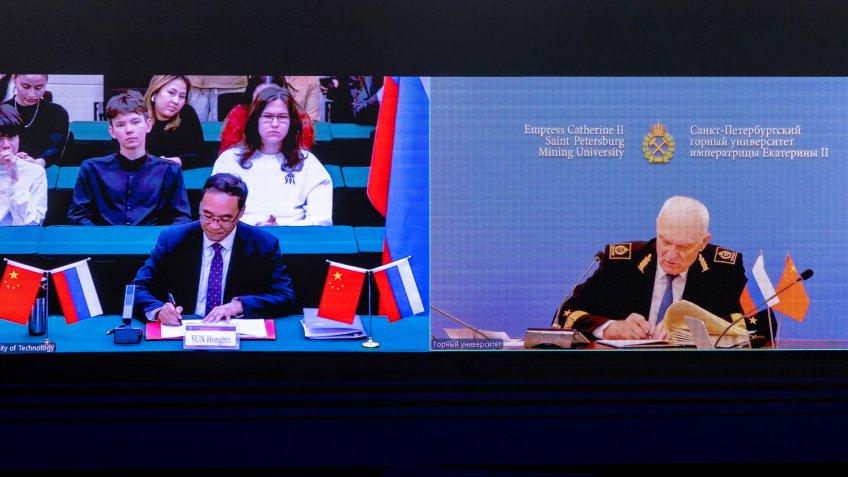
The context in which the institution is being established is noteworthy. In spring 2026, Russian President Vladimir Putin and Chinese leader Xi Jinping launched the two-year Russia–China Years of Education programme. Its principal areas are expanding academic mobility, conducting joint research, organising educational conferences, and studying Russian and Chinese.
This year also marks the 25th anniversary of the Treaty of Good-Neighbourliness, Friendship and Cooperation between Russia and China, which sets out the basic principles and areas of bilateral cooperation, including the intention to develop cooperation in science and technology. In May, the treaty was extended for another five years by mutual decision of the presidents.
The decision to establish the joint institute was not spontaneous. It was preceded by a lengthy process of finding a suitable partner, developing a dialogue and securing agreement at the highest level.

Relations between the universities in Saint Petersburg and Taiyuan began with “summer schools” for students. Cooperation has now firmly moved beyond standard educational programmes and includes regular placements for lecturers and postgraduate researchers. These are intended to enable each side to learn from the other’s experience in developing professional, research and teaching competencies, gain a thorough understanding of relevant enterprises’ operations, and establish bilateral research groups.
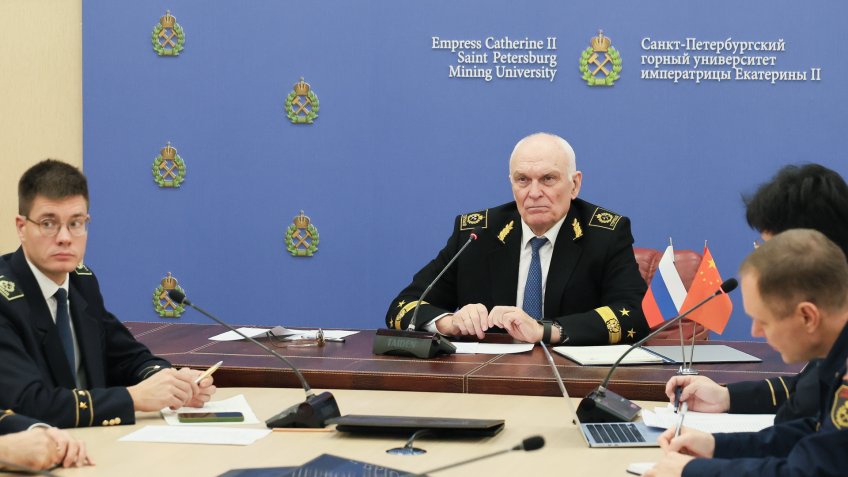
«Today, we are launching a substantial and important project that will improve the quality of training of both countries’ engineering workforce by adapting our educational models to one another and developing a common approach. Modern industrial challenges call for a new kind of specialist: less of a theorist and more of a practitioner. This makes our initiative a priority. Against the backdrop of current geopolitical challenges, Russia and China must act with greater unity and intensity: develop economic ties, advance civilisation’s technological projects and implement joint educational initiatives», - emphasised Mining University Rector Vladimir Litvinenko.
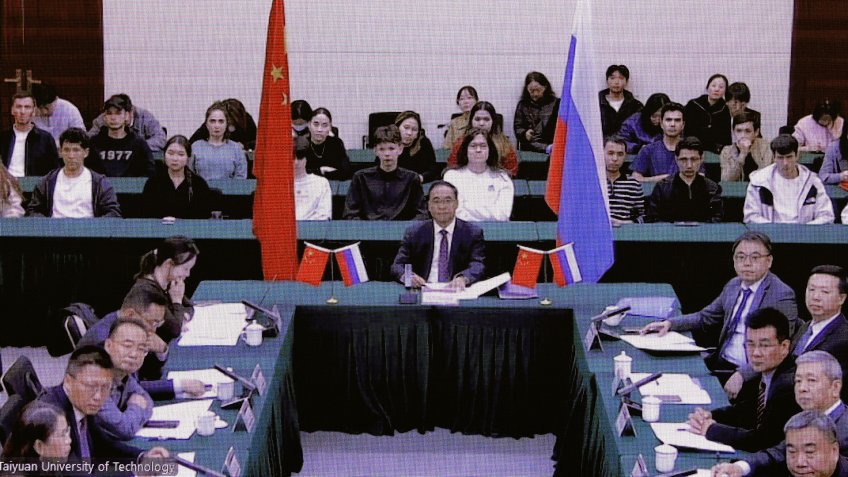
«Looking back over the 11-year history of our cooperation, I would like to say that, on the path towards a joint institute, we have passed important milestones that laid a solid foundation for today’s work. All the visits and exchanges remain vivid in my memory, as if they happened only yesterday. These include the International Scientific and Practical Dialogue on Defining Methodological Approaches to Doctoral Training, ‘A Step into Science’, for which 30 young TYUT scientists travelled to Russia; the Mining University delegation’s participation in the opening ceremony of the new academic year in Taiyuan in September 2025; and regular ‘summer schools’, placements and conferences. The signing of this agreement to establish a new institute is not only a logical continuation of our formal cooperation, but also a vivid expression of the deep mutual respect between good friends», - noted Sun Hongbin, President of Taiyuan University of Technology.
«Many joint educational structures and even institutions operate today, but all of them, without exception, effectively follow a one-sided model on Chinese territory. Lecturers, working materials and equipment are sent there accordingly. This raises a reasonable question: what do we gain from it? It is difficult to speak of equal participation in such circumstances. We therefore specifically sought to develop a mirrored approach that would be equally attractive and beneficial to both sides. As a result, together with TYUT, we approved an innovative cooperation model involving the establishment of a mineral resources institute with two campuses, in Russia and China. Under this arrangement, our Chinese colleagues help us train our specialists, and we likewise help them in China», - explained Evgeniy Lyubin, Vice-Rector for International Affairs.
Under the agreement, students spend the first two years of the six-year programme at their home university, studying a second language: Russian in China and Chinese in Russia. A two-year academic exchange follows. TYUT students come to Saint Petersburg and continue their studies in Russian, while students from Russia travel to Taiyuan to study in Chinese. After returning home, they complete their final thesis and receive two diplomas.
The first intake to the Russian–Chinese Mineral Resources Institute is expected in summer 2027. Up to 125 students will be admitted annually, with a total enrolment of up to 750. Guided by mutual benefit and making the fullest use of both sides’ academic strengths, the universities have agreed to offer programmes including ‘Mining Operations’, ‘Safety of Technological Processes and Production’, and ‘Chemical Technology of Natural Energy Carriers and Carbon Materials’. What will be of fundamental importance, however, is specialised training for each future engineer in a clearly defined area where their knowledge will be applied. The Pilot Project’s basic components — the ‘Education Core’, comprising general technical and specialist subjects in the first two years, and industrial training on the broadest possible scale — will form the foundation of the new institution.

There is no doubt about the demand for the new institution’s specialisation. An efficient mineral resources sector is of paramount importance to both Russia and China. Relations between Moscow and Beijing in this sector are based on exchanges of technologies and equipment, scientific and technical cooperation in geology and mineral extraction and processing, and the development of operational standards. The countries are implementing several joint raw materials projects, including Yamal LNG, Power of Siberia, Razrezugol and the development of the Kyzyl-Tashtyg deposit in the Republic of Tyva.
Maximum productivity is nevertheless hampered by the fact that specialists speak different languages and are unfamiliar with their colleagues’ equipment, technological nuances and ways of thinking. Engineers with an international outlook are needed.
«We must acknowledge that China now leads the global market in several industries, including mechanical engineering, robotics, AI and electronics. We need to be able to give students an understanding of advanced technologies. As part of the Pilot Project, Mining University trains engineering personnel for the Russian Federation. The Institute being established will enable them to broaden their professional horizons: alongside cooperation with domestic companies, they will gain overseas experience of the Chinese economy and learn about China’s industry from within», - noted Evgeniy Lyubin, Vice-Rector for International Affairs.

Rector Vladimir Litvinenko highlighted Taiyuan University of Technology’s significant role in developing China’s mineral resources sector and outlined Mining University’s principal areas of activity:
«As part of the presidential Pilot Project, Mining University is modernising higher engineering education by strengthening the practical component of the learning process. In its scientific work, the University conducts fundamental research into lower oil- and gas-bearing horizons and, to this end, is drilling two wells in Russia’s principal oil and gas provinces. The concept of studying and using deep subsoil reserves directly for the benefit of the economy, beginning with the world-famous first Kola superdeep well, took shape within our University. Equally important work is under way to drill wells in the Antarctic ice sheet at Vostok and Progress stations».