1 kWh of electricity is approximately enough to boil an electric kettle 10 times, cook 4 dishes in an oven, or run a refrigerator continuously for 24 hours. These household equivalents help us understand how much energy is needed for the comforts we take for granted. Behind every appliance that is switched on lies a chain of complex technological processes: resource extraction, generation and distribution. Yet energy efficiency today is determined less by technology than by people’s conscious approach to energy resources.
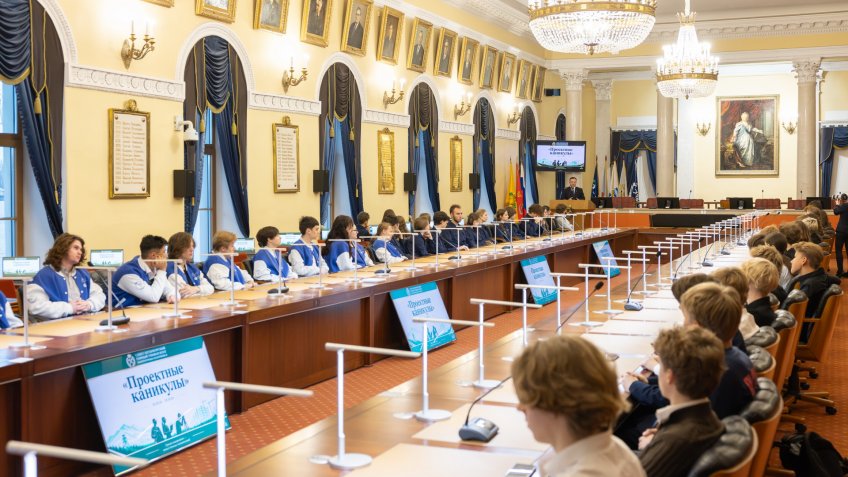
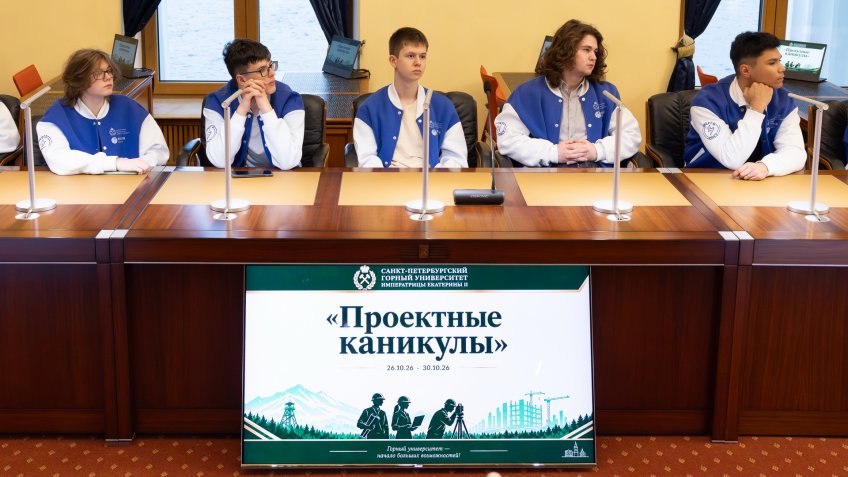
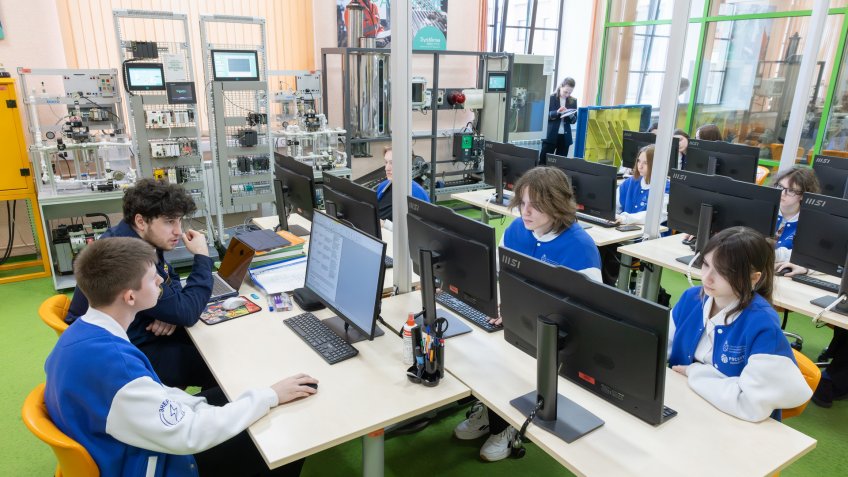
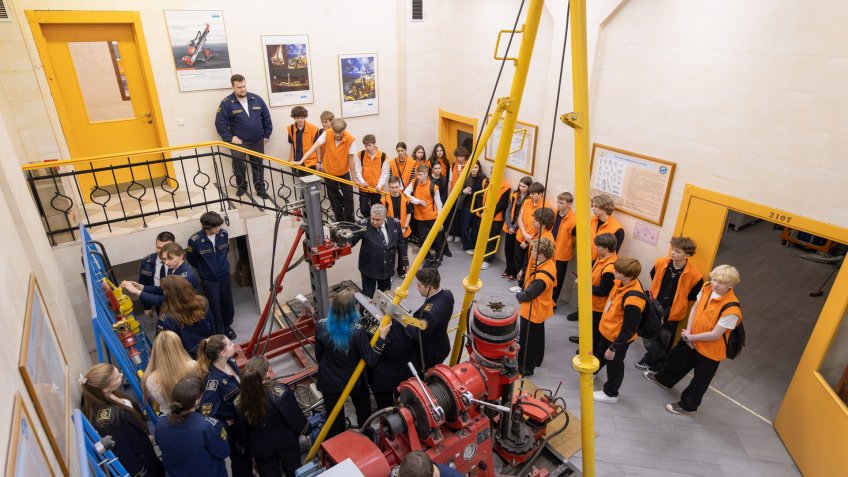
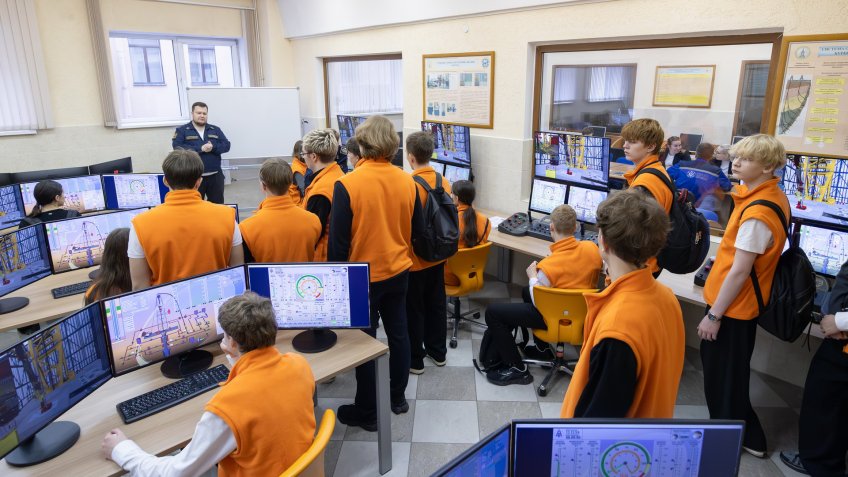
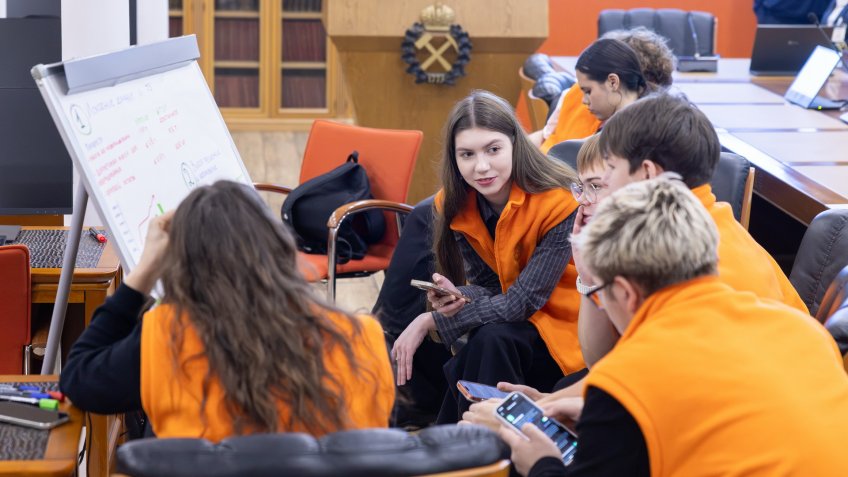
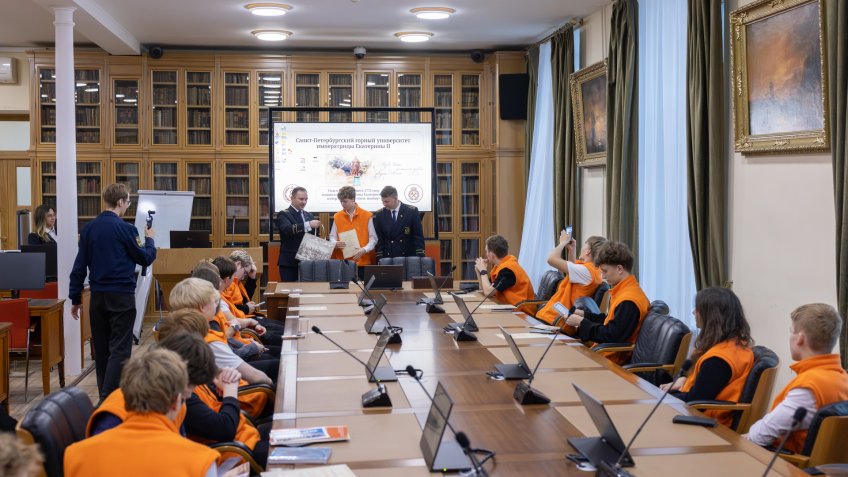
This was the focus of ‘Project Holidays’, an educational programme for schoolchildren at Empress Catherine II Saint Petersburg Mining University. Over five days, upper secondary school pupils immersed themselves in the world of modern energy, explored engineering solutions and turned scientific ideas into practical solutions.
The autumn session offered three classes with different specialisms: an energy class for pupils from School No. 334’s Grade 10 energy class, and a construction class for pupils from School No. 639’s specialist class. For the first time this year, the University also formed a general engineering class, inviting all interested upper secondary school pupils to try their hand at project work. Interest exceeded expectations: applications came from Saint Petersburg, the Leningrad and Moscow regions, Moscow and even Pskov. A preliminary selection process therefore had to be introduced: applicants were asked to write an essay about their experience, interests and expectations of the project session.
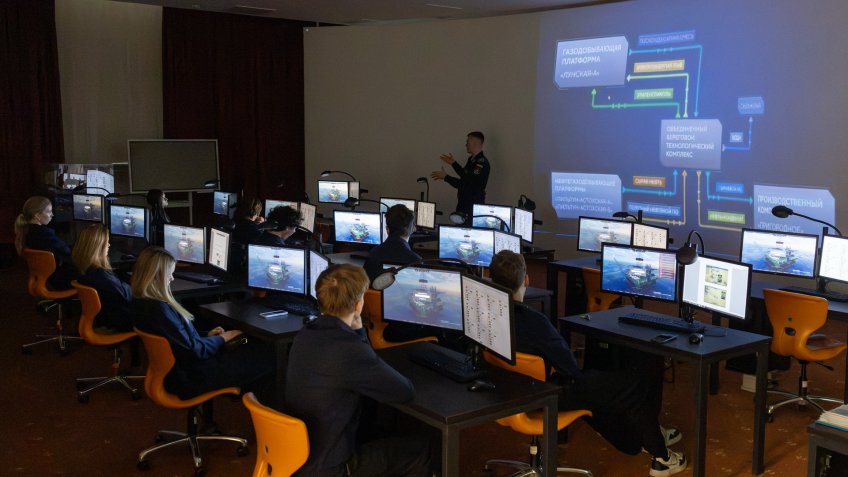
A five-day intensive educational programme awaited the schoolchildren. Both specialist classes — energy and construction — explored the rational and efficient management of resources. The pupils attended lectures on lean manufacturing, sustainable energy, renewable energy sources and energy auditing, and learned the principles of assessing the economic viability of projects in this field.
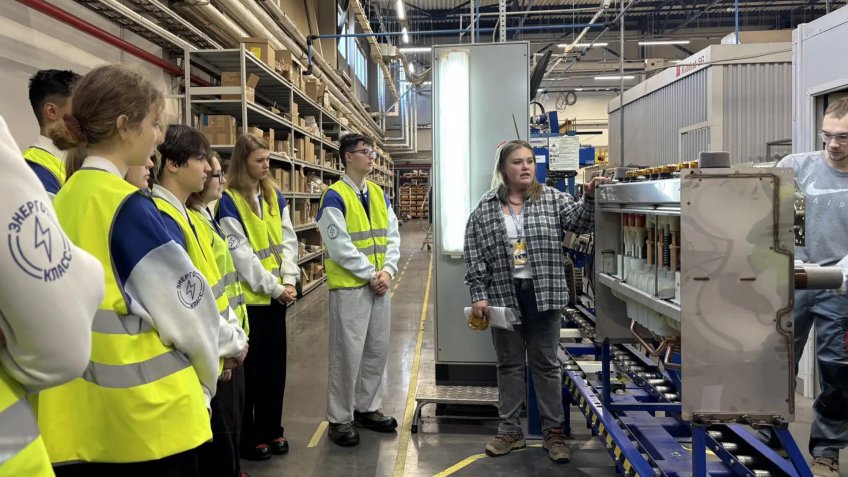
For pupils in the energy class, who had previously visited Mining University for Project Holidays, this session offered an opportunity to deepen their knowledge and discover new areas of research. A visit was arranged to the factory of Systeme Electric, an academic partner of the University. The pupils saw how equipment for the energy industry is manufactured and learned how lean manufacturing principles are applied in practice at the factory, from organising production processes to producing finished products.
В Санкт-Петербургском горном университете завершились две каникулярные смены для учащихся 8-го и 10-го энергетических классов школы №334 Невского района. В них приняли участие более 50 детей. Смены проводились одновременно на двух площадках – в самом Горном университете, и на его учебной базе в «Кавголово», где школьники не только получали новые знания, знакомились с вузом, но и отдыхали.
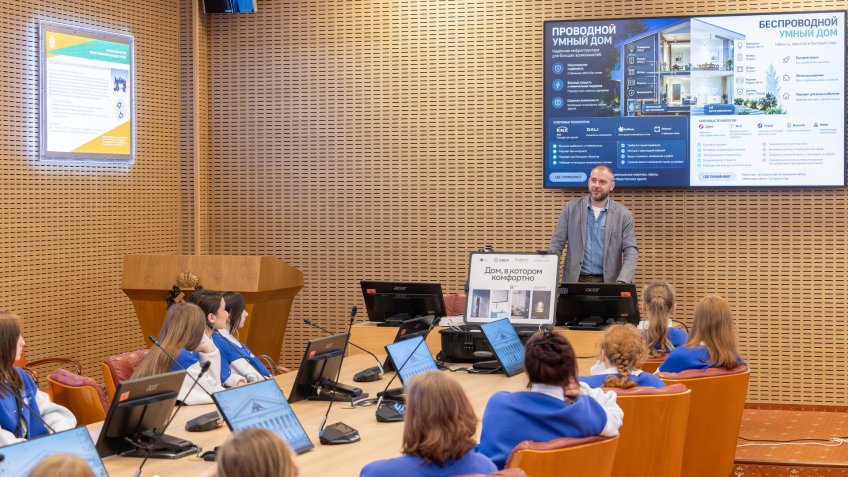
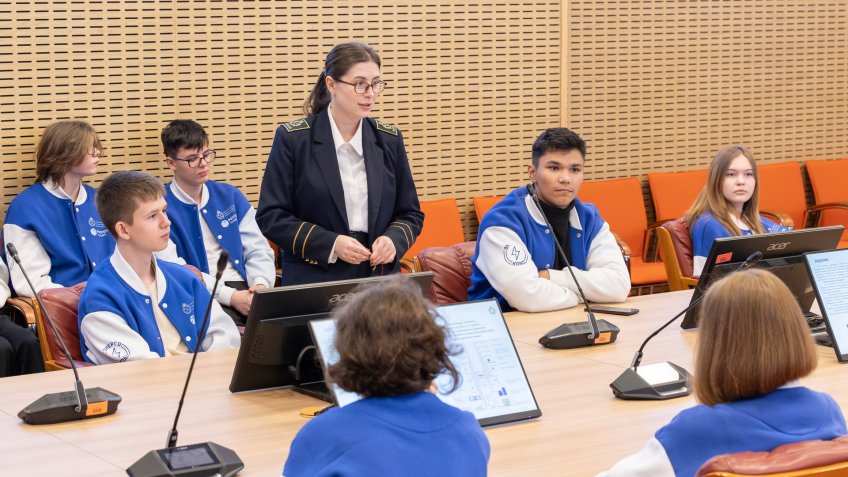
The focus then shifted from industrial production to managing resource consumption directly at the point of use. Smart home technologies help address this task. By bringing together various devices and sensors, they make it possible to optimise electricity, heat, water and gas consumption, monitor equipment condition and ensure safety and security. Systeme Electric representative Dmitry Kudryavtsev introduced the pupils to the fundamentals of designing such systems.
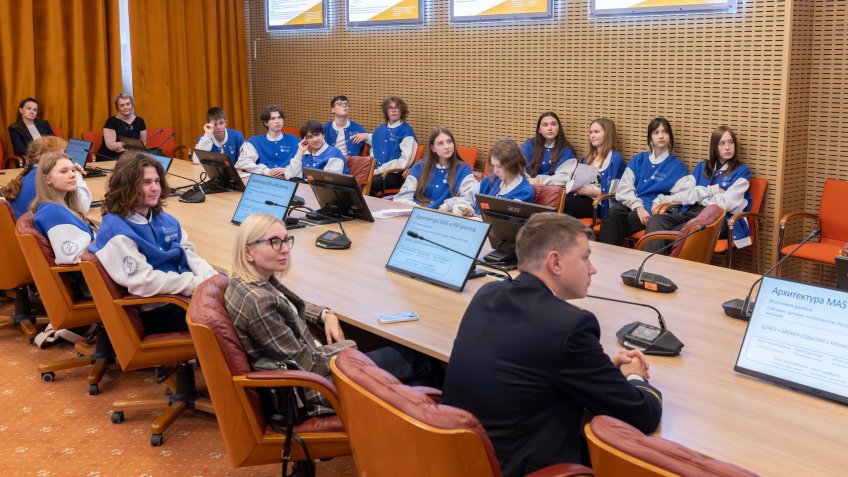
«A smart home is more than a collection of separate devices: it is a complex, integrated system in which technologies interact with one another. We examined which standards and protocols enable this integration and how to use them to create energy-saving scenarios. The pupils were very active in the discussion: almost half the session took the form of questions and answers. This helped them understand how intelligent systems work and prepare to tackle the final project task», – said Dmitry Kudryavtsev.
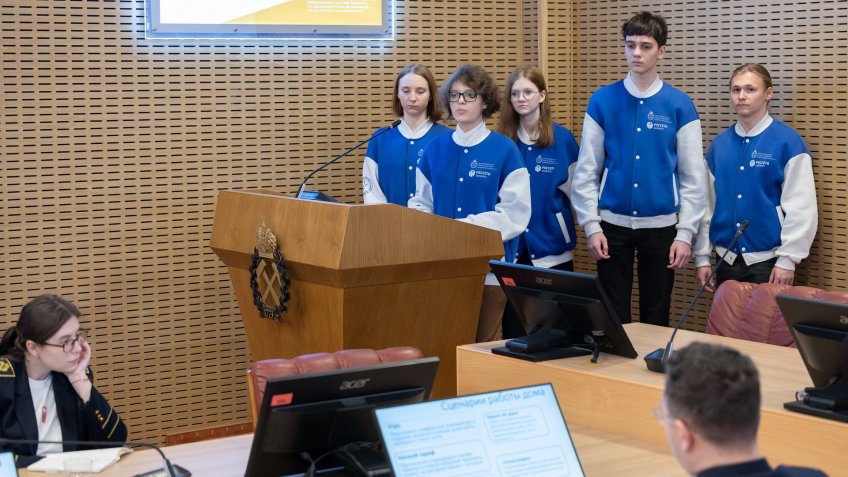
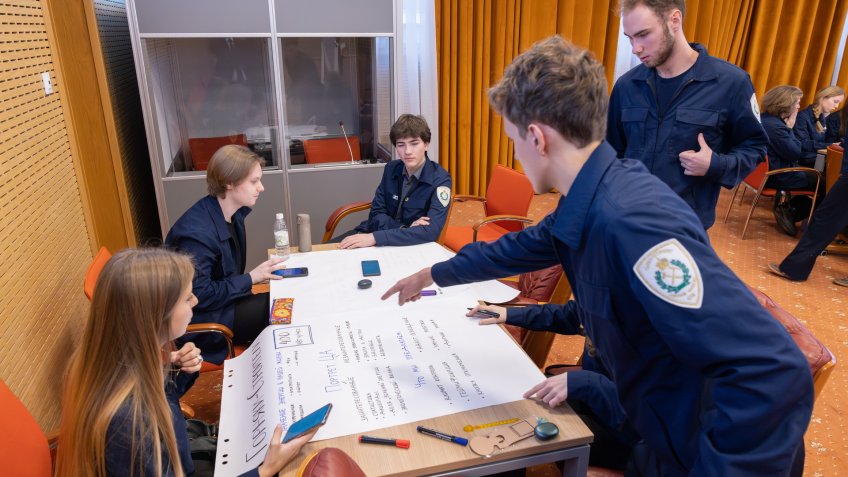
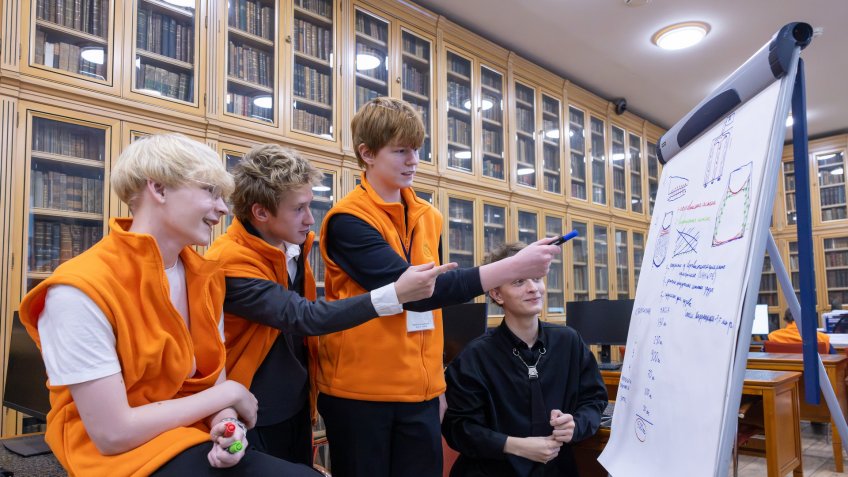
For their final assessment, pupils in the energy class were asked to imagine themselves as the team of an innovative start-up developing systems for country houses based on new principles of automation. One such system was to be an intelligent energy manager. Using a questionnaire for residents, they had to specify the equipment required, devise the manager’s architecture, describe the functions of the AI agents and, above all, propose home automation scenarios and schemes to encourage residents to save energy.
One team focused on automating familiar household routines and developed ‘Good Morning’, ‘I’m Out’ and ‘Returning Home’ scenarios. The system was intended to perform specified actions automatically depending on whether residents were present: switch off lights and electrical appliances, close windows, activate security and create a comfortable indoor climate. Separate developments included a smart window handle and an intelligent wardrobe that interacted directly with weather forecast data.
«We tried to make the house more than simply automated: we wanted it to be capable of making decisions based on data. For example, the smart window handle will receive readings from indoor and outdoor temperature sensors, compare them, and determine the optimal ventilation mode. The system will be able to interact with climate control equipment, regulating the air conditioner. Essentially, this is an element of intelligent indoor climate management that helps use electricity rationally», – said Elizaveta Mostovskaya.
Another group presented a concept for a two-storey country house with five control domains. In one scenario, ‘The Perfect Morning’, the system increases ventilation in advance, partially opens the curtains, and switches on the bathroom lighting, underfloor heating, and coffee machine. At the same time, the user receives up-to-date information on the weather, traffic conditions, and the electric vehicle’s charge level. In the evening, according to the pupils’ concept, intelligent agents distribute the load on the electricity network, taking into account household appliances operating simultaneously. The economic rationale was also presented: investment in implementing the solution would be approximately 2.5 million roubles, with potential savings of up to 150,000 roubles a year.
«Each AI agent is responsible for a particular control domain, such as lighting, climate or security, but they all exchange data and work towards a common result. This makes it possible to coordinate the operation of the entire house, rather than simply control individual devices. For example, during peak hours the system can analyse energy consumption and reschedule the operation of some appliances to more suitable times to reduce the load on the network. Our task is to create a house that takes residents’ habits into account, anticipates their needs and helps them use resources more efficiently», – explained Vasily Badovsky.
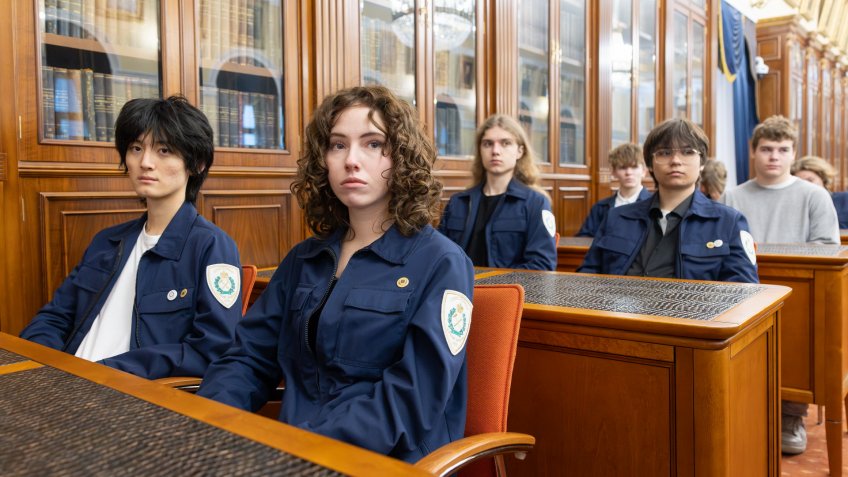
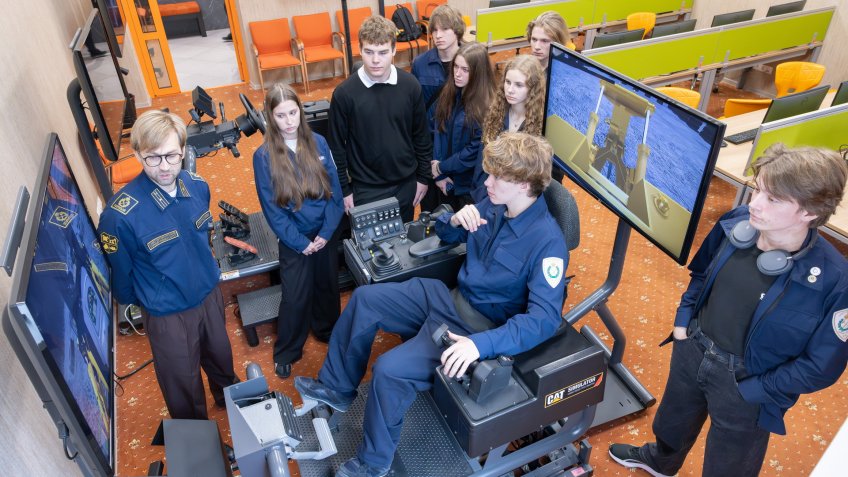
The construction programme had much in common with that of the energy class, but energy conservation was considered in the context of building design and operation. The pupils visited the BELAZ Competence Centre and the Caterpillar laboratory, studied virtual and augmented reality technologies and explored automation processes in the construction industry.
«Pupils in the construction class need knowledge of energy not only to perform calculations but also to formulate research problems: it is important to be able to identify new factors affecting the durability and economic efficiency of buildings and structures. For example, an increase in the number of hurricanes or sharp temperature changes leading to freezing rain alter the very logic of design: something that appears well considered and promising today may prove unviable tomorrow. That is why a construction engineer must think like a researcher, analyse risks and adapt approaches to new realities, – noted Yuriy Zhukovskiy, Director of the NIRS Centre for Student Research and Creativity and Dean of the Energy Faculty.
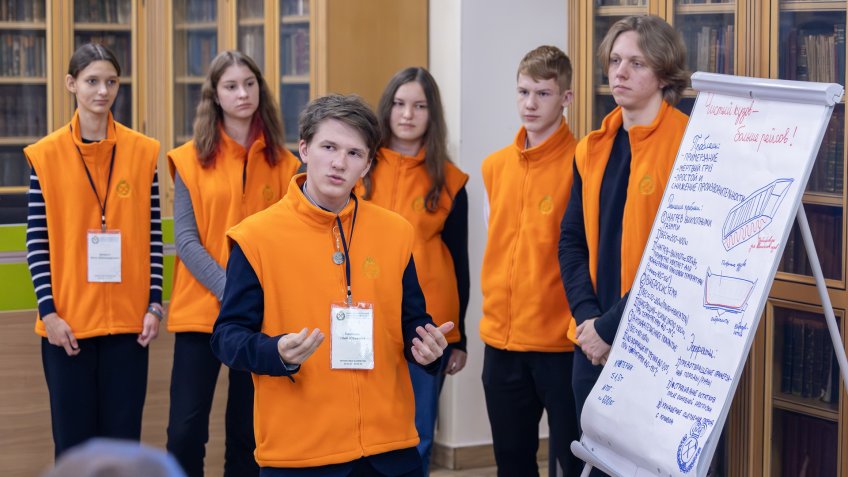
In their final case study, the pupils also acted as the team developing an energy manager, but focused on promoting the project rather than the system’s technical architecture. They had to prepare a presentation for the developer of a hypothetical estate of detached houses and persuade them of the merits of introducing energy-efficient technologies. A panel of experts took on the developer’s role, assessing the proposals from the perspective of business and prospective property buyers.
One group, for example, built its presentation around figures: an intelligent energy manager would help reduce electricity costs by 40%. An average house consumes 400 kWh a month, meaning savings of 160 kWh, or more than 1,000 roubles — a real, tangible benefit. Their competitors emphasised convenience and presented the energy manager in the form of an app called ‘EnergoDom’. In addition to practical advice, it featured an incentive scheme. Users would be able to earn special rewards — ‘energy coins’ — for the energy they saved and spend them in shops partnered with the developer.
«We wanted to make energy saving understandable and engaging for families. The app is intended to synchronise with the smart home system and provide recommendations based on actual consumption. To motivate people to save, we came up with energy coins and user rankings: the more carefully you use resources, the more rewards you receive. From what we have so far been able to learn about existing solutions, nothing else exists in precisely this form. We have even begun working on the technical side of the app. We find the idea very interesting and would like to develop it further», – said Alexandra Vasilyeva.
Case-based tasks are a good way to teach schoolchildren to get to grips with a particular topic quickly and propose solutions. In the process, they learn to work as a team, divide responsibilities and argue their case. Members of the WeWatt Student Design Bureau helped develop the tasks. This group brings together active students with a keen interest in energy. One of the bureau’s key areas of work is preparing a global forecast for the development of the fuel and energy sector. As part of this project, students consider a wide range of technological challenges, some of which provide the basis for case studies for schoolchildren.
«Children often take a bolder and more unconventional view of a problem than adult specialists, whose approach has already been shaped to a considerable extent by their professional experience. Sometimes it is precisely this freedom of thought that produces interesting ideas we can then develop. For example, in one project the schoolchildren proposed using a 3D printer to produce insulators for power transmission lines. That idea led to further work: we began studying the possibilities of manufacturing composite insulators, while the pupils proposed their own product design and shape. Of course, the initial idea needed further technical development, but it was the children’s suggestion that provided the starting point for the project», – said Aleksandra Buldysko, Head of the WeWatt Student Design Bureau».
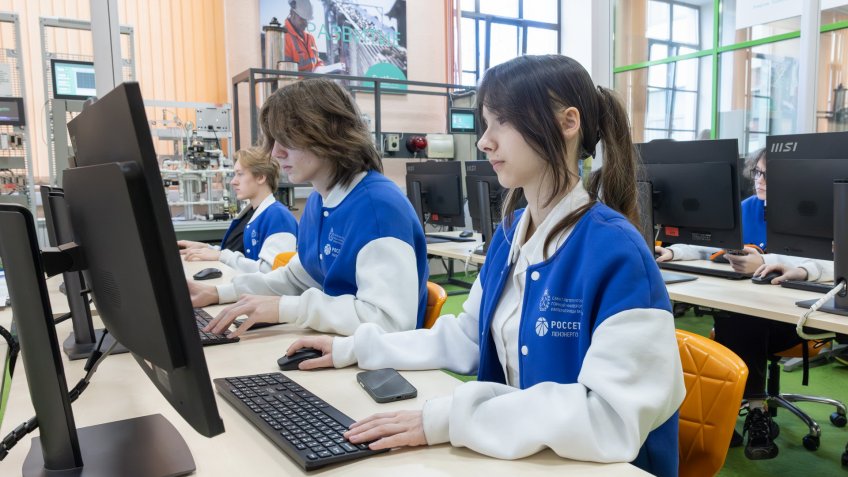
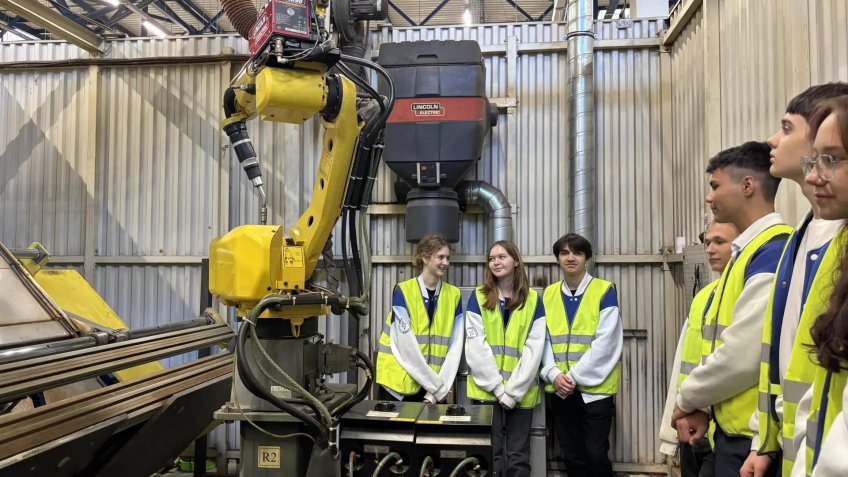
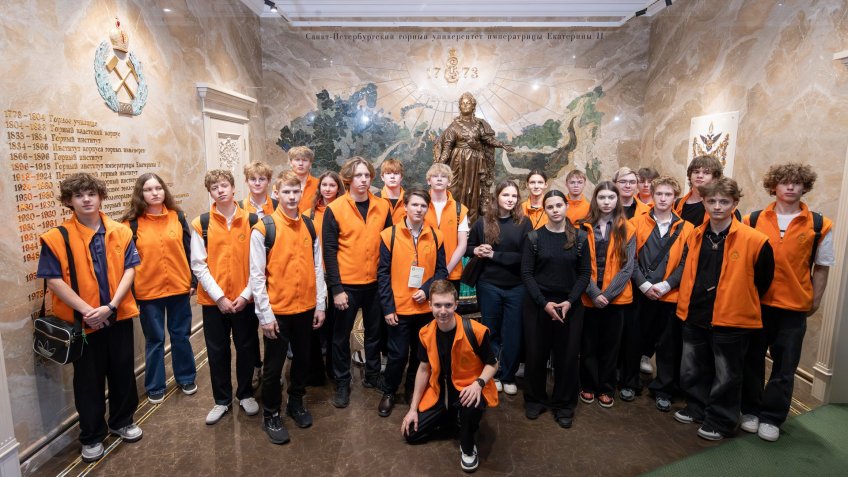
Newcomers to Project Holidays — the upper secondary school pupils in the mixed group — immersed themselves fully in digital modelling. Being first-time participants, however, did not mean that their programme was simplified. Over five days, they developed skills in robotisation, additive technologies and 3D modelling in industry, and discovered how digital tools are changing approaches to equipment design and operation. A tour of Mining University was arranged for them, including a visit to the Sablino-Gorny Research and Education Centre for Technological Facilities in the Leningrad Region.
A real engineering task put their knowledge to the test. Divided into teams, the participants had to devise ways to upgrade the body of a BELAZ mining dump truck to reduce the amount of rock material remaining stuck to it in Arctic conditions. This required them to audit the standard vehicle, study its operating conditions and develop their own technical solutions. They had just a few hours to do it all. The task might have seemed excessively difficult for upper secondary school pupils with no specialist training. Yet the Project Holidays participants clearly see their future in engineering and are therefore confident in mathematics and physics. Many are preparing to apply to Mining University, and this offered them an early opportunity to experience their future profession.
«Over the week, we attended many useful lectures that helped us develop our own solution. This knowledge goes far beyond the school curriculum and broadens our horizons. We were given a very interesting task. I know that rock material sticking to the truck body is a real problem. We proposed combining several technologies: using body heating and a vibration system, changing the geometry of the body’s floor by rounding off certain elements, and adding other solutions to the design. I think our project could certainly be developed further and presented at competitions and conferences, including the School Premier League organised by Mining University», – said Maxim Kozlov, a pupil at Lyceum No. 387.
Gleb Sinitsin, a pupil at School No. 559, learned about Project Holidays through Mining University’s official social media community. He is in Grade 10 and sees himself becoming a land surveyor, so he joined the engineering project with enthusiasm. His team considered several possible solutions to the task: applying special anti-adhesion compounds, changing the body’s shape and using exhaust gas heat to prevent rock from freezing onto it. The pupils assessed both the potential effectiveness and the limitations of each option.
«We considered changing the shape of the body, making it more rounded so that rock would not remain in the corners. But we realised that this would reduce the usable space and mean that less ore could be carried. Another option is to use exhaust gas heat: reroute the exhaust pipe and run it beneath the body to heat it from within. This solution also has its own difficulties, which still need to be addressed. I see great scope here for scientific creativity», – said Gleb Sinitsin.
«The pupils are very technically knowledgeable, although some ideas were unconventional. One team jokingly proposed using dachshunds: letting the dogs into the truck body to help remove the rock stuck to it. Of course, this is a rather fanciful option, but the idea itself shows how freely children approach the search for solutions. An interesting proposal was to develop a special hydrophobic film for the body’s inner surface. Essentially, rather than looking for a ready-made material, the pupils formulated the task of creating one. Some ideas could well provide a basis for further project work. For example, dump truck body heating is already used, but questions requiring engineering calculations remain: what material to use for the pipes, how to supply the heat and how large the contact area with the body should be. With more detailed technical development, any of these solutions could become a fully fledged project», –said Sergei Serzhan, Associate Professor in the Department of Applied Competencies in Digital Technologies, commenting on the results of the final tas.
The main aim of Project Holidays is to spark schoolchildren’s interest in research and project work and show them opportunities for professional development. After the session, any participant can contact the University for individual support and develop their project under the guidance of lecturers and senior students. The next opportunity to present the results of this work is the School Premier League research project competition for upper secondary school pupils, held under the patronage of the International Competence Centre for Mining Engineering Education under the auspices of UNESCO. Its next stage will take place in the spring of next year.
Огнестойкая древесина, умный кондиционер, космическая ручка, «блинный» электродвигатель и другие изобретения привезли в Санкт-Петербургский горный университет талантливые школьники из 39 регионов. В старейшем техническом вузе России подвели итоги конкурса научно-исследовательских проектов для старшеклассников «Школьная премьер-лига». В этом году он прошел уже в третий раз, под патронажем Центра компетенций в горнотехническом образовании под эгидой ЮНЕСКО.