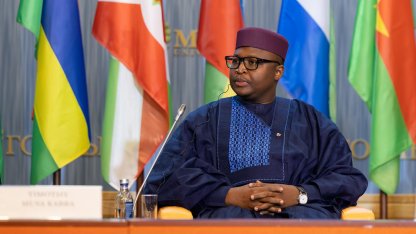
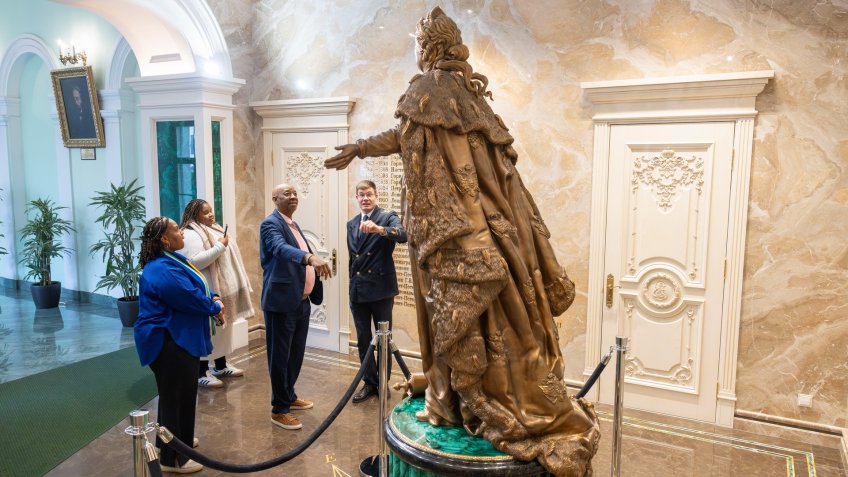
A government delegation from the Republic of South Africa paid a working visit to Empress Catherine II Saint Petersburg Mining University.
Much of the republic’s prosperity — it ranks 40th in the world by GDP, at US$381 billion — is linked to its exceptionally rich mineral deposits. It holds leading positions globally in terms of proven reserves of a number of minerals: platinum group metals (60% of global reserves), manganese (80% of global reserves), chromite (50% of global production), gold (40% of global reserves) and zirconium (17% of global production). Diamonds, nickel and uranium are also mined there. The mining sector accounts for 7–10% of the country’s GDP and 50% of its export earnings.
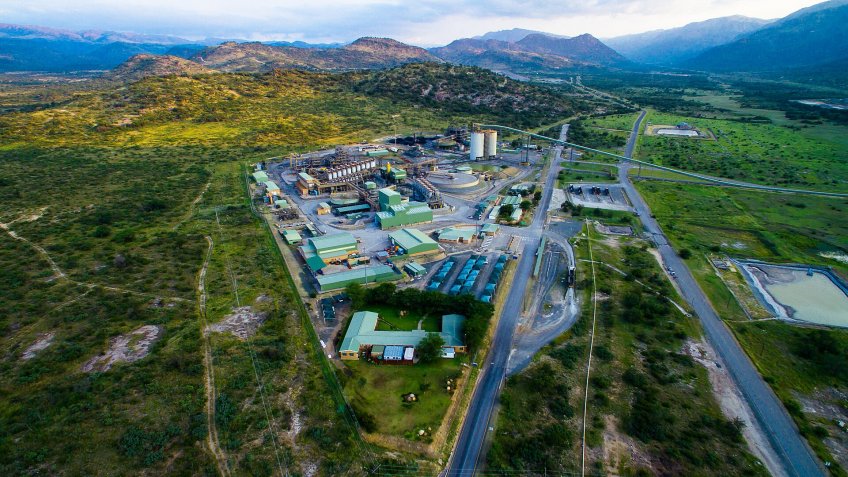
South Africa’s substantial mineral resources potential has secured it a relatively strong global position and a place in the G20 as its only African member country. However, its economy faces a range of serious problems rooted both in the legacy of apartheid and in contemporary domestic and external challenges. These include the underdevelopment of high-technology and processing industries (80% of chromium ores are exported without beneficiation), dependence on commodity prices and the resulting high volatility, and an energy crisis.
Intensive training of qualified personnel could provide a solution to these accumulated problems. The low level of education in the country limits opportunities for technological breakthroughs and industrial modernisation. For a long time, much of the black population was denied access to quality education. After the abolition of apartheid, access to education expanded, but its quality remained low owing to a lack of resources and outdated teaching methods. As a result, many South Africans simply lack the skills in demand in today’s labour market. Consequently, South Africa has one of the world’s highest unemployment rates, at around 35%.
Despite the fairly complex history of their relationship, Russia and South Africa are now strengthening ties in a number of areas and cooperating actively within BRICS. Pretoria sees Moscow as a strong partner that could potentially provide support in education and science. Particular attention has focused on Mining University, which is the lead centre of the federal National Center for Personnel and Scientific Support of the Mineral Resources Complex “Corps of Mining Engineers” and leads efforts to improve engineering education in Russia.
In October 2026, heads of South African universities and professional engineering organisations took an active part in the Second Russian-African Raw Materials Dialogue.
As early as November, Cecil Masoka, Director of the Department of Science, Technology and Innovation, visited Mining University to discuss specific opportunities for cooperation. The meeting’s agenda focused primarily on securing scholarships for students in agreed specialist disciplines of strategic importance to the South African government, and on the support mechanisms in place to help young people from abroad integrate, including language courses, student accommodation and laboratory visits.
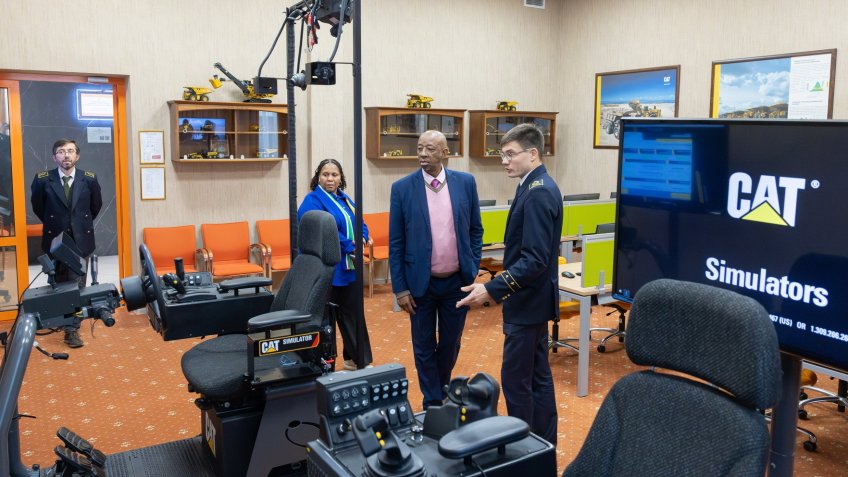
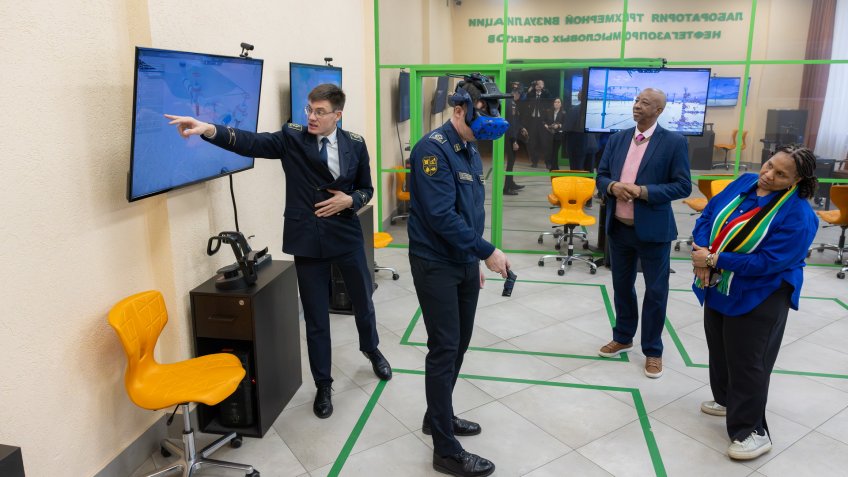
The visitors also noted that they currently intend to modernise their own universities and strengthen engineering education and science. They are therefore also interested in doctoral training, professional development for teaching staff and technological cooperation.
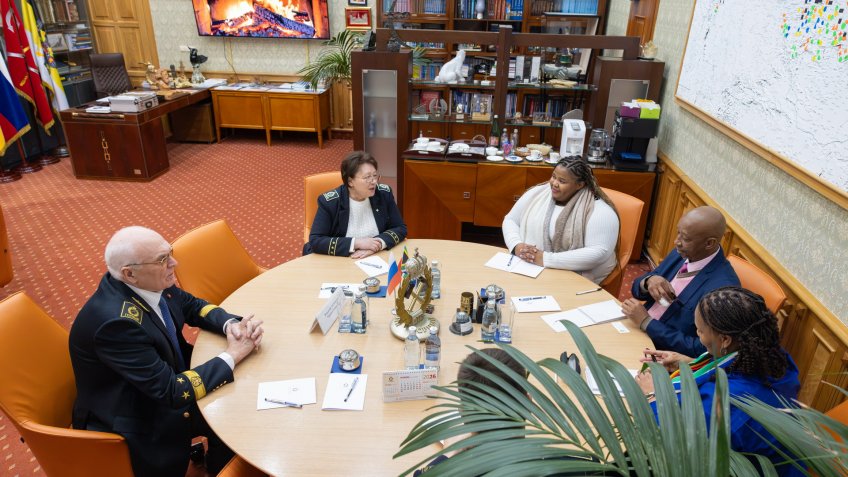
«Training one, two or three students in fields that they have chosen haphazardly together with their parents will do absolutely nothing to substantially strengthen workforce training for the mineral resources sector. To develop such rich mineral resources, a fundamentally new system must be established: one in which training is commissioned by the state. The aim is for you to receive not simply people with bachelor’s degrees in an unpredictable range of disciplines for which there is no demand in the economy, but well-trained engineering specialists with practical skills and competencies in a specialism defined in advance», - Rector Vladimir Litvinenko emphasised.
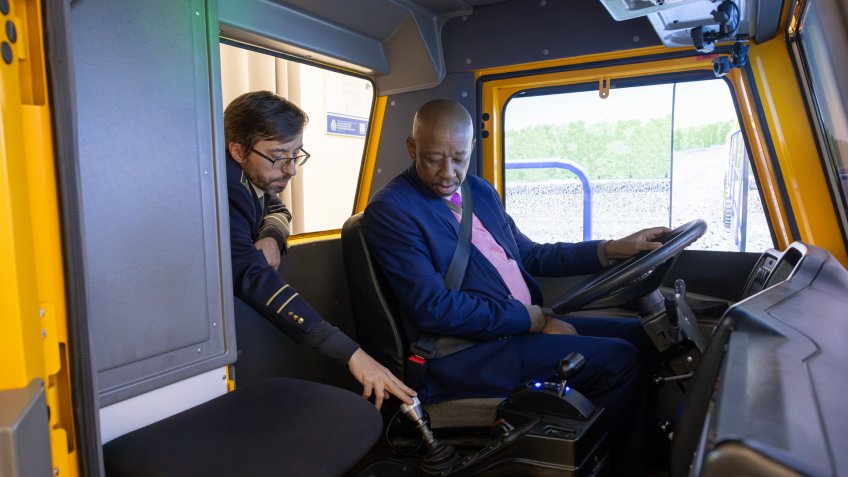
«We have students who are awarded places under the Russian Government quota, but unfortunately we do not monitor them and do not know where they go to study. We are therefore interested in developing a mechanism that would allow us to influence the allocation of applicants to universities. Mining University has accumulated an enormous body of knowledge and experience, and we would welcome the opportunity to draw on this intellectual resource through its graduates in our own context. South Africa’s economy was traditionally controlled by white colonisers, with all the consequences that entails. In 1994, with a population of 43 million, we effectively had two universities in operation. Today, our population is 65 million, but the situation has not fundamentally improved. There is still an acute shortage of specialist educational institutions. The proportion of the black population among qualified graduates is extremely small. The situation in science is even worse. Our universities are engaged only in teaching, not research. That is why we are so interested in students and young researchers from South Africa enrolling at universities in the Russian Federation», -confirmed Cecil Masoka, Director of the Department of Science, Technology and Innovation.
As a short-term solution, Mining University’s leadership proposed considering a specially designed MBA-format programme that would enable South Africa’s existing teaching staff to enhance their professional skills in two areas: technology and teaching expertise.
«We need to bear in mind that developing a labour market is a lengthy process. If we are talking about creating a fundamentally new body of teaching staff, this will take at least two years. During this period, a group of your teaching staff would come to Russia for training and subsequent professional accreditation. If, however, we begin with the full training cycle, the planning horizon will approach 20 years: six to seven years of study, three years of doctoral study and several years to gain experience. Infrastructure is a separate issue. Training modern engineers is inconceivable without creating the appropriate conditions, including lecture halls, laboratories, institutions’ own training grounds and agreements with enterprises on industrial placements», - Vladimir Litvinenko concluded.
The head of the South African delegation confirmed that their planning horizon is 50 years and that mining is one of the priorities of the department he leads. They see the BRICS countries — Russia, China and other members of the group — as their principal partners in mineral extraction and processing.