
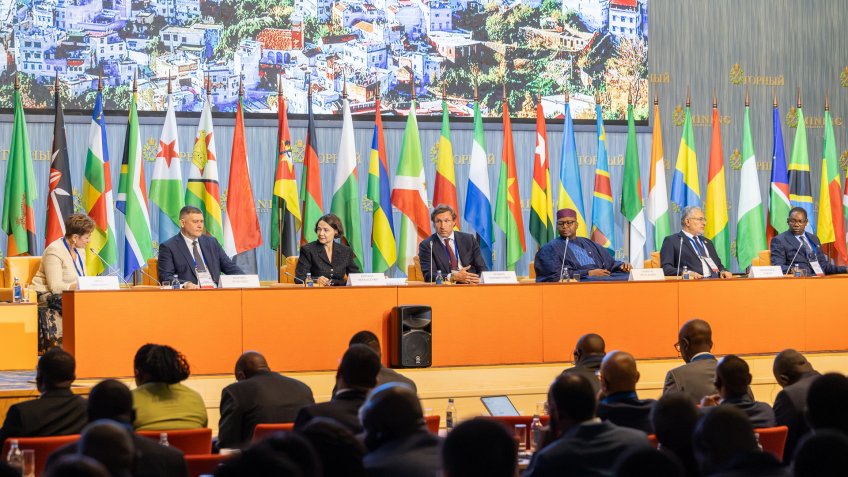
This year, the now-established forum on partnership with African countries in subsoil use, hosted by Empress Catherine II Saint Petersburg Mining University, takes place ahead of the Third Russia–Africa Summit. The Summit will be held in Moscow on 28–29 October. It covers the broadest possible cooperation agenda, and last year the mineral resources sector was addressed only in passing. In 2026, according to Tatiana Dovgalenko, Director of the Department of Partnership with Africa at the Russian Ministry of Foreign Affairs, it will be one of the central topics.
This is largely a result of the work of the Raw Materials Dialogue in Saint Petersburg. In 2025, this platform consolidated the formation of an alliance between academic communities through the joint efforts of the International Competence Centre for Mining Engineering Education under the auspices of UNESCO and the Association of African Universities. Today, the focus has shifted to the systematic coordination of specific joint projects in a key economic sector on which both state budget revenues and the well-being of people in the Dialogue’s participating countries depend to the greatest extent.
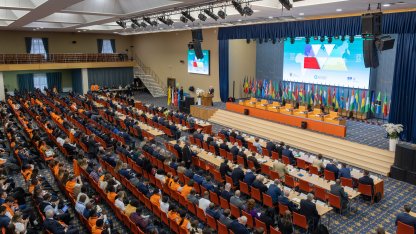
Russian Foreign Minister Sergey Lavrov highly praised the Raw Materials Dialogue. In his words, it is a much-needed platform bringing together representatives of relevant government bodies and the scientific and mining communities of Russia and countries across the African continent.
At the opening of the forum, Mining University Rector Vladimir Litvinenko emphasised that the development of advanced industry in any country will be effective only when based on that country’s own natural resources, provided that highly skilled personnel are available to extract and process them:
«No deposit can be discovered by following a template without innovation. And this statement becomes more relevant with each passing day. Until recently, exploration and appraisal accounted for approximately one dollar of the production cost of a barrel of oil. Today, the figure is 2–4 US dollars. A policy of increasing mineral reserves and developing the processing sector is the very foundation of the economy.
Many people in Africa literally walk on gold, yet their countries are poor. Gold mining areas have been allocated to British or American interests, and the state can do nothing: a long-term concession is in force. Yet subsoil resources should serve society. Until they do, political instability and armed conflicts will persist».
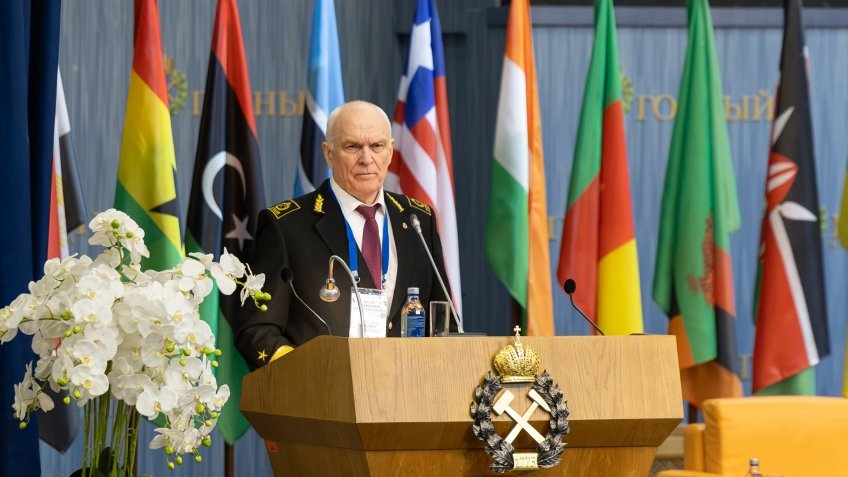
Vladimir Litvinenko believes that subsoil use, particularly in African projects, suffers from a critical lack of state incentives. This problem is relevant not only to Africa but also to Russia. The National Center for Personnel and Scientific Support of the Mineral Resources Complex “Corps of Mining Engineers” is developing through close cooperation between education, science, and business, while regulators have so far remained largely passive:
«The state cannot be content to act as an outside observer, restricting itself to representational functions and collecting statistics. Systematically improving the efficiency of subsoil use requires a unified centre for economic regulation: it must adjust market mechanisms and create conditions under which international projects are effective for both sides. Naturally, the system must be transparent. In particular, we will insist that the national centre established at our University to coordinate scientific and personnel support for the mineral resources sector participate in developing a unified policy on quotas for foreign students studying in Russia».
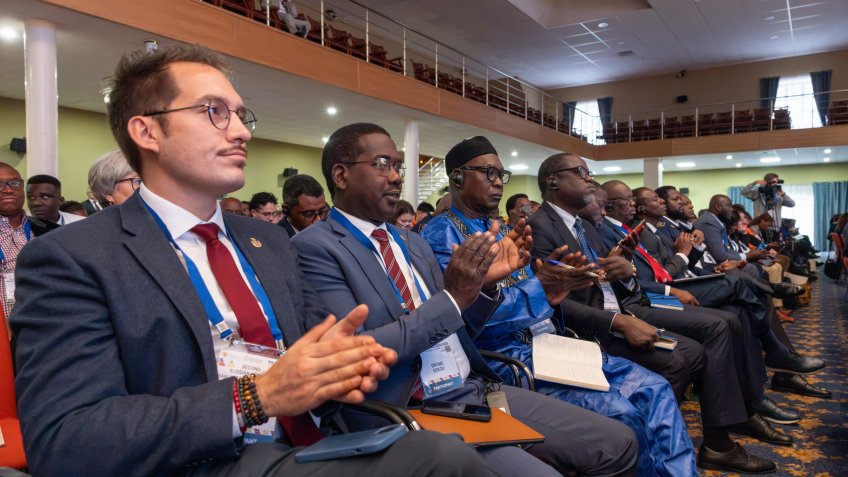
The shortage of personnel is the principal source of problems in developing natural resource processing. Mining University’s Rector cited shocking figures: “While in Russia around 30–35% of raw material resources are processed into final consumer products, which is a cause for concern, in African countries only 1–1.5% are processed.
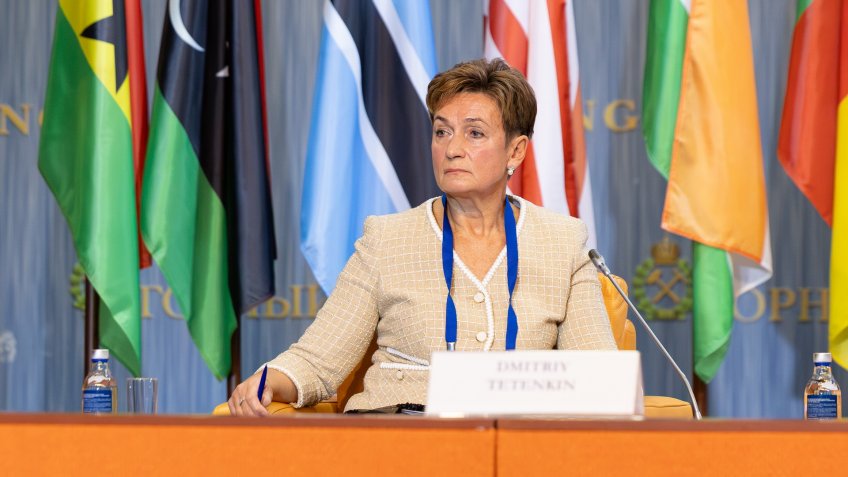
The meeting’s moderator, Irina Abramova, Acting Director of the Institute for African Studies of the Russian Academy of Sciences, drew participants’ attention to these figures. She, in turn, presented data showing that raw material consumption continues to increase as scientific and technological progress advances:
«The meeting’s moderator, Irina Abramova, Acting Director of the Institute for African Studies of the Russian Academy of Sciences, drew participants’ attention to these figures. She, in turn, presented data showing that raw material consumption continues to increase as scientific and technological progress advances:
“Some 20 years ago, the countries of the ‘golden billion’ actively promoted the idea that raw material resources would play an increasingly smaller role as technology developed. This turned out to be entirely wrong. Between 1950 and 2020, the world’s population roughly tripled, while oil consumption increased eightfold; demand for metallic minerals also rose significantly. The struggle for resources is turning into a genuine strategic war. Russia and Africa together hold two-thirds of the world’s natural wealth, in roughly equal shares. Countries that call themselves a ‘blooming garden’ would like to use it in their own interests».
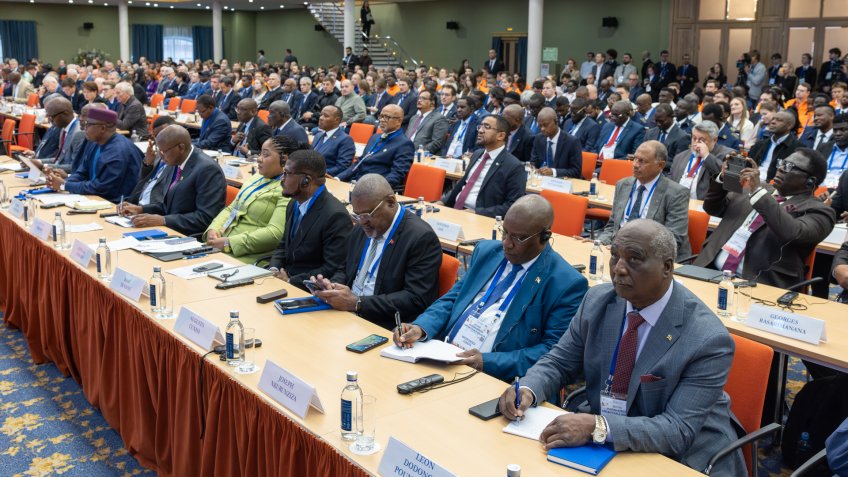
The central question of the Raw Materials Dialogue is what needs to be done to ensure that raw material resources contribute to the development of the countries that possess them.
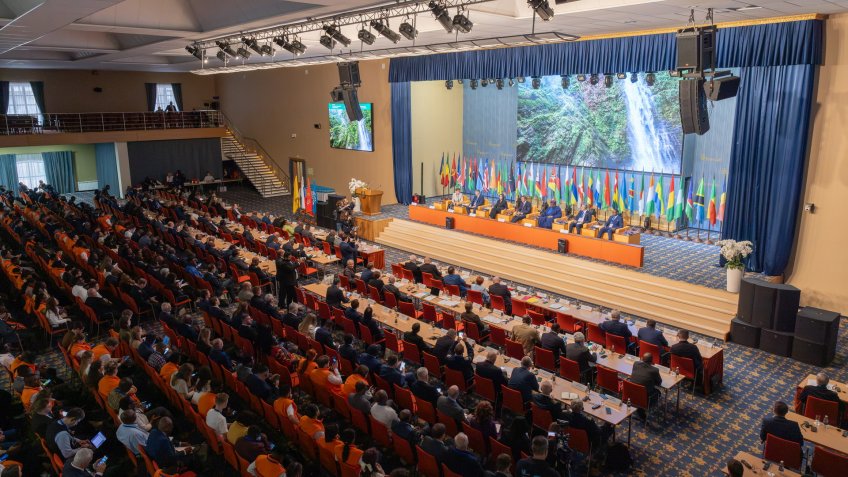
The participants in the plenary session at Mining University’s Congress Hall demonstrated the involvement in the Dialogue of key government figures from the countries with the greatest prospects for integration.
Sierra Leone was represented by Timothy Musa Kabba, Senior Adviser to the country’s President. A Mining University graduate, he worked on Lukoil’s overseas projects and headed Sierra Leone’s Ministry of Mines and Mineral Resources and the Ministry of Foreign Affairs. Today, he is the principal figure advancing the country’s policy of sovereign subsoil use.
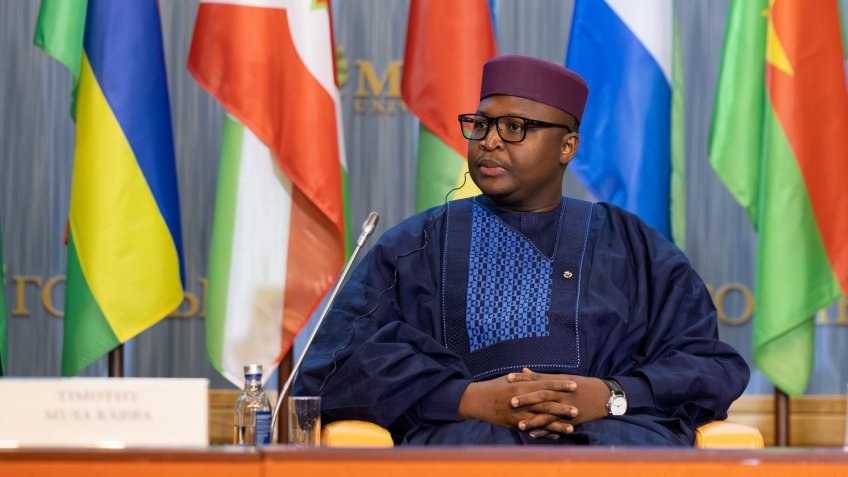
The small but resource-rich republic on the continent’s Atlantic coast already has agreements with JSC Zarubezhgeologia and the Russian Ministry of Natural Resources and Environment on cooperation in geological exploration. At the same time, greater attention is being paid to training national personnel.
«The small but resource-rich republic on the continent’s Atlantic coast already has agreements with JSC Zarubezhgeologia and the Russian Ministry of Natural Resources and Environment on cooperation in geological exploration. At the same time, greater attention is being paid to training national personnel.
“Sierra Leone endured a bloody civil war for many years. It was fuelled by arms supplies from Western countries. Meanwhile, natural resources were exported, and the population naturally suffered as a result. At this stage, we want Russia’s help to gain access to modern peaceful technologies and high-quality education so that we can extract and process raw materials independently, free from pressure by international financial institutions that are trying to manipulate us. I have been fortunate to interact closely with Russian scientists, lecturers and engineers, and I know that they are the best specialists in their fields and can be trusted», – said Timothy Musa Kabba.
Dmitry Tetenkin, Deputy Minister of Natural Resources and Environment of the Russian Federation, described Russia’s partnership with the Central African Republic as exemplary. In January last year, the two countries’ presidents reached an agreement on cooperation in geology and subsoil use. The working group held its first meeting in April this year. A roadmap signed at a meeting of the intergovernmental commission is now being implemented in three areas: improving the legal and regulatory framework for mineral extraction and processing, ensuring access to advanced technologies in the industry, and providing high-quality training for its personnel. Practical work in the Central African Republic must begin by expanding geological knowledge of the territory. A Comprehensive Geological Laboratory has been established for this purpose. A mining school is responsible for training personnel.
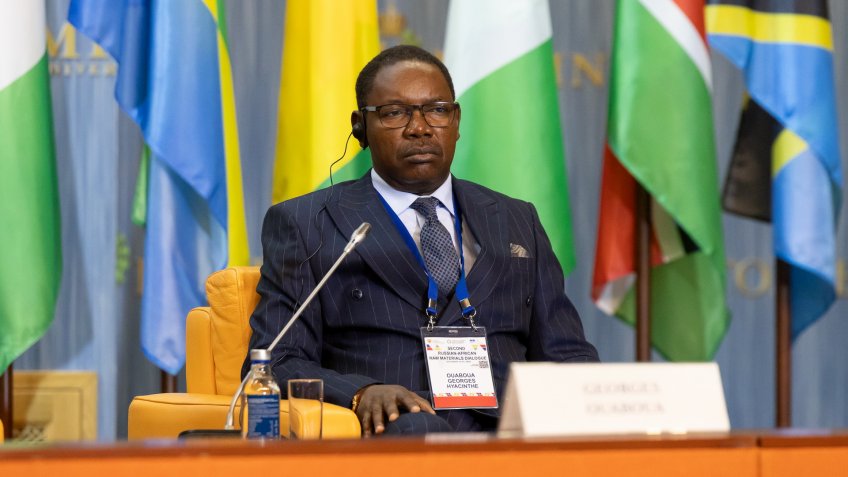
Georges Hyacinthe Ouaboua, Chief of Staff to the Minister of Mines and Geology of the Central African Republic, noted that his country has many valuable mineral resources, including oil, diamonds, bauxite, gold, cobalt, lithium and rare-earth metals. Extraction, however, is predominantly artisanal.
«French and Canadian companies used to mine our gold. They usurped exploration and extraction rights for decades. When the government objected, civil war broke out in the country. The situation has now stabilised. The President has declared the mining sector a priority. Last year, we gained 500 new mining engineers, but their level of professional competence is insufficient. We are interested in increasing the number of applicants to Russian technical universities. At the same time, we are working on mapping in partnership with Rosgeo specialists. Even in this area, our former colonisers left us with many blank spots», – said Rufin Benam-Beltoungou.
North Africa was represented at the forum by Mohamed Takala, President of Libya’s High Council of State. Libya has the largest oil reserves on the continent and ranks fourth for gas reserves, as well as possessing deposits of a wide range of metallic minerals. Today, the country is seeking ways “to turn its exceptionally rich resources from a bone of contention into a foundation for sustainable development”. In Mohamed Takala’s view, Russia can offer Libya substantial assistance in personnel training and technology transfer:
“The benefits of natural resources depend directly on how efficiently they are used. Here at Mining University, we have a good opportunity to outline future work to turn the resource base into a source of prosperity for our people and build a long-term partnership in the interests of our countries. Yesterday, we visited several Mining University laboratories, and I saw how seriously the quality of personnel training is taken here».
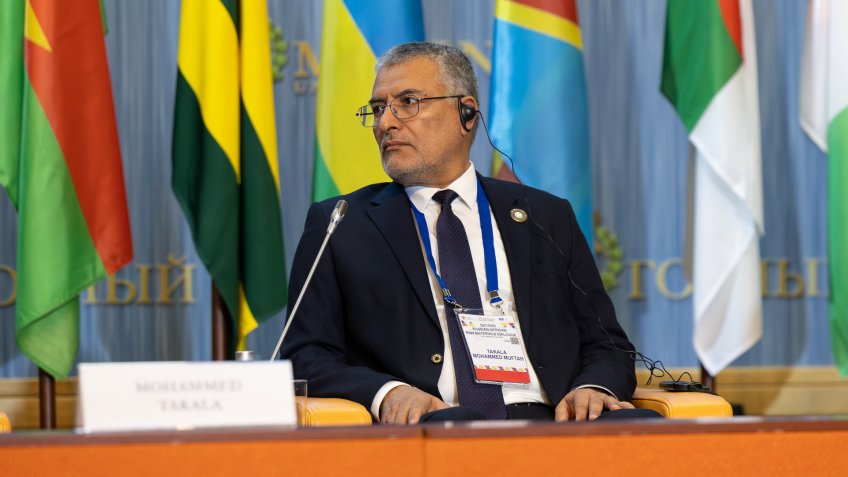
The Libyan guest expressed an interest in cooperating within the Russian–African Centre for Scientific and Personnel Support of the Mineral Resources Complex, which is being established at the initiative of Mining University Rector Vladimir Litvinenko. This body is a natural extension of the National Center “Corps of Mining Engineers”, established at the University in February this year by a decree of Vladimir Putin. Its purpose is to coordinate relevant educational and research work within Russia.
How the State Helps
As the example of the Central African Republic discussed above illustrates, the Russian Ministry of Natural Resources and Environment supports African countries’ efforts to strengthen their economic sovereignty by establishing intergovernmental commissions that work on cooperation roadmaps. Dmitry Tetenkin noted that agreements on subsoil use with African countries, involving the Federal Agency for Subsoil Use (Rosnedra), are now being concluded systematically. These include Algeria, Angola and Guyana, as well as the Central African Republic, Sierra Leone and others. Rosgeologia is also actively involved in joint projects.
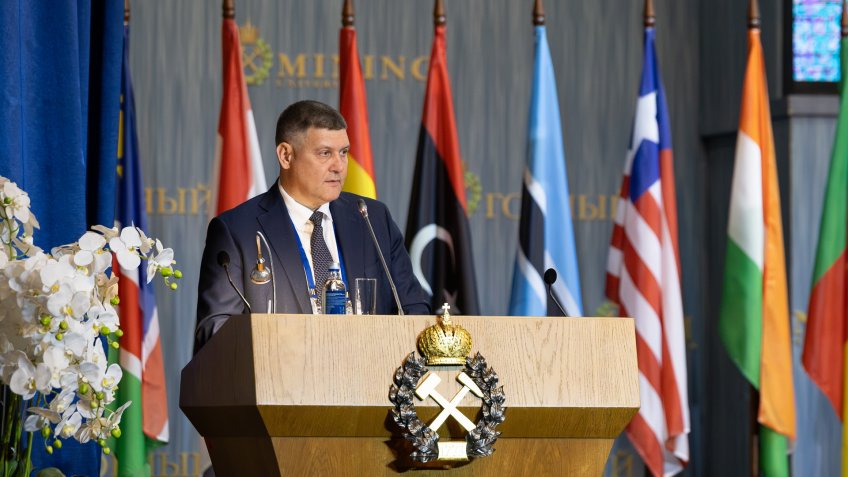
Speaking as a representative of the Ministry of Foreign Affairs, Tatiana Dovgalenko discussed the opening of Russian embassies across the African continent:
«Speaking as a representative of the Ministry of Foreign Affairs, Tatiana Dovgalenko discussed the opening of Russian embassies across the African continent:
“Trade between Russia and African countries has reached a record 27 billion dollars, and there is considerable scope for further growth. Recently, we have opened another 10 embassies on the continent [there are now 45]. In one country, I heard local people say: if Russia is reopening its embassy, the sugar factory built with Soviet support will start working again. Diplomacy provides effective mechanisms for integration, including the implementation of economic projects. We are ready to help African countries carry out the plans they have set for themselves».
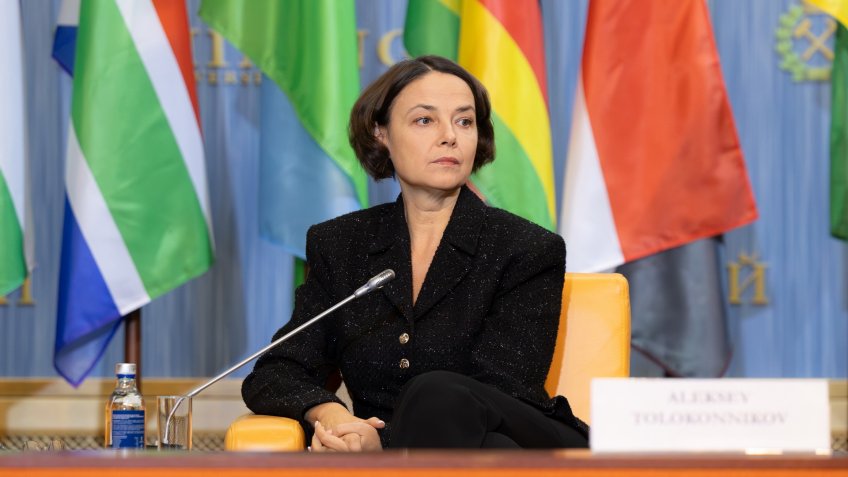
What Business Offers
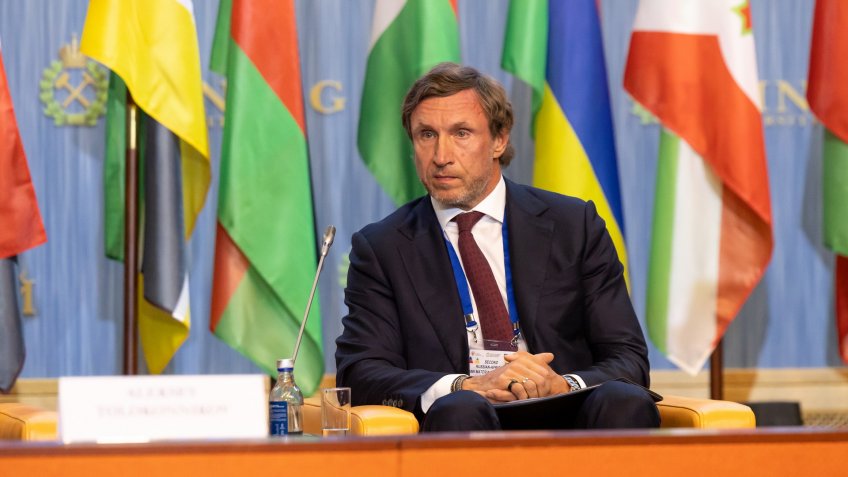
Alexey Tolokonnikov, Chairman of the Board of Directors of the OKTO investment and industrial group, spoke about Russian business activities in Africa. The company primarily mines gold in remote parts of Russia, particularly in Bodaybo in the northeast of Irkutsk Region. Its projects place considerable emphasis on social infrastructure and personnel training. As the speaker noted, the problems faced by mining areas in Africa are similar to those in Siberia:
“In some African countries, we are already in the process of obtaining geological exploration licences, and our experience in organising gold mining could easily be adapted to their specific circumstances. Africa accounts for around 27% of global gold production, and roughly half of this gold is mined by artisanal methods. In such cases, there is no provision for tax collection, environmental protection, or labour rights. We have a plan for how African states can establish control over the gold trade within their territories and introduce modern technologies».
What Impedes Cooperation
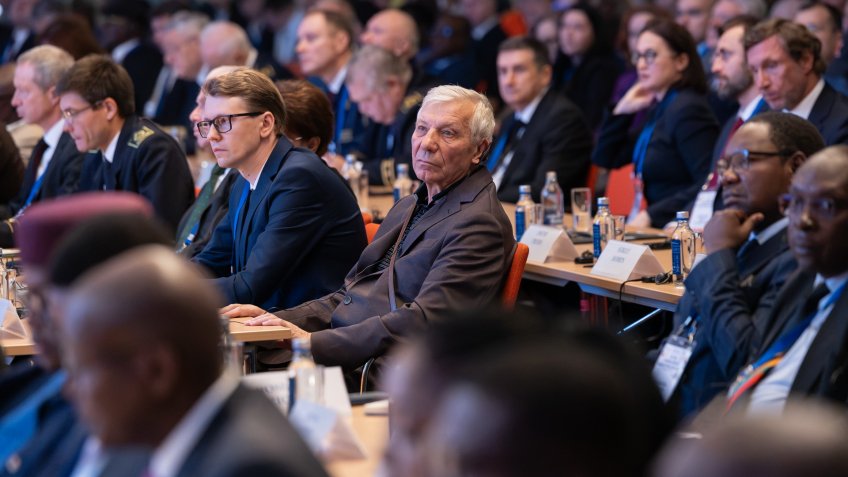
Interested parties in Russia already have many promising proposals and initiatives concerning Africa. The problems are also well known. They were discussed at length during the question-and-answer session at the end of the plenary meeting. The exchange of views lasted more than an hour and a half. So many people wished to speak that moderator Irina Abramova proposed continuing the discussion over the business lunch.
One pressing issue in training personnel for Africa is the reluctance of foreign graduates of Russian universities to work either in their home countries or in Russia. Mining University graduates, for example, can be found at multinational oil and gas companies under US, British, and Canadian jurisdiction. Mechanisms to retain specialists are urgently needed, perhaps through targeted admissions or Mining University’s more flexible model, in which students begin interacting with future employers from their first year through systematically organised industrial placements.
Natural resource processing projects generally face economic difficulties associated with their energy supply. These are highly energy-intensive operations. The question is who should be responsible for supplying production facilities with low-cost electricity, especially where a project has social obligations in the area where it operates. As is well known, electricity provision for settlements and villages in Africa is virtually undeveloped.
The coordinating centre under the auspices of the “Corps of Mining Engineers” should become a focal point for multilateral cooperation projects in Africa and a think tank for resolving the problems that hinder a substantial increase in trade under raw materials agreements.