Diego Monterrey

Кузнецов
Today, even in scientific publications about the invention of the legendary explosive ”Sinal-AK” during the Great Patriotic War one can meet a very simplified interpretation of events: they say that the cry was raised and a scientist far from military affairs, after thinking for a while, immediately gave a new composition. In July 1941 the City Committee of the CPSU(b) agreed to the proposal, and in August the products produced thirteen Leningrad enterprises and scientific organizations. One can guess that events developed somewhat differently…
заварицкий
The founder of the new scientific field of petrochemistry, President of the All-Union Mineralogical Society, laureate of the Lenin and two Stalin Prizes, Alexander Zavaritsky, according to the recollections of his colleagues, was a very private person. This was due not only to his high state positions and developments of defense purposes, but also to certain circumstances of his life.
дворец Воронцова в Алупке
Cobblestones, with the light hand of sculptor Ivan Shadr, are associated with the weapons of the proletariat. During the revolutionary events of 1917, all Moscow sidewalks, including Red Square, were paved with such stones. Today’s heavy-duty diabase appeared on it only in 1930. In ancient times, this stone from the family of basalts was used by miners as a substitute for metal in making the striking part of a pick. Diamonds, corundum and topaz are the hardest of all minerals. No houses are built of diabase. The only known example is the summer residence of Count Vorontsov in Alupka.
тагарский котел
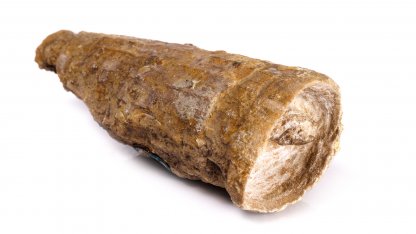
The history of non-ferrous metallurgy in the south of the Krasnoyarsk Territory began not with the construction of a refinery in 1941, and not with the commissioning of one of the world’s largest aluminum plants in the mid-1960s. The first bronze items were cast here by the Iranian-speaking Tagars long before the heyday of ancient Athens, in the 7th century BC.
Шафрановский
One of the largest Russian crystallographers of the 20th century, Ilarion Shafranovsky, became a doctor of sciences at the age of 35. The creator of a vast branch of science - mineralogical crystallography - devoted more than 50 years to research and teaching. However, few knew that the professor had another equally strong passion…
монетный пресс
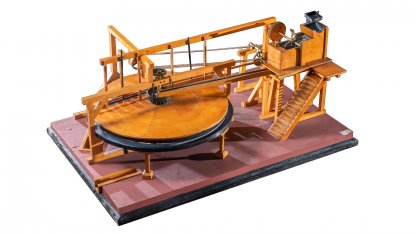
Russian monarchs thought broadly, but often dependently. For example, Peter the Great adopted from the British East India Company not only the scheme for building shipyards for St. Petersburg, but also the strategy of expansion to Asia and Africa. In chess, copying the moves of a stronger opponent will never lead to victory, but in politics this method can sometimes give unexpected results.
коралл мозговик
The oldest known image of the labyrinth dates back to 1200 BC. Its author lived in the Peloponnese. Not far from the island of Crete, where later, according to Athenian mythology, the inventor Daedalus, the father of the winged Icarus, built a labyrinth for King Minos. In it, Theseus defeated the Minotaur and was able, with the help of Ariadne’s thread, to return back.

масленица
On the penultimate day of Maslenitsa they competed in tug-of-war and arm-wrestling, ate pancakes and danced in a circle dance.
Путин и Литвиненко
Vladimir Putin held a meeting on the implementation of the Far East development program as part of his visit to Buryatia
Горный университет
This is a historic achievement. No other Russian institution of higher education has managed to do anything like this before.
Литвиненко
This fall marks the 250th anniversary of the founding of St. Petersburg Mining University. Why was it necessary to open a college for engineers in Russia a quarter of a millennium ago?
Менделеевские чтения
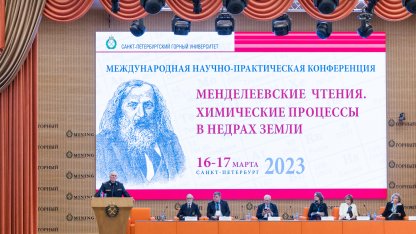
The International Scientific and Practical Conference ”Mendeleev Readings. Chemical Processes in the Earth’s Interior” started.
Иран
The unprecedented sanctions imposed by the West on Russia have frozen cooperation between Russian universities and American and European partners. What next?
Наливкин
In 1948 one of the most destructive earthquakes in the history of mankind, the intensity of which reached 9-10 points, occurred in the region of Ashkhabad city. According to various estimates, 110,000 to 170,000 people died. The number of injured went off the scale. In the first hours after the disaster, a 60-year-old man came to the emergency response headquarters. ”The city is buried under the rubble. I am not a doctor of medicine, but I am a doctor of science. And I want to offer my help,” he said.
рудисты
The bubonic plague pandemic in the middle of the 14th century in Europe alone killed about 30 million people. People unwittingly began to think about sanitation. In some German duchies orders were issued for the production of exclusively closed vessels. Thus the classic beer mugs with hinged lids appeared. Seventy million years before the plague, the bivalve mollusks rudists evolved in the same direction.
рундгерд
As we know, the wheel was invented by the Sumerians. They are also the authors of the first cuneiform texts in history. Five thousand years ago, scholars in the area of modern Baghdad were scribbling signs of writing with a pointed reed on a clay plane. Two of these discoveries were almost enough to stimulate Emile Berliner’s creative imagination for his main project. The famous native of Lower Saxony modernized Edisson’s phonograph, uncomfortable for widespread use, into the most popular consumer ”toy” of the early 20th century: the gramophone.