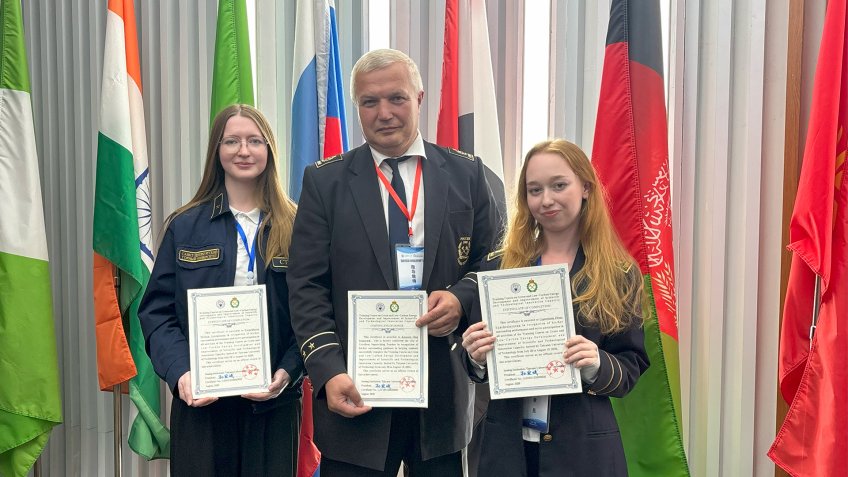

The delegation from Empress Catherine II Saint Petersburg Mining University has returned from the International Internship “Scientific and Technological Development in the Field of Energy Security,” held at Taiyuan University of Technology (TYUT) in China.
China ranks first in the world in coal production by a huge margin. The country’s largest coal-producing region is Shanxi Province, where the host university is located. In fact, its entire economy, science, and education revolve around “black gold.” A Summer School in the “coal capital” provides highly relevant experience in the intellectualization and technological development of mining and chemical engineering.

The global objective of the trip was to implement the tasks of the National Center “Corps of Mining Engineers” and to develop international cooperation. Established at the Mining University by presidential decree in February 2026, the Centre is tasked with coordinating the development and implementation of advanced training programmes for engineering, academic, and research personnel for the mineral resources sector. Fulfilling this task necessarily involves analysing international experience in training specialists for the industry and conducting research in this field.
Over the course of two weeks, eighteen students, postgraduate students, and faculty members of the university studied the educational, laboratory, and research facilities of three higher education institutions — TYUT, Shanxi Engineering and Technology University, and Taiyuan University of Science and Technology. A series of strategic meetings and discussions was held; topics for potential joint research projects and areas for improving the educational process were identified.
TYUT has more than 41,000 students, around 4,000 faculty members, and 25 institutes.
At the College of Safety, Emergency Management and Engineering, the visitors were shown a laboratory complex and advanced developments in industrial safety for underground coal mining.
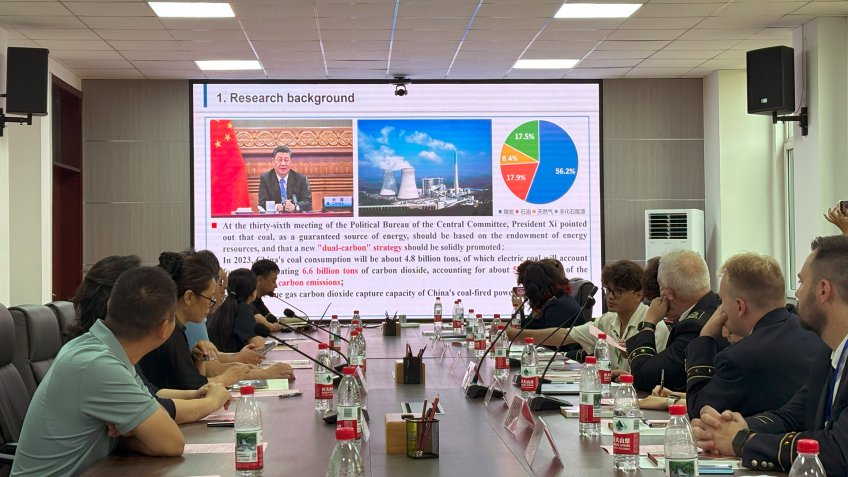
«Two key innovations were of particular interest. The first concerns next-generation CCUS technology, which involves directly injecting purified flue gas into coal seams without prior capture, with an absorption capacity reaching an impressive 37.2 kg of CO₂ per 1 kg of coal. The economic benefits of implementing this technology are associated with the projected increase in the price of carbon allowances. The second development is a comprehensive suite of intelligent mine safety systems. It includes three components: the so-called ‘Ventilation Brain,’ an intelligent system for controlling ventilation flows; bio-ecological dust suppressants; and expanding polymer anchoring compounds», - explained Nikita Duka, an instructor at the Faculty of Mining, Department of Industrial Safety.
Accumulated methane remains the leading cause of fatalities in underground mining, making the development of ventilation systems an important and promising area of research.
The mining specialists were also interested in the “1.5D” numerical method for modelling fires in topological networks, which reduces the time required to build 3D models from 1–3 months to 9 hours and cuts the size of the database by 99%. The solution has already been implemented in Chinese coal mines and certified for industrial use.
The delegation was particularly impressed by a separate laboratory complex installed in a dedicated pavilion. It is a full-scale model of a mine equipped with replicas of actual mining equipment. The facility is designed to provide students with a visual introduction to the development of coal deposits and allows laboratory work to be carried out under conditions as close as possible to real-world operations.

The Smart Lighting and Wearable Devices Centre at TYUT’s Institute of Electrical Engineering and Energy demonstrated that even traditional universities specializing in coal and chemical engineering are now actively developing high-tech fields, diversifying their competencies and training personnel for the new economy. The Centre conducts research in interdisciplinary areas. In smart lighting, researchers are developing energy-efficient street-lighting control systems (“smart streetlights”), intelligent control algorithms, and LED technologies. In the field of wearable devices, they are working on sensors and sensing technologies, human health monitoring systems, and human–machine interfaces.
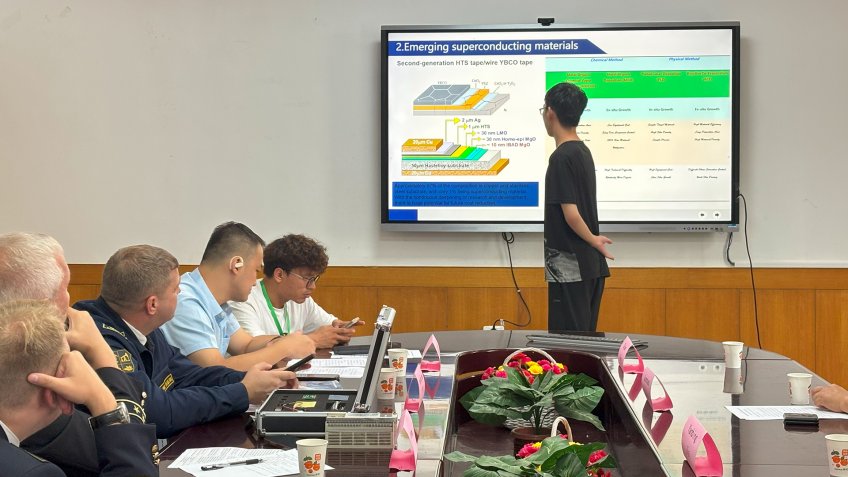
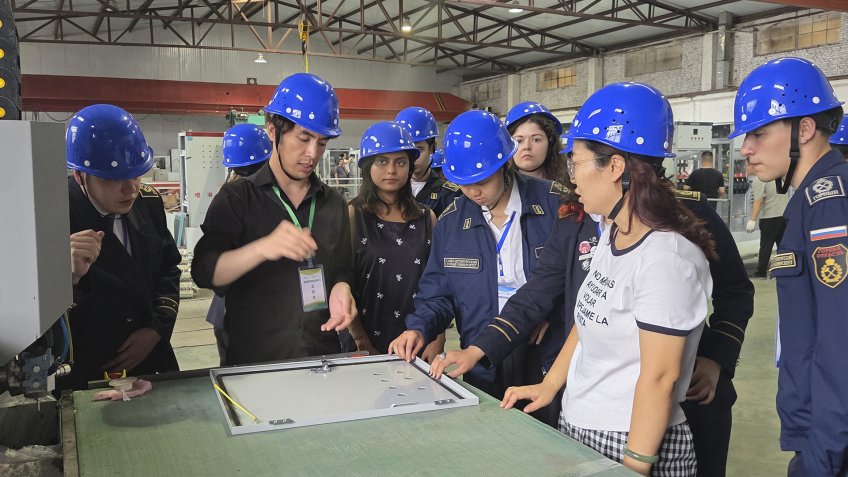
«For me, the Institute of Electrical Engineering and Energy was one of the most valuable parts of my introduction to Taiyuan University. As an instructor of courses offered by the Department of Mechanics, I see significant potential in using MR (mixed reality) technologies to visualize the stress–strain state of structures, demonstrate the operation of mechanisms, model loads, and conduct virtual laboratory work. This format could increase student engagement and facilitate the understanding of complex theoretical concepts. Equally important was the opportunity to learn about developments in intelligent protective equipment for miners. Using gas sensors, the protective clothing monitors methane levels and is equipped with LED lighting, positioning systems, and an ‘airbag’ to provide protection in the event of a collapse. These projects demonstrated how closely electronics, information technology, and mining now interact, combining their capabilities to address the key challenge of improving occupational safety. This once again highlighted the importance of an interdisciplinary approach to training modern engineers», - noted postgraduate student Elena Baeva.
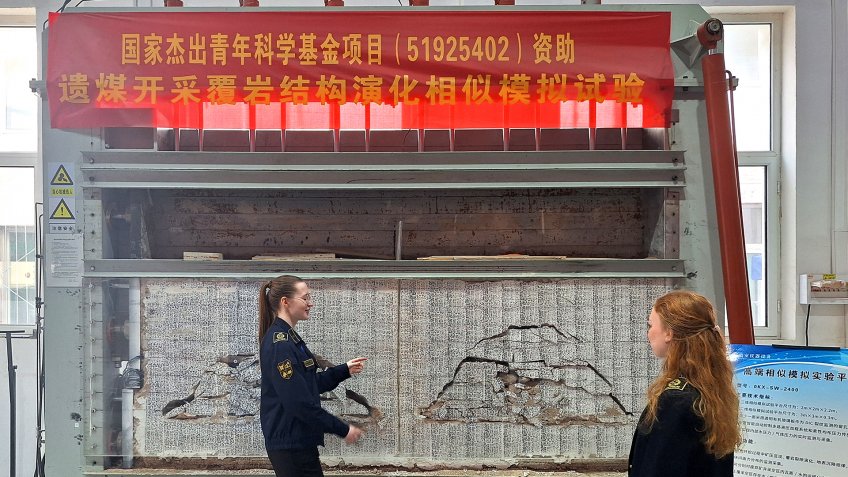
As part of their visit to the Faculty of Mining at TYUT, the engineers from Saint Petersburg familiarized themselves with the university’s infrastructure and took part in a scientific symposium.
«One of the key specialized laboratories focuses on physical modelling using equivalent materials. Back in 1936, Grigory Kuznetsov, a scientist at our Leningrad Mining Institute, proposed and substantiated the use of this method for studying processes in mining. A scaled-down replica of a real facility or process is created, and instead of natural rocks, artificial materials are used whose properties are selected so that, within a particular experiment, they behave similarly to the natural materials being simulated. This enables researchers to study rock failure mechanics, mine pressure control processes, the modelling of catastrophic phenomena in mines, and the chemical properties of rocks. Saint Petersburg Mining University has accumulated extensive expertise in this field, and today the method is actively used at the Research Centre for Geomechanics and Mining Problems. TYUT researchers are interested in cooperation», - explained Milena Pospekhova, a student specializing in Construction of Mining Enterprises and Underground Structures.
Specialists from the two countries discussed differences in approaches to physical modelling. One notable distinction is that their Chinese colleagues use virtual modelling before moving on to physical and full-scale modelling. The university has developed a dedicated platform where students, postgraduate students, and faculty initially simulate the process of creating a physical model, from selecting equivalent materials to processing the model. Before moving on to the actual laboratory setups, they repeatedly practise and refine their skills on a computer. This approach — in which students must successfully complete an assignment on a computer simulator before being admitted to perform the same laboratory work using real laboratory equipment — is widespread across many divisions of the university.
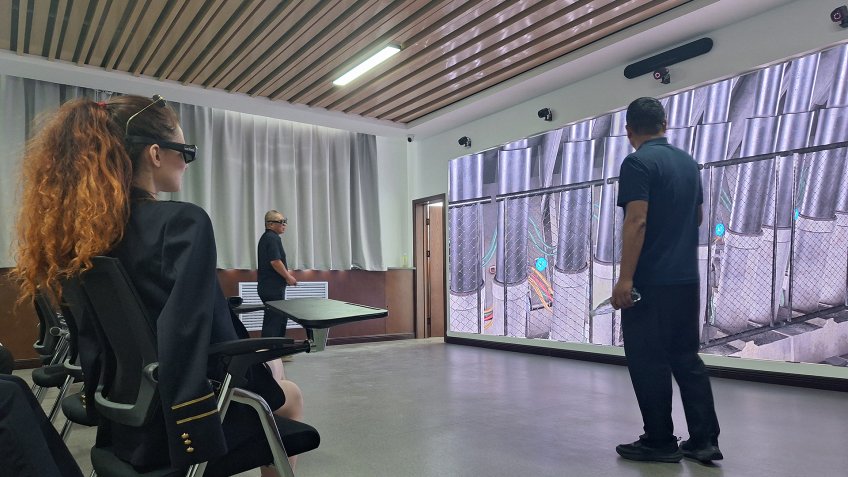
In the Laboratory of Mine Pressure Control and Disaster Prevention, students and postgraduate students were particularly interested in the AW-2000kN electro-hydraulic system for triaxial testing of rock specimens, capable of generating an axial force of up to 2,000 kN and confining pressure of up to 100 MPa. It makes it possible to simulate conditions associated with rocks at great depths.
Another significant piece of equipment, particularly relevant to underground gasification projects, is a high-temperature chamber furnace with a controlled atmosphere. It has a working zone measuring one metre by one metre and can heat samples to temperatures of up to 1,400°C at a rate of up to 30°C per minute. It is used to model in situ coal gasification processes and study the thermal degradation of rocks under different gas atmospheres.
According to Oleg Kazanin, Dean of the Faculty of Mining at Empress Catherine II Saint Petersburg Mining University and head of the internship, companies and industrial enterprises, the state and the provincial government, as well as revenue generated from commercializing patented research results, play an important role in developing the universities’ material and technical infrastructure. This makes it possible to use expensive equipment in the educational process, acquired specifically to address particular research and engineering challenges.
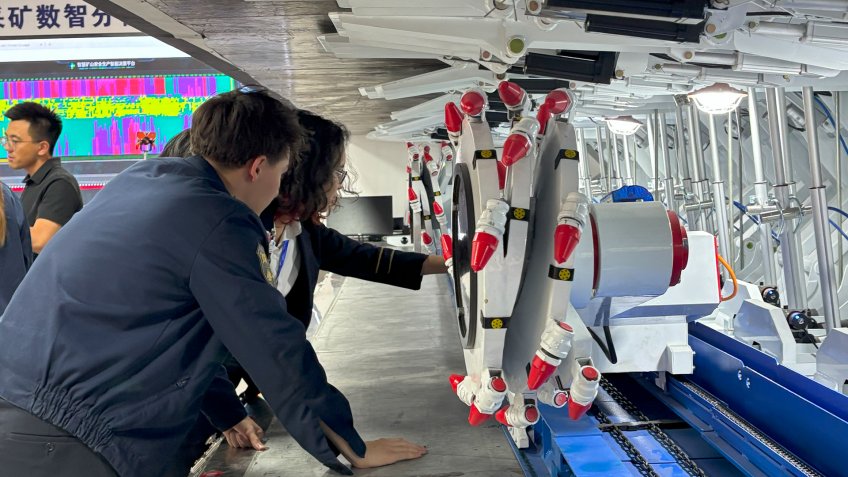
«The price of a complete set of longwall mining equipment for underground coal extraction can reach 2.5 billion rubles. We were shown operating longwall systems at the Faculty of Mining and the Faculty of Safety at Taiyuan University, as well as two longwall systems at the training centre of Shanxi Engineering and Technology University. The same training centre houses a roadheader costing from 40 million rubles, an operating ropeway, and other equipment. This directly affects the quality of education and research in the key laboratories of the universities, which correspond to the priority areas of technological development defined by state policy», - emphasized Oleg Kazanin.
During the conference at the Faculty of Mining at TYUT, one of the most important challenges in training the next generation of specialists was highlighted: an acute shortage of professionals who simultaneously possess expertise in mining, artificial intelligence, big data analytics, and automation.
«Since 2020, Taiyuan University of Technology has been offering a degree program in Intelligent Mining Engineering, combining mechanics, information technology, electrical engineering, and control systems. Students in this program won 18 national awards in engineering competitions between 2022 and 2025, while faculty members won a prize in the national higher education innovation competition for their application of artificial intelligence in the educational process. The department cooperates with major energy companies, including China Energy, establishing joint research and production facilities», - noted postgraduate student Yevgenia Prokhorova, specializing in Mineral Processing.
The intelligent transformation of the mining industry as a whole became the central theme of the entire internship.

«The development of artificial intelligence and AI-based technologies has been identified as one of the priority tasks for the current five-year plan, providing a powerful impetus for the development of this field both for AI developers and for all sectors of industry and education in China. The scope of AI applications in mining is expanding, from monitoring and controlling technological processes to the transition toward unmanned coal mining and processing technologies. At the national level, the ‘Intelligent Mine’ concept is being implemented, involving the introduction of information technologies at all stages of a mining enterprise’s life cycle — from geological exploration and the construction of a 3D deposit model to the final closure of a mine. The necessary infrastructure has been created to put this concept into practice, ranging from mining equipment manufacturers to personnel training. As for education, AI is being actively introduced in schools and universities to visualize educational materials and monitor academic performance and attendance, while specialized platforms are being developed for teachers and students. AI-related disciplines have also been incorporated into curricula», - explained Oleg Kazanin, head of the internship.
Thus, “smart” boards are installed throughout the classrooms, allowing them to be used both as conventional boards and for displaying various presentations, videos, and laboratory-work simulators.
In addition to familiarizing themselves with higher education in Shanxi Province, the mining specialists from Saint Petersburg visited coal-mining and service companies in the region, manufacturers of mining equipment, companies developing intelligent systems for monitoring and controlling production at “smart mines,” as well as an organization specializing in the development of AI and its various applications.
«The working visit to the Huayang intelligent mine left an incredible impression. We were in a control room from which we could observe all the processes and employees. We were shown remote start-up systems that make it possible to control all stages of the mine’s life cycle. They are connected to an online analytics centre, which receives sensor readings from the mine, processes them, and makes decisions on adjusting the operation of the systems», - shared Ksenia Khvan, a student specializing in Radioelectronic Systems and Complexes.
At Shanxi Engineering and Technology University, the visitors inspected a unique training facility — a simulated coal mine created jointly with Huayang Corporation and used for student training. The facility also houses a roadheader and a longwall shearer with powered roof supports, allowing students to study the full working cycle of a coal face.
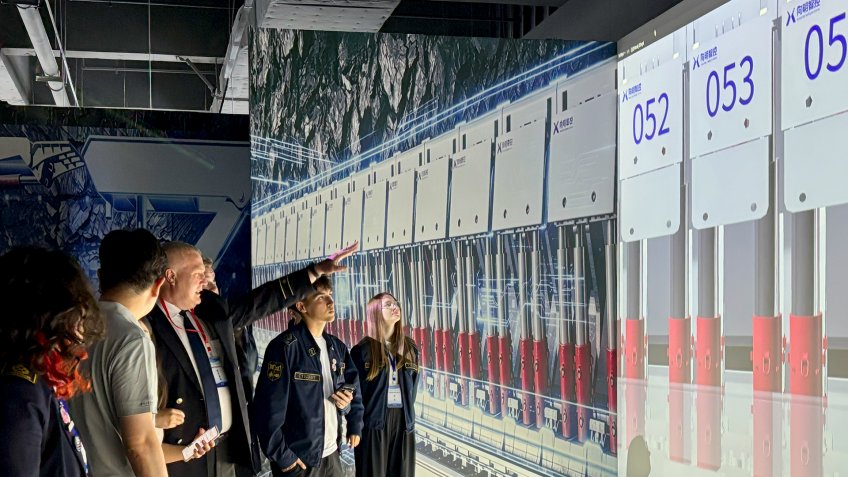
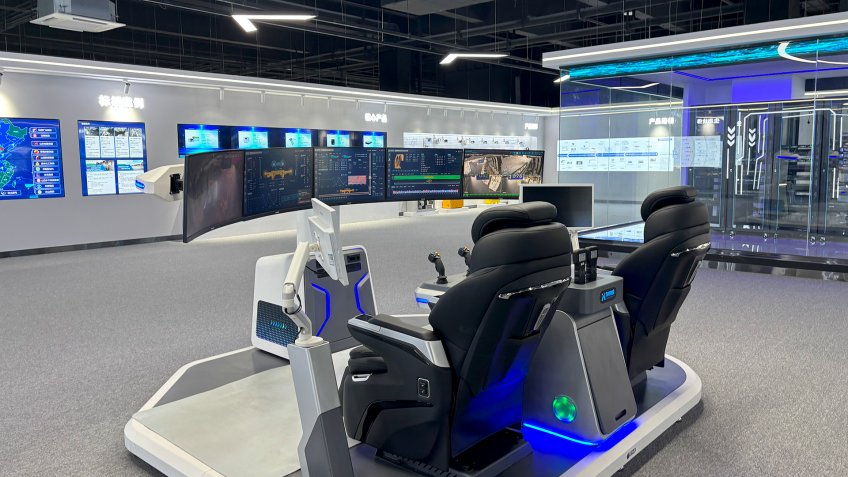
The programme also included visits to Huayue Machinery, Huaxin Electric, and a pipeline fittings manufacturing enterprise. During a meeting with the management and specialists of Xianming Intelligent Control, one of the leaders in the development and implementation of digital technologies in mining, the engineers from Saint Petersburg were presented with a dispatcher workstation simulator designed for monitoring and controlling technological processes and safety systems at intelligent coal-mining faces. The product reflects the transformation of the coal industry from conventional mining toward automation and intelligent technologies and is suitable both for student training and for the professional development of employees working in the industry.
As part of their further exploration of China’s research and development in artificial intelligence, the delegation visited iFLYTEK, a company specializing in intelligent systems. Its main areas of activity include speech recognition and synthesis, natural language processing, machine learning, and adaptive learning, in which the company holds a leading position globally. The company’s latest developments include a large language model for real-time interpretation supporting more than 85 languages; a virtual 3D assistant generated in the likeness of an actual company employee, with such avatars already working as television presenters in Chinese media; and an interactive smart board with voice control and speech recognition for instructors.
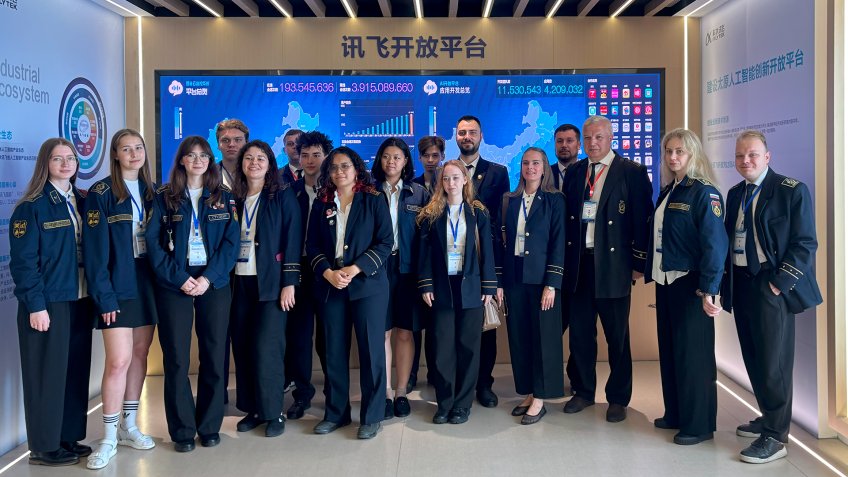
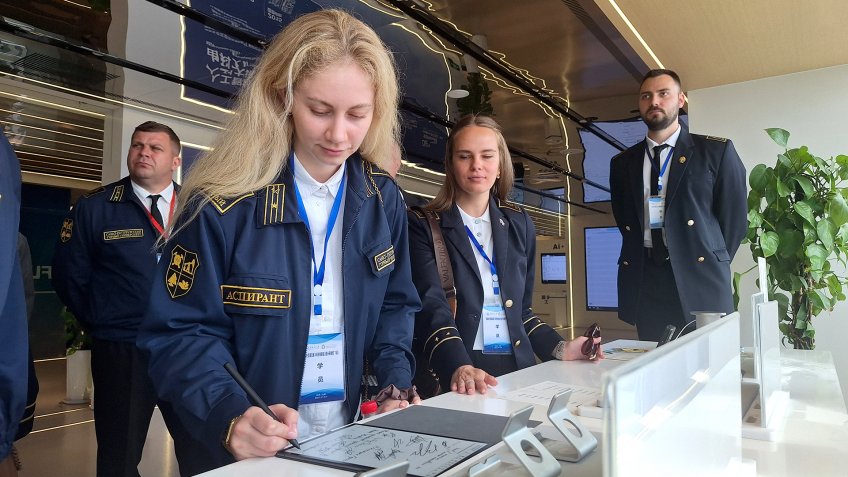
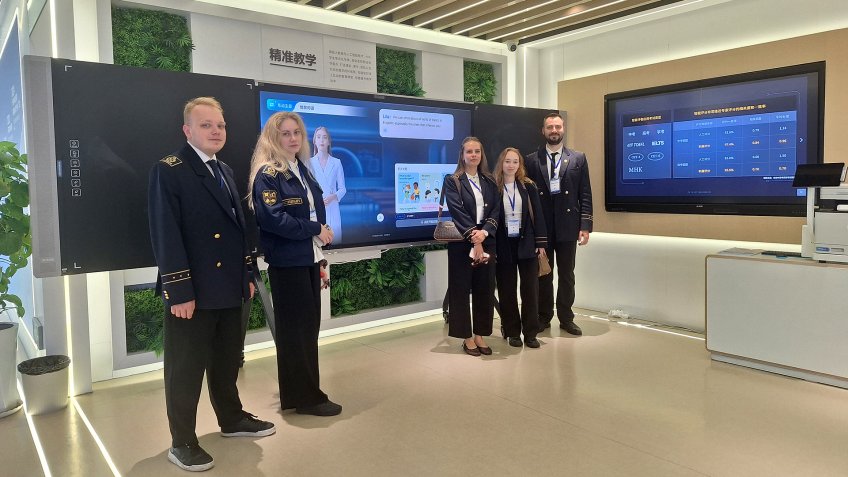
«I was genuinely impressed by the depth to which artificial intelligence has been integrated into everyday life, education, and the workplace. When you see how iFLYTEK’s translator conveys the technical nuances of our conversation from Chinese into Russian virtually without delay or distortion, any language barrier disappears. I was particularly impressed by the smart board. The ability to write with chalk on a traditional surface while simultaneously obtaining a perfect digital copy with graphs and 3D models on the screen is precisely the bridge between traditional pedagogy and the future that we should strive for», - said Nikita Khudoyarov, a student specializing in Industrial Management.
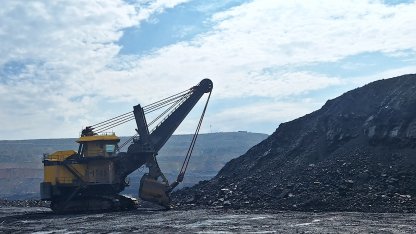
The workforce of this and other similar modern companies exceeds 10,000 employees. This, however, helps explain why only 700 people currently work at Antaibao, one of China’s largest open-pit coal mines, which the delegation also visited during the Summer School.
The internship culminated in a final meeting with lecturers and researchers from Taiyuan University, followed by the presentation of certificates — official confirmation of international experience that can be added to a portfolio when applying for postgraduate study or employment. The internship at TYUT provided strong motivation for further professional development. The next step is to analyse and adapt the Chinese experience to the training of mining engineers in Russia.