

This spring, Empress Catherine II Saint Petersburg Mining University organized a series of international trips for its students, postgraduate researchers, and faculty members to partner universities and industrial enterprises. Two cohorts visited China: one traveled to Taiyuan in Shanxi Province, where nearly 40% of China's coal reserves are concentrated, and the other went to Xuzhou in Jiangsu Province, which serves as a major hub for the mining industry's scientific and technological centers. A third group flew across the ocean to Ecuador in South America. The oil sector is currently developing rapidly there, already accounting for over 30% of the nation's total exports.

The composition of the delegations was determined through a competitive selection process—only those who excelled in their studies and research activities, combined with a strong proficiency in languages, specifically English and Spanish, were chosen to participate.
Contacts with the People's Republic of China represent one of the absolute priorities for the Mining University. On May 20, Russian President Vladimir Putin and Chinese Leader Xi Jinping launched the reciprocal Years of Education in the Russian Federation and China. The visit of the Mining University representatives to the Celestial Empire took place shortly before this event. The core principle driving cooperation with China is equality and mutual benefit, which fully aligns with the cultural traditions of both nations. The PRC does not accept a "zero-sum game" in either international affairs or scientific research, where the gain of one side is equal to the loss of the other. In Russia, this is referred to as a "one-way street" (literally, "playing into a single goalpost") and is similarly rejected on a cultural and mental level.

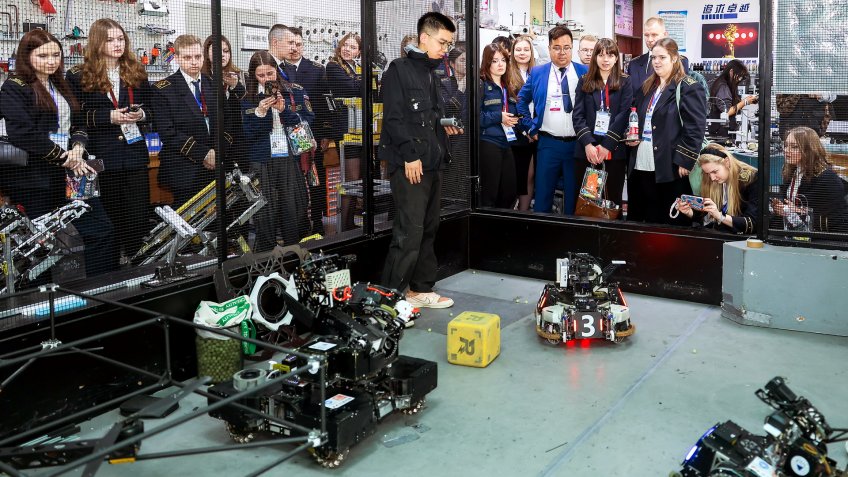
The primary hubs of attraction for the St. Petersburg delegations in Taiyuan were the Taiyuan University of Technology (TYUT), the Shanxi University of Science and Technology (SUST), the Yangquan High-Tech Industrial Development Zone, the Shanxi Linxian Huaye Coal Industry enterprise—which specializes in the development of "green" and "smart" mines—the emergency rescue equipment manufacturer Hong’an Emergency, the major engineering corporation Taiyuan Heavy Machinery Group (producers of overhead cranes and autonomous haul trucks), and the Antaibao open-pit coal mine. In Xuzhou, the students visited the China University of Mining and Technology (CUMT), the GCL Group waste-to-energy plant, and the LvJian dairy processing facility.

The primary objective of these internships was to develop horizontal ties between Russian and international colleagues. This serves as the foundation for any joint project. The roadmap for effective academic cooperation initiates with reciprocal visits of top executives, alongside the creation of structured mechanisms to align the scientific agendas and educational requirements of both parties.
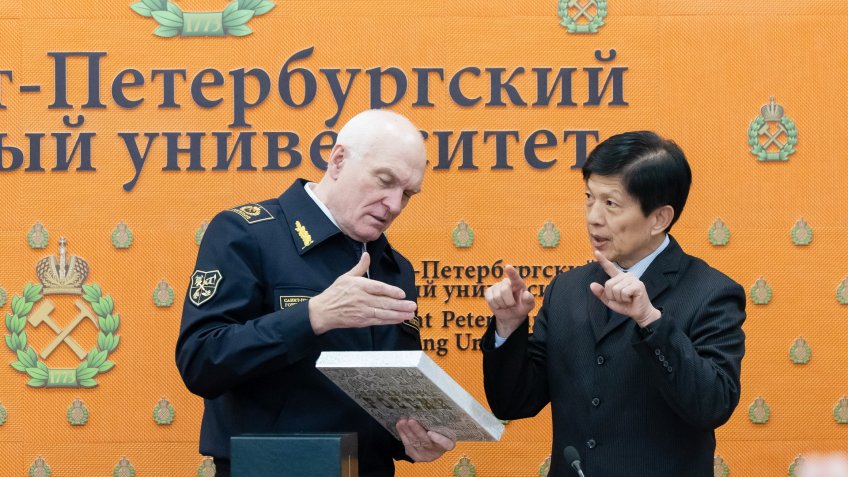
This is followed by joint internship projects and "Summer Schools," alongside the staging of conferences and scientific forums—such as, for example, the "Step into Science" postgraduate summit dedicated to energy development and safety, which was held reciprocally across venues in both St. Petersburg and Taiyuan.
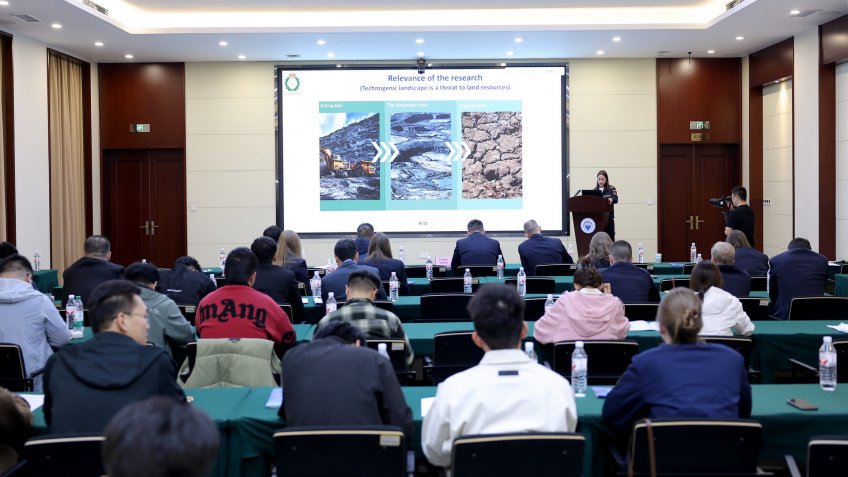
The third step involves institutionalizing the outcomes of this collaborative work into international scientific groups, research laboratories, and educational centers.


Grigoriy Karpov, Head of the Delegation and Deputy Dean of the Mining Faculty:
«While familiarizing oneself with the scientific research being carried out at the Taiyuan University of Technology, one notices a distinct characteristic feature—a large number of projects possess a fundamental scientific orientation. Instead of the conventional phrase 'substantiation of the parameters of well-known technologies...', one frequently encounters titles such as: 'study of the processes of gas heat and mass transfer within rock mass...', or 'investigation of the properties of modern backfill materials formulated with new components...'. This indicates the genuine development of science, rather than merely its exploitation for practical purposes.
To provide an evaluation—the volume of funding directed over the last three years to the research of just one of the three laboratories within the Institute of Mining Engineering, excluding commercial contracts, amounts to: 4.2 million yuan (14 projects, approximately 50 million rubles) for projects led by young scientists, and 15.2 million yuan (13 projects, approximately 170 million rubles) for other national projects».
Within the framework of the Pilot Project, a targeted postgraduate training program has commenced operations at the Mining University, designed to prepare the future faculty of the institution.

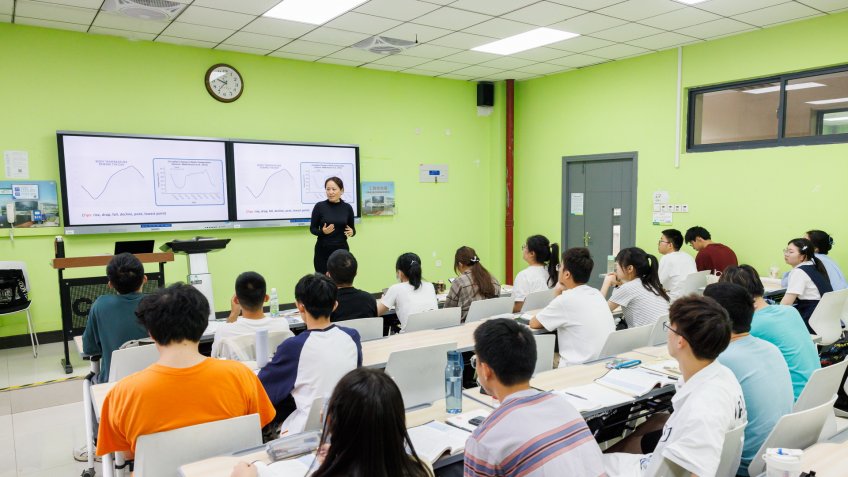
Therefore, the working conditions of Chinese faculty members aroused particular interest among the guests.
«The position of a university lecturer in China is classified among the most prestigious, ranking just behind the military, law enforcement personnel, and doctors. The minimum salary for assistants who are not engaged in scientific research averages 8,000 yuan per month. This is approximately 90,000 rubles. The salary of assistants involved in scientific research is nearly twice as high.
On average, there are five students for every lecturer within the degree-awarding departments. A robust, competitive environment is formed among competent young scientists to fill vacancies within the departments.
The leadership of Taiyuan University of Technology successfully implements a faculty performance quality control system, which includes: classroom visits by an internal quality control service (up to 3 times a year); the presence of faculty professors at lectures (up to 3 times a semester); a semester-by-semester student survey; and audits of the availability and content of educational and methodological materials within the department. Furthermore, a video surveillance system is installed in the classrooms, which is primarily utilized to monitor student attendance and engagement in the current lesson. In addition to the aforementioned measures, an evaluation of all lecturers is conducted every three years. Based on its outcomes, a promotion or demotion is possible—meaning that, in theory, a professor could eventually transition to the position of an assistant and vice versa», - recounted Ildar Fazylov, Assistant in the Department of Occupational Safety.
Cooperation between Saint Petersburg Mining University and Taiyuan University of Technology is currently evolving from basic academic exchanges and summer schools toward the creation of fully realized, joint educational and scientific structures.

The First Vice-Rector of the Mining University, Marat Rudakov, held discussions in Taiyuan with the leadership of TYUT regarding the practical aspects of establishing a joint institute. Operating across two campuses (one in Saint Petersburg and the other in Taiyuan), this institution will conduct the training of Russian and Chinese students across three educational programs: "Chemical Engineering," "Mining Engineering," and "Technological Safety and Mine Rescue Operations".
«At present, the harmonization of curricula has been virtually completed, taking into account the Mining University's methodology regarding the organization of extended industrial field internships. Furthermore, other operational documents concerning the Institute's activities are being prepared based on a symmetric—'mirror'—principle.
Additionally, the Chinese side took the initiative to propose the creation of joint scientific laboratories within the framework of the PRC's global 'One Belt, One Road' strategy, which aims to establish an extensive network of transcontinental transport, trade, and economic corridors. Furthermore, during the negotiations, the Chinese colleagues proposed developing joint scientific research in the Arctic and Antarctic, as both parties have accumulated a substantial wealth of successful experimental work in this domain. Another key avenue of collaboration is the field of intelligent mining technologies ('Smart Mine')», – stated Marat Rudakov.


Local joint projects are emerging spontaneously around the primary avenues of cooperation, potentially opening doors to new, promising research topics over time. For example, Deng Huang, a postgraduate researcher at the Institute of Safety and Emergency Management at TYUT, became deeply inspired after learning about the scientific developments of his Russian colleagues. He is eager to conduct joint research on coal mining safety, specifically focusing on dust control, underground hazardous substances, and subsoil engineering management.

Admitting international students into full-cycle engineering programs—which were extended to a six-year duration in 2023—has become a vital driver of scientific collaboration for the Mining University. Today, 29 Chinese undergraduate students and 6 postgraduate researchers are enrolled at the university.


In 2023, Li Yunpeng, a postgraduate researcher in the Department of Underground Mining, successfully defended his dissertation at the Mining University. For a long time, he struggled to finalize the topic of his Candidate of Sciences (Ph.D.) thesis. His academic advisor, Professor Vladimir Zubov, suggested that during his summer holidays, he should visit the "Khan Laiwan" mine where his father works, speak with the chief engineer, and identify the enterprise's pressing technological challenges. The young scientist returned to St. Petersburg with a highly relevant research topic ("Technology of slice mining for thick, flat-lying coal seams with hard-to-collapse roof rocks"), which is deeply applicable to both Chinese and Russian coal mines. The outcome of his work was not only a successful defense but also a formal decision to implement the newly minted candidate’s engineering solution directly at the "Khan Laiwan" mine.
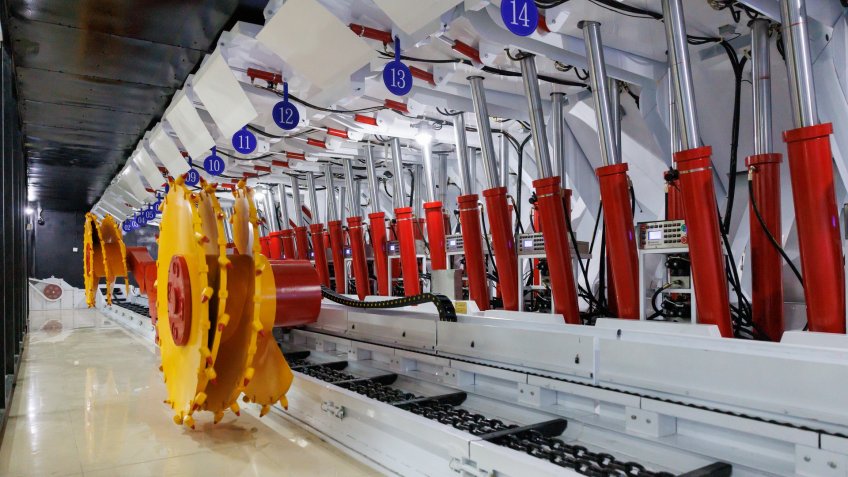
The dissertation work was followed by a series of joint scientific publications. The most recent to date is a 2025 paper titled "Slice Mining System for Thick, Flat-Lying Coal Seams in Chinese Mines: Problematic Issues and Directions for Improvement." This serves as an excellent example of the utility of horizontal ties in science and the effective application of Russian "soft power" abroad.
A special place in the strategy of Empress Catherine II Saint Petersburg Mining University is occupied by its work with school pupils: for several years now, the "School Leader" project has been operating inside the country to attract the most highly motivated applicants, and the university was the first in Russia to account for not only the average Unified State Exam (EGE) score but also individual school transcript grades during the admissions process. The recruitment of international students is likewise far from being left to chance. During the current trip to China, a meeting was held with a partner of the Mining University—the Shanghai "Jingyuan" Secondary School, where the Russian language is actively studied. A delegation from this school had previously visited St. Petersburg in April of last year. Agreements were reached to integrate Chinese high school students into the "Summer Schools" format in St. Petersburg. For this year, a series of lectures delivered by Mining University faculty members has been scheduled in Shanghai, covering scientific research in hydrocarbon extraction, geology, and mining engineering as a whole.


A critical success factor for scientific and educational contacts with China is the Soviet heritage. Representatives of the PRC elite who once graduated from Soviet higher educational institutions are still alive today. The older generation harbors deep sentiments toward the Soviet industrial assistance and cultural exchanges of those years. The Leningrad Mining Institute (the predecessor of Saint Petersburg Mining University) trained a whole galaxy of specialists for the mineral resources sector of the PRC. For instance, in the 1956/57 academic year, out of 246 international students enrolled at the institute, 110 were Chinese citizens. There is vast room to grow upon this foundation of mutual necessity.