What Conclusions Did Students and Faculty of Empress Catherine II Saint Petersburg Mining University Draw after Returning from Internships in China and Ecuador
The first three groups of students from Empress Catherine II Saint Petersburg Mining University have returned from their internships in China and Ecuador, which took place from April 27 to May 12. These programs became the largest-scale in recent years, both in terms of the number of participants (59 students and instructors) and structural content. Two delegations visited the Chinese cities of Taiyuan and Xuzhou, while their colleagues traveled to Ecuador. For two weeks, the St. Petersburg cohorts immersed themselves in a completely new educational environment, studied the industrial and scientific experience of their colleagues, and visited key enterprises within the host regions.
Such educational trips—officially designated as "International short-term programs for acquiring supplementary competencies" (or "Summer Schools" for short)—have been implemented by the university for many years. Furthermore, this initiative operates in a bilateral format: the Mining University not only dispatches its own students to study at foreign partner universities but also hosts them in return. This year, more than 400 representatives from the PRC, India, and other universities are expected to arrive. Regarding "outbound mobility," current cooperation is primarily carried out with higher educational institutions in China, Iran, India, Peru, Bolivia, Brazil, and Ecuador.
This spring, Empress Catherine II Saint Petersburg Mining University organized a series of international trips for its students, postgraduate researchers, and faculty members to partner universities and industrial enterprises. Two cohorts visited China: one traveled to Taiyuan in Shanxi Province, where nearly 40% of China’s coal reserves are concentrated, and the other went to Xuzhou in Jiangsu Province, which serves as a major hub for the mining industry’s scientific and technological centers. A third group flew across the ocean to Ecuador in South America.
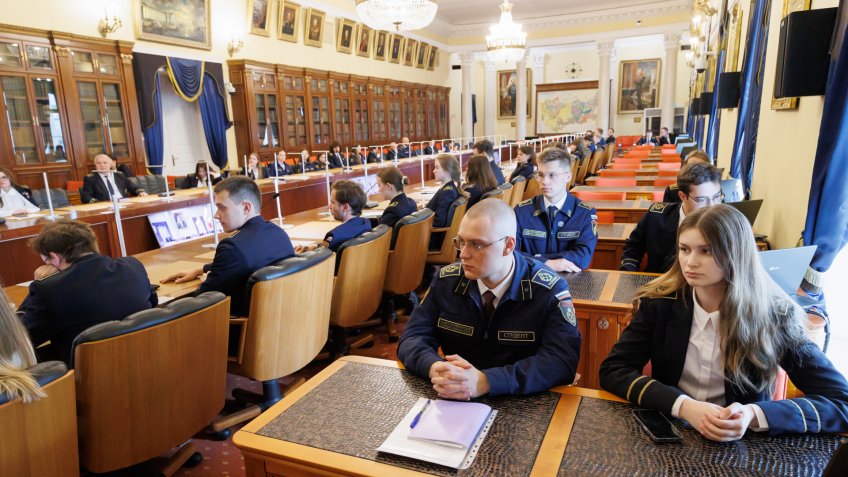
Following the results of all three trips, a general meeting was held in the conference hall of the Mining University, during which the interns shared their impressions and discussed the organization and content of their program. This "feedback loop" is required to take all nuances into account when planning the second wave of Summer Schools, which will take place in late July and early August.
- You observed everything from the inside, and your impressions are highly valuable to us, including the aspects that raised questions or seemed suboptimal. One of the key elements is the pedagogical and scientific component. We want to understand which experience we can successfully apply in our own work, particularly for utilization within the pilot project for reforming the higher education system, - stated Marat Rudakov, First Vice-Rector of the Mining University, addressing the audience.
First, the floor was given to the leader of the Ecuadorian delegation, Stanislav Kovshov, whose program was dedicated to petroleum engineering.
The choice of this specific geography is not accidental. Since 2017, the Mining University has actively cooperated with the local National Polytechnic School, located in the city of Quito. This is the oldest scientific research center in the country, with approximately 10,000 students enrolled. The St. Petersburg delegation was shown the campus, specialized faculties and departments, research centers, and museums. During a visit to the Center for Foreign Language Studies, both parties reached a mutual decision to resume Russian language courses, organize an International Olympiad in the Russian language, and arrange other collaborative events.
Special attention was devoted to analyzing the educational system and curriculum design in Ecuador. Mirroring a nationwide trend, the university has largely abandoned the Bologna system. Master's degree training is virtually non-existent; instead, a bachelor's degree system is implemented, after which graduates continue their education to reach the level of specialists. The structure of the curricula is also similar, featuring a distinct core block of disciplines and a specialization block. This strongly resembles the specialized higher education system adopted at the Mining University, albeit with a shorter duration of study.
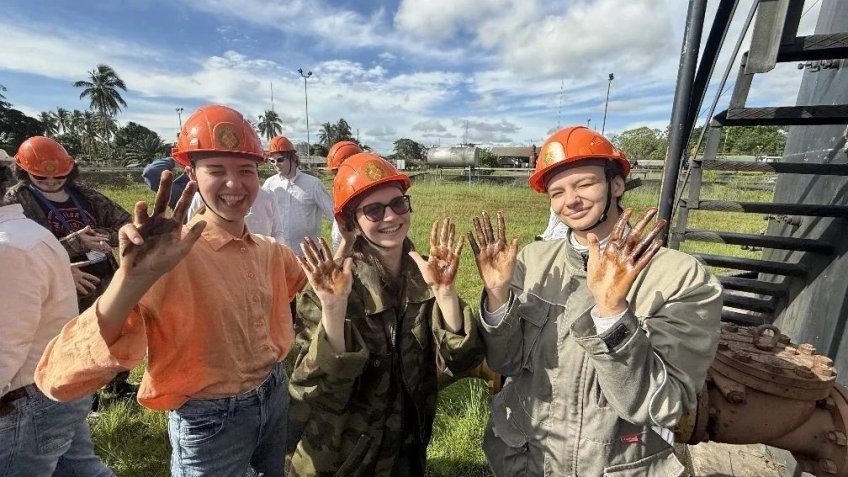
Since a key component of the program was the acquisition of practical skills, particular interest was directed toward visiting the facilities of the republic’s largest oil and gas company, PetroEcuador, which extracts 130–140 million barrels of "black gold" annually. At a drilling site, student Ksenia Dyshanova even had the opportunity to participate in operations for tripping out the drilling tool.
- She practically controlled the process, and you should have seen the expressions on the faces of our Ecuadorian colleagues when they realized that a young woman at a drilling rig is not only highly qualified and understands the technology, but also identifies deficiencies in the process. This significantly elevated our status in their eyes, - noted Stanislav Kovshov.
Other PetroEcuador locations visited included a laboratory for the interpretation of geological and geophysical well logging data, a Center for the Formulation, Treatment, and Analysis of Drilling Fluids, and an oil treatment facility.
The greatest advantage was that the guests were granted broad access to the equipment. None of the hosting personnel raised any objections, and naturally, this became the most memorable aspect for the future engineers. Depending on their field of specialization, the St. Petersburg students independently conducted a portion of the operations and experiments. Some determined water and oil levels using various methodologies, while others performed rapid testing to assess the quality of stored and transported petroleum products. A third group independently conducted centrifugation to determine the water content in oil samples extracted from different levels of the storage tank.
- During meetings with the management of PetroEcuador, potential technical cooperation in a containerized format was discussed. If such a scenario proves feasible, this leading company in the sector is prepared to execute a tripartite academic partnership agreement. This, in my view, would be highly advantageous for advancing our interests, - stated Kovshov.
The students also shared their observations. Each of them traveled on this assignment with a distinct personal objective, contingent upon their specialty, scientific interests, future plans, and career ambitions.
- My primary plans involved an in-depth study of drilling technologies, a comparison of the methodologies and equipment utilized there with domestic counterparts, and an introduction to the geological characteristics of the region. I concluded that our approaches are quite similar. When comparing well designs, I noted that all types of casing strings in Ecuador are utilized in a manner analogous to our standards. However, differences are observed in the diameters. Based on the outcomes of the trip, I can state that the experience gained holds high professional value for me and opens up distinct prospects for future teaching activities, - shared Ksenia Dyshanova, a 3rd-year student at the Department of Well Drilling.
Ekaterina Makarova, a 5th-year student majoring in Geophysics, received an invitation to defend her master's thesis at the National Polytechnic School, conditional upon her enrollment in their postgraduate program. Professor Mario Ruiz of the Department of Geophysics was deeply interested in the graduate's thesis, which is dedicated to the evaluation of rock fracturing.
- This topic is of paramount importance for their region. Given the constant seismic activity in Ecuador, where minor earthquakes occur practically every day, understanding the structure of rock formations is of immense significance. Dr. Mario was particularly interested in how my research supervisor and I developed probabilistic cross-sections and applied traditional methods from a new angle. Communicating with him was incredibly valuable. Regarding the invitation, I am currently weighing all the pros and cons; a final decision has not yet been made.
However, the other objectives that Ekaterina had set for herself prior to the internship were also fully achieved. These included studying new ways of applying geophysical methods, participating in real operational tasks, and, naturally, expanding her scientific and general horizons.
- Almost everywhere we visited, we were immersed in the actual operational process, showing us how everything happens in reality rather than how it 'ought to be.' This provided priceless practical experience. At the local university, we worked with geological samples, engaged in petrography, and utilized microscopes. There were no restrictions: if we wanted to try something, they accommodated us or made suggestions themselves. At the Lago Agrio field, I worked alongside geologists, studying their core analysis techniques and methodologies for determining oil saturation. We discussed operations with drilling fluids, their properties, and parameters in detail, and observed the sampling process. We visited all sections of the field, including the derrick and the mud system zones, and interacted closely with the geologists. A great number of practical skills were acquired. The female students specializing in chemistry and drilling analyzed oil-in-water and water-in-oil content. This mutual interest fostered highly productive learning, - Ekaterina Makarova told Forpost.
Timur Kulmagombetov, a first-year student majoring in Chemical Engineering, had the opportunity to practice metal welding in the university's training laboratory. Up until now, the young man had only theoretical knowledge under his belt. This made his visit to a "real" oil field and his introduction to drilling mud equipment—models of which he had previously worked with only in a laboratory environment—all the more valuable.
- I managed to speak with local specialists, in particular, with a laboratory technician who handles drilling fluids in the oil and gas industry. I learned how they formulate mud systems, what experiments they conduct, and whether they utilize simulation modeling. The latter, by the way, is currently a global trend, and they adhere to it as well. It is remarkable that despite the broader issues with higher education in this Latin American country, they are keeping pace with the times. Although I am only a freshman and have not yet begun studying specialized disciplines, I was pleased to hear that my level of knowledge does not give away my age. Looking ahead, I have an internship coming up, and I will be traveling to Belarus for the first time in my life, - added Timur Kulmagombetov.
Next, the floor was given to the delegation that traveled to Xuzhou—a city with a rich history spanning more than 3,000 years. Their program was titled "Green Mines, Intelligent Mining of Minerals," and the hosting institution was the China University of Mining and Technology (CUMT) along with its division, the CUMT International College.
The delegation from Empress Catherine II Saint Petersburg Mining University spent nearly two weeks in the PRC. The trip was organized by the International Competence Centre for Mining Engineering Education under the auspices of UNESCO as part of the Summer School program.
Approximately 80% of graduates enter heavy industry—energy, mining, infrastructure, and intelligent manufacturing—while others pursue careers in science and academia or the civil service. The model of the Mining University, which emphasizes fundamental knowledge and an extended practical training cycle, is largely similar in spirit to that of the PRC.
The participants attended a course of lectures delivered by leading professors. The economics students noted the high relevance of the topics and the intriguing perspective on reforms and innovations; however, they expressed a recommendation that future programs dedicate more attention to specific case studies from the mining sector.
At the Institute of Mining, the Dean expressed a strong interest in cooperation, particularly regarding personnel training through specialized training grounds. The possibility of supplying Chinese machinery to Russian operational sites for the joint instruction of students was evaluated. This will unlock new horizons for the exchange of best practices and the training of both Russian and Chinese students. stated the program leader, Valentin Isheyskiy, Associate Professor of the Department of Blasting Engineering.
The St. Petersburg delegation visited the college affiliated with the XCMG plant—the world’s third-largest manufacturer of mining machinery, which has surpassed major American and Swedish corporations. The institution trains specialists for the construction, mechanical engineering, and related industries associated with the company’s product line. The training program spans the entire manufacturing process—ranging from electrical wiring to the finished vehicle.
The guests were also shown a State Key Laboratory, where they were introduced to specialized equipment for coal seam testing and open-pit monitoring, including experimental setups designed to measure compressive and tensile strength.
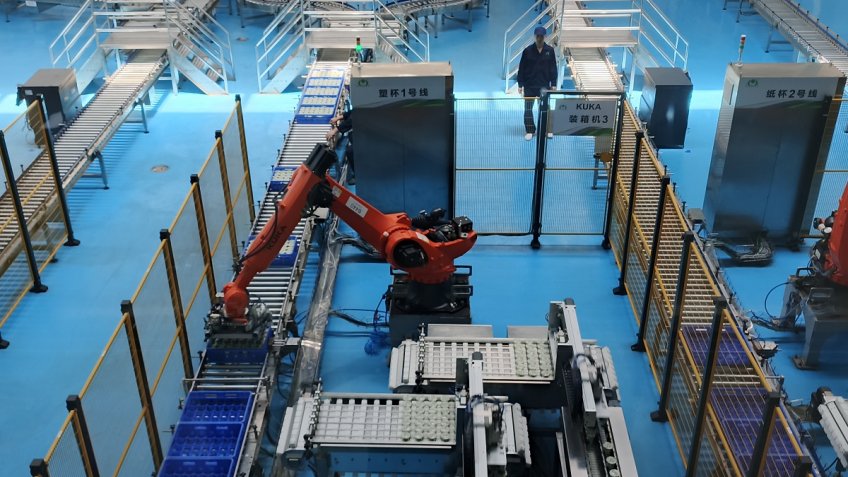
During the trip, the delegation visited key industrial enterprises of the region: the waste-to-energy incineration plant managed by the GCL Group and the LvJian dairy processing facility.
Denis Suchkov, Senior Lecturer at the Department of Geoecology, expressed a recommendation. Since the student cohort included "representatives" from completely different academic years (from the first to the third), this led to certain difficulties in grasping the core essence of the discussions.
- The lectures were oriented toward a level slightly above that of a first-year student who is just beginning to master a foundational engineering education and is not yet fully familiar with their own specialty, let alone the advanced aspects of other fields. Of course, we discussed these issues collectively, explained the unclear concepts, and in the end, everyone achieved a clear understanding. Nevertheless, this factor was present, - stated Denis Suchkov.
He also expressed a recommendation to make future summer schools more narrowly specialized. The participants included students from a wide range of specialties—from economists to metallurgists—and each possessed distinct professional interests.
- This could take the form of an independent program for the economics and management tracks, and a separate one for mining engineers and ecologists (as these fields are relatively closely aligned). This would ensure that every participant can extract precisely what will be personally useful to them from the trip. On the whole, the lectures were organized in a highly engaging manner, leaning heavily on practical case studies. Our students even solved real-world engineering and managerial problems during the classes, based on the actual experiences of industrial enterprises shared by the lecturers, - added the instructor.
Since the residents of the Celestial Empire mostly do not speak English, which naturally complicated communication, a recommendation was made to increase the number of interpreters.
Yury Abrashitov, a 3rd-year student majoring in "Automation of Technological Processes and Production in the Mining Industry," shared his impressions of the visit to Xuzhou:
- In terms of their layout and equipment, the university's laboratories are on par with ours. Of particular interest for my specialty was the lab where they teach operations with positioning interfaces and the remote control of open-pit machinery. Information was presented regarding a practically autonomous open-pit mine, where approximately 500 units of mining equipment are managed remotely by a small number of operators. In the future, it would be highly interesting to see such technology live, study the software utilized, and potentially extract useful experience for my own professional career.
The final part of the meeting consisted of the report from the largest group (30 people), which had returned from Taiyuan. Their educational program was dedicated to scientific and technological development in the field of energy security. The partner for this program was the Taiyuan University of Technology (TYUT), which ranks among the first three national universities in the PRC.
During the period from April 29 to May 13, 2026, a delegation from Empress Catherine II Saint Petersburg Mining University participated in the international short-term educational program for acquiring supplementary competencies titled ”Scientific and Technological Development in the Sphere of Energy Security,” hosted by Taiyuan University of Technology.
This university holds a special place among the partners of the Mining University. Already, a multitude of joint educational programs are being successfully implemented here. Future plans include the execution of an ambitious collaborative project: the Russian-Chinese Mineral and Raw Materials Institute. The result of this collaboration will be a network of educational programs leading to double degrees, as well as a wide spectrum of scientific research areas.
Just like their colleagues, during the internship, the participants of this trip familiarized themselves in detail with the university's infrastructure and its instructional and laboratory base, including the specialized training grounds designed for the formation of primary practical skills. The group leader, Grigory Karpov, Associate Professor of the Department of Underground Mining of Mineral Deposits, noted the exceptional speed of idea implementation in China: it takes only a couple of weeks to progress from an initial concept to a finished product.
- For us, accustomed to lengthy processes of verification, coordination, and approval, such a format seems unusual. Nevertheless, this is precisely how it is implemented on the university's premises. I believe that fully duplicating such a practice will, of course, not be possible, but striving for a similar level of efficiency is definitely something we should aim for, - Karpov reasons.
The spectrum of research topics currently being pursued by their Chinese colleagues was of particular interest to the Russians. All of them are characterized by high relevance and a practical orientation.
- There are no abstract topics divorced from reality, which speaks to the alignment of scientific interests with modern requirements. I think anyone who has engaged in scientific research and studied international experience has encountered a vast number of Chinese publications on their respective issues. This is undeniable evidence of the effective functioning of science in China, - Karpov summarized.
Alexey Usypko is the Director of the Student Creativity Center at the Mining University—a facility featuring instructional and experimental workshops where students master and develop professional competencies and practical skills for both industrial and creative vocations. During the trip, he studied the robotics laboratories at the Taiyuan university in detail, where they assemble drones capable of solving a wide spectrum of tasks. To say that the students there are extremely passionate about this topic would be an understatement.
During the visit of the St. Petersburg delegation, preparation for the RoboMaster competition—which is immensely popular in China—was underway in the classrooms. In addition to a substantial financial cash prize, participation and victory in this tournament clears a direct path toward a successful career for the students. Notably, the students do not construct their designs entirely from scratch; many parts are outsourced to third-party manufacturers, which allows them to significantly accelerate the assembly process, as observed by the guests from the Mining University. The turnaround time for executing a single robot is approximately one month.
- It is precisely this ability to outsource custom component fabrication to subcontractors that enables the students to transition so rapidly from a design draft to a finished product. The decision to launch a new project is made personally by the head of the laboratory, which entirely eliminates the administrative delays typical of our realities. This highly efficient management framework is likely driven by the fact that a portion of the prize fund is channeled directly back into the laboratory itself. This is, without a doubt, an impressive model that prompts serious reflection on the possibility of creating similar structures within our own institution, - notes Alexey Usypko.
Another competition that the St. Petersburg cohorts had the opportunity to visit was the National Undergraduate Mechanical Engineering Innovation Competition. It was being held for the 12th time, bringing together future mechanical engineers. The theme was—unexpectedly—related to culinary processing. For instance, one task required designing a machine to peel Napa cabbage, while another demanded an apparatus to wash and remove the roots of romaine lettuce. On the surface, this might seem trivial. Yet, it is precisely within the resolution of such non-standard tasks that a student's inventive potential and the true power of mechanical engineering are unlocked. Everything was built by the students' own hands: structural profiles, modular components, and automated assemblies, all integrated, programmed, and calibrated.
- The highly developed competitive culture within the university immediately stands out. Events like these grant students the opportunity to apply their knowledge, compete, and achieve professional recognition. I have not encountered anything quite like this at our institute, although there are domestic initiatives attempting to organize similar frameworks. We will undoubtedly explore opportunities to participate in such formats. Consequently, in the near future, we plan to establish an experimental group of students focusing on mechanical engineering and robotics, possibly incorporating elements of magnetism. We will see how this unfolds, how motivated our students will be, what we can achieve given our resources, and where exactly we can prove our capabilities, - Alexey Usypko concluded.
Ildar Fazylov, Assistant at the Department of Industrial Safety, also shared his impressions regarding the trip to the Taiyuan University of Technology.
- Our scientific school at the Mining University in the fields of 'Mine Aerology' and 'Gas Dynamics' stands at a level fully comparable to that of our Taiyuan colleagues. However, we lag behind in the deployment of modern tools—namely digitalization, the integration of artificial intelligence, and engineering solutions such as the 'smart mine' and 'smart ventilation.' For the sustainable development of our scientific school, it is vital to operate within structured research collectives and actively engage students in scientific endeavors. These collectives do not necessarily have to be restricted to a single department; I believe it is far more effective to establish interdisciplinary teams. Furthermore, scientific activity must be conducted in close tandem with industrial production, identifying its operational bottlenecks and resolving them, potentially within the framework of contract R&D (Research and Development — Ed.) or scientific grants. I also believe that within the instructional process, it is essential to present students with more examples derived from real production problems, demonstrating the methodologies used to solve them. For my own course, I plan to utilize the knowledge acquired during this trip, - shared Ildar Fazylov.
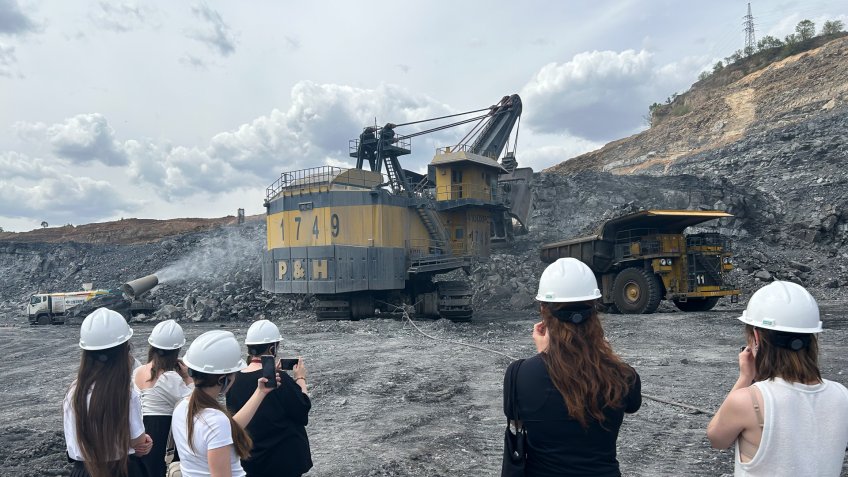
In conclusion, Larissa Bykova, a 1st-year student at the Faculty of Energy, presented her trip report. What she remembered most vividly was the visit to the Antelbago open-pit coal mine, where extraction operations are carried out around the clock. It was the first time the young woman had witnessed the sheer scale of open-pit coal mining with her own eyes. The students climbed aboard a haul truck, learned about the specific features of its operation, and descended several benches into the pit, where they observed the coal loading process. Notably, the enterprise already deploys autonomous haul trucks and electric transport vehicles.
- The internship demonstrated how real production is structured—from initial extraction to product commercialization. Now I understand that any economic calculation must be anchored in the actual technological process. This underlines the critical importance of the practical training component that all students at the Mining University undergo. Furthermore, I realized just how vital digitalization and automation are, both of which are actively developed at all the enterprises we visited. Going forward, I will study these topics more deeply to possess relevant and highly sought-after knowledge, - stated Larissa Bykova.